



Skip to content
  • Facebook
  • X
  • Linkedin
  • WhatsApp
  • Associate Journalism
  • About Us
  • Privacy Policy
  • 033-46046046
  • editor@artifex.news
Artifex.News

Artifex.News

Stay Connected. Stay Informed.

  • Breaking News
  • World
  • Nation
  • Sports
  • Business
  • Science
  • Entertainment
  • Lifestyle
  • Toggle search form
  • Rohit Sharma Captains ICC Men’s T20I Team Of The Year 2024, 4 Indians Make The Cut. Full List
    Rohit Sharma Captains ICC Men’s T20I Team Of The Year 2024, 4 Indians Make The Cut. Full List Sports
  • End of MI’s Dream Team? India Great Hints At Big Exits Of Rohit Sharma And…
    End of MI’s Dream Team? India Great Hints At Big Exits Of Rohit Sharma And… Sports
  • Class 11 Student Stabbed 14 Times In Faridabad Market, 10 Detained
    Class 11 Student Stabbed 14 Times In Faridabad Market, 10 Detained Nation
  • U.S. Govt must remove tariffs, says Australian Trade Minister
    U.S. Govt must remove tariffs, says Australian Trade Minister Business
  • Access Denied Business
  • India Ready For Maha Kumbh Mela, World’s Largest Religious Gathering
    India Ready For Maha Kumbh Mela, World’s Largest Religious Gathering World
  • Access Denied
    Access Denied Nation
  • Access Denied
    Access Denied Nation
Human super-predators not always ‘super-scary’ to wildlife, finds study

Human super-predators not always ‘super-scary’ to wildlife, finds study

Posted on February 17, 2026 By admin


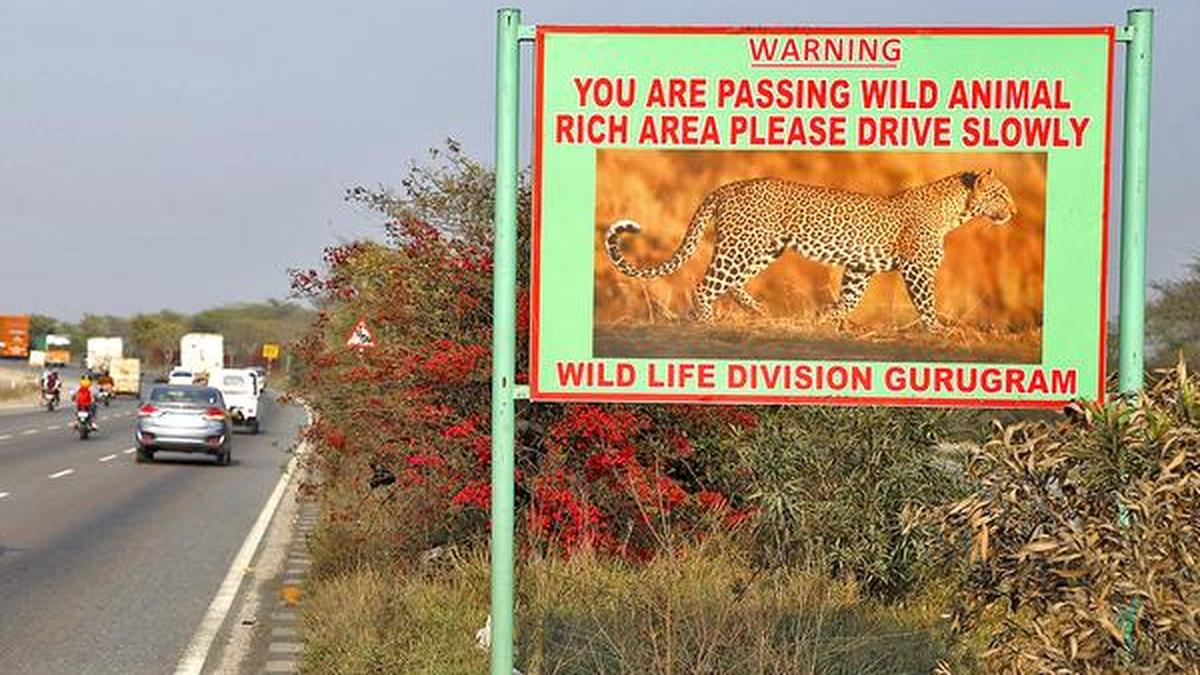
Passive human structures like roads and settlements sometimes reduced animal vigilance, an Indian Institute of Science release said. File
| Photo Credit: The Hindu

Humans have climbed to the top of the food chain by skillfully hunting, trapping, and fishing for other animals at scales that far exceed other predators, altering how the animals behave and earning the tag of a “super-predator”. But a new study led by the Centre for Ecological Sciences, Indian Institute of Science (IISc), suggests that there is a bit more nuance to this idea.

While animals clearly respond with fear to humans who hunt or kill, they are far less consistent in how they react to non-lethal human presence.

A comprehensive meta-analysis, published in Ecology Letters, analyses three decades of research on how wild animals change their behaviour in response to different types of human interactions. The study examined behavioural shifts in foraging, vigilance, and movement across species and ecosystems to look into whether humans are always super-scary.

“The short answer is: no, not always,” says Shawn D’Souza, PhD student at CES and the study’s lead author. “We found strong evidence that lethal humans such as hunters and fishers are indeed perceived as threatening. Animals in areas exposed to lethal humans tend to be more vigilant and spend less time foraging. In contrast, responses to non-lethal humans, such as tourists or researchers are weaker and more variable.”

An IISc release said passive human structures like roads and settlements sometimes reduced animal vigilance. “In certain cases, these areas can function as perceived refuges,” D’Souza explained. “Predators often avoid humans, which can make areas near people feel safer for some prey species.”

Another reason is that areas adjacent to roads are often cleared of thick vegetation, making them attractive grazing sites for smaller animals, said co-author Maria Thaker, Professor at CES. But these sites still pose the risk of vehicular collisions.

The researchers chose foraging, vigilance, and movement as the behavioural parameters because these help capture trade-offs that animals face when managing risk. “Time spent being vigilant is time not spent feeding. Changes in animal movement affect energy expenditure and access to resources. Because these behaviours directly affect survival and reproduction, they offer a clear window into how fear of humans can shape wildlife populations over time,” said the release, adding that the study’s findings broadly support the “risk allocation hypothesis,” which suggests that animals adjust their behaviour based on how intense and predictable a threat is. When danger is high and consistent, animals stay cautious, says D’Souza. When risk is low or predictable, they can afford to relax.

Beyond individual behaviour, the researchers point to a bigger picture. Changes in fear and behaviour can cascade through ecosystems, altering grazing, predation, and ecological balance. According to co-author Kartik Shanker, Professor at CES, the effect of lethal impacts on behaviour can actually help manage conflict. A small amount of culling may greatly reduce the ingress of wild animals in human-dominated areas compared to a range of other approaches currently in use, he said.

“We need more predictive frameworks that link behavioural responses to ecological and evolutionary context. That includes incorporating species traits, past exposure to humans, predator communities, and landscape structure,” said Mr. D’Souza, adding that long-term and experimental studies will be key to understanding whether animals are simply getting used to humans or undergoing deeper evolutionary changes.

Published – February 17, 2026 09:47 pm IST


Source link

Science Tags:Bengaluru, IISc, Indian Institute of Science, study

Post navigation

Previous Post: Man arrested after running toward U.S. Capitol with loaded shotgun, say police
Next Post: T20 World Cup | For South Africa, the real challenge starts in the Super Eight stage

Related Posts

  • Send robots into space rather than people, says Britain’s Astronomer Royal
    Send robots into space rather than people, says Britain’s Astronomer Royal Science
  • The Science Quiz: Know your gut beyond digestion
    The Science Quiz: Know your gut beyond digestion Science
  • India’s Aditya-L1 spacecraft successfully escapes sphere of Earth’s influence
    India’s Aditya-L1 spacecraft successfully escapes sphere of Earth’s influence Science
  • Watch | Earth Day: wake-up call on climate change
    Watch | Earth Day: wake-up call on climate change Science
  • Risky geoengineering should be banned, climate group says
    Risky geoengineering should be banned, climate group says Science
  • Organ-on-chip tech could boost BioE3 goal to personalise medicine
    Organ-on-chip tech could boost BioE3 goal to personalise medicine Science

More Related Articles

What is Google’s ‘quantum advantage’ leap? | Explained What is Google’s ‘quantum advantage’ leap? | Explained Science
Neural circuitry of mouse mothers to pups’ calls deciphered Neural circuitry of mouse mothers to pups’ calls deciphered Science
How are hydrocarbons extracted from under the ground? | Explained How are hydrocarbons extracted from under the ground? | Explained Science
Academics warn new science papers are being generated with AI chatbots Academics warn new science papers are being generated with AI chatbots Science
Trump trouble? A psychologist’s guide to dealing with political distress Trump trouble? A psychologist’s guide to dealing with political distress Science
Govt. reveals more info about ‘One Nation, One Subscription’ | Explained Govt. reveals more info about ‘One Nation, One Subscription’ | Explained Science
SiteLock

Archives

  • February 2026
  • January 2026
  • December 2025
  • November 2025
  • October 2025
  • September 2025
  • August 2025
  • July 2025
  • June 2025
  • May 2025
  • April 2025
  • March 2025
  • February 2025
  • January 2025
  • December 2024
  • November 2024
  • October 2024
  • September 2024
  • August 2024
  • July 2024
  • June 2024
  • May 2024
  • April 2024
  • March 2024
  • February 2024
  • January 2024
  • December 2023
  • November 2023
  • October 2023
  • September 2023
  • August 2023
  • July 2023
  • June 2023
  • May 2023
  • April 2023
  • March 2023
  • February 2023
  • January 2023
  • December 2022
  • November 2022
  • October 2022
  • September 2022
  • August 2022
  • July 2022
  • June 2022
  • May 2022

Categories

  • Business
  • Nation
  • Science
  • Sports
  • World

Recent Posts

  • Access Denied
  • Access Denied
  • U.S. pays about $160 million of nearly $4 billion it owes to U.N.
  • Access Denied
  • Access Denied

Recent Comments

  1. Vanessahob on UP Teacher Who Asked Students To Slap Muslim Classmate
  2. MaggieJax on UP Teacher Who Asked Students To Slap Muslim Classmate
  3. Richardvem on UP Teacher Who Asked Students To Slap Muslim Classmate
  4. JerryInows on UP Teacher Who Asked Students To Slap Muslim Classmate
  5. AntonioDrumb on UP Teacher Who Asked Students To Slap Muslim Classmate
  • Access Denied Sports
  • Australians to vote in a referendum on Indigenous Voice to Parliament on October 14
    Australians to vote in a referendum on Indigenous Voice to Parliament on October 14 World
  • Access Denied World
  • Ukraine hits Russian submarine in first underwater drone attack
    Ukraine hits Russian submarine in first underwater drone attack World
  • Access Denied Business
  • Naveen Patnaik Expells 2 Party MLAs Including Journalist Soumya Patnaik
    Naveen Patnaik Expells 2 Party MLAs Including Journalist Soumya Patnaik Nation
  • UP Police Recruitment Board Chairperson Renuka Mishra Removed Over Paper Leak
    UP Police Recruitment Board Chairperson Renuka Mishra Removed Over Paper Leak Nation
  • Mathews, Chameera to join Sri Lankan squad as travelling reserves
    Mathews, Chameera to join Sri Lankan squad as travelling reserves Sports

Editor-in-Chief:
Mohammad Ariff,
MSW, MAJMC, BSW, DTL, CTS, CNM, CCR, CAL, RSL, ASOC.
editor@artifex.news

Associate Editors:
1. Zenellis R. Tuba,
zenelis@artifex.news
2. Haris Daniyel
daniyel@artifex.news

Photograher:
Rohan Das
rohan@artifex.news

Artifex.News offers Online Paid Internships to college students from India and Abroad. Interns will get a PRESS CARD and other online offers.
Send your CV (Subjectline: Paid Internship) to internship@artifex.news

Links:
Associate Journalism
About Us
Privacy Policy

News Links:
Breaking News
World
Nation
Sports
Business
Entertainment
Lifestyle

Registered Office:
72/A, Elliot Road, Kolkata - 700016
Tel: 033-22277777, 033-22172217
Email: office@artifex.news

Editorial Office / News Desk:
No. 13, Mezzanine Floor, Esplanade Metro Rail Station,
12 J. L. Nehru Road, Kolkata - 700069.
(Entry from Gate No. 5)
Tel: 033-46011099, 033-46046046
Email: editor@artifex.news

Copyright © 2023 Artifex.News Newsportal designed by Artifex Infotech.