
Skip to content
  • Facebook
  • X
  • Linkedin
  • WhatsApp
  • Associate Journalism
  • About Us
  • Privacy Policy
  • 033-46046046
  • editor@artifex.news
Artifex.News

Artifex.News

Stay Connected. Stay Informed.

  • Breaking News
  • World
  • Nation
  • Sports
  • Business
  • Science
  • Entertainment
  • Lifestyle
  • Toggle search form
  • Russia-Ukraine crisis: Lavrov praises Trump for saying NATO was a major cause of war in Ukraine
    Russia-Ukraine crisis: Lavrov praises Trump for saying NATO was a major cause of war in Ukraine World
  • An airstrike kills 20 in central Gaza and fighting rages as Israel’s leaders air wartime divisions
    An airstrike kills 20 in central Gaza and fighting rages as Israel’s leaders air wartime divisions World
  • Access Denied Sports
  • Zomato CEO Responds After PM Modi’s Big Praise
    Zomato CEO Responds After PM Modi’s Big Praise Nation
  • Access Denied Sports
  • Access Denied World
  • Benjamin Netanyahu Says Israel Is Preparing Ground Invasion Of Gaza
    Benjamin Netanyahu Says Israel Is Preparing Ground Invasion Of Gaza World
  • Access Denied
    Access Denied Nation
Study by Indian researchers finds that body’s immune cells ‘betray’ it to help breast cancer spread

Study by Indian researchers finds that body’s immune cells ‘betray’ it to help breast cancer spread

Posted on February 5, 2026 By admin


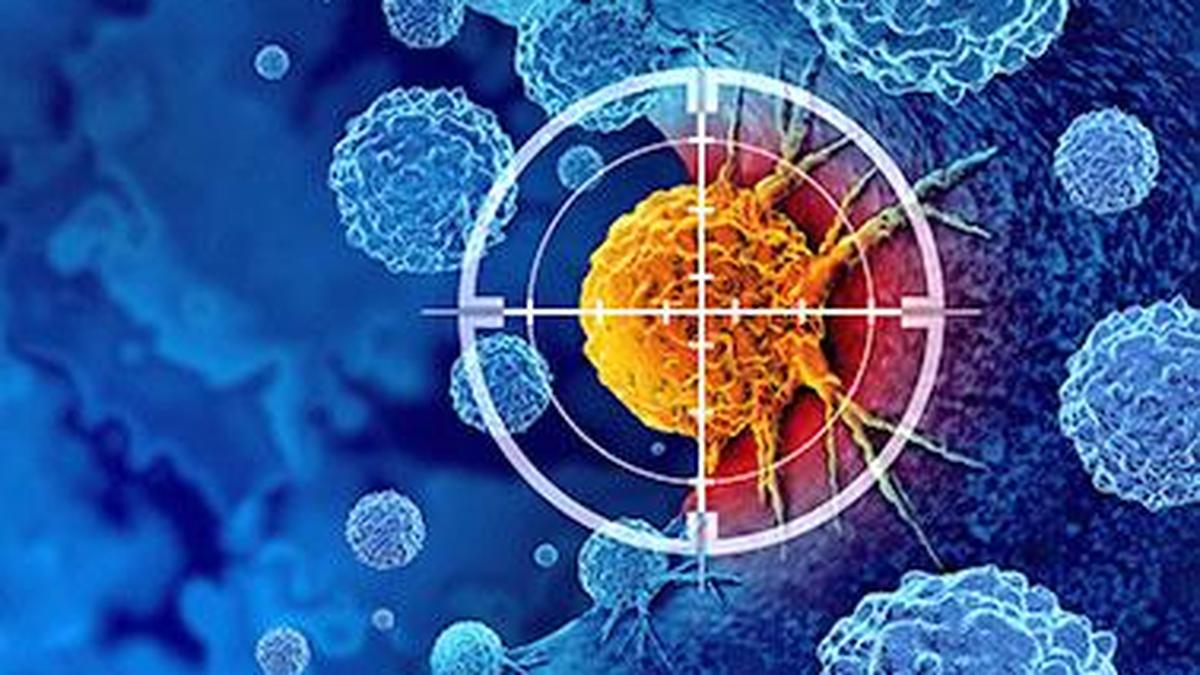
Many mechanisms involved in breast cancer metastasis focus on tumour cell activities. Image used for representational purposes only
| Photo Credit: Getty Images

A growing body of research is reshaping how scientists understand breast cancer—not just as a disease of rogue tumour cells, but as one that cleverly recruits the body’s own immune system to survive and spread.

A new review by researchers from two Indian universities explains how macrophages, a type of white blood cell meant to protect the body at sites of infection, can be “reprogrammed” by breast tumours to aid cancer growth and metastasis.

The authors of the review are Alisha Sinha of the Jaipur-based Banasthali University’s Department of Biotechnology, and Pranay Punk Pankaj and Ranjit Kumar of Nagaland University’s Department of Zoology. Their review was published in the Breast Global Journal.

Breast cancer, the most common cancer and the leading cause of death in women worldwide, accounts for almost 15% of cancer deaths in women, either due to metastasis or its drug-resistant nature. Many mechanisms involved in breast cancer metastasis focus on tumour cell activities. Macrophages normally act as the body’s clean-up crew, destroying harmful cells through phagocytosis, a process in which unwanted cells are engulfed and digested. However, within breast tumours, these cells often change their behaviour and become tumour-associated macrophages (TAMs)—immune cells that now work in favour of the cancer rather than against it.

What the study found

The study explains that macrophages can exist in different “moods” or states. One form, the M1 macrophages, attacks tumours and triggers inflammation to destroy abnormal cells. Another form, the M2 macrophages, focuses on tissue repair and calming inflammation. Breast cancer cells push macrophages towards this M2 state, which unintentionally helps tumours grow, spread, and hide from the immune system.

Once converted, these M2-type macrophages help tumours in several ways. They release chemical messengers called cytokines (small proteins that allow cells to communicate) that encourage the formation of new blood vessels—a process known as angiogenesis. These blood vessels supply tumours with oxygen and nutrients, allowing them to expand rapidly.

The macrophages also weaken the body’s defences. They suppress T cells, immune cells that would otherwise recognise and kill cancer cells. In addition, tumour cells display “don’t eat me” signals on their surface, preventing macrophages from destroying them and allowing cancer cells to survive unchecked.

Another critical role played by these altered immune cells is in reshaping the extracellular matrix—the supportive tissue surrounding cells. By breaking down this structure, macrophages make it easier for cancer cells to escape the breast and travel to distant organs such as the lungs or bones, a process known as metastasis.

What next

The authors highlighted that this ‘dangerous partnership’ between tumours and macrophages forms a self-reinforcing cycle: larger tumours attract more macrophages, which further accelerate tumour growth and spread.

Understanding this relationship could open new treatment options. Instead of targeting cancer cells alone, future therapies may aim to re-educate macrophages, switching them back into their tumour-fighting mode or blocking signals that turn them into cancer allies.

Ms. Sinha said checking the “betrayal” of immune cells could be key to slowing breast cancer progression and improving long-term survival.

“The downregulation or reprogramming of M2 macrophage differentiation could emerge as a viable strategy for reducing breast cancer progression and metastasis. Such approaches may support the development of targeted immunotherapies that complement existing treatment modalities, offering more precise and less toxic options for patients,” Prof. Kumar said.

Published – February 05, 2026 07:35 pm IST


Source link

Science Tags:cancer research india, how cancer spreads, nagaland university

Post navigation

Previous Post: U.K. court jails Russian captain for 6 years for fatal North Sea crash
Next Post: Access Denied

Related Posts

  • Pollen in pee: fossilised urine from a small African mammal helps us understand past environments
    Pollen in pee: fossilised urine from a small African mammal helps us understand past environments Science
  • Predatory fish use rapid colour changes to coordinate attacks
    Predatory fish use rapid colour changes to coordinate attacks Science
  • What causes the seas to foam?
    What causes the seas to foam? Science
  • Science for all Curiosity-driven research in an unequal world
    Science for all Curiosity-driven research in an unequal world Science
  • Genes fuel antibiotic resistance in Yemen cholera epidemic
    Genes fuel antibiotic resistance in Yemen cholera epidemic Science
  • Shielding humans alone won’t prevent pandemics if animals can fall ill
    Shielding humans alone won’t prevent pandemics if animals can fall ill Science

More Related Articles

Japan Moon lander put to sleep after surviving lunar night Japan Moon lander put to sleep after surviving lunar night Science
Astronomers just found complex carbon molecules in space – a step closer to deciphering the origins of life Astronomers just found complex carbon molecules in space – a step closer to deciphering the origins of life Science
Indian team uses repurposed drug to treat oral cancer subtype Indian team uses repurposed drug to treat oral cancer subtype Science
What does a healthy breakfast do for you? What does a healthy breakfast do for you? Science
Can heat-related illnesses be prevented in dogs? Can heat-related illnesses be prevented in dogs? Science
ISRO inks pact with HAL for transfer of small satellite launch vehicle technology ISRO inks pact with HAL for transfer of small satellite launch vehicle technology Science
SiteLock

Archives

  • February 2026
  • January 2026
  • December 2025
  • November 2025
  • October 2025
  • September 2025
  • August 2025
  • July 2025
  • June 2025
  • May 2025
  • April 2025
  • March 2025
  • February 2025
  • January 2025
  • December 2024
  • November 2024
  • October 2024
  • September 2024
  • August 2024
  • July 2024
  • June 2024
  • May 2024
  • April 2024
  • March 2024
  • February 2024
  • January 2024
  • December 2023
  • November 2023
  • October 2023
  • September 2023
  • August 2023
  • July 2023
  • June 2023
  • May 2023
  • April 2023
  • March 2023
  • February 2023
  • January 2023
  • December 2022
  • November 2022
  • October 2022
  • September 2022
  • August 2022
  • July 2022
  • June 2022
  • May 2022

Categories

  • Business
  • Nation
  • Science
  • Sports
  • World

Recent Posts

  • PM Modi in Malaysia: PM Anwar Ibrahim, like several of us in India, is a ‘big fan’ of MGR says PM.
  • Access Denied
  • Access Denied
  • Access Denied
  • Access Denied

Recent Comments

  1. NathanCycle on UP Teacher Who Asked Students To Slap Muslim Classmate
  2. RogerPerge on UP Teacher Who Asked Students To Slap Muslim Classmate
  3. NathanCycle on UP Teacher Who Asked Students To Slap Muslim Classmate
  4. Richardcoura on UP Teacher Who Asked Students To Slap Muslim Classmate
  5. NathanCycle on UP Teacher Who Asked Students To Slap Muslim Classmate
  • Gold blazes trail beyond ,700/oz to record high as safety rush fuels demand
    Gold blazes trail beyond $4,700/oz to record high as safety rush fuels demand Business
  • United Airlines plane makes emergency landing in Los Angeles after losing a tire during takeoff
    United Airlines plane makes emergency landing in Los Angeles after losing a tire during takeoff World
  • Women’s Indian Open golf | Diksha Dagar finishes creditable third; rookie Aline Krauter cruises to a five-shot win
    Women’s Indian Open golf | Diksha Dagar finishes creditable third; rookie Aline Krauter cruises to a five-shot win Sports
  • Prehlad Iyengar, Suspended Over Palestine Essay, Appeals Against MIT Order
    Prehlad Iyengar, Suspended Over Palestine Essay, Appeals Against MIT Order World
  • Pakistan Coach Unhappy Despite ODI Series Win vs Australia, Reason Is India
    Pakistan Coach Unhappy Despite ODI Series Win vs Australia, Reason Is India Sports
  • Women’s ODI World Cup: Chamari Athapaththu-inspired Sri Lanka to pip Bangladesh by 7 runs in Women’s World Cup thriller
    Women’s ODI World Cup: Chamari Athapaththu-inspired Sri Lanka to pip Bangladesh by 7 runs in Women’s World Cup thriller Sports
  • Account Holders In 3 ICICI Bank Branches In Andhra Pradesh Lose Rs 28 Crore
    Account Holders In 3 ICICI Bank Branches In Andhra Pradesh Lose Rs 28 Crore Nation
  • CBSE Brainstorms When And How To Conduct Board Exams Twice A Year
    CBSE Brainstorms When And How To Conduct Board Exams Twice A Year Nation

Editor-in-Chief:
Mohammad Ariff,
MSW, MAJMC, BSW, DTL, CTS, CNM, CCR, CAL, RSL, ASOC.
editor@artifex.news

Associate Editors:
1. Zenellis R. Tuba,
zenelis@artifex.news
2. Haris Daniyel
daniyel@artifex.news

Photograher:
Rohan Das
rohan@artifex.news

Artifex.News offers Online Paid Internships to college students from India and Abroad. Interns will get a PRESS CARD and other online offers.
Send your CV (Subjectline: Paid Internship) to internship@artifex.news

Links:
Associate Journalism
About Us
Privacy Policy

News Links:
Breaking News
World
Nation
Sports
Business
Entertainment
Lifestyle

Registered Office:
72/A, Elliot Road, Kolkata - 700016
Tel: 033-22277777, 033-22172217
Email: office@artifex.news

Editorial Office / News Desk:
No. 13, Mezzanine Floor, Esplanade Metro Rail Station,
12 J. L. Nehru Road, Kolkata - 700069.
(Entry from Gate No. 5)
Tel: 033-46011099, 033-46046046
Email: editor@artifex.news

Copyright © 2023 Artifex.News Newsportal designed by Artifex Infotech.