
Skip to content
  • Facebook
  • X
  • Linkedin
  • WhatsApp
  • Associate Journalism
  • About Us
  • Privacy Policy
  • 033-46046046
  • editor@artifex.news
Artifex.News

Artifex.News

Stay Connected. Stay Informed.

  • Breaking News
  • World
  • Nation
  • Sports
  • Business
  • Science
  • Entertainment
  • Lifestyle
  • Toggle search form
  • Federal officer shoots person in leg after being attacked during Minneapolis arrest, officials say
    Federal officer shoots person in leg after being attacked during Minneapolis arrest, officials say World
  • Access Denied World
  • Northern Lights: Severe solar storm triggers rare auroral arc in Ladakh sky
    Northern Lights: Severe solar storm triggers rare auroral arc in Ladakh sky Science
  • High Court Notice to Gujarat on Activist Teesta Setalvad’s Appeal
    High Court Notice to Gujarat on Activist Teesta Setalvad’s Appeal Nation
  • “Harkatein Padhe-Likhon Wali Karein”: Mohammad Amir Rips Into Ramiz Raja For Shan Masood Interview
    “Harkatein Padhe-Likhon Wali Karein”: Mohammad Amir Rips Into Ramiz Raja For Shan Masood Interview Sports
  • Lok Sabha Congratulates Team India On Clinching T20 World Cup After 17 Years
    Lok Sabha Congratulates Team India On Clinching T20 World Cup After 17 Years Nation
  • B20 summit | My priority is to tame inflation, says Nirmala Sitharaman
    B20 summit | My priority is to tame inflation, says Nirmala Sitharaman Business
  • Access Denied
    Access Denied Nation
From field to screen: the changing landscape of ecology research

From field to screen: the changing landscape of ecology research

Posted on February 1, 2026 By admin


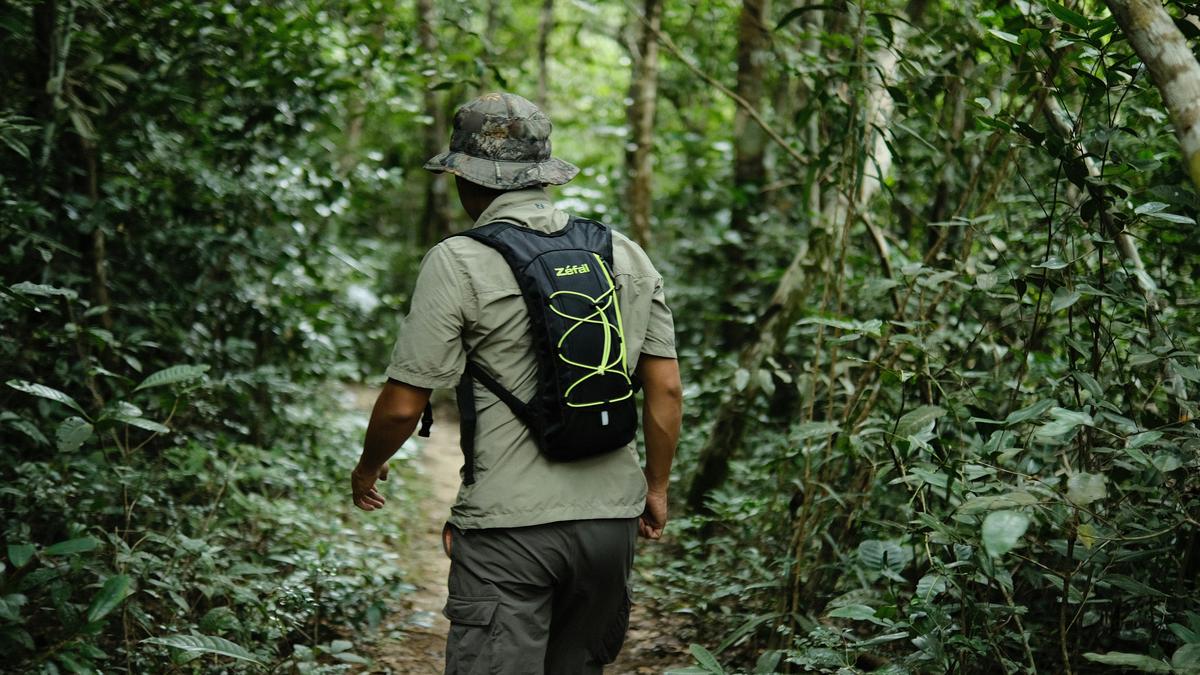
For centuries, ecology and biology have been built on muddy boots, mosquito bites and long days spent in forests, wetlands and oceans. Fieldwork was not just a method; it was an identity. To be an ecologist meant to be outdoors, immersed in nature, observing life in its raw, unpredictable complexity. But the age of artificial intelligence is quietly — and decisively — redrawing this relationship. Today, fieldwork is increasingly transforming into in silico work, carried out on computer screens, powered by algorithms, sensors, and automated systems.

The shift is neither accidental nor trivial. It is driven by an unprecedented explosion of data. More than a billion natural history specimens have been digitised globally, many linked with genetic information. Citizen scientists upload millions of observations to platforms such as iNaturalist, while satellites, drones, camera traps, acoustic sensors, and environmental DNA samplers stream data continuously from land, sea, and air. AI systems now classify species, track migration, model distributions, and even predict ecological futures — which are all tasks that once demanded years of painstaking field observations.

Screen ecology

In this context, the romantic ideal of physically walking through forests to document biodiversity begins to look inefficient, even unnecessary. Why trek through dense jungles, risking logistics, health and carbon emissions, when sophisticated robotic cameras can sit silently for years, capturing images day and night? Why manually count insects when AI-enabled camera traps can identify thousands of species automatically? And why rely on sporadic human visits when sensors never sleep?

Robotic and automated systems do offer clear advantages. They reduce human disturbance to sensitive habitats. They can operate in extreme or inaccessible environments — including the deep ocean and from amid dense canopies — and where human presence is limited or dangerous. They generate standardised, high-resolution data across vast spatial and temporal scales, something no individual researcher could ever achieve. In many cases, insisting on physical presence may add little scientific value while consuming time and resources better spent analysing the data.

Indeed, the very idea that ecological understanding must come from direct bodily immersion is being challenged. Some of the most influential ecological insights of recent years have emerged from computer-based analyses rather than hands-on field studies. Researchers studying flowering times, invasive species or insect declines increasingly work indoors, writing code rather than field notes. For practical purposes their ecosystems of interest now exist as abstract objects on the screen.

From this perspective, physically going to a forest can appear almost irrelevant. Forests today are already saturated with technologies: camera traps fixed to trees, microphones recording soundscapes, drones scanning canopies, satellites tracking phenology from space. AI does not merely supplement fieldwork but replaces large parts of it. The forest, in effect, comes to the scientist as streams of data. What matters is not where the scientist stands but how intelligently she is able to interpret the data.

Not without discomfort

There is also a pragmatic argument. Modern academic careers reward speed and publication volume. In silico research driven by data often produces results faster than long-term field studies. In a competitive environment, spending years inside a forest may be career-limiting compared with analysing global datasets from a laptop. The incentives of science increasingly favour algorithms rather than adventures.

Yet to be sure this transformation is not without discomfort. Many ecologists worry about an extinction of experience, i.e. a gradual loss of direct engagement with nature that could erode ecological intuition, contextual understanding and ethical responsibility. They argue that algorithms trained without deep field knowledge risk bias and misinterpretation. Data after all are not neutral: they reflect how, where, and why they were collected.

But even these concerns must be weighed against reality. Ecology, like physics or genomics, has reached a level of complexity that demands specialisation. Not every physicist builds detectors and not every biologist needs to chase animals through forests. Expecting all ecologists to be field naturalists may be nostalgic rather than rational. As the field matures, its exponents must consider division of labour more seriously and sensitively.

Moreover, the idea that physical presence automatically guarantees better understanding is itself questionable. Human observation is limited, subjective, and intermittent. Robotic cameras don’t tire, and they don’t forget or notice selectively. AI systems can also reveal patterns that are invisible to the naked eye, uncovering relationships across scales that fieldwork alone could never capture. In this sense, in silico ecology need not be the retreat from reality that many make it out to be a way for human researchers to perceive more.

Science, in silico

This does not mean that forests, wetlands or reefs have become scientifically irrelevant — only that scientists no longer need to be physically present to study them, traversing the dangers involved in it. The point of knowledge production has shifted. Nature is increasingly mediated through technology and scientific understanding can now emerge from synthesis rather than sensory immersion.

The future is in turn not a simple choice between boots on the ground and laptops but rather an opportunity to redefine what ‘fieldwork’ could mean. A camera trap bolted to a tree is as much a field instrument as a notebook once was. A machine-learning model trained on millions of observations is as much a lens on nature as a pair of binoculars. In the AI world, the forest still matters; it’s just that it no longer demands our constant physical presence.

And as ecological research enters this new phase, the challenge is not to mourn the decline of traditional fieldwork but to ensure that in silico science remains grounded in ecological realities, ethical responsibility and conservation goals. The mud may be gone from our boots but the responsibility to understand and protect the living world remains firmly under our feet, even if those feet now rest under a desk.

Dr Biju Dharmapalan is Dean, Academic Affairs, Garden City University, Bengaluru, and an adjunct faculty member at the National Institute of Advanced Studies,  Bengaluru.

Published – February 02, 2026 05:30 am IST


Source link

Science

Post navigation

Previous Post: Access Denied
Next Post: Access Denied

Related Posts

  • ‘STEMinism is an attempt to bring more women into science without critiquing the field of science’
    ‘STEMinism is an attempt to bring more women into science without critiquing the field of science’ Science
  • Indigenously built stroke device approved on domestic trial data, launch set for February 2026
    Indigenously built stroke device approved on domestic trial data, launch set for February 2026 Science
  • What is the legal framework for space missions like the Chandrayaan 3 and Aditya L-1? | Explained
    What is the legal framework for space missions like the Chandrayaan 3 and Aditya L-1? | Explained Science
  • Self-sustainable science and tech ecosystem with larger participation by private sector need of the hour: Jitendra Singh
    Self-sustainable science and tech ecosystem with larger participation by private sector need of the hour: Jitendra Singh Science
  • Nobel Prize 2023 in Chemistry is awarded to
    Nobel Prize 2023 in Chemistry is awarded to Science
  • Budget 2024: Under-spending brightens allocations for science ministries, depts.
    Budget 2024: Under-spending brightens allocations for science ministries, depts. Science

More Related Articles

Science quiz: The infinite wonders of space Science quiz: The infinite wonders of space Science
Unpredictable rainfall makes farming in Marathwada even harder Unpredictable rainfall makes farming in Marathwada even harder Science
How mangroves’ cells helps plants survive in saltwater How mangroves’ cells helps plants survive in saltwater Science
Why do athletes race in an anti-clockwise direction? Why do athletes race in an anti-clockwise direction? Science
Sci-Five | The Hindu Science Quiz: On Whale Sharks Sci-Five | The Hindu Science Quiz: On Whale Sharks Science
Making sense of DHRUV64 indigenous microprocessor | Explained Making sense of DHRUV64 indigenous microprocessor | Explained Science
SiteLock

Archives

  • February 2026
  • January 2026
  • December 2025
  • November 2025
  • October 2025
  • September 2025
  • August 2025
  • July 2025
  • June 2025
  • May 2025
  • April 2025
  • March 2025
  • February 2025
  • January 2025
  • December 2024
  • November 2024
  • October 2024
  • September 2024
  • August 2024
  • July 2024
  • June 2024
  • May 2024
  • April 2024
  • March 2024
  • February 2024
  • January 2024
  • December 2023
  • November 2023
  • October 2023
  • September 2023
  • August 2023
  • July 2023
  • June 2023
  • May 2023
  • April 2023
  • March 2023
  • February 2023
  • January 2023
  • December 2022
  • November 2022
  • October 2022
  • September 2022
  • August 2022
  • July 2022
  • June 2022
  • May 2022

Categories

  • Business
  • Nation
  • Science
  • Sports
  • World

Recent Posts

  • End of U.S.-Russia nuclear pact a ‘grave moment’: UN chief
  • Access Denied
  • A dozen people, including Israeli soldiers, charged with smuggling goods into Gaza
  • Iran, U.S. to hold nuclear talks in Oman on February 6
  • A turning point for nuclear deterrence

Recent Comments

  1. DennisEpist on UP Teacher Who Asked Students To Slap Muslim Classmate
  2. DennisEpist on UP Teacher Who Asked Students To Slap Muslim Classmate
  3. CraigPaync on UP Teacher Who Asked Students To Slap Muslim Classmate
  4. DennisEpist on UP Teacher Who Asked Students To Slap Muslim Classmate
  5. Josephfeemy on UP Teacher Who Asked Students To Slap Muslim Classmate
  • Awami League won’t be allowed to contest Bangladesh polls: Muhammed Yunus’ key adviser
    Awami League won’t be allowed to contest Bangladesh polls: Muhammed Yunus’ key adviser World
  • CSK fret over injury concern ahead of IPL as pacer Pathirana suffers hamstring strain
    CSK fret over injury concern ahead of IPL as pacer Pathirana suffers hamstring strain Sports
  • Babar Azam Dropped As Pakistan Team Announced vs Zimbabwe, Picked For Australia Series
    Babar Azam Dropped As Pakistan Team Announced vs Zimbabwe, Picked For Australia Series Sports
  • “Very Strategic, Always Has A Plan”: Usman Khawaja’s Special Praise For India Star
    “Very Strategic, Always Has A Plan”: Usman Khawaja’s Special Praise For India Star Sports
  • Access Denied World
  • Rupee ends higher on foreign, state-run banks’ dollar sales; rises on week
    Rupee ends higher on foreign, state-run banks’ dollar sales; rises on week Business
  • Dr. Reddy’s biosimilar of Roche’s cancer drug gets EMA panel nod
    Dr. Reddy’s biosimilar of Roche’s cancer drug gets EMA panel nod Business
  • French Rail Chief Says Trains To Run Normally From Monday After Sabotage
    French Rail Chief Says Trains To Run Normally From Monday After Sabotage World

Editor-in-Chief:
Mohammad Ariff,
MSW, MAJMC, BSW, DTL, CTS, CNM, CCR, CAL, RSL, ASOC.
editor@artifex.news

Associate Editors:
1. Zenellis R. Tuba,
zenelis@artifex.news
2. Haris Daniyel
daniyel@artifex.news

Photograher:
Rohan Das
rohan@artifex.news

Artifex.News offers Online Paid Internships to college students from India and Abroad. Interns will get a PRESS CARD and other online offers.
Send your CV (Subjectline: Paid Internship) to internship@artifex.news

Links:
Associate Journalism
About Us
Privacy Policy

News Links:
Breaking News
World
Nation
Sports
Business
Entertainment
Lifestyle

Registered Office:
72/A, Elliot Road, Kolkata - 700016
Tel: 033-22277777, 033-22172217
Email: office@artifex.news

Editorial Office / News Desk:
No. 13, Mezzanine Floor, Esplanade Metro Rail Station,
12 J. L. Nehru Road, Kolkata - 700069.
(Entry from Gate No. 5)
Tel: 033-46011099, 033-46046046
Email: editor@artifex.news

Copyright © 2023 Artifex.News Newsportal designed by Artifex Infotech.