


Skip to content
  • Facebook
  • X
  • Linkedin
  • WhatsApp
  • YouTube
  • Associate Journalism
  • About Us
  • Privacy Policy
  • 033-46046046
  • editor@artifex.news
Artifex.News

Artifex.News

Stay Connected. Stay Informed.

  • Breaking News
  • World
  • Nation
  • Sports
  • Business
  • Science
  • Entertainment
  • Lifestyle
  • Toggle search form
  • Congress Slams BJP Over Its Rajasthan Candidate Jyoti Mirdha’s ‘Samvidhanik Badlav’ Remarks
    Congress Slams BJP Over Its Rajasthan Candidate Jyoti Mirdha’s ‘Samvidhanik Badlav’ Remarks Nation
  • Donald Trump dismisses Taylor Swift’s endorsement of Kamala Harris, praises Brittany Mahomes
    Donald Trump dismisses Taylor Swift’s endorsement of Kamala Harris, praises Brittany Mahomes World
  • Chief Minister After Haryana BJP List Upsets Leaders
    Chief Minister After Haryana BJP List Upsets Leaders Nation
  • Atiq Ahmed’s Two Plots Worth Rs 6 Crore Attached By UP’s Prayagraj Police
    Atiq Ahmed’s Two Plots Worth Rs 6 Crore Attached By UP’s Prayagraj Police Nation
  • PM Modi’s Jakarta Visit Will Fortify India Active Involvement In ASEAN: Envoy
    PM Modi’s Jakarta Visit Will Fortify India Active Involvement In ASEAN: Envoy Nation
  • Access Denied
    Access Denied Nation
  • Access Denied
    Access Denied Nation
  • Budget 2024: Centre must target 4.9% fiscal deficit and continue consolidation, SBI Research suggests
    Budget 2024: Centre must target 4.9% fiscal deficit and continue consolidation, SBI Research suggests Business
Pax Silica | The silicon curtain

Pax Silica | The silicon curtain

Posted on January 24, 2026 By admin


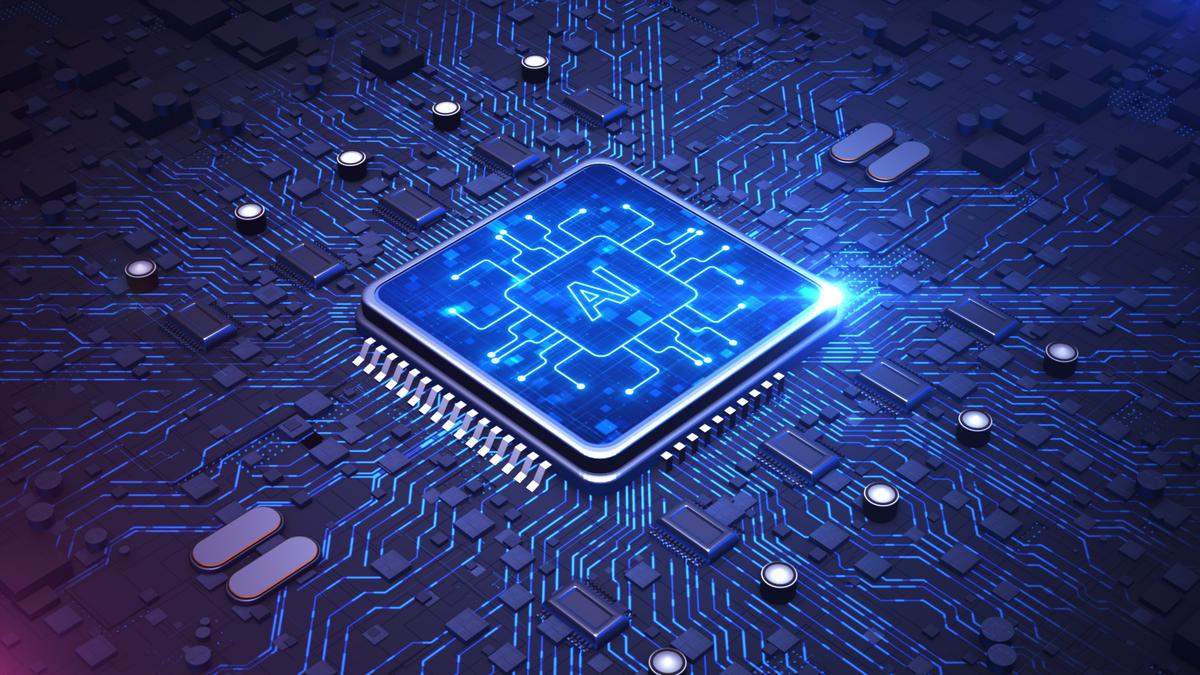
“If the 20th century ran on oil and steel, the 21st century runs on compute and the minerals that feed it,” declared Jacob Helberg, U.S. Undersecretary for Economic Affairs, as America launched a chip supply chain alliance to “build the AI ecosystem of tomorrow — from energy and critical minerals to high-end manufacturing and models”.

Signed by nine countries — Australia, Greece, Israel, Japan, Qatar, South Korea, Singapore, the UAE, and the U.K. — in mid-December, ‘Pax Silica’ seeks to map a new geography of computing power. [Non-signatory participants include Canada, the EU, the Netherlands, OECD countries, and Taiwan.]

For decades, the semiconductor supply chain was governed by the cold, borderless logic of competitive advantage and cheap labour. Chips were designed in California, printed in the Netherlands, fabricated in Taiwan and South Korea, and assembled in the vast factories of mainland China.

Pax Silica signals a definitive end to this era of efficiency. By formalising a coalition that includes Australia’s mines to Singapore’s logistics and Japan’s chemical manufacturing and precision machinery, the U.S. is attempting to build a ‘closed-loop’ ecosystem.

The implied goal is to insulate the AI development from China’s dominance as Beijing is rapidly advancing domestic chip-making capacity.

This closed-loop approach marks a profound shift in American strategy. Rather than seeking a sprawling consensus among all Indo-Pacific partners — many of whom have deeply entangled trade ties with Beijing — Washington is prioritising politically aligned states that are technologically aligned and willing to buy American tech and integrating with America’s economic security protocols.

Under this initiative, members are expected to synchronise semiconductor design, launch joint ventures in AI research, and align their investments in rare earths — raw materials that underpin the hardware for AI development. Pax Silica seems like a functional successor to the Indo-Pacific Economic Framework (IPEF), but with a sharper focus on the supply chain for chip-making. The IPEF was launched during the Biden administration to boost economic cooperation in the Indo-Pacific region with a focus on trade, supply chain, clean energy and fair economy. India was part of the 14-member country group, but maintained an observer status in trade.

However, the ‘Pax’ is already proving to be a flexibility test. Despite the initial exclusion of New Delhi, the strategic map is being redrawn as the newly appointed U.S. Ambassador to India signalled a pivot, indicating that Washington intends to formally invite India to join Pax Silica as early as February. This move suggests that for this alliance to achieve true global scale, India must be member country.

The Indian paradox

What India brings to the table is not just its burgeoning market, but its unique role as the talent powerhouse. With its immense pool of engineering talent and dominance in software services, India is the logical site for the labour-intensive ‘design-to-delivery’ pipeline of the AI age — a fact that India’s IT minister Ashwini Vaishnaw pointed out at the World Economic Forum in Davos, Switzerland.

The country’s demographic dividend and its status as a data-rich democracy make it a key pillar for a Western-led tech bloc. Yet, New Delhi’s journey toward the ‘Silicon Curtain’ is complicated by its own pragmatic foreign policy. Even as it prepares to join a U.S.-led security architecture aimed at countering Chinese influence, New Delhi is simultaneously signalling a tactical thaw with Beijing.

After years of frosty relations following border skirmishes, the Indian government is reportedly considering easing restrictions on Chinese investments.

This creates a paradoxical landscape. India may soon sit at the Pax Silica table to help secure a supply chain away from China, while at the same moment opening its own domestic doors to Chinese firms to bolster its industrial growth. For India, the goal is not total decoupling, but rather a “re-balancing” where it can leverage Western security ties while maintaining the economic benefits of its proximity to the world’s factory.

History’s echoes

History suggests that techno-nationalist alliances are a double-edged sword. The most direct ancestor of Pax Silica is COCOM (Coordinating Committee for Multilateral Export Controls), the Cold War-era body designed to keep Western technology out of Soviet hands. While COCOM succeeded in maintaining a “technology gap” that eventually helped the West win the Cold War, it also forced the Eastern Bloc into a state of costly, often clumsy, indigenous duplication. It created two parallel technological universes that rarely intersected.

Compare this to more constructive past alliances, such as the post-war European Coal and Steel Community. That alliance sought to lower barriers and harmonise standards to spur growth and make war “not only unthinkable but materially impossible” through economic integration.

Pax Silica, by contrast, feels more defensive, like the British or Dutch East India Companies of the 17th century, which sought to secure trade routes and resources for a specific group of players while aggressively excluding rivals.

The inherent risk of this alliance is that it may inadvertently create an exclusive club of “trusted” nations, driving those left on the outside closer to Beijing’s orbit.

Beijing’s Perception

China, for its part, has already been promoting its own technology cooperation through groupings like the BRICS and the Shanghai Cooperation Organisation, stressing a model of “non-interference” that contrasts with Washington’s “values-based” trade.

Beijing’s official reaction to Pax Silica has been a mixture of measured calls for “market principles” and sharper warnings from state media about “decoupling.” If China perceives this as a containment effort, it may respond by deepening its own dominance over the processing of critical minerals, potentially creating a “resource wall” that Pax Silica members will find difficult to scale.

Perhaps, it is this eventuality that will make the U.S.’s case to purchase Greenland stronger as the arctic island is naturally endowed with critical minerals.

For the signatories of Pax Silica, the gamble is that the sheer economic gravity of their combined markets will be enough to set the rules for the AI century. But a “Pax” maintained by exclusion and walls is often a precursor to a long and expensive era of friction.

Silicon may be the “new oil”, but unlike oil, it is a product of human ingenuity that requires a global, frictionless exchange of ideas to remain cutting-edge. As Washington prepares to expand its inner circle to include New Delhi in February, it must decide whether Pax Silica is a bridge to a new era of secure prosperity, or merely a very expensive fortress.

Published – January 25, 2026 01:40 am IST


Source link

World Tags:pax silica, pax silica india invite, pax silica members, the hindu profile pax silica

Post navigation

Previous Post: Labour party joins electoral alliance led by Jamaat-e-Islami in Bangladesh
Next Post: Access Denied

Related Posts

  • Venezuelans rally to support opposition after disputed vote
    Venezuelans rally to support opposition after disputed vote World
  • Access Denied World
  • Canada theatre reports two violent attacks within 10 days
    Canada theatre reports two violent attacks within 10 days World
  • China’s Xi Jinping Ends 2024 With A Threat To Taiwan
    China’s Xi Jinping Ends 2024 With A Threat To Taiwan World
  • At Texas arts and tech festival, VR is perfectly human
    At Texas arts and tech festival, VR is perfectly human World
  • Gaza Deaths Hurting Israel’s Attempt To Cast Hamas As ISIS
    Gaza Deaths Hurting Israel’s Attempt To Cast Hamas As ISIS World

More Related Articles

Meghan Markle’s New Lifestyle Brand Is Named After California Home Meghan Markle’s New Lifestyle Brand Is Named After California Home World
India, U.S. ink pact for cooperation in cybercrime investigations India, U.S. ink pact for cooperation in cybercrime investigations World
Piyush Goyal says no free trade pact if EU insists on opening dairy business; need to respect mutual sensitivities Piyush Goyal says no free trade pact if EU insists on opening dairy business; need to respect mutual sensitivities World
AI Replaces Boyfriends In China, Making Entrepreneur Yao Runhao A Billionaire AI Replaces Boyfriends In China, Making Entrepreneur Yao Runhao A Billionaire World
Hezbollah attacks Israel after deadly south Lebanon strike Hezbollah attacks Israel after deadly south Lebanon strike World
Iran executes ‘one of most important spies’ for Israel Iran executes ‘one of most important spies’ for Israel World
SiteLock

Archives

  • May 2026
  • April 2026
  • March 2026
  • February 2026
  • January 2026
  • December 2025
  • November 2025
  • October 2025
  • September 2025
  • August 2025
  • July 2025
  • June 2025
  • May 2025
  • April 2025
  • March 2025
  • February 2025
  • January 2025
  • December 2024
  • November 2024
  • October 2024
  • September 2024
  • August 2024
  • July 2024
  • June 2024
  • May 2024
  • April 2024
  • March 2024
  • February 2024
  • January 2024
  • December 2023
  • November 2023
  • October 2023
  • September 2023
  • August 2023
  • July 2023
  • June 2023
  • May 2023
  • April 2023
  • March 2023
  • February 2023
  • January 2023
  • December 2022
  • November 2022
  • October 2022
  • September 2022
  • August 2022
  • July 2022
  • June 2022
  • May 2022

Categories

  • Business
  • Nation
  • Science
  • Sports
  • World

Recent Posts

  • China committed to not providing material support to Iran: U.S. trade representative Jamieson Greer
  • Man seeks action against youth over daughter’s death in Erode
  • 128th annual flower show inaugurated in Ooty
  • BCCI not a public authority under RTI Act: CIC
  • Supreme Court notice to Delhi Government on lack of regular appointments to DERC

Recent Comments

  1. Marvinjep on UP Teacher Who Asked Students To Slap Muslim Classmate
  2. RobertRit on UP Teacher Who Asked Students To Slap Muslim Classmate
  3. DonaldMok on UP Teacher Who Asked Students To Slap Muslim Classmate
  4. Williamuriva on UP Teacher Who Asked Students To Slap Muslim Classmate
  5. RobertVab on UP Teacher Who Asked Students To Slap Muslim Classmate
  • “It Has A Direct Influence”: Abhinav Bindra On Athletes’ Mental Health, Calls It ‘Work In Progress’
    “It Has A Direct Influence”: Abhinav Bindra On Athletes’ Mental Health, Calls It ‘Work In Progress’ Sports
  • Access Denied Business
  • Indian User’s Reply to Trump Goes Viral
    Indian User’s Reply to Trump Goes Viral Nation
  • On Raksha Bandhan, Shubman Gill’s Sister Shahneel Talks About ‘Difficult’ Times As India Star Stayed Away For Games
    On Raksha Bandhan, Shubman Gill’s Sister Shahneel Talks About ‘Difficult’ Times As India Star Stayed Away For Games Sports
  • Access Denied
    Access Denied Nation
  • “Babar Azam Hiding Behind Selectors”: Out-Of-Favour Star’s Scathing Attack At Pakistan Captain
    “Babar Azam Hiding Behind Selectors”: Out-Of-Favour Star’s Scathing Attack At Pakistan Captain Sports
  • 93% Of Gen Z, Gen Alpha Shape Family Travel Plans In India: Report
    93% Of Gen Z, Gen Alpha Shape Family Travel Plans In India: Report Nation
  • Access Denied
    Access Denied Nation

Editor-in-Chief:
Mohammad Ariff,
MSW, MAJMC, BSW, DTL, CTS, CNM, CCR, CAL, RSL, ASOC.
editor@artifex.news

Associate Editors:
1. Zenellis R. Tuba,
zenelis@artifex.news
2. Haris Daniyel
daniyel@artifex.news

Photograher:
Rohan Das
rohan@artifex.news

Artifex.News offers Online Paid Internships to college students from India and Abroad. Interns will get a PRESS CARD and other online offers.
Send your CV (Subjectline: Paid Internship) to internship@artifex.news

Links:
Associate Journalism
About Us
Privacy Policy

News Links:
Breaking News
World
Nation
Sports
Business
Entertainment
Lifestyle

Registered Office:
72/A, Elliot Road, Kolkata - 700016
Tel: 033-22277777, 033-22172217
Email: office@artifex.news

Editorial Office / News Desk:
No. 13, Mezzanine Floor, Esplanade Metro Rail Station,
12 J. L. Nehru Road, Kolkata - 700069.
(Entry from Gate No. 5)
Tel: 033-46011099, 033-46046046
Email: editor@artifex.news

Copyright © 2023 Artifex.News Newsportal designed by Artifex Infotech.