

Skip to content
  • Facebook
  • X
  • Linkedin
  • WhatsApp
  • Associate Journalism
  • About Us
  • Privacy Policy
  • 033-46046046
  • editor@artifex.news
Artifex.News

Artifex.News

Stay Connected. Stay Informed.

  • Breaking News
  • World
  • Nation
  • Sports
  • Business
  • Science
  • Entertainment
  • Lifestyle
  • Toggle search form
  • On Narayana Murthy’s 70-Hour Work-Week Comment, Ex Infosys CFO Mohandas Pai Says…
    On Narayana Murthy’s 70-Hour Work-Week Comment, Ex Infosys CFO Mohandas Pai Says… Nation
  • In Pictures | Bishan Singh Bedi (1946-2023)
    In Pictures | Bishan Singh Bedi (1946-2023) Sports
  • Providing support to women dealing with the unbearable pain of vaginismus
    Providing support to women dealing with the unbearable pain of vaginismus Science
  • England Star All-Rounder Ben Stokes Pulls Out Of T20 World Cup
    England Star All-Rounder Ben Stokes Pulls Out Of T20 World Cup Sports
  • Brij Bhushan Sexual Harassment Case: Court Records Wrestler’s Statement
    Brij Bhushan Sexual Harassment Case: Court Records Wrestler’s Statement Nation
  • Access Denied World
  • NSE to launch derivatives on Nifty Next 50 index from April 24
    NSE to launch derivatives on Nifty Next 50 index from April 24 Business
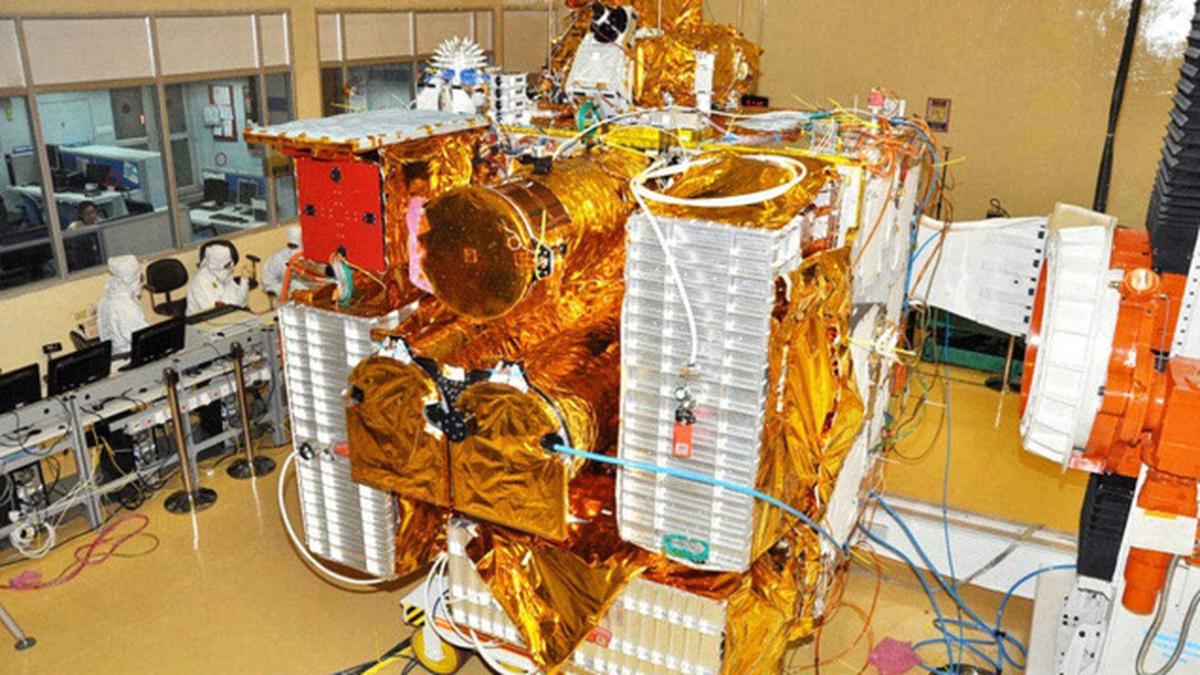
  • Smooth operation of Liquid Apogee Motor engine critical to Aditya-L1 success
    Smooth operation of Liquid Apogee Motor engine critical to Aditya-L1 success Science
What is futuristic marine and space biotechnology? | Explained

What is futuristic marine and space biotechnology? | Explained

Posted on January 15, 2026 By admin


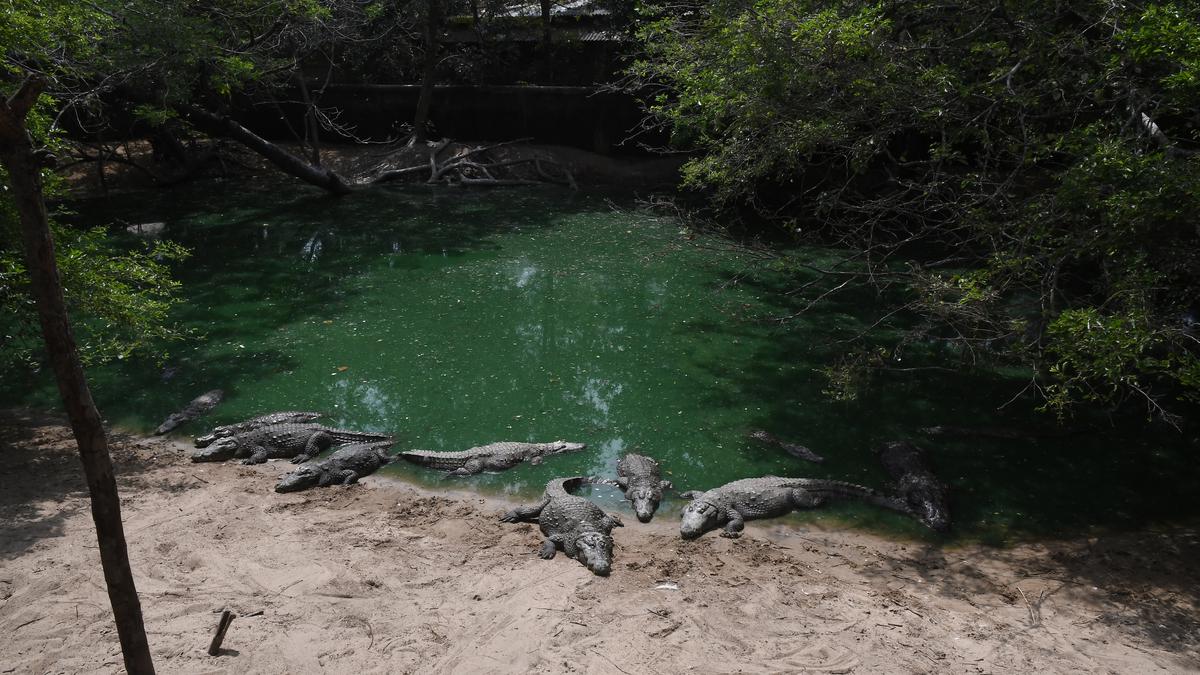
The story so far: Futuristic space and marine biotechnology research focuses on using underexplored environments, such as the deep oceans and outer space, to develop new biological knowledge, materials, and manufacturing processes. Marine biotechnology involves studying microorganisms, algae, and other marine life to discover bioactive compounds, enzymes, biomaterials, food ingredients, and biostimulants. These organisms have evolved to survive high pressure, salinity, low light, and nutrient-poor conditions making them valuable for industrial and climate-resilient applications. Space biotechnology, meanwhile, studies how microbes, plants, and human biological systems behave under microgravity and radiation. This includes microbial biomanufacturing for food, materials, and life-support systems, as well as research on astronauts’ microbiomes to develop health and probiotic interventions for long-duration missions.

Why does India need them?

India’s long coastline of over 11,000 km and a vast Exclusive Economic Zone of over 2 million sq. km give it access to rich marine biodiversity and biomass. Yet its share of global marine outputs remains low, indicating significant untapped potential. Investing in marine biomanufacturing can unlock new sources of food, energy, chemicals, and biomaterials, while reducing pressure on land, freshwater, and agricultural systems. Similarly, space biotechnology is critical for India’s long-term ambitions in space exploration, enabling safe food production, human health management, and biological manufacturing in extreme environments. Together, futuristic marine and space biotechnology can strengthen India’s bioeconomy, enhance strategic autonomy, and position India as a leader in next-generation biomanufacturing.

Where does India stand today?

India’s domestic production of marine biomass such as seaweed remains modest, with an annual cultivated output of around 70,000 tonnes. As a result, India continues to import seaweed-derived components such as agar, carrageenan, and alginates for use in food, pharmaceuticals, cosmetics, and medical applications. Targeted initiatives under the Blue Economy agenda, the Deep Ocean Mission, and, more recently, the BioE3 are pushing the sector toward integrated marine biomanufacturing, linking cultivation, extraction, and downstream applications. A small number of private players, such as Sea6 Energy and ClimaCrew, along with ICAR–Central Marine Fisheries Research Institute and state-led initiatives such as the Vibrant Gujarat Regional Conference, are exploring pathways to scale marine biomass into high-value ingredients, and bio-based products. In space biotechnology, ISRO’s microgravity biology programme is conducting experiments on microbes, algae, and biological systems to study food production, life-support regeneration, and human health in space. Research on microbial behaviour and astronaut microbiomes is gaining relevance as India prepares for longer-duration human spaceflight missions. However, private-sector participation is limited as these technologies are still nascent.

What are other countries doing?

The European Union funds large-scale programmes on marine bioprospecting, algae-based biomaterials, and bioactive compounds, supported by shared research infrastructure such as the European Marine Biological Resource Centre. China has rapidly expanded seaweed aquaculture and marine bioprocessing integrating deep-sea exploration with industrial applications in food, pharmaceuticals, and biomaterials. Other countries with vast marine resources such as the United States and Australia also support marine biotech initiatives. In space biotechnology, the U.S. leads through NASA and the International Space Station, where research on microbial behaviour, protein crystallisation, stem cells, and closed-loop life-support systems informs drug discovery, regenerative medicine, and long-duration human missions. The European Space Agency, China’s Tiangong programme, and Japan’s JAXA conduct experiments on plant growth, microbiomes, and biomaterials generation in microgravity.

What next?

Marine and space biotechnology remain relatively unexplored frontiers, where early movers are likely to gain lasting strategic and technological advantages. India’s rich and diverse marine ecology positions it well to emerge as a leader in marine biotechnology. Similarly, India’s ambitions as a space-faring nation require the development of biological technologies that account for the genetic, nutritional, and health profiles of Indian populations, rather than relying solely on externally developed solutions. The primary risk lies in slow and fragmented progress in research and development. A dedicated roadmap that defines timelines and outcomes for marine and space biotechnology would help align investments, coordinate institutions, and channel resources more effectively.

Shambhavi Naik is chairperson, Takshashila Institution’s Health & Life Sciences Policy.

Published – January 15, 2026 08:30 am IST


Source link

Science

Post navigation

Previous Post: Access Denied
Next Post: When a fan is spinning fast, why can it seem like it’s spinning backwards?

Related Posts

  • Brumation: Winter is coming for reptiles
    Brumation: Winter is coming for reptiles Science
  • 2023 Nobel Prize in Physics: Seeing electrons through brief pulses of light | Explained
    2023 Nobel Prize in Physics: Seeing electrons through brief pulses of light | Explained Science
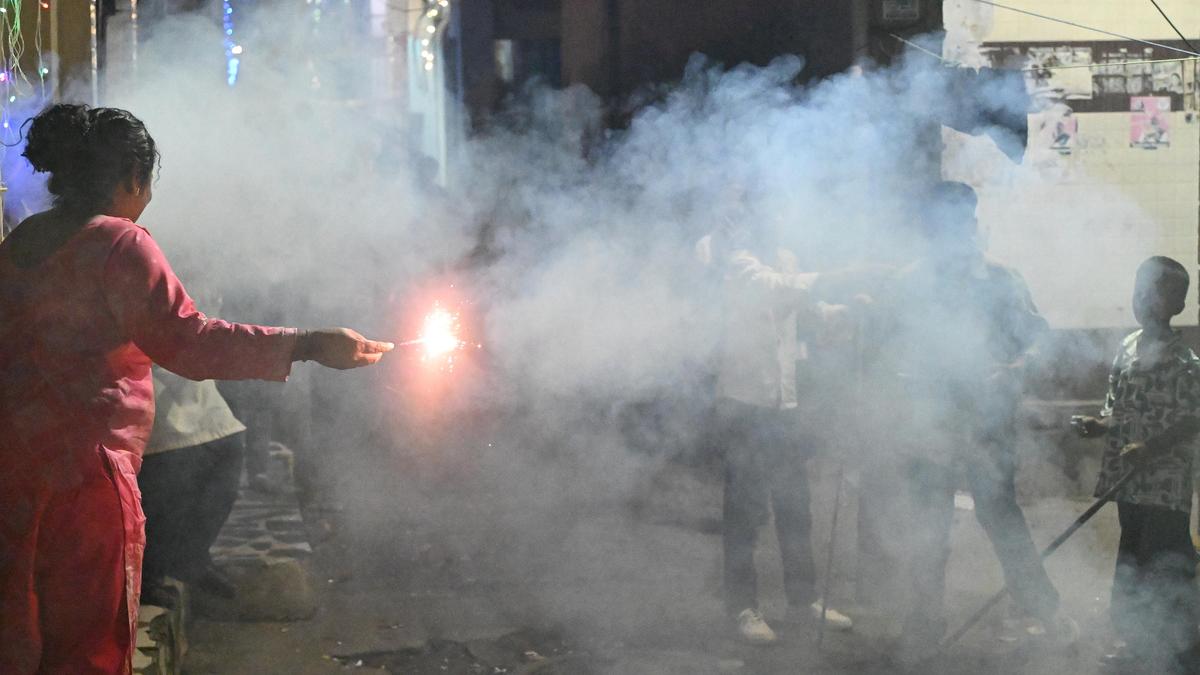
  • Deepavali fireworks worsen Delhi’s air quality
    Deepavali fireworks worsen Delhi’s air quality Science
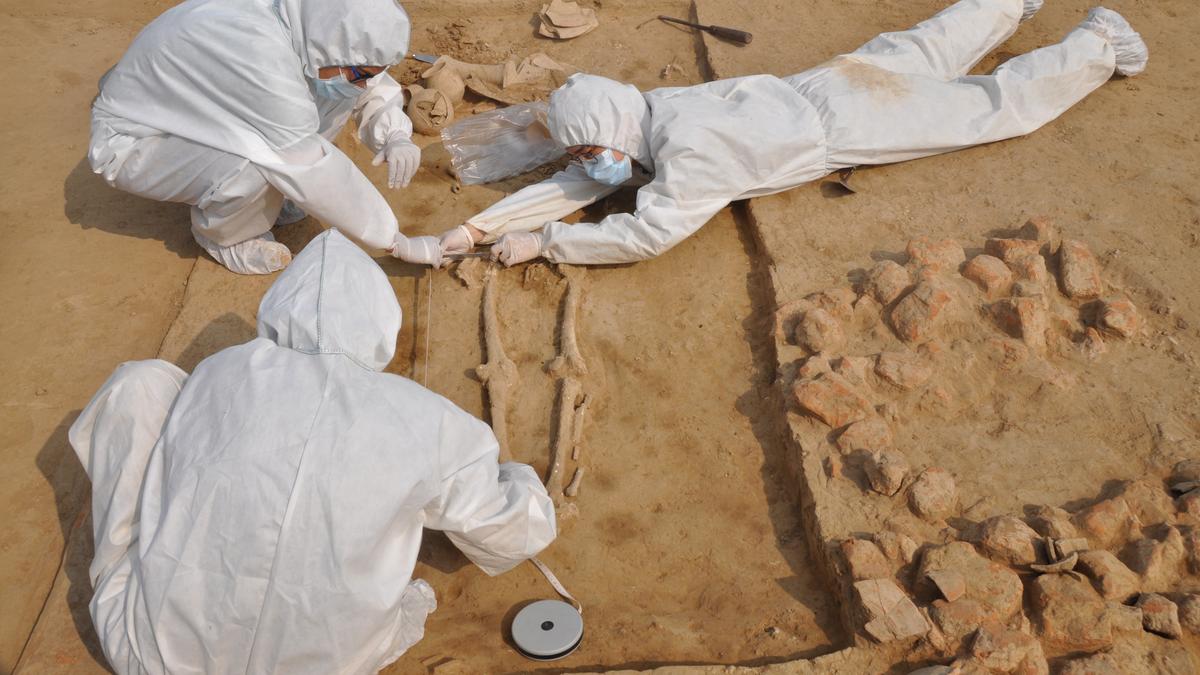
  • Archaeologists, Sanskrit scholars tie up to decipher Rigveda text
    Archaeologists, Sanskrit scholars tie up to decipher Rigveda text Science
  • What is multi-messenger astronomy? – The Hindu
    What is multi-messenger astronomy? – The Hindu Science
  • Pragyan rover finds an unexpected surprise on the moon: sulphur | Explained
    Pragyan rover finds an unexpected surprise on the moon: sulphur | Explained Science

More Related Articles

Scientists pen letter to Principal Scientific Adviser demanding ‘transparency’ on Vigyan Puraskar Scientists pen letter to Principal Scientific Adviser demanding ‘transparency’ on Vigyan Puraskar Science
How does extreme heat affect medicines and those taking them? How does extreme heat affect medicines and those taking them? Science
Aditya-L1 launch live updates | India’s first solar observatory mission set to launch today Aditya-L1 launch live updates | India’s first solar observatory mission set to launch today Science
What is jet lag? – The Hindu What is jet lag? – The Hindu Science
India’s fossil fuel capacity grows 2.44% in FY24; non fossil-fuel rises 11%: Government data India’s fossil fuel capacity grows 2.44% in FY24; non fossil-fuel rises 11%: Government data Science
Daily Quiz | On World Organ Donation Day Daily Quiz | On World Organ Donation Day Science
SiteLock

Archives

  • January 2026
  • December 2025
  • November 2025
  • October 2025
  • September 2025
  • August 2025
  • July 2025
  • June 2025
  • May 2025
  • April 2025
  • March 2025
  • February 2025
  • January 2025
  • December 2024
  • November 2024
  • October 2024
  • September 2024
  • August 2024
  • July 2024
  • June 2024
  • May 2024
  • April 2024
  • March 2024
  • February 2024
  • January 2024
  • December 2023
  • November 2023
  • October 2023
  • September 2023
  • August 2023
  • July 2023
  • June 2023
  • May 2023
  • April 2023
  • March 2023
  • February 2023
  • January 2023
  • December 2022
  • November 2022
  • October 2022
  • September 2022
  • August 2022
  • July 2022
  • June 2022
  • May 2022

Categories

  • Business
  • Nation
  • Science
  • Sports
  • World

Recent Posts

  • Access Denied
  • Musk’s Grok barred from undressing images after global backlash
  • Access Denied
  • When a fan is spinning fast, why can it seem like it’s spinning backwards?
  • What is futuristic marine and space biotechnology? | Explained

Recent Comments

  1. JerryNig on UP Teacher Who Asked Students To Slap Muslim Classmate
  2. JamieClunk on UP Teacher Who Asked Students To Slap Muslim Classmate
  3. Felixzek on UP Teacher Who Asked Students To Slap Muslim Classmate
  4. Edwardtasse on UP Teacher Who Asked Students To Slap Muslim Classmate
  5. JosephOccam on UP Teacher Who Asked Students To Slap Muslim Classmate
  • Access Denied World
  • Israel clears final hurdle to start settlement construction that would cut West Bank in two
    Israel clears final hurdle to start settlement construction that would cut West Bank in two World
  • Huge Protests In Pakistan-Occupied Kashmir, Cops Fire AK-47s
    Huge Protests In Pakistan-Occupied Kashmir, Cops Fire AK-47s World
  • India’s T20 World Cup Squad: 38-year-Old Veteran Throws Hat Into The Ring, Says “Will Do Everything”
    India’s T20 World Cup Squad: 38-year-Old Veteran Throws Hat Into The Ring, Says “Will Do Everything” Sports
  • Hezbollah Spokesman Killed In Israeli Strike On Beirut: Report
    Hezbollah Spokesman Killed In Israeli Strike On Beirut: Report World
  • Support for disgruntled BJP, Congress leaders spurs protests across Madhya Pradesh
    Support for disgruntled BJP, Congress leaders spurs protests across Madhya Pradesh Nation
  • Prime Minister Narendra Modi Interacts With Neeraj Chopra And Other Olympic-Bound Athletes
    Prime Minister Narendra Modi Interacts With Neeraj Chopra And Other Olympic-Bound Athletes Sports
  • Access Denied World

Editor-in-Chief:
Mohammad Ariff,
MSW, MAJMC, BSW, DTL, CTS, CNM, CCR, CAL, RSL, ASOC.
editor@artifex.news

Associate Editors:
1. Zenellis R. Tuba,
zenelis@artifex.news
2. Haris Daniyel
daniyel@artifex.news

Photograher:
Rohan Das
rohan@artifex.news

Artifex.News offers Online Paid Internships to college students from India and Abroad. Interns will get a PRESS CARD and other online offers.
Send your CV (Subjectline: Paid Internship) to internship@artifex.news

Links:
Associate Journalism
About Us
Privacy Policy

News Links:
Breaking News
World
Nation
Sports
Business
Entertainment
Lifestyle

Registered Office:
72/A, Elliot Road, Kolkata - 700016
Tel: 033-22277777, 033-22172217
Email: office@artifex.news

Editorial Office / News Desk:
No. 13, Mezzanine Floor, Esplanade Metro Rail Station,
12 J. L. Nehru Road, Kolkata - 700069.
(Entry from Gate No. 5)
Tel: 033-46011099, 033-46046046
Email: editor@artifex.news

Copyright © 2023 Artifex.News Newsportal designed by Artifex Infotech.