

Skip to content
  • Facebook
  • X
  • Linkedin
  • WhatsApp
  • YouTube
  • Associate Journalism
  • About Us
  • Privacy Policy
  • 033-46046046
  • editor@artifex.news
Artifex.News

Artifex.News

Stay Connected. Stay Informed.

  • Breaking News
  • World
  • Nation
  • Sports
  • Business
  • Science
  • Entertainment
  • Lifestyle
  • Toggle search form
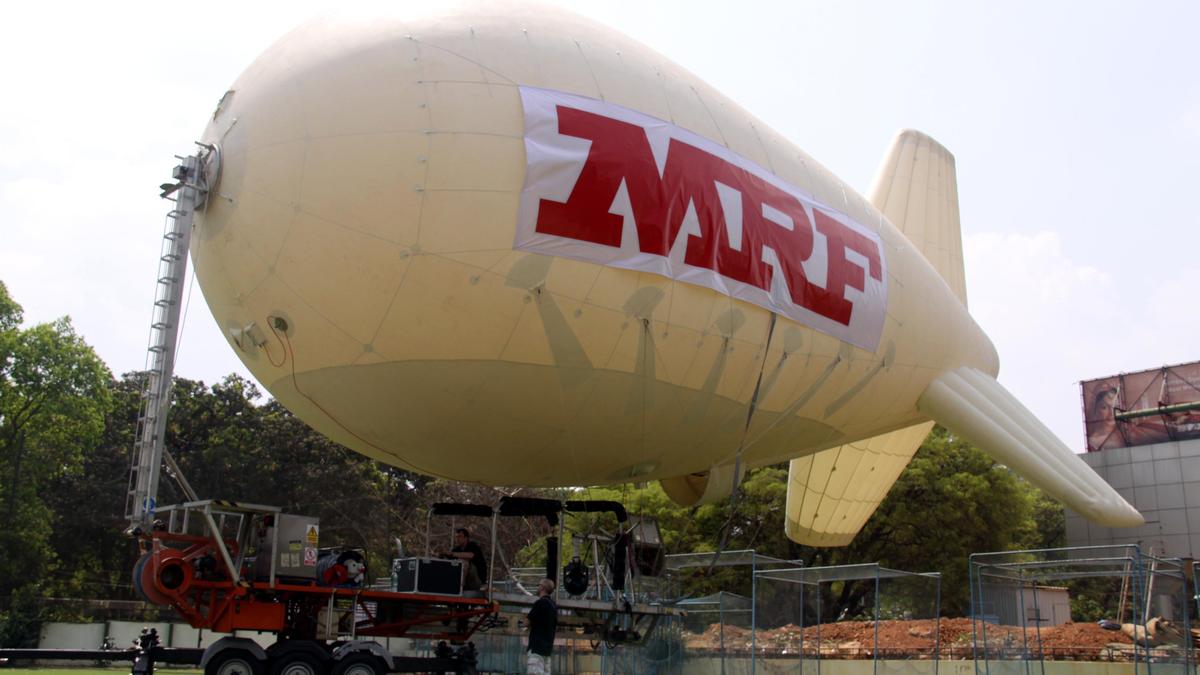
  • MRF net profit surges over two-fold to ₹692 crore in Q3
    MRF net profit surges over two-fold to ₹692 crore in Q3 Business
  • Campus Connect – Tiruchi – The Hindu
    Campus Connect – Tiruchi – The Hindu Nation
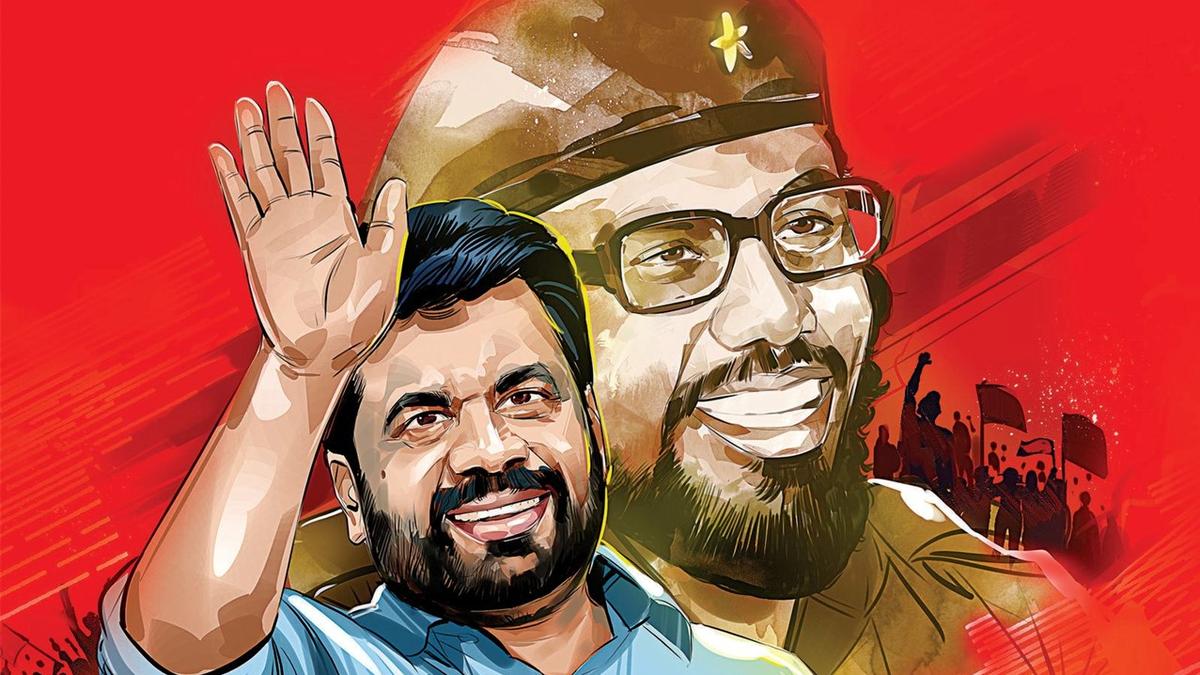
  • The Hindu profiles on Janatha Vimukthi Peramuna
    The Hindu profiles on Janatha Vimukthi Peramuna World
  • Long Queues Outside Mumbai, Delhi Stores As iPhone 16 Debuts In India
    Long Queues Outside Mumbai, Delhi Stores As iPhone 16 Debuts In India Nation
  • Iron Mirage tipped to continue winning run
    Iron Mirage tipped to continue winning run Sports
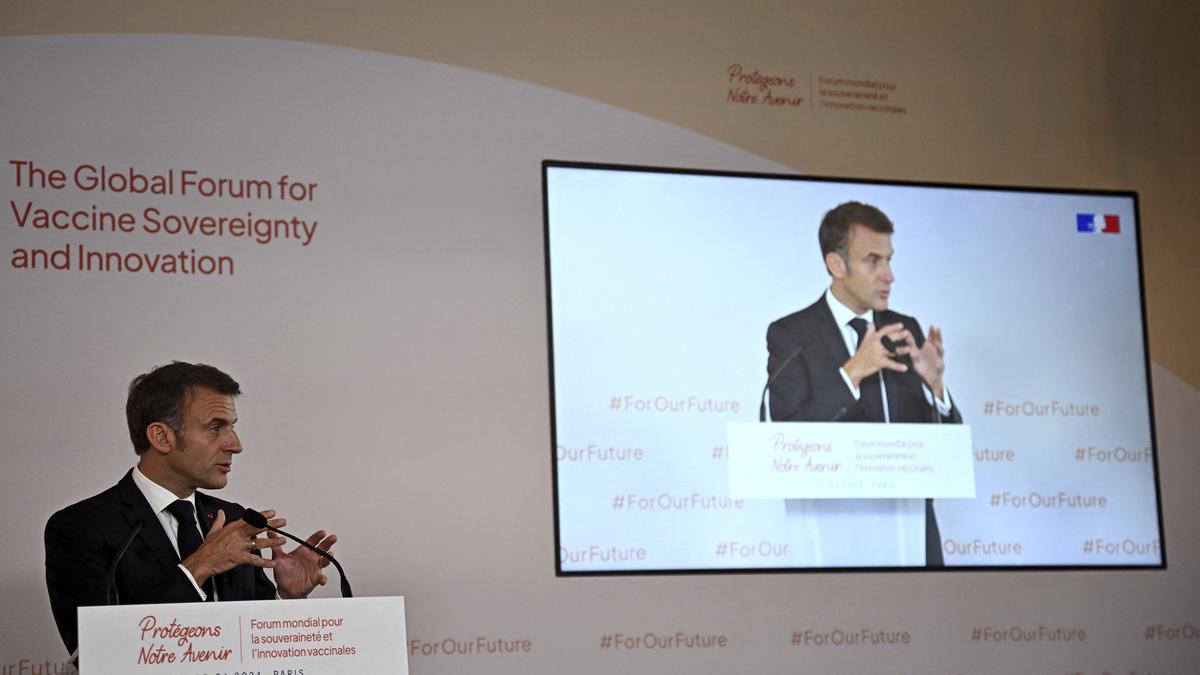
  • France’s Macron, African leaders push for vaccines for Africa after COVID-19 exposed inequalities
    France’s Macron, African leaders push for vaccines for Africa after COVID-19 exposed inequalities World
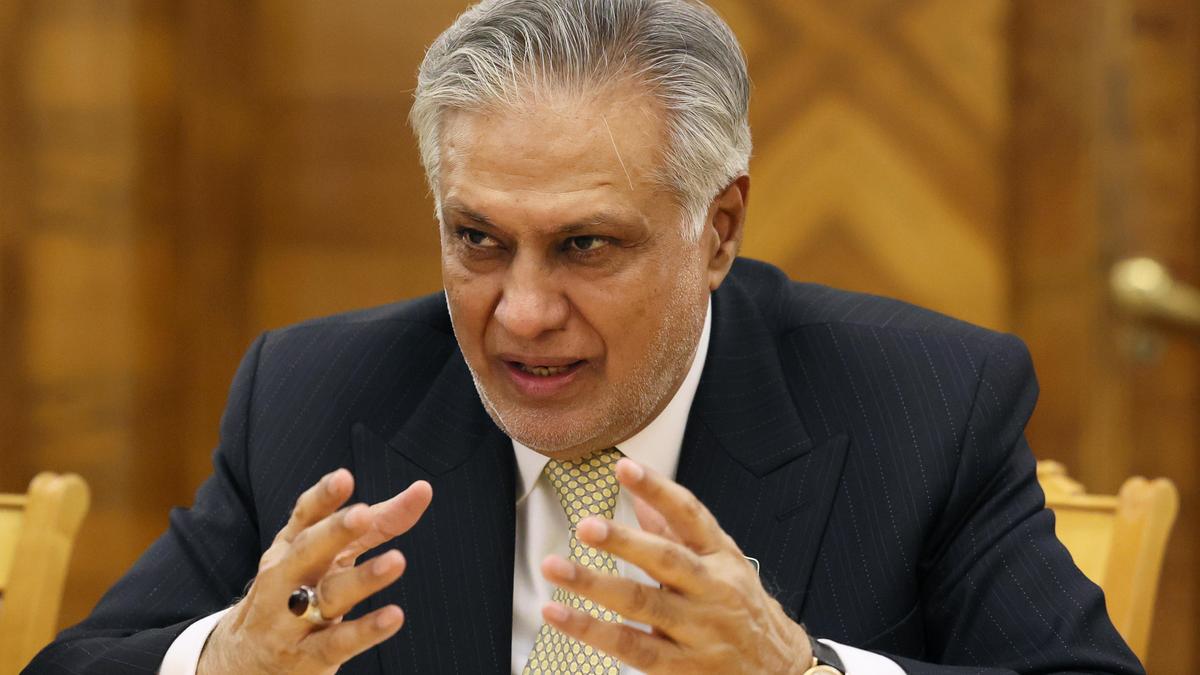
  • Pakistan Deputy PM Dar calls for de-escalation in West Asia
    Pakistan Deputy PM Dar calls for de-escalation in West Asia World
  • “Instigated That Confrontation”: Ricky Ponting Puts Total Blame On Virat Kohli For Sam Konstas Clash
    “Instigated That Confrontation”: Ricky Ponting Puts Total Blame On Virat Kohli For Sam Konstas Clash Sports
An exploration of India’s minerals diplomacy

An exploration of India’s minerals diplomacy

Posted on January 14, 2026 By admin


Today, India’s clean energy transitions are impossible without imported critical minerals and rare earths. The country needs these minerals now, and China’s tightening export controls only heighten the urgency. Just like other countries around the world, India is also committing to diversify mineral trade linkages, promote responsible production and build standards-based markets.

India needs a two-pronged strategy to build long-term capability at home while securing immediate access abroad. Realising this, over the past five years, New Delhi has pursued close to a dozen bilateral and multilateral partnerships across continents while bolstering domestic mineral policies. The question is about what these engagements have delivered to India and whether there is a need for recalibration.

The two sides to partnerships

Some partnerships have advanced more meaningfully than others. Australia emerges as reliable, offering political stability, large reserves and a strategic vision. Cooperation here is active with long-term supply discussions, joint research and targeted investments. In 2022 under the India-Australia Critical Minerals Investment Partnership, the two countries identified five target projects for potential investment in lithium and cobalt.

Japan provides a template for resilience, exemplifying an institutional model for long-term planning rather than reactive deals. When China restricted rare earth exports to Tokyo a decade ago, Japan responded with diversification, stockpiling, recycling and sustained research and development. Beyond its long-standing cooperation with Indian Rare Earths Limited, the partnership has now extended into potential joint extraction processing and stockpiling minerals, both bilaterally and in third countries, under a cooperation agreement last year.

African nations, given their long-standing trade linkages with India, offer similar opportunities, with mineral abundance paired with rising demands for local value creation. India’s recent agreements with Namibia for lithium, rare earths and uranium as well as asset-acquisition talks in Zambia for copper and cobalt reflect a growing push to turn towards Africa. India must approach Africa with a long-term industrial mindset or risk losing ground to more coordinated competitors.

Despite previous political enthusiasm around “friend-shoring”, cooperation on critical minerals has struggled to move beyond dialogue with the United States. Recent American tariffs on Indian goods, shifting trade rules and restrictive Inflation Reduction Act incentives complicate stable engagement. The volatility of the U.S.’s trade policy makes it hard for New Delhi to rely on Washington, even though the U.S. could be a significant technology and downstream innovation partner. The Transforming the Relationship Utilizing Strategic Technology (TRUST) Initiative and the Strategic Minerals Recovery Initiative propose frameworks for joint work on rare-earth processing, battery recycling and clean separation technologies.

The European Union (EU)’s Critical Raw Materials Act, the European Battery Alliance and its circular economy agenda show how regulation, sustainability and industrial strategy can reinforce each other. Progress requires India to align with the EU’s requirements on transparency, lifecycle standards and environmental norms.

West Asia holds potential but lacks institutional depth and long-term frameworks. The United Arab Emirates and Saudi Arabia are investing heavily in battery materials, refining capacity and green hydrogen, with sovereign wealth funds acquiring mining stakes across Africa and Latin America. For India, West Asia could become an important midstream partner, processing minerals sourced elsewhere.

Russia’s reserves of rare earths, cobalt and lithium are substantial, and scientific ties with India are longstanding. Yet, sanctions, financing challenges and logistical unpredictability constrain reliability. Russia could be an important hedge, not a foundation.

New frontiers

Latin America presents India’s new frontiers with expanded engagement in Argentina, Chile, Peru and, increasingly, Brazil. These countries are becoming central to global copper, nickel and rare-earth strategies. There have been substantial investments by public and private sector companies from India into projects in these regions. Khanij Bidesh India Limited (KABIL) has signed a ₹200 crore exploration and development agreement with Argentina. However, competition for Indian companies is intense, and engagement remains at an early stage. A lasting presence will require value-chain partnerships and local processing, not extraction-only agreements.

With the restoration of diplomatic ties with Canada recently, Ottawa emerges as an important player. With reserves of nickel, cobalt, copper and rare earths, and a recently signed trilateral agreement with Australia and India, Canada has potential to become a strong minerals partner. Yet, political stability between the two countries will be key.

Develop integrated partnerships

Across all regions, lessons converge. Securing ore is not enough. The choke point is processing. Without domestic refining and midstream capability, India remains exposed to supply chain vulnerabilities. Technology, innovation and on-ground project implementation matters far more than announcements. India must use its country-by-country approach to build resilience across the value-chain. Africa, Australia, Canada and Latin America for upstream ore extraction; West Asia (the Gulf) and Japan for midstream processing of the mineral ores; the EU and the U.S. for downstream technology creation such as batteries and recycling, and Russia for diversification.

While it is important for India to be also open to cooperation with additional partners, such as South Korea and Indonesia, it first needs to have a clear strategic vision for existing partnerships. None of this will deliver results unless India strengthens its domestic framework for responsible mining with issues such as Environmental, Social and Governance (ESG) and transparency increasingly becoming a key issue in international partnerships.

Watch: Can rare earth Samarium bail out India? Or will it be magnet-less motors? 

India has built an impressive web of critical minerals partnerships. The next step is to deepen what works, rethink what does not, and ensure technology, processing and long-term certainty.

Anindita Sinh is Research Associate at the Centre for Social and Economic Progress (CSEP). Pooja Ramamurthi is Fellow at the Centre for Social and Economic Progress (CSEP)

Published – January 15, 2026 12:08 am IST


Source link

Business Tags:Australia and political stability, bilateral and multilateral partnerships, China’s export controls, European Union, imported critical minerals and rare earths, India-Australia Critical Minerals Investment Partnership, Indian Rare Earths Limited and Japan, India’s clean energy transition, Inflation Reduction Act and U.S., responsible production, Strategic Minerals Recovery Initiative, The Transforming the Relationship Utilizing Strategic Technology Initiative

Post navigation

Previous Post: Access Denied
Next Post: The great reckoning: On the crises in Iran

Related Posts

  • Q3 Results Updates: Bajaj Finance Profit Falls 6%, Mankind Pharma Revenue Rises 12% Business
  • China, EU are open to talks on plans to hike tariffs on Chinese EVs
    China, EU are open to talks on plans to hike tariffs on Chinese EVs Business
  • Access Denied Business
  • Interim Union Budget 2024 | Taxes
    Interim Union Budget 2024 | Taxes Business
  • Retail inflation inches up to 3.48% in April: Govt data
    Retail inflation inches up to 3.48% in April: Govt data Business
  • Ensure children up to 12 years are allocated seats with their parents in flight: DGCA tells airlines
    Ensure children up to 12 years are allocated seats with their parents in flight: DGCA tells airlines Business

More Related Articles

Access Denied Business
Union Budget 2025: MGNREGA wages must be increased to ₹400 per day, says Jairam Ramesh Union Budget 2025: MGNREGA wages must be increased to ₹400 per day, says Jairam Ramesh Business
Simone Tata, mother of Noel Tata, passes away at the age of 95 Simone Tata, mother of Noel Tata, passes away at the age of 95 Business
Wall Street Journal moves Asia headquarters from Hong Kong to Singapore; layoffs imminent Wall Street Journal moves Asia headquarters from Hong Kong to Singapore; layoffs imminent Business
Access Denied Business
SiteLock

Archives

  • October 2026
  • September 2026
  • August 2026
  • July 2026
  • June 2026
  • May 2026
  • April 2026
  • March 2026
  • February 2026
  • January 2026
  • December 2025
  • November 2025
  • October 2025
  • September 2025
  • August 2025
  • July 2025
  • June 2025
  • May 2025
  • April 2025
  • March 2025
  • February 2025
  • January 2025
  • December 2024
  • November 2024
  • October 2024
  • September 2024
  • August 2024
  • July 2024
  • June 2024
  • May 2024
  • April 2024
  • March 2024
  • February 2024
  • January 2024
  • December 2023
  • November 2023
  • October 2023
  • September 2023
  • August 2023
  • July 2023
  • June 2023
  • May 2023
  • April 2023
  • March 2023
  • February 2023
  • January 2023
  • December 2022
  • November 2022
  • October 2022
  • September 2022
  • August 2022
  • July 2022
  • June 2022
  • May 2022

Categories

  • Business
  • Nation
  • Science
  • Sports
  • World

Recent Posts

  • AIADMK, BJP leaders slam TVK-led Tamil Nadu government over electricity purchase at high rate
  • Women stage silent demonstration at Kathipara against police action on anti-CEC protesters in Delhi
  • DGCA bans specific power banks on flights
  • Saudi Supreme Court sets aside Sri Lankan migrant worker’s death penalty
  • Nedumbassery accident: CPI(M) stages protest march to police station over ‘indifference’ in handling of case

Recent Comments

  1. RobertTes on UP Teacher Who Asked Students To Slap Muslim Classmate
  2. Manuelret on UP Teacher Who Asked Students To Slap Muslim Classmate
  3. RobertTes on UP Teacher Who Asked Students To Slap Muslim Classmate
  4. RobertTes on UP Teacher Who Asked Students To Slap Muslim Classmate
  5. BrentWes on UP Teacher Who Asked Students To Slap Muslim Classmate
  • Access Denied
    Access Denied Nation
  • Access Denied Business
  • Beyond books: How a Kolkata school is teaching girls to build self-reliant futures
    Beyond books: How a Kolkata school is teaching girls to build self-reliant futures Nation
  • Lebanon says 23 killed in Israeli strikes on Wednesday
    Lebanon says 23 killed in Israeli strikes on Wednesday World
  • Access Denied Sports
  • B. Manickam Tagore appointed as Tamil Nadu Congress Committee president
    B. Manickam Tagore appointed as Tamil Nadu Congress Committee president Nation
  • IPL | Kohli has a long stint as RCB begins training
    IPL | Kohli has a long stint as RCB begins training Sports
  • Trump threatens to take back control of Panama Canal
    Trump threatens to take back control of Panama Canal World

Editor-in-Chief:
Mohammad Ariff,
MSW, MAJMC, BSW, DTL, CTS, CNM, CCR, CAL, RSL, ASOC.
editor@artifex.news

Associate Editors:
1. Zenellis R. Tuba,
zenelis@artifex.news
2. Haris Daniyel
daniyel@artifex.news

Photograher:
Rohan Das
rohan@artifex.news

Associate Journalists
1. Subrata Paul - AN/2020/01
2. Quamruz Zaman - AN/2021/22
3. Ahmed Sha - AN/2021/035
4. Ajay Kumar Shaw - AN/2021/39
5. Tahqiqul Hoda - AN/2021/21

Artifex.News offers Online Paid Internships to college students from India and Abroad. Interns will get a PRESS CARD and other online offers.
Send your CV (Subjectline: Paid Internship) to internship@artifex.news

Links:
Associate Journalism
About Us
Privacy Policy

News Links:
Breaking News
World
Nation
Sports
Business
Entertainment
Lifestyle

Registered Office:
72/A, Elliot Road, Kolkata - 700016
Tel: 033-22277777, 033-22172217
Email: office@artifex.news

Editorial Office / News Desk:
No. 13, Mezzanine Floor, Esplanade Metro Rail Station,
12 J. L. Nehru Road, Kolkata - 700069.
(Entry from Gate No. 5)
Tel: 033-46011099, 033-46046046
Email: editor@artifex.news

Copyright © 2023 Artifex.News Newsportal designed by Artifex Infotech.