


Skip to content
  • Facebook
  • X
  • Linkedin
  • WhatsApp
  • Associate Journalism
  • About Us
  • Privacy Policy
  • 033-46046046
  • editor@artifex.news
Artifex.News

Artifex.News

Stay Connected. Stay Informed.

  • Breaking News
  • World
  • Nation
  • Sports
  • Business
  • Science
  • Entertainment
  • Lifestyle
  • Toggle search form
  • Fresh Jasprit Bumrah Setback For India Ahead Of Champions Trophy Squad Announcement: Report
    Fresh Jasprit Bumrah Setback For India Ahead Of Champions Trophy Squad Announcement: Report Sports
  • 2 UP Men Imitate Scene From Mirzapur Series For A Reel, Arrested
    2 UP Men Imitate Scene From Mirzapur Series For A Reel, Arrested Nation
  • Pragyan rover confirms sulphur at moon’s south pole, searching for hydrogen
    Pragyan rover confirms sulphur at moon’s south pole, searching for hydrogen Science
  • IIM Calcutta Unveils New Technology Incubation Arm With Focus On Jobs For East And North East
    IIM Calcutta Unveils New Technology Incubation Arm With Focus On Jobs For East And North East Nation
  • Australia vs India LIVE, T20 World Cup 2024 Super Eight: Will Rain Play Spoilsport? Hourly Weather Forecast Gives Gloomy Picture
    Australia vs India LIVE, T20 World Cup 2024 Super Eight: Will Rain Play Spoilsport? Hourly Weather Forecast Gives Gloomy Picture Sports
  • Why Joe Biden Is Ignoring Fellow Democrats’ Calls To Leave Race
    Why Joe Biden Is Ignoring Fellow Democrats’ Calls To Leave Race World
  • Access Denied
    Access Denied Nation
  • Injury-Plagued Pakistan Look To See Of Sri Lanka Threat For A Place In Asia Cup Final
    Injury-Plagued Pakistan Look To See Of Sri Lanka Threat For A Place In Asia Cup Final Sports
Conservation in the Global South erases human rights, researchers say

Conservation in the Global South erases human rights, researchers say

Posted on January 12, 2026 By admin


Exactly 20 years ago, forest rangers in Chitwan National Park in Nepal nabbed a farmer, Shikharam Chaudhary, who they believed helped his son bury, in his own backyard, a stolen rhino horn. The rangers interrogated him and waterboarded him in prison.

Days later, Chaudhary died. No horn was found. But the large and wealthy global conservation organisation World Wildlife Fund (WWF) curiously campaigned for the charges filed against the rangers to be dropped, and won. The story came to light in an investigation by BuzzFeed News in 2019.

But two decades after this murder, the colonial legacy in the world of conservation, of privileging individual wildlife over human well-being, endures in the Global South. One article in the latest edition of Nature suggests the marginalisation and “othering” –the treatment of people as ‘different’, or creating an ‘us’ versus ‘them’ narrative – continues to affect indigenous people when conservation projects are concerned.

The discourse on racism in conservation was renewed by the Black Lives Matter protests of 2020. The authors of the paper, many of whom are Indian scientists, instead propose a framework for more “inclusive” conservation that supports the human rights of black, indigenous and people of colour (BIPOC) communities, and nature, by countering exclusion.

A great othering

The history of conservation has always been steeped in marginalisation, injustice and racism, said the paper: “‘Othering’ in conservation has primarily occurred against BIPOC communities, and is exacerbated in the global south, where governance systems and the rule of law and protection of both individual and collective rights are often weaker.”

The main players in this form of discrimination are the wealthy elite, multi-national corporations, and the inheritance of the colonial penchant for a ‘pristine’ wilderness devoid of people.

Colonial rulers routinely forced indigenous peoples and communities out of protected areas. However, the paper said, although conservation “has evolved substantially to be more inclusive,” the racist European colonial past has created a roadmap for continued marginalisation.

The scientists elaborate that the modern conservation movement began during the European colonial era in 1800s, when indigenous people were portrayed as ‘uncivilised’ and racially inferior. They rationalised the latter’s extermination and the appropriation of their territories especially in India and in African colonies. Today, “conservation campaigns and initiatives, particularly through campaigns aimed at the Western public, often value wild animals over BIPOC people,” the paper added.

Games in India

In India, the British colonial administration created exploitative public works projects such as perennial irrigation and railways. But they also instituted mechanisms to displace local communities (for forestry, plantations, development and conservation) and created game reserves where the elite could hunt wildlife for sport.

The authors use the recent example of the tiger Avni, killed in 2018, to illustrate urban-rural divisions in conservation. There was intense public outrage. “Notably, little mention was made of the number, names or ages of the children left parentless following Avni’s killing of at least 13 rural villagers,” the authors added. Mumbai’s animal lovers demanded ‘justice’ for the tigress and her cubs, chanting “Avni’s kids, nation’s kids”.

“Along with that, when these animals, elephants, wild pigs, crocodiles, have left forest areas or sanctuaries to raid crops or kill people, either little has been done or compensation has been limited,” the paper’s co-author Kartik Shanker, a professor at the Centre for Ecological Sciences, Indian Institute of Science, Bengaluru, told The Hindu.

Wildlife conservation in India is still dominated by the urban elite, by certain castes, with their privileged and often Western views of what conservation is, he added. This brings with it a combination of outdated notions of “pristine nature” and neoliberal views of monetising conservation, e.g. ecotourism for the rich, as well as animal-rights-centric opposition to traditional forms of use that can benefit local communities. 

In a 2014 report in The Hindu, this reporter found that between 2001 and 2011, 192 cases were registered against tribal communities living in and around Nagarahole National Park, violating the Forest Rights Act. The tribal people’s “offenses” were “trespassing forest land” in which they had lived for generations, collecting honey and cultivating ginger in the forest.

Gadgil’s paradigm shift

The new work argues for greater rights, agency, and education among communities. As the late peoples’ conservationist and scholar Madhav Gadgil put it in his autobiography, “Talk of many things, not just air and water and the bird that sings, but of men and money and economic reforms…”

There have been many movements to make conservation more people-centric in India. Ashish Kothari’s Kalpavriksh, Madhav Gadgil’s work on People’s Biodiversity Registers, and Keystone’s work in the Nilgiris are some.

Most of the progress has been at the level of “ideas”, another co-author, Tarsh Thekaekara, trustee of The Shola Trust, told The Hindu: “The concept of coexistence has become mainstream, even in India. Forest departments everywhere now use the language of coexistence, and there’s a broad recognition that the old fortress conservation model is no longer viable.”

But the prevailing notion of “a pristine wilderness without human occupation” casts local people “as enemies, rather than custodians of nature.” Indigenous peoples and local communities (IPLCs), on the contrary can be “very effective stewards of nature.” “Dehumanisation” is not limited to extreme events but is a “common everyday occurrence,” present in many societies even today, the paper continued.

In Nagarhole, there are ongoing protests by the Jenu Kurubas. The Van Gujjars in the Himalayas continue to be dispossessed of their livelihoods and ways of life, Dr. Thekaekara said. “Almost everywhere you look, there are stories of dispossession.”

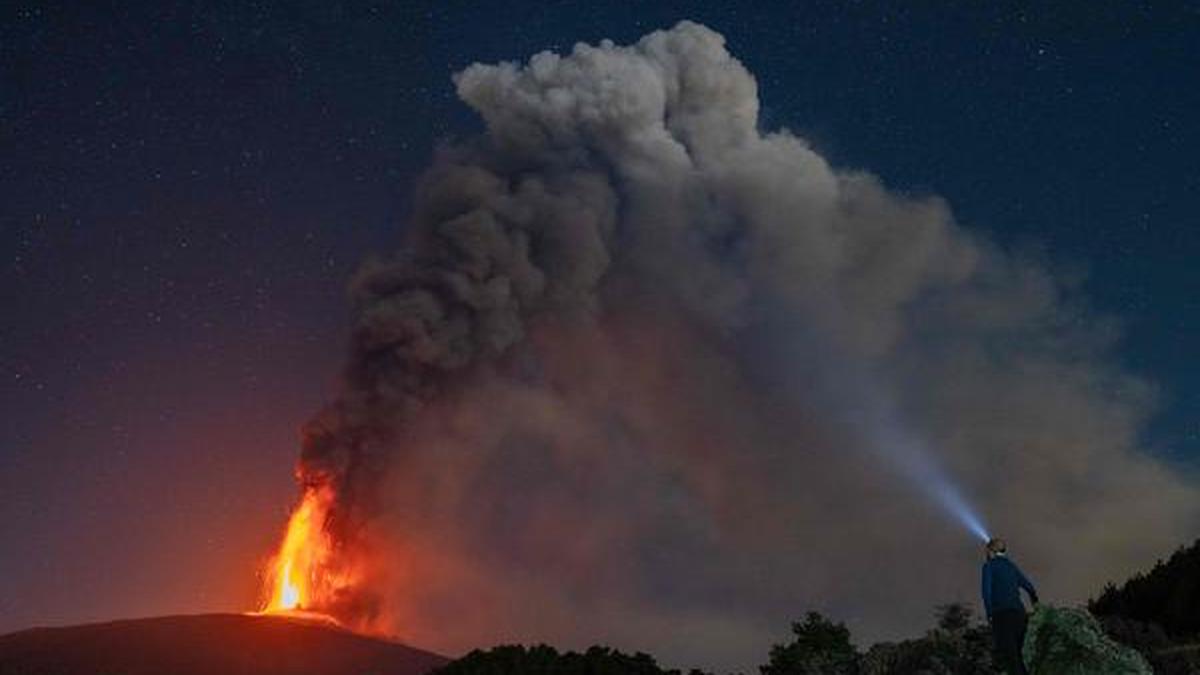
The Nilgiris is a particularly stark example, he added: “Barely 200 years ago, this landscape was completely managed by indigenous communities who today have almost no voice at all. They are marginalised on virtually every count.”

The historical legacy of conservation “cannot be easily undone,” said the paper. Instead it proposes a four-step framework to address the disparity: engaging and supporting human rights, advocating for and making space for the agency of IPLCs, challenging the accepted norms of how we engage with people from BIPOC communities, and seeking out new educational opportunities for and from BIPOC communities.



Source link

Science

Post navigation

Previous Post: Iran protest deaths cross 500, says rights group; authorities call for counter-rally to ‘condemn U.S., Israel actions’
Next Post: What is the context window?

Related Posts

  • Is there an emerging threat of drug-resistant fungal infections? The jock itch case study
    Is there an emerging threat of drug-resistant fungal infections? The jock itch case study Science
  • Cancer to comics — Bengal researcher makes art out of science
    Cancer to comics — Bengal researcher makes art out of science Science
  • What is the latest science telling us about climate change?
    What is the latest science telling us about climate change? Science
  • The 2025 Ig Nobel prizes: laugh, and then think
    The 2025 Ig Nobel prizes: laugh, and then think Science
  • Do some spiders exploit firefly’s flashing signals to lure more prey?
    Do some spiders exploit firefly’s flashing signals to lure more prey? Science
  • On zoos and magnets: the physics behind sounds
    On zoos and magnets: the physics behind sounds Science

More Related Articles

India’s first solar observatory mission Aditya-L1 takes off India’s first solar observatory mission Aditya-L1 takes off Science
Can an ivermectin pill keep malaria from being transmitted? Can an ivermectin pill keep malaria from being transmitted? Science
AI-fit cameras in Similipal Tiger Reserve send poaching plummeting AI-fit cameras in Similipal Tiger Reserve send poaching plummeting Science
Why now is the time to address humanity’s impact on the moon Why now is the time to address humanity’s impact on the moon Science
What role does Arctic sea ice play in Indian monsoon? What role does Arctic sea ice play in Indian monsoon? Science
Tonga volcano could cause unusual weather for rest of decade: study Tonga volcano could cause unusual weather for rest of decade: study Science
SiteLock

Archives

  • January 2026
  • December 2025
  • November 2025
  • October 2025
  • September 2025
  • August 2025
  • July 2025
  • June 2025
  • May 2025
  • April 2025
  • March 2025
  • February 2025
  • January 2025
  • December 2024
  • November 2024
  • October 2024
  • September 2024
  • August 2024
  • July 2024
  • June 2024
  • May 2024
  • April 2024
  • March 2024
  • February 2024
  • January 2024
  • December 2023
  • November 2023
  • October 2023
  • September 2023
  • August 2023
  • July 2023
  • June 2023
  • May 2023
  • April 2023
  • March 2023
  • February 2023
  • January 2023
  • December 2022
  • November 2022
  • October 2022
  • September 2022
  • August 2022
  • July 2022
  • June 2022
  • May 2022

Categories

  • Business
  • Nation
  • Science
  • Sports
  • World

Recent Posts

  • Access Denied
  • Access Denied
  • OpenAI, SoftBank invest $1 billion in SB Energy as Stargate buildout expands
  • Access Denied
  • Trump ‘inclined’ to keep ExxonMobil out of Venezuela after CEO calls it ‘uninvestable’

Recent Comments

  1. ThomasCef on UP Teacher Who Asked Students To Slap Muslim Classmate
  2. SteveRiz on UP Teacher Who Asked Students To Slap Muslim Classmate
  3. RobertNuh on UP Teacher Who Asked Students To Slap Muslim Classmate
  4. SteveRiz on UP Teacher Who Asked Students To Slap Muslim Classmate
  5. GeorgeEncof on UP Teacher Who Asked Students To Slap Muslim Classmate
  • The Hindu Morning Digest, February 17, 2025
    The Hindu Morning Digest, February 17, 2025 Nation
  • Access Denied
    Access Denied Nation
  • UN calls for age limits for AI tools in schools
    UN calls for age limits for AI tools in schools World
  • ​Sports and politics: On India, Pakistan and sports 
    ​Sports and politics: On India, Pakistan and sports  Sports
  • Access Denied
    Access Denied Nation
  • Full list of sold and unsold players in IPL auction 2025
    Full list of sold and unsold players in IPL auction 2025 Sports
  • After Backlash Over Freshers’ Pay, Cognizant Clarifies What Techies Get
    After Backlash Over Freshers’ Pay, Cognizant Clarifies What Techies Get Nation
  • Kolkata Rape Victim’s Mother Slams Mamata Banerjee’s No Compensation Claim
    Kolkata Rape Victim’s Mother Slams Mamata Banerjee’s No Compensation Claim Nation

Editor-in-Chief:
Mohammad Ariff,
MSW, MAJMC, BSW, DTL, CTS, CNM, CCR, CAL, RSL, ASOC.
editor@artifex.news

Associate Editors:
1. Zenellis R. Tuba,
zenelis@artifex.news
2. Haris Daniyel
daniyel@artifex.news

Photograher:
Rohan Das
rohan@artifex.news

Artifex.News offers Online Paid Internships to college students from India and Abroad. Interns will get a PRESS CARD and other online offers.
Send your CV (Subjectline: Paid Internship) to internship@artifex.news

Links:
Associate Journalism
About Us
Privacy Policy

News Links:
Breaking News
World
Nation
Sports
Business
Entertainment
Lifestyle

Registered Office:
72/A, Elliot Road, Kolkata - 700016
Tel: 033-22277777, 033-22172217
Email: office@artifex.news

Editorial Office / News Desk:
No. 13, Mezzanine Floor, Esplanade Metro Rail Station,
12 J. L. Nehru Road, Kolkata - 700069.
(Entry from Gate No. 5)
Tel: 033-46011099, 033-46046046
Email: editor@artifex.news

Copyright © 2023 Artifex.News Newsportal designed by Artifex Infotech.