


Skip to content
  • Facebook
  • X
  • Linkedin
  • WhatsApp
  • YouTube
  • Associate Journalism
  • About Us
  • Privacy Policy
  • 033-46046046
  • editor@artifex.news
Artifex.News

Artifex.News

Stay Connected. Stay Informed.

  • Breaking News
  • World
  • Nation
  • Sports
  • Business
  • Science
  • Entertainment
  • Lifestyle
  • Toggle search form
  • Drones hit fuel tank at Oman port: State media
    Drones hit fuel tank at Oman port: State media World
  • The Science Quiz | The weird shapes of space
    The Science Quiz | The weird shapes of space Science
  • Annual festival of Our Lady of Lourdes Basilica in Poondi begins
    Annual festival of Our Lady of Lourdes Basilica in Poondi begins Nation
  • Two Key Paris Landmarks For Paralympics Opening Ceremony
    Two Key Paris Landmarks For Paralympics Opening Ceremony Sports
  • Access Denied Sports
  • Twin Titles For Shubhi Gupta In Commonwealth Chess Championships
    Twin Titles For Shubhi Gupta In Commonwealth Chess Championships Sports
  • Access Denied World
  • Annual festival of Our Lady of Lourdes Basilica in Poondi begins
    Woman, son found dead in house in Kannur Nation
Africa study catches ‘high-flying’ mosquitoes spreading pathogens

Africa study catches ‘high-flying’ mosquitoes spreading pathogens

Posted on December 25, 2025 By admin


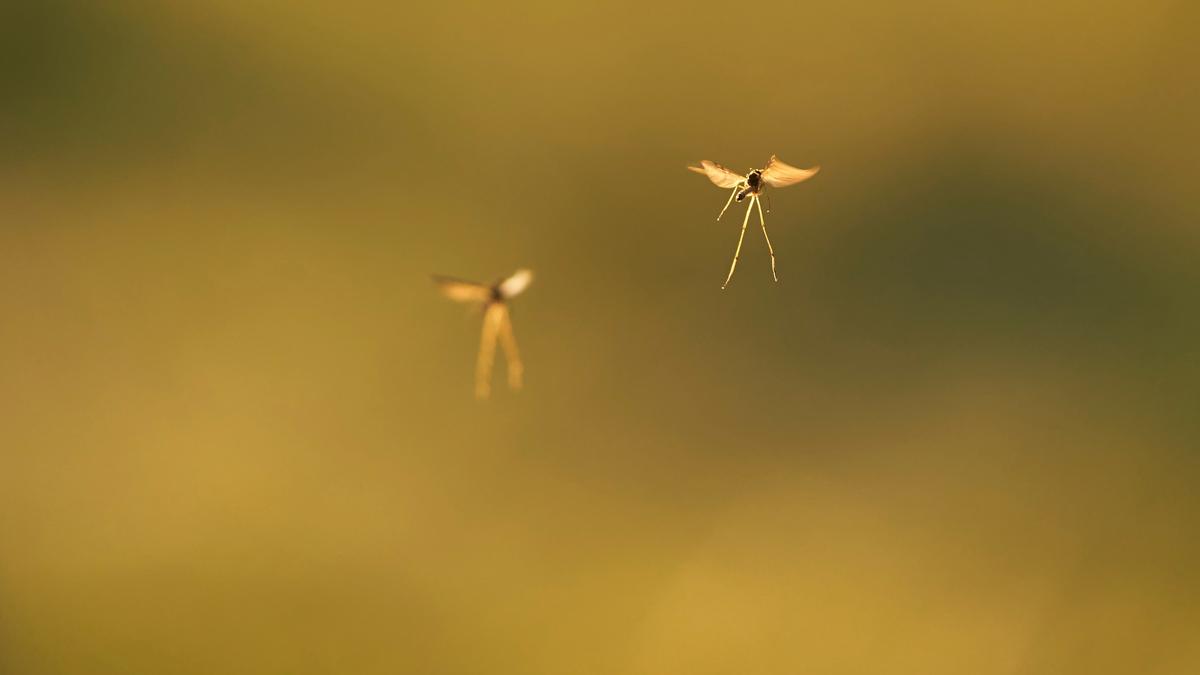
Scientists have suspected for decades that high-flying mosquitoes could move pathogens far from where the mosquitoes first took an infected blood meal.
| Photo Credit: Wolfgang Hasselmann/Unsplash

Mosquitoes spread diseases such as malaria and dengue, and these diseases affect billions of people worldwide. Many public health plans assume that pathogens borne by mosquitoes spread over long distances when infected people or animals travel. But there’s another possible route: some mosquitoes regularly fly high above the ground and get carried by winds for tens to hundreds of kilometres in a night.

Scientists have suspected for decades that these high-flying mosquitoes could move pathogens far from where the mosquitoes first took an infected blood meal. Until recently, this idea hasn’t been tested directly by screening mosquitoes caught at altitude for the pathogens they carry.

Research from China, Ghana, Mali, and the USA set out to test this idea in West Africa by collecting mosquitoes in the air, instead of near homes or breeding sites. They used nets attached to helium balloons and suspended them about 120 to 290 m above the ground at sites in Mali and Ghana in Africa. They flew these balloons for 191 nights between 2018 and 2020 to capture mosquitoes actively moving with the wind. The team then identified the mosquito species using DNA sequencing and tested individual females for several major pathogen groups using PCR-based methods.

The researchers also separated some mosquitoes into abdomen and head and thorax sections. This was done because pathogens may first be present in the gut after a blood meal, but a mosquito is more likely to be able to transmit a pathogen after it spreads through the body and reaches tissues in the head and thorax.

In all, the researchers screened 1,017 female mosquitoes of 61 species. Many were gravid (carrying mature eggs). They found that the high-flying mosquitoes were commonly infected with pathogens, including those that could infect vertebrates. About 8% carried Plasmodium parasites (including malaria parasites), about 3.5% carried flaviviruses, and about 1.6% carried filarial worms.

When the team specifically looked for signs of disseminated infection in head and thorax tissues, the rates were 4.6% for Plasmodium, 1.1% for flaviviruses, and 0.6% for filariae. Per the team members, these detections are proof that a fraction of the high-flying mosquitoes weren’t just exposed but were likely capable of infecting a new host after landing.

The findings were published in Proceedings of the National Academy of Sciences in November.

The team also identified 21 mosquito-borne pathogen types infecting vertebrates. These included dengue virus, West Nile virus, and M’Poko virus; 15 bird-infecting Plasmodium species; and filarial nematodes including a Pelecitus species. The study also found that many of the detected pathogens were sylvatic, meaning they circulate among wild animals rather than mainly among humans.

If high-altitude movement is routine, then monitoring only at ground level may miss part of the picture, especially for sylvatic pathogens that are hard to track in wild hosts. The authors have argued that public health schemes could benefit from paying attention to the prevailing wind corridors, surveilling downwind areas during transmission seasons, and preparing rapid response when infections appear in new locations.

Published – December 25, 2025 06:00 pm IST


Source link

Science

Post navigation

Previous Post: Access Denied
Next Post: Syria says killed senior Islamic State leader

Related Posts

  • India is world’s second largest emitter of nitrous oxide
    India is world’s second largest emitter of nitrous oxide Science
  • Lipase inhibitors cause mosquito sterility, study shows
    Lipase inhibitors cause mosquito sterility, study shows Science
  • Southern Ocean carbon ‘anomaly’ reveals what models can still miss
    Southern Ocean carbon ‘anomaly’ reveals what models can still miss Science
  • COVID-19 vaccines fail to alter neuro symptoms of Long COVID
    COVID-19 vaccines fail to alter neuro symptoms of Long COVID Science
  • Explained | What is NASA’s Moon Base programme, why it wants India to be part of it ?
    Explained | What is NASA’s Moon Base programme, why it wants India to be part of it ? Science
  • President Murmu congratulates ISRO for successful deployment of Pragyan Rover
    President Murmu congratulates ISRO for successful deployment of Pragyan Rover Science

More Related Articles

What is IADT-1, the Gaganyaan test ISRO conducted on August 24? | Explained What is IADT-1, the Gaganyaan test ISRO conducted on August 24? | Explained Science
2025 to be International Year of Quantum Science and Tech, UN says 2025 to be International Year of Quantum Science and Tech, UN says Science
The chemical treasury in garlic The chemical treasury in garlic Science
Amazon’s Indigenous people urge Brazil to declare climate emergency as rivers dry up Amazon’s Indigenous people urge Brazil to declare climate emergency as rivers dry up Science
India is world’s second largest emitter of nitrous oxide India is world’s second largest emitter of nitrous oxide Science
Science Quiz: Counterintuitive effects – The Hindu Science Quiz: Counterintuitive effects – The Hindu Science
SiteLock

Archives

  • September 2026
  • August 2026
  • July 2026
  • June 2026
  • May 2026
  • April 2026
  • March 2026
  • February 2026
  • January 2026
  • December 2025
  • November 2025
  • October 2025
  • September 2025
  • August 2025
  • July 2025
  • June 2025
  • May 2025
  • April 2025
  • March 2025
  • February 2025
  • January 2025
  • December 2024
  • November 2024
  • October 2024
  • September 2024
  • August 2024
  • July 2024
  • June 2024
  • May 2024
  • April 2024
  • March 2024
  • February 2024
  • January 2024
  • December 2023
  • November 2023
  • October 2023
  • September 2023
  • August 2023
  • July 2023
  • June 2023
  • May 2023
  • April 2023
  • March 2023
  • February 2023
  • January 2023
  • December 2022
  • November 2022
  • October 2022
  • September 2022
  • August 2022
  • July 2022
  • June 2022
  • May 2022

Categories

  • Business
  • Nation
  • Science
  • Sports
  • World

Recent Posts

  • Depositors of finance firm to stage protest on September 21
  • Trump to use Washington arch as military complex for drones and snipers
  • Chess Olympiad | Polish women make a habit of beating India
  • New party emerges as a frontrunner as Israel goes to polls amid Netanyahu’s waning appeal
  • Crime branch to probe IIT-Bombay student death case; faculty forum backs professor named in FIR

Recent Comments

  1. Josephjab on UP Teacher Who Asked Students To Slap Muslim Classmate
  2. LarryKef on UP Teacher Who Asked Students To Slap Muslim Classmate
  3. Jasonnekly on UP Teacher Who Asked Students To Slap Muslim Classmate
  4. Jasonnekly on UP Teacher Who Asked Students To Slap Muslim Classmate
  5. Frankenrib on UP Teacher Who Asked Students To Slap Muslim Classmate
  • Ex-MLA Among 2 Killed After Pickup Vehicle Hits Their Two-Wheeler In Maharashtra
    Ex-MLA Among 2 Killed After Pickup Vehicle Hits Their Two-Wheeler In Maharashtra Nation
  • What is Trump’s Project Vault?
    What is Trump’s Project Vault? World
  • FIFA World Cup: Senegal rout 10-man Iraq to stay in World Cup hunt
    FIFA World Cup: Senegal rout 10-man Iraq to stay in World Cup hunt Sports
  • Access Denied Sports
  • “Justice For Sanju”: Shashi Tharoor Bats For “Best IPL Keeper” Samson Ahead India’s T20 World Cup Selection
    “Justice For Sanju”: Shashi Tharoor Bats For “Best IPL Keeper” Samson Ahead India’s T20 World Cup Selection Sports
  • Access Denied World
  • Champions Trophy 2025: BCCI should give in writing that government has declined permission to play in Pakistan
    Champions Trophy 2025: BCCI should give in writing that government has declined permission to play in Pakistan Sports
  • Access Denied World

Editor-in-Chief:
Mohammad Ariff,
MSW, MAJMC, BSW, DTL, CTS, CNM, CCR, CAL, RSL, ASOC.
editor@artifex.news

Associate Editors:
1. Zenellis R. Tuba,
zenelis@artifex.news
2. Haris Daniyel
daniyel@artifex.news

Photograher:
Rohan Das
rohan@artifex.news

Artifex.News offers Online Paid Internships to college students from India and Abroad. Interns will get a PRESS CARD and other online offers.
Send your CV (Subjectline: Paid Internship) to internship@artifex.news

Links:
Associate Journalism
About Us
Privacy Policy

News Links:
Breaking News
World
Nation
Sports
Business
Entertainment
Lifestyle

Registered Office:
72/A, Elliot Road, Kolkata - 700016
Tel: 033-22277777, 033-22172217
Email: office@artifex.news

Editorial Office / News Desk:
No. 13, Mezzanine Floor, Esplanade Metro Rail Station,
12 J. L. Nehru Road, Kolkata - 700069.
(Entry from Gate No. 5)
Tel: 033-46011099, 033-46046046
Email: editor@artifex.news

Copyright © 2023 Artifex.News Newsportal designed by Artifex Infotech.