


Skip to content
  • Facebook
  • X
  • Linkedin
  • WhatsApp
  • YouTube
  • Associate Journalism
  • About Us
  • Privacy Policy
  • 033-46046046
  • editor@artifex.news
Artifex.News

Artifex.News

Stay Connected. Stay Informed.

  • Breaking News
  • World
  • Nation
  • Sports
  • Business
  • Science
  • Entertainment
  • Lifestyle
  • Toggle search form
  • Businessman Sanjay Bhandari’s extradition appeal opens in U.K. High Court
    Businessman Sanjay Bhandari’s extradition appeal opens in U.K. High Court World
  • Access Denied World
  • Access Denied
    Access Denied Nation
  • Australia and New Zealand gather in Turkiye to commemorate WWI battle
    Australia and New Zealand gather in Turkiye to commemorate WWI battle World
  • Access Denied World
  • 7 Iranian Revolutionary Guards Killed As Israel Strike Iran Embassy In Syria
    7 Iranian Revolutionary Guards Killed As Israel Strike Iran Embassy In Syria World
  • ‘George Orwell Library’ shines a light in Russia
    ‘George Orwell Library’ shines a light in Russia World
  • Trump Board of Peace: List of members invited and countries that rejected the proposal
    Trump Board of Peace: List of members invited and countries that rejected the proposal World
Twenty-first century solutions to snake bites

Twenty-first century solutions to snake bites

Posted on December 26, 2025 By admin


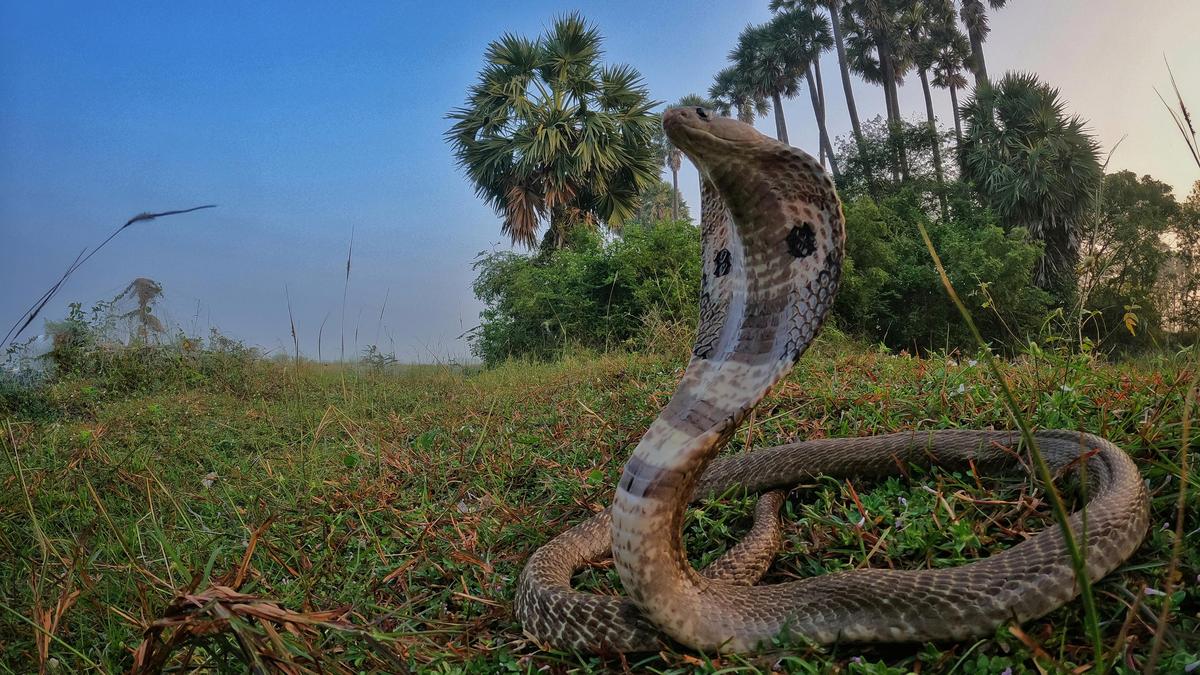
A spectacled cobra, one of India’s ‘Big Four’ species.
| Photo Credit: SPECIAL ARRANGEMENT/The Hindu

As India has progressed, the stereotyped image of the “land of snake charmers” has been left behind. We now have snake rescuers. However, in rural areas, snakebites still account for 58,000 deaths every year, affecting workers in paddy fields as much as subsistence farmers in dry landscapes.

Snake venoms generally cause three types of damage: blood disorders, muscle paralysis, and tissue death. Viper bites commonly cause blood-related disorders, while elapid snakes (like cobras) typically trigger nerve-related paralysis.

A standard antivenom has been designed against the venom of India’s ‘Big Four’ species: spectacled cobra, common krait, Russell’s viper, and saw-scaled viper. Venom from these snakes is needed for making this antivenom. Most of India’s requirement of snake venom is met by snakes captured in paddy fields and the scrublands of Tamil Nadu by tribals of the Irula Snake Catcher’s Industrial Co-operative Society.

A cocktail of venoms from the four species is injected into horses in non-lethal doses, and the animals are hyper-immunised by repeated injections. Horses are chosen because they are large animals and are easy to handle. Their immune system reacts, producing antibodies in large quantities. When ready, blood is drawn from the horses. Plasma containing the antibodies is processed to isolate toxin-binding antibody fragments, which are then tested, freeze-dried, and distributed in vials. 

This method has been in practice since the 1950s, and has several limitations. India has over 60 venomous snake species. Snakes from different geographical regions have different toxin constituents in their venom, even within the same species. The ‘Big Four’ antivenom is not quite up to the task in many scenarios. This has driven research towards creating a therapy that is specific to a region or is universally effective.

Recent findings (Nature 647, 716, 2025) have taken us closer to a broad-spectrum treatment for snake bites. A Danish laboratory along with international collaborators focused on snakes in sub-Saharan Africa, where snakebites lead to 10,000 amputations every year. The researchers collected venom from the 18 snake species of the region that are medically important (including cobras and mambas) and injected the mix into an alpaca and a llama. These animals are related to camels and are native to South America. The camel family was chosen because it has unusual antibodies that yield small, stable fragments called nanobodies. A strong immune response is generated to the injected toxins, providing a potent source of highly effective neutralisers.

At this stage, B cells that produce antibodies are collected from the blood. The DNA that codes for the nanobodies is genetically engineered into the genome of bacteriophage viruses. The virus particles express nanobodies on their surface.  The nanobodies that bind most strongly to snake venom toxins are selected. These nanobodies can now be mass-produced cheaply in bacteria, instead of in horses. In experiments performed on mice, strong antivenom activity was observed against 17 of the 18 snakes whose venoms were included in the study.

Coming to Indian snakes: researchers at the National Research Centre on Camel at Bikaner in Rajasthan have shown that antivenom generated in camels is able to neutralise the effects of venom from Sochurek’s saw-scaled viper, which is found in this region (Toxicon 134, 1, 2017). Expanding this to other medically important snake species will help in tackling what the World Health Organisation has classified as a neglected tropical disease.

The article was written in collaboration with Sushil Chandani.

Published – December 26, 2025 08:00 am IST


Source link

Science

Post navigation

Previous Post: 10 killed, 32 injured in Mexico bus crash
Next Post: Access Denied

Related Posts

  • Dyson sphere: an energy devourer
    Dyson sphere: an energy devourer Science
  • ‘Loose connection’ prevented NVS-02 satellite from landing in intended orbit, says panel
    ‘Loose connection’ prevented NVS-02 satellite from landing in intended orbit, says panel Science
  • CE20 cryogenic engine clears human rating test, ready for Gaganyaan missions
    CE20 cryogenic engine clears human rating test, ready for Gaganyaan missions Science
  • What will ‘cosmic detective’ OSIRIS-Rex bring back on September 24? | Explained
    What will ‘cosmic detective’ OSIRIS-Rex bring back on September 24? | Explained Science
  • Can large landslides be remotely detected in real-time?
    Can large landslides be remotely detected in real-time? Science
  • How do volcanoes affect the earth’s atmosphere?
    How do volcanoes affect the earth’s atmosphere? Science

More Related Articles

Why human-rating matters as India prepares for Gaganyaan Why human-rating matters as India prepares for Gaganyaan Science
AI’s Cassandra moment AI’s Cassandra moment Science
Musk’s SpaceX testing breakthrough tech in risky spacewalk Musk’s SpaceX testing breakthrough tech in risky spacewalk Science
Veteran space scientist Eknath Vasant Chitnis dies at 100 Veteran space scientist Eknath Vasant Chitnis dies at 100 Science
Japan, India startups to study laser-equipped satellite to tackle space debris Japan, India startups to study laser-equipped satellite to tackle space debris Science
GST 2.0 could undermine dietary health GST 2.0 could undermine dietary health Science
SiteLock

Archives

  • May 2026
  • April 2026
  • March 2026
  • February 2026
  • January 2026
  • December 2025
  • November 2025
  • October 2025
  • September 2025
  • August 2025
  • July 2025
  • June 2025
  • May 2025
  • April 2025
  • March 2025
  • February 2025
  • January 2025
  • December 2024
  • November 2024
  • October 2024
  • September 2024
  • August 2024
  • July 2024
  • June 2024
  • May 2024
  • April 2024
  • March 2024
  • February 2024
  • January 2024
  • December 2023
  • November 2023
  • October 2023
  • September 2023
  • August 2023
  • July 2023
  • June 2023
  • May 2023
  • April 2023
  • March 2023
  • February 2023
  • January 2023
  • December 2022
  • November 2022
  • October 2022
  • September 2022
  • August 2022
  • July 2022
  • June 2022
  • May 2022

Categories

  • Business
  • Nation
  • Science
  • Sports
  • World

Recent Posts

  • Drug ban low, WTC high, now IPL blitz: Rabada reflects on roller-coaster 12 months
  • Andhra government sanctions 895 pensions for kidney, liver, heart transplant patients
  • Britain’s former Deputy PM Angela Rayner cleared by tax authority, say reports
  • Ship anchored off east coast of UAE seized, heading toward Iranian waters
  • GMR Aero Technic to maintain Indian Navy’s Boeing P-8I fleet under pact with Boeing Defence India

Recent Comments

  1. JamesHeR on UP Teacher Who Asked Students To Slap Muslim Classmate
  2. RafaelNar on UP Teacher Who Asked Students To Slap Muslim Classmate
  3. CarlosExorb on UP Teacher Who Asked Students To Slap Muslim Classmate
  4. Robertfloup on UP Teacher Who Asked Students To Slap Muslim Classmate
  5. Davidcag on UP Teacher Who Asked Students To Slap Muslim Classmate
  • Huge Rush Of Devotees At Gangotri, Yamunotri Dhams
    Huge Rush Of Devotees At Gangotri, Yamunotri Dhams Nation
  • Access Denied Sports
  • Access Denied Sports
  • “Hindi Language Is Like Aurat”: Yuvraj Singh’s Father Yograj Slammed For Sexist Remarks
    “Hindi Language Is Like Aurat”: Yuvraj Singh’s Father Yograj Slammed For Sexist Remarks Sports
  • Access Denied Sports
  • Marathon Great Eliud Kipchoge Hangs Up His Shoes… Literally
    Marathon Great Eliud Kipchoge Hangs Up His Shoes… Literally Sports
  • Embraer teams up with Mahindra to bid for IAF’s medium transport aircraft deal
    Embraer teams up with Mahindra to bid for IAF’s medium transport aircraft deal Business
  • Why Mayank Yadav Didn’t Bowl Between 150-160 kmph Against Bangladesh? Ex-India Star Explains
    Why Mayank Yadav Didn’t Bowl Between 150-160 kmph Against Bangladesh? Ex-India Star Explains Sports

Editor-in-Chief:
Mohammad Ariff,
MSW, MAJMC, BSW, DTL, CTS, CNM, CCR, CAL, RSL, ASOC.
editor@artifex.news

Associate Editors:
1. Zenellis R. Tuba,
zenelis@artifex.news
2. Haris Daniyel
daniyel@artifex.news

Photograher:
Rohan Das
rohan@artifex.news

Artifex.News offers Online Paid Internships to college students from India and Abroad. Interns will get a PRESS CARD and other online offers.
Send your CV (Subjectline: Paid Internship) to internship@artifex.news

Links:
Associate Journalism
About Us
Privacy Policy

News Links:
Breaking News
World
Nation
Sports
Business
Entertainment
Lifestyle

Registered Office:
72/A, Elliot Road, Kolkata - 700016
Tel: 033-22277777, 033-22172217
Email: office@artifex.news

Editorial Office / News Desk:
No. 13, Mezzanine Floor, Esplanade Metro Rail Station,
12 J. L. Nehru Road, Kolkata - 700069.
(Entry from Gate No. 5)
Tel: 033-46011099, 033-46046046
Email: editor@artifex.news

Copyright © 2023 Artifex.News Newsportal designed by Artifex Infotech.