

Skip to content
  • Facebook
  • X
  • Linkedin
  • WhatsApp
  • YouTube
  • Associate Journalism
  • About Us
  • Privacy Policy
  • 033-46046046
  • editor@artifex.news
Artifex.News

Artifex.News

Stay Connected. Stay Informed.

  • Breaking News
  • World
  • Nation
  • Sports
  • Business
  • Science
  • Entertainment
  • Lifestyle
  • Toggle search form
  • Access Denied Sports
  • 2 Arrested Over Indore Temple Tragedy That Killed 36 In March Last Year
    2 Arrested Over Indore Temple Tragedy That Killed 36 In March Last Year Nation
  • Markets fall after rising in opening trade amid unabated foreign fund outflows
    Markets fall after rising in opening trade amid unabated foreign fund outflows Business
  • Visibly Frustrated Rohit Sharma Has Intense Chat With Hardik Pandya After MI’s Loss To GT. Watch
    Visibly Frustrated Rohit Sharma Has Intense Chat With Hardik Pandya After MI’s Loss To GT. Watch Sports
  • “Haven’t Resigned”: Boxing Great Mary Kom Breaks Silence On Reports Of Quitting IOA Panel
    “Haven’t Resigned”: Boxing Great Mary Kom Breaks Silence On Reports Of Quitting IOA Panel Sports
  • Nifty hits new all-time high level; Sensex jumps nearly 600 points
    Nifty hits new all-time high level; Sensex jumps nearly 600 points Business
  • Namibia’s Loftie-Eaton smashes fastest T20I century
    Namibia’s Loftie-Eaton smashes fastest T20I century Sports
  • Union Budget 2025 | What’s in it for textile, apparel, footwear and leather sectors?
    Union Budget 2025 | What’s in it for textile, apparel, footwear and leather sectors? Business
In axolotls and flatworms, regeneration is a body-wide choreograph

In axolotls and flatworms, regeneration is a body-wide choreograph

Posted on December 23, 2025 By admin


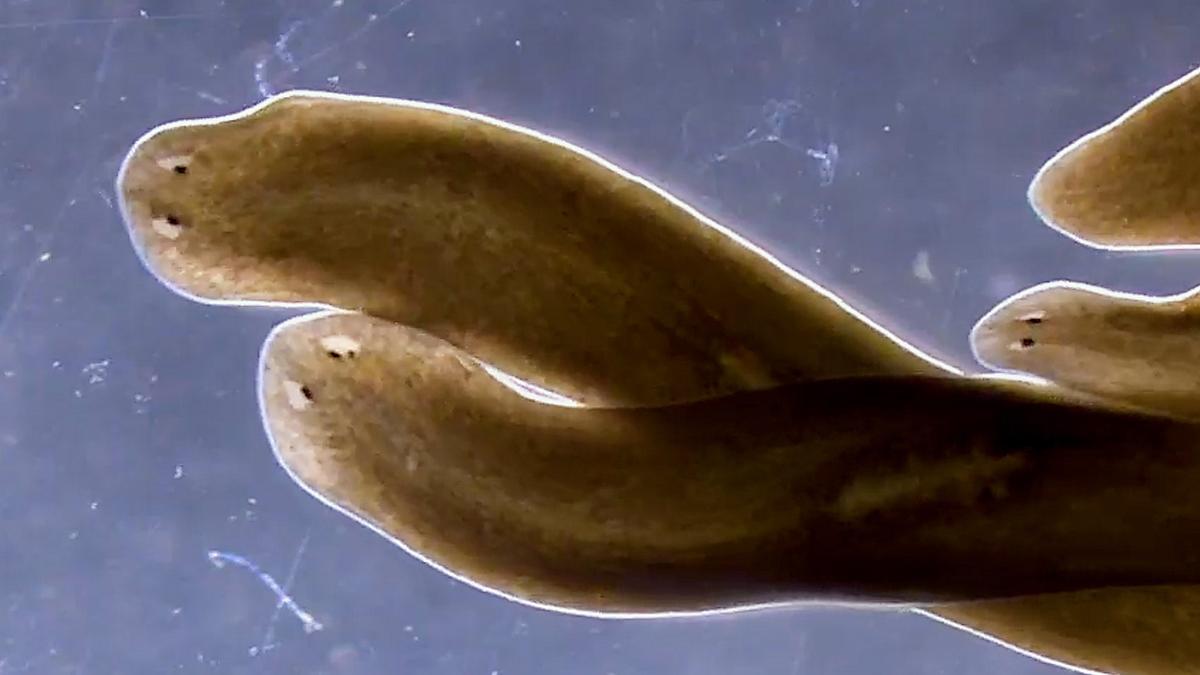
Planarian flatworms are small, unassuming creatures with an astonishing talent. Cut one into pieces, and each fragment can regrow a complete animal. This seemingly magical ability comes from their prolific stem cells, known as neoblasts, which can produce every tissue in the body.

In most animals, such regenerative stem cells grow under the care of nearby niche cells, small micro-environments that signal when to divide. But planarians, despite their extraordinary powers of renewal, appear to lack any such neighbourhoods, leaving biologists puzzled about where their stem cells get their cues.

In a new study in Cell Reports, researchers at the Stowers Institute for Medical Research in Missouri, USA, found that the missing niche might not be local at all, but comes from the gut. They combined a powerful gene-mapping tool called Slide-seqV2 with electron microscopy to chart where thousands of stem cells sit and which genes they switch on. The maps revealed that neoblasts rarely stay in contact with nearby tissues, yet their activity depends on chemical messages sent from the intestine. When key intestinal genes were turned off, the usual post-injury burst of cell division disappeared and regeneration faltered; even day-to-day cell replacement changed.

“The planarian gut functions as a central regulator for whole-body regeneration,” the study’s corresponding author Alejandro Sánchez Alvarado, a molecular biologist at the Stowers Institute, said. He added that the same gut signals may also help guide routine tissue renewal across the body.

The findings don’t put the intestine in charge. Instead, they point to a cooperative system in which many tissues, including the gut, help steer stem cells through shared chemical cues. Because stem and intestinal cells sit only a few micrometres apart (roughly a single cell’s width), their conversations are likely carried by molecules such as small proteins, fats or other metabolic signals rather than direct contact.

That is to say, in planarians, regeneration seems to depend on a diffuse web of nearby chemical signals rather than a single, fixed neighborhood.

A composite image of a planarian flatworm regrowing itself from a truncated form.

A composite image of a planarian flatworm regrowing itself from a truncated form.
| Photo Credit:
Special arrangement

Poised to heal

In another species, that same kind of long-range communication runs through the nervous system rather than the gut.

When an axolotl (Ambystoma mexicanum) loses a limb, the cells at the stump gather and multiply into a mound of tissue called the blastema, which becomes an engine of new growth. For decades, scientists believed this small structure contained a major part of the regenerative programme. But a new study in Cell by a group at the Harvard Stem Cell Institute in Massachusetts, USA, has reported that the body itself joins the act.

After amputation, a burst of activity in the animal’s stress response nerves briefly drives cells throughout the body to reenter the cycle of division. This organism-wide systemic activation seems to prime the animal for repair. When a previously uninjured limb is later amputated, its blastema is noticeably larger by two weeks.

The response was found to be carried by special proteins on cells that sensed stress signals. In distant tissues, one group of these proteins switched on a growth control system called mTOR, putting the body into a temporary state of readiness. At the injury site, another group kept the new limb growing. In both places, the same stress hormone, norepinephrine, a close chemical cousin of adrenaline, acted as the messenger.

When the researchers blocked the animal’s stress nerves, regeneration slowed down. But when they used common blood pressure drugs to mimic or block those stress signals, they could dial the response up or down, showing that the body’s repair mode could be switched on and off chemically. The primed state itself faded after about four weeks, suggesting that regeneration is not a permanent condition but a short-lived ‘repair mode’ under the nervous system’s control.

The group also expressed suspicion that the system actively shut down this state rather than letting it fade, perhaps through a surveillance mechanism that reined in cell growth once the injury response had served its purpose.

Rethinking regeneration

The same signalling machinery exists in mammals, so scientists are now wondering if mammals could have such abilities, too. However, regenerative biologist and associate professor Jessica Whited, who led the Harvard group, strongly emphasised that any parallels to humans remain speculative.

“It could be possible that humans have latent regenerative abilities that need to be coaxed out with the proper molecular instructions, in a specific sequence,” she said, stressing that such hypotheses still require direct testing.

Her team is considering whether mammals could even trigger a similar adrenergic response after severe injury but become “stuck” before the process can proceed, a failure that could reflect molecular brakes blocking the later steps of regeneration.

Even in axolotls, she noted, regeneration is tightly confined to the wound.

“Systemically activated cells don’t grow new limbs all over the body,” she said. “They appear to be held in check by brakes that limit where and how regeneration proceeds.”

Some of these cells near the stump may themselves become blastema precursors while others might act indirectly, signalling to their neighbors to initiate growth. In both cases, she said, the process depends on communication across tissues rather than within a single compartment.

Even so, the way this global coordination works is not the same in every animal. Ken Poss, a biologist at Duke University in North Carolina in the USA, said evolution seems to have invented several ways to achieve that coordination.

“Innate regeneration as a whole certainly uses different architectures,” Dr. Poss said. “Nerves and their signals can have major, minor or no role in regeneration, depending on the species and tissue. Finding commonalities and differences helps us piece the puzzle together.”

However, those differences don’t contradict the idea of body-wide coordination; they refine it.

These studies address an outstanding question: how local is the regenerative response to injury?” Nadia Rosenthal, a researcher at Imperial College of London, said. “They reveal a more complex, coordinated response where the entire organism is involved in the regenerative process.”

Salamanders may rely on neural signals and flatworms on metabolic cues, but both, she added, expose “a dynamic balance between local responses and whole-body governance of tissue repair.”

Together, the two studies recast regeneration as a team effort, not a solo act. Whether driven by gut signals or nerve impulses, the process depends on a dialogue between the wound and the rest of the body. The next challenge is to learn how those conversations start, and how the body knows when to stop them.

Anirban Mukhopadhyay is a geneticist by training and science communicator from New Delhi.



Source link

Science

Post navigation

Previous Post: Access Denied
Next Post: Access Denied

Related Posts

  • Try edible insects and fermented raw foods at this food festival at the Science Gallery Bengaluru
    Try edible insects and fermented raw foods at this food festival at the Science Gallery Bengaluru Science
  • General relativity survives its most rigorous single-event test yet
    General relativity survives its most rigorous single-event test yet Science
  • Satellite data show India’s major deltas sinking due to human activity
    Satellite data show India’s major deltas sinking due to human activity Science
  • For Udaipur’s Holi, Rajasthan’s semal trees are going up in flames
    For Udaipur’s Holi, Rajasthan’s semal trees are going up in flames Science
  • Science for All | New atlas reveals tiled bodies are common across life on earth
    Science for All | New atlas reveals tiled bodies are common across life on earth Science
  • Mysuru: The Hindu in School Science Festival inspires young innovators
    Mysuru: The Hindu in School Science Festival inspires young innovators Science

More Related Articles

What the ‘moral distress’ of doctors tells us about eroding trust in health care What the ‘moral distress’ of doctors tells us about eroding trust in health care Science
What is the butterfly effect? What is the butterfly effect? Science
‘Historic day’: Artemis astronauts break space distance record ‘Historic day’: Artemis astronauts break space distance record Science
IIT Madras finds aerosols transported from north India worsen air quality over Chennai, southeast coast IIT Madras finds aerosols transported from north India worsen air quality over Chennai, southeast coast Science
No signals from Chandrayaan-3’s Vikram, Pragyan: ISRO No signals from Chandrayaan-3’s Vikram, Pragyan: ISRO Science
New research traces how Africa’s wildcats became today’s house cats New research traces how Africa’s wildcats became today’s house cats Science
SiteLock

Archives

  • May 2026
  • April 2026
  • March 2026
  • February 2026
  • January 2026
  • December 2025
  • November 2025
  • October 2025
  • September 2025
  • August 2025
  • July 2025
  • June 2025
  • May 2025
  • April 2025
  • March 2025
  • February 2025
  • January 2025
  • December 2024
  • November 2024
  • October 2024
  • September 2024
  • August 2024
  • July 2024
  • June 2024
  • May 2024
  • April 2024
  • March 2024
  • February 2024
  • January 2024
  • December 2023
  • November 2023
  • October 2023
  • September 2023
  • August 2023
  • July 2023
  • June 2023
  • May 2023
  • April 2023
  • March 2023
  • February 2023
  • January 2023
  • December 2022
  • November 2022
  • October 2022
  • September 2022
  • August 2022
  • July 2022
  • June 2022
  • May 2022

Categories

  • Business
  • Nation
  • Science
  • Sports
  • World

Recent Posts

  • Maruti Suzuki crosses 3 million vehicle dispatches through railways, eyes 35% share by rail
  • Delhi High Court refuses to entertain PIL to prevent suicides
  • Gold ETF prices revive as investors flock on higher import duties on yellow metal
  • Kashmir MLA ‘boycotts’ L-G’s drug campaign after demolition drive in his constituency
  • Assam ships first legal agarwood chips to West Asia

Recent Comments

  1. Jeffreyroure on UP Teacher Who Asked Students To Slap Muslim Classmate
  2. Stevemonge on UP Teacher Who Asked Students To Slap Muslim Classmate
  3. RichardClage on UP Teacher Who Asked Students To Slap Muslim Classmate
  4. StevenLek on UP Teacher Who Asked Students To Slap Muslim Classmate
  5. Leonardren on UP Teacher Who Asked Students To Slap Muslim Classmate
  • Hezbollah Targets Mossad Headquarters, Military Base Near Tel Aviv
    Hezbollah Targets Mossad Headquarters, Military Base Near Tel Aviv World
  • Access Denied Sports
  • Access Denied
    Access Denied Nation
  • North Korean leader inspects new missile factory ahead of visit to China
    North Korean leader inspects new missile factory ahead of visit to China World
  • Where does dust come from?
    Where does dust come from? Science
  • Ranji Trophy: Upbeat TN gears up for Jharkhand challenge
    Ranji Trophy: Upbeat TN gears up for Jharkhand challenge Sports
  • Akhilesh Yadav On EVM Row
    Akhilesh Yadav On EVM Row Nation
  • Claiming To “Get Rid Of Devil,” Pastor Thrashes Man To Death In Punjab: Cops
    Claiming To “Get Rid Of Devil,” Pastor Thrashes Man To Death In Punjab: Cops Nation

Editor-in-Chief:
Mohammad Ariff,
MSW, MAJMC, BSW, DTL, CTS, CNM, CCR, CAL, RSL, ASOC.
editor@artifex.news

Associate Editors:
1. Zenellis R. Tuba,
zenelis@artifex.news
2. Haris Daniyel
daniyel@artifex.news

Photograher:
Rohan Das
rohan@artifex.news

Artifex.News offers Online Paid Internships to college students from India and Abroad. Interns will get a PRESS CARD and other online offers.
Send your CV (Subjectline: Paid Internship) to internship@artifex.news

Links:
Associate Journalism
About Us
Privacy Policy

News Links:
Breaking News
World
Nation
Sports
Business
Entertainment
Lifestyle

Registered Office:
72/A, Elliot Road, Kolkata - 700016
Tel: 033-22277777, 033-22172217
Email: office@artifex.news

Editorial Office / News Desk:
No. 13, Mezzanine Floor, Esplanade Metro Rail Station,
12 J. L. Nehru Road, Kolkata - 700069.
(Entry from Gate No. 5)
Tel: 033-46011099, 033-46046046
Email: editor@artifex.news

Copyright © 2023 Artifex.News Newsportal designed by Artifex Infotech.