
Skip to content
  • Facebook
  • X
  • Linkedin
  • WhatsApp
  • YouTube
  • Associate Journalism
  • About Us
  • Privacy Policy
  • 033-46046046
  • editor@artifex.news
Artifex.News

Artifex.News

Stay Connected. Stay Informed.

  • Breaking News
  • World
  • Nation
  • Sports
  • Business
  • Science
  • Entertainment
  • Lifestyle
  • Toggle search form
  • Access Denied World
  • Joe Biden Says Could Drop Election Bid If “Medical Condition” Emerged
    Joe Biden Says Could Drop Election Bid If “Medical Condition” Emerged World
  • Anna’s Archive shadow library search engine sued by U.S. publishing group
    Anna’s Archive shadow library search engine sued by U.S. publishing group World
  • LTTS to acquire California firm Intelliswift for an aggregate consideration of 0 million
    LTTS to acquire California firm Intelliswift for an aggregate consideration of $110 million Business
  • Access Denied Sports
  • Iranian state TV issues first official death toll from recent protests, saying 3,117 were killed
    Iranian state TV issues first official death toll from recent protests, saying 3,117 were killed World
  • Premier Probe Agencies “Spread Too Thin”, Cautions Justice DY Chandrachud
    Premier Probe Agencies “Spread Too Thin”, Cautions Justice DY Chandrachud Nation
  • Access Denied Business
Southern Ocean carbon ‘anomaly’ reveals what models can still miss

Southern Ocean carbon ‘anomaly’ reveals what models can still miss

Posted on December 22, 2025 By admin


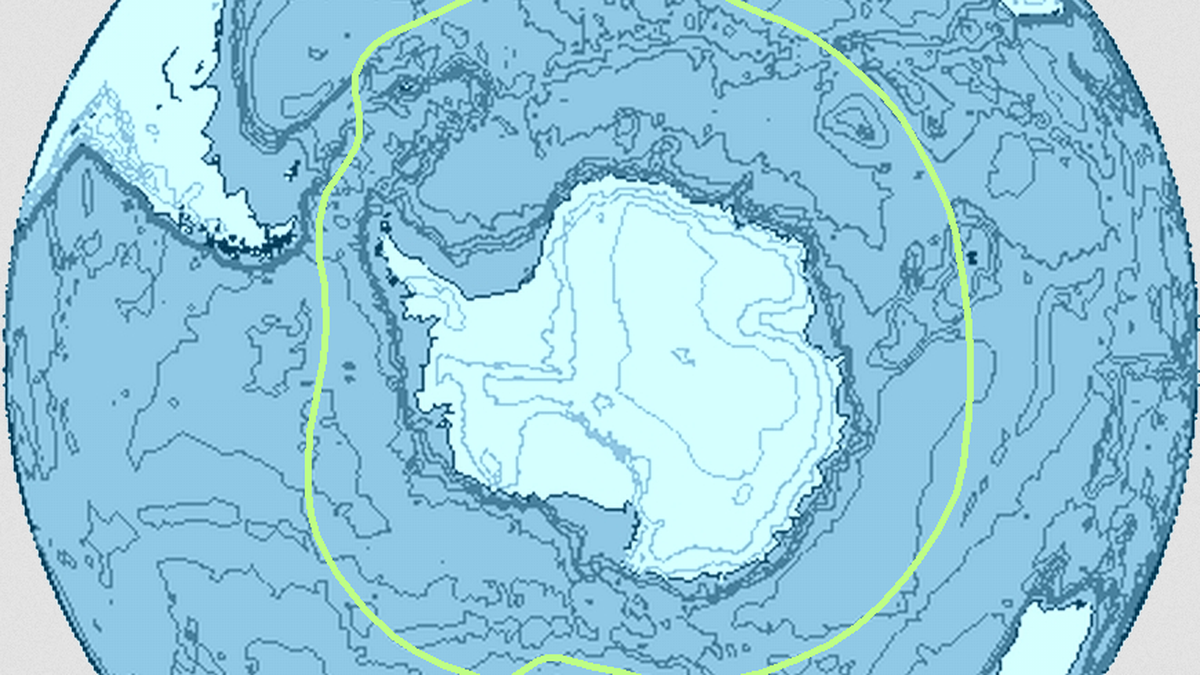
The chilly waters of the Southern Ocean that surround Antarctica like a moat are among the least explored and least understood of all the world’s oceans. This is stark because we also know that this ocean plays an outsized role in regulating the earth’s climate with its moody currents and its tremendous ability to absorb heat and carbon dioxide from the atmosphere.

The Southern Ocean covers roughly 25-30% of the global ocean area and absorbs about 40% of all the human-emitted carbon dioxide the oceans absorb.

This ability of the ocean comes in large part from its cold and relatively fresh surface layers, which sit like a lid on top of the warmer, saltier, carbon-rich reservoirs. This arrangement allows the ocean to trap a lot more carbon dioxide than it emits. Even a small shift in this layering — which could be due to freshwater influx, changing wind patterns, changes in circulation, etc. — can change whether the ocean continues to act as a buffer or if it becomes a terrible new source of atmospheric carbon dioxide.

For nearly two decades, scientists have used computer models to understand the ocean’s role in climate change — and the models have been saying that the Southern Ocean could become less of a sink as the world warms. Specifically, the models said stronger westerly winds and more greenhouse gases in the atmosphere would pump more carbon-rich deep water up towards the surface, which would release carbon dioxide into the air and reduce the ocean’s ability to buffer global warming.

Yet new data has found the exact opposite has happened.

Since the early 2000s, scientists have found the Southern Ocean to be soaking up more carbon, not less. A new long-term analysis of ocean chemistry by researchers — from the Helmholtz Centre for Polar and Marine Research and the Ludwig Maximilian University of Munich, both in Germany — has offered the clearest explanation yet for this unexpected resilience. While climate models did get important parts of the physics right, the researchers said the models missed a powerful surface process that temporarily masked the weakening they predicted.

The team’s findings were published in Nature Climate Change in October.

The carbon sink

The models’ reasoning was physically sound, so scientists didn’t have reason to doubt them. As the concentration of greenhouse gases rose and the ozone layer thinned, westerly winds in the southern hemisphere were to strengthen and shift poleward. This shift would mean stronger upwelling in the Southern Ocean, i.e. more deep, carbon-dioxide-laden waters rising towards the surface.

“The key assumption in earlier climate models is an intensification of the meridional overturning circulation of the Southern Ocean,” Léa Olivier, the new study’s coauthor and an oceanographer at the aforementioned institutions, said. “That would lead to more waters from the deep of the ocean … being in contact with the atmosphere, and therefore weakening the Southern Ocean carbon sink.”

So models predicted that as the winds got stronger, the Southern Ocean would start emitting more carbon, perhaps even accelerating climate change.

Using decades of hydrographic measurements across the Southern Ocean, the new analysis has reported that the deep waters are indeed rising. Specifically, the circumpolar deep waters, which are naturally rich in dissolved inorganic carbon and warmer than the layers above it, have moved up by around 40 metres since the 1990s.

This in turn has increased carbon dioxide pressure in the subsurface by about 10 microatmospheres, a shift consistent with model projections.

“The most surprising part of this study was seeing that the signal we expected was there — just in the subsurface layer … the deep waters getting closer and closer to the surface, slowly but surely replacing the waters that were there before,” Dr. Olivier said.

What the models missed

Even then the ocean wasn’t emitting more carbon dioxide, and the Germany team found why in a thin layer of freshwater at the surface.

Over the last few decades, the Southern Ocean has been becoming fresher (or less salty) thanks to more rainfall, transport of sea ice, and more meltwater from Antarctica’s glaciers. Fresher water is lighter. When it accumulates at the surface, it strengthens stratification, i.e. the amount of layering that separates the cooler and more buoyant surface from the warmer and saltier waters below.

This stratification prevented the carbon-rich water from the deep from being exposed to the atmosphere. Instead it seems to be trapped 100-200 m below the surface.

According to Dr. Olivier, this competing interplay between forces is exactly what models struggled to capture: “We have two competing mechanisms: the upwelling that brings the deep water up and the stratification that blocks the vertical exchanges. My guess would be that the stratification of the Southern Ocean is sometimes misrepresented.”

Indeed capturing the presence of this layer is quite challenging. Stratification is governed by many processes that are happening at wildly different scales. Dr. Olivier said this is mainly due to the complex physics of eddies and ice-shelf cavities. Eddies are only a few kilometres wide while ice cavities are much larger.

“The lack of data also plays a role,” she added.

Fleeting reprieve

The new study emphasised that the current situation may not last. Roughly in the first half of the 2010s, the stratified layer began to grow thinner. Recent observations have shown surface salinity rising again in parts of the Southern Ocean, suggesting the lid may be fading.

“We see a strong stratification, but it is getting more shallow,” Dr. Olivier explained. “Strong winds could more easily reach below the stratified layer and into the deep waters that are warm, saline and rich in carbon dioxide. Once these waters mix, it will be harder to re-stratify the upper layer.”

In other words, the predicted weakening of the carbon sink could re-emerge, and perhaps sooner than (now) expected. The deep carbon dioxide reservoir is already closer to the surface than it used to be. So if the stratification erodes further, the carbon that models expected to see at the surface decades ago could suddenly appear.

But rather than discredit models, the researchers said their findings reinforce how essential they are. Their projections helped direct policy attention to the processes that scientists needed to observe, and which ultimately helped explain why the Southern Ocean behaved unexpectedly.

The lesson is simple: models reveal vulnerabilities; observations reveal exceptions. And the earth’s climate system lies somewhere in between.

To know what comes next, scientists also need continuous, year-round observations in one of the world’s harshest environments. Whether it absorbs or releases carbon in the coming decades could profoundly alter the planet’s future and tell us just how well our models can keep up with the evolution of a deceptively small ocean.

Ashmita Gupta is a science writer.

Published – December 22, 2025 06:00 am IST



Source link

Science

Post navigation

Previous Post: Access Denied
Next Post: When ‘misvestment’ has more facets than is known

Related Posts

  • The environment, another casualty of war in West Asia
    The environment, another casualty of war in West Asia Science
  • ISRO successfully launches NVS-02 satellite; creates history with the 100th launch from Sriharikota
    ISRO successfully launches NVS-02 satellite; creates history with the 100th launch from Sriharikota Science
  • Groups to prevent human-elephant conflict linked to more elephant deaths
    Groups to prevent human-elephant conflict linked to more elephant deaths Science
  • Five ISRO technologies transferred to private companies
    Five ISRO technologies transferred to private companies Science
  • DNA remnants found in fossil of 6 million year old turtle
    DNA remnants found in fossil of 6 million year old turtle Science
  • Longer-lasting ozone holes over Antarctica expose seal pups and penguin chicks to much more UV
    Longer-lasting ozone holes over Antarctica expose seal pups and penguin chicks to much more UV Science

More Related Articles

The green and crimson chemistry of the watermelon The green and crimson chemistry of the watermelon Science
Scientists genetically modify ‘sexual’ fruit fly to reproduce asexually Scientists genetically modify ‘sexual’ fruit fly to reproduce asexually Science
What triggers the flowering of durians? What triggers the flowering of durians? Science
Artemis II astronauts pass half-way point on way to Moon Artemis II astronauts pass half-way point on way to Moon Science
Scientists, diplomats should discuss evolution of quantum computing: Marilyne Andersen Scientists, diplomats should discuss evolution of quantum computing: Marilyne Andersen Science
Stealing behaviour influenced by emotional instability: NIMHANS study Stealing behaviour influenced by emotional instability: NIMHANS study Science
SiteLock

Archives

  • May 2026
  • April 2026
  • March 2026
  • February 2026
  • January 2026
  • December 2025
  • November 2025
  • October 2025
  • September 2025
  • August 2025
  • July 2025
  • June 2025
  • May 2025
  • April 2025
  • March 2025
  • February 2025
  • January 2025
  • December 2024
  • November 2024
  • October 2024
  • September 2024
  • August 2024
  • July 2024
  • June 2024
  • May 2024
  • April 2024
  • March 2024
  • February 2024
  • January 2024
  • December 2023
  • November 2023
  • October 2023
  • September 2023
  • August 2023
  • July 2023
  • June 2023
  • May 2023
  • April 2023
  • March 2023
  • February 2023
  • January 2023
  • December 2022
  • November 2022
  • October 2022
  • September 2022
  • August 2022
  • July 2022
  • June 2022
  • May 2022

Categories

  • Business
  • Nation
  • Science
  • Sports
  • World

Recent Posts

  • Shrimp feed manufacturers put on hold price hike following govt.’s intervention
  • Refurbished Bharat Scouts and Guides Training Centre inaugurated at Papanasam
  • King’s Speech outlines U.K. govt. agenda as Starmer’s future hangs in the balance
  • Shots heard at Philippine Senate as lawmaker wanted by ICC holds out; no casualties reported
  • Pawan Khera appears before Assam police Crime Branch

Recent Comments

  1. NathanJobre on UP Teacher Who Asked Students To Slap Muslim Classmate
  2. DavidNup on UP Teacher Who Asked Students To Slap Muslim Classmate
  3. JeffryFok on UP Teacher Who Asked Students To Slap Muslim Classmate
  4. Jesusetexy on UP Teacher Who Asked Students To Slap Muslim Classmate
  5. WilliamGoT on UP Teacher Who Asked Students To Slap Muslim Classmate
  • Access Denied World
  • Access Denied World
  • ICC Announces ODI Team Of The Year. No Indian Player Finds Spot
    ICC Announces ODI Team Of The Year. No Indian Player Finds Spot Sports
  • IPL Auction 2025 Rules: What are the RTM rules during the auction
    IPL Auction 2025 Rules: What are the RTM rules during the auction Sports
  • Access Denied Sports
  • India vs South Africa Live Streaming, 3rd T20I: When And Where To Watch Live Telecast
    India vs South Africa Live Streaming, 3rd T20I: When And Where To Watch Live Telecast Sports
  • U.S. President Biden wraps up visit to wartime Israel with warning against being ‘consumed’ by rage
    U.S. President Biden wraps up visit to wartime Israel with warning against being ‘consumed’ by rage World
  • “Not Looking At It One Game…”: Jasprit Bumrah Makes Captaincy Intentions Clear Ahead Of Perth Test
    “Not Looking At It One Game…”: Jasprit Bumrah Makes Captaincy Intentions Clear Ahead Of Perth Test Sports

Editor-in-Chief:
Mohammad Ariff,
MSW, MAJMC, BSW, DTL, CTS, CNM, CCR, CAL, RSL, ASOC.
editor@artifex.news

Associate Editors:
1. Zenellis R. Tuba,
zenelis@artifex.news
2. Haris Daniyel
daniyel@artifex.news

Photograher:
Rohan Das
rohan@artifex.news

Artifex.News offers Online Paid Internships to college students from India and Abroad. Interns will get a PRESS CARD and other online offers.
Send your CV (Subjectline: Paid Internship) to internship@artifex.news

Links:
Associate Journalism
About Us
Privacy Policy

News Links:
Breaking News
World
Nation
Sports
Business
Entertainment
Lifestyle

Registered Office:
72/A, Elliot Road, Kolkata - 700016
Tel: 033-22277777, 033-22172217
Email: office@artifex.news

Editorial Office / News Desk:
No. 13, Mezzanine Floor, Esplanade Metro Rail Station,
12 J. L. Nehru Road, Kolkata - 700069.
(Entry from Gate No. 5)
Tel: 033-46011099, 033-46046046
Email: editor@artifex.news

Copyright © 2023 Artifex.News Newsportal designed by Artifex Infotech.