





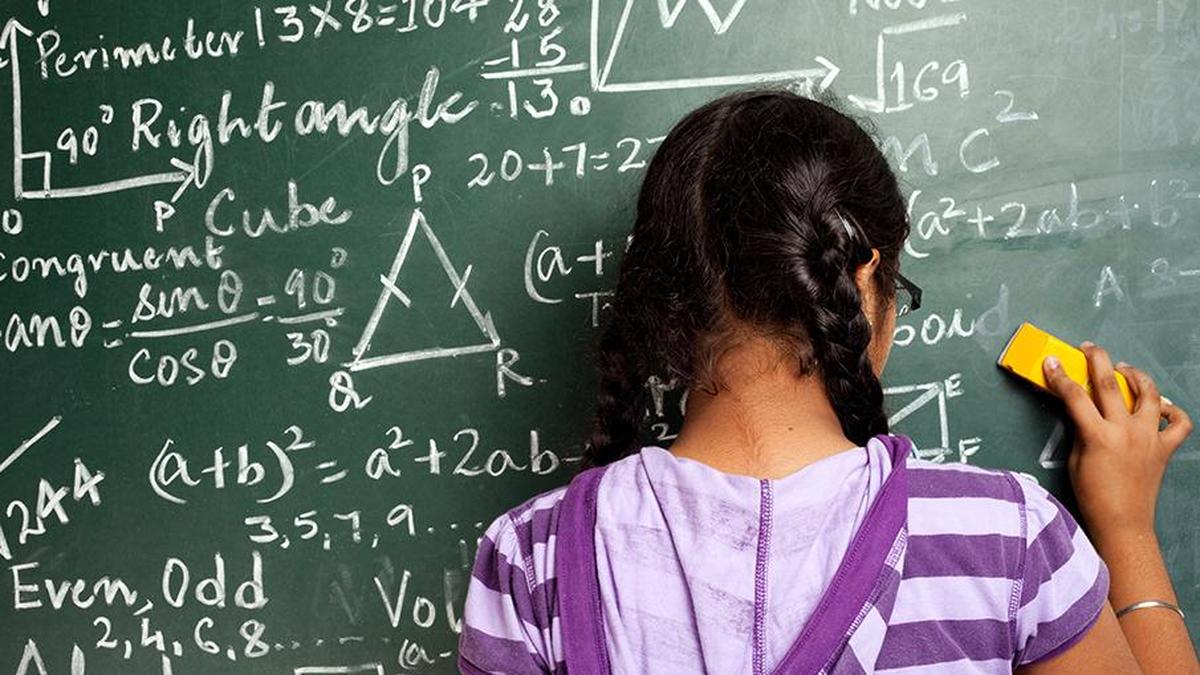
For many students, mathematics feels less like a subject and more like a verdict, you’re either “good at it” or you’re not. There’s no escape from maths in school, and for some, every class brings a familiar knot of anxiety rather than curiosity or confidence. You’re not imagining it: the fear is real, and it’s widespread enough to have a name. Arithmophobia, also known as numerophobia, refers to an intense fear of numbers and mathematical thinking.
But here’s the truth, this fear is far more common than we admit. Generations of students have grown up believing they simply aren’t “maths people.” But is that label even valid? Experts say no. Math ability isn’t an inborn talent reserved for a few; it’s shaped by experience, teaching, and mindset. To understand where this fear comes from and how it can be overcome, we spoke to educators and mathematics experts. And for everyone who has ever struggled with math, they have an answer.
Learning maths with bad drawings
So what do the people who love math say about this fear? Let’s turn to Benjamin Orlin—an educator who has made a career out of doing math differently. Based in Minnesota, Ben proudly describes himself as a “lover of math, bad at drawings.” And that contradiction is exactly his strength. Through stick figures, simple sketches, and sharp humour, he breaks down complex ideas and makes math feel human, approachable, and even fun. As the bestselling author of the Math with Bad Drawings series, Orlin proves that you don’t need perfect equations — or perfect drawings — to truly understand math.
Math with bad drawings by Benjamin Orlin.
To understand why math fear takes root so early, and how it can be unlearned, we asked what really drives students away from mathematics, Orlin points to something deeper than numbers or formulas.
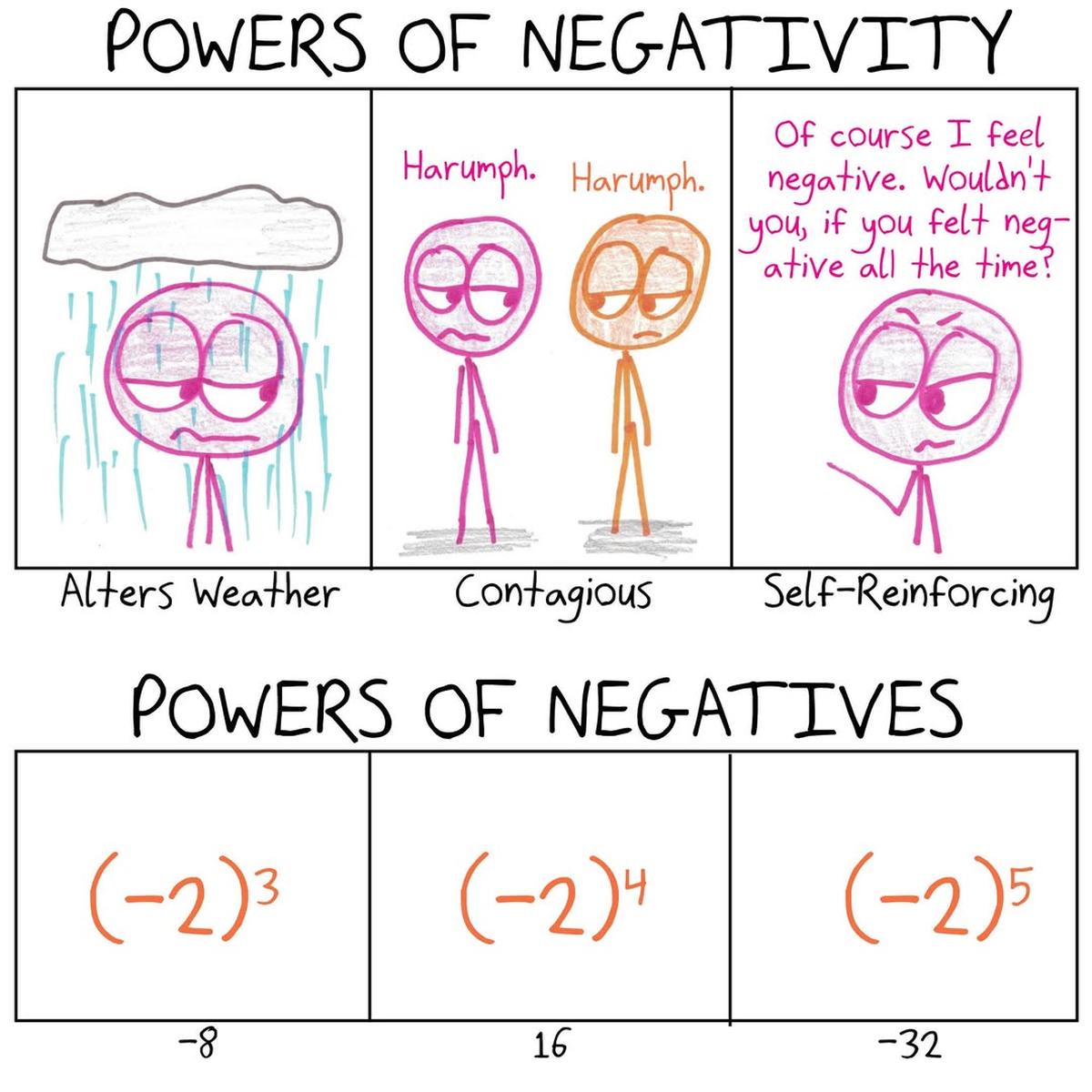
“Young people move through life asking a few big questions. One of these is, ‘What am I good at?’”
Math with bad drawings by Benjamin Orlin.
According to him, students often tie their sense of self-worth to how they perform in math class. Those who feel successful tend to enjoy the subject. Those who don’t, quickly internalise failure.
“To oversimplify vastly,” he says, “kids learn to hate math if it makes them feel stupid.”
Much of Orlin’s work focuses on dismantling this feeling. One major problem, he argues, lies in how math classrooms are structured.
Math with bad drawings by Benjamin Orlin.
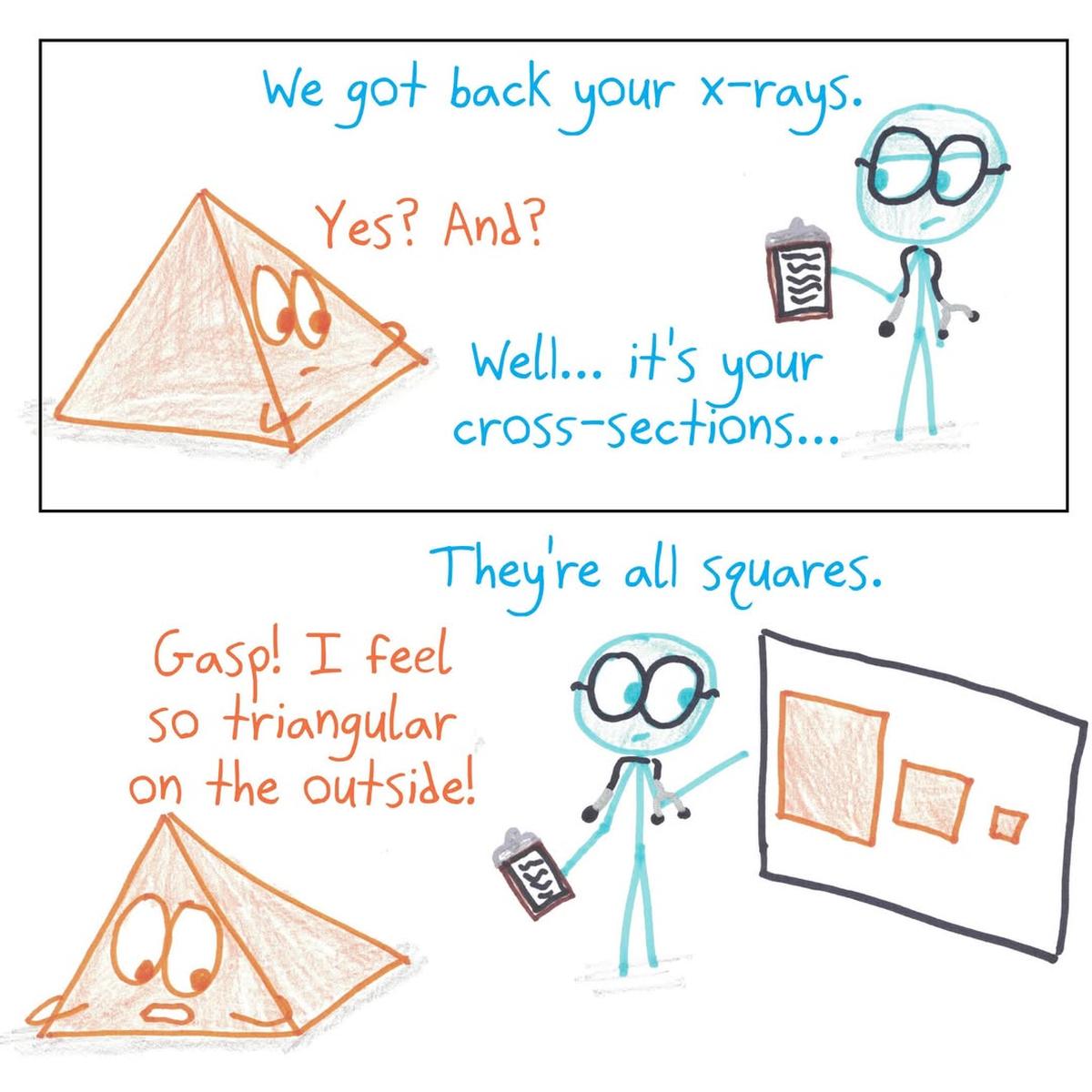
When everyone is doing the same kind of work, side by side, day after day, you learn pretty quickly who in the class is fastest and most accurate. It’s hard not to compare yourself… and feel like a ‘winner’ or a ‘loser.’”
To change that, Orlin believes educators must first disrupt this hierarchy and then redefine what success in math actually looks like.
“Math is all about doing. What problems can you solve? What can you accomplish and create? To learn math is to develop new powers of thought.”
He is equally critical of traditional teaching methods that rely heavily on repetitive exercises. “That’s like learning a sport by doing practice drills and running laps, but never actually playing a game.”
Instead, he advocates for meaningful, real-world tasks, from designing budgets to analysing data — that reflect how mathematics is used beyond classrooms.On whether fear of math is universal, Orlin is clear: “It’s virtually 100% cultural.”
And for students — especially those who feel bored or overwhelmed, his message is both honest and encouraging. “Math is full of variety… so if you’re feeling bored, find something that excites you and start digging. And if you find this stuff hard, well, it is! That’s what makes it worth studying.”
What teachers see from the classroom
For educators, the fear of mathematics isn’t abstract — it plays out daily in classrooms. After three decades of teaching, Mathew K. Thomas, Mathematics Educator at Don Bosco School, Delhi, says anxiety around maths usually begins when understanding breaks down.
Students who miss foundational concepts—fractions, algebra, geometry, often struggle to catch up. “They feel lost,” he explains, and that feeling slowly turns into fear. Added to this are societal expectations, parental pressure, and the belief that maths is about speed and perfection rather than thought.
One misconception, Thomas says, does particular damage: the idea that students are either “good” or “bad” at maths.

Mathew K. Thomas, Mathematics Educator at Don Bosco School, Delhi.
“Maths is not about memorisation or getting the right answer,” he stresses. “It’s about understanding the process.”
That belief is echoed by Parijat Jain, author of the S.M.A.R.T. Minds Mathematics series, who sees fear take root the moment students stop understanding and start memorising.
“When a concept is not clear, students switch from understanding to rote learning. Very soon, that creates confusion — and repeated confusion turns into anxiety.”

Parijat Jain, author of the S.M.A.R.T. Minds Mathematics
Jain describes mathematics as a staircase: miss a few steps early on, and every new chapter feels impossibly high. “The real issue is not intelligence,” he says, “it is missing foundations.”
Both educators argue that traditional teaching methods often reinforce this fear. When classrooms prioritise speed, marks, and rote procedures, students who need more time begin to believe they are “not maths people.” Meaningful engagement, projects, visualisation, real-life applications, changes that perception.
Jain puts it simply: “Mathematics is not something to memorise, it is something to understand.”
And once students understand, the fear begins to fade. Maths, they emphasise, is not just a school subject but a way of thinking, one that builds logic, patience, and problem-solving skills far beyond the classroom.
As Thomas reminds his students: “Mathematics is a journey, not a destination. Focus on the process—and the confidence will follow.”
“There is nothing called a math brain”
Geeta Mahashabde, a veteran math educator and Director of the Navnirmiti Learning Foundation, Maharashtra, has spent over two decades working with teachers, textbooks, and classrooms across India. A former Chief Consultant for Quality for the Maharashtra government and a member of the NCERT mathematics textbook writing team, she has seen—firsthand—how fear of mathematics is not natural, but created.
According to her, no child begins school afraid of numbers. “When 100 children enter Class 1,” she points out, “not a single one is scared of maths. But by Class 10, nearly 80% want to drop it.” That shift, she says, is not accidental—it is systemic.
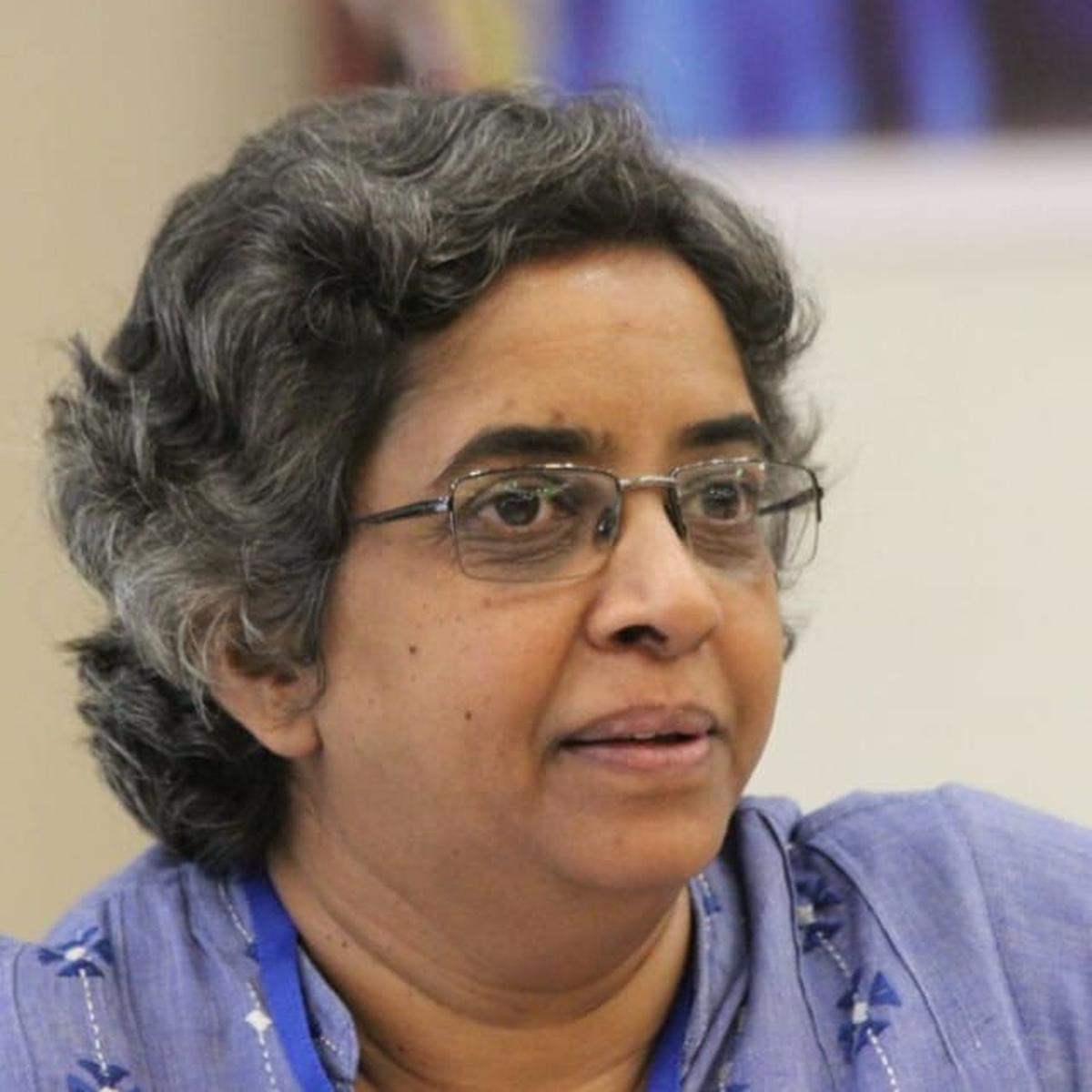
Geeta Mahashabde, math educator and Director of the Navnirmiti Learning Foundation, Maharashtra
Mahashabde strongly challenges the widely held belief that some people are “math people” and others are not. Research in brain science, she explains—building on the work of scholars like Carol Dweck and Jo Boaler, has conclusively shown that there is no such thing as a ‘math brain’. Intelligence is not fixed, and mathematical ability grows with the right mindset and experiences.
So where does the fear come from?
One major culprit is speed. Classrooms often reward the fastest answer, not thoughtful thinking. A question is asked, a few children shout out the answer, and the lesson moves on—leaving many others mid-thought. “Children don’t fail because they can’t think,” she says. “They fail because they are not given time to think.”
Mathematics, unlike many subjects, is vertical, each concept builds on the previous one. Miss a step, and everything that follows feels impossible. When children are rushed, interrupted, or discouraged from making mistakes, they slowly disengage.
Mahashabde advocates a radically simple shift: let children handle, build, and discover mathematics the way humans always have — by observing patterns, arranging objects, and asking questions. Whether it’s using sticks to construct triangles, blocks to discover square numbers, or real-life stories to explain fractions, learning becomes permanent when children experience concepts instead of memorising formulas.
She gives a striking example: Most adults freeze at a question like 5 ÷ ½ —but the same people can easily answer, “If you have 2½ litres of milk and pack it in half-litre packets, how many packets will you get?”
The math is identical. The fear comes from the language, not the idea.
Equally important, she says, is how teachers are supported. Confidence in students cannot grow unless confidence in teachers does. One-off workshops, rigid scripts, and excessive monitoring through apps do little to change classroom practice. What works is time, trust, collaboration, and teacher autonomy.
Her message, ultimately, is not just for students — but for parents, teachers, and the system itself: “Everyone can learn mathematics. Just like swimming, you don’t learn it by watching from outside. You learn it by getting into the water.”
And when children are given small steps, space to think, and repeated experiences of success, fear gives way to confidence—one problem at a time.
When fear becomes anxiety
While teaching methods and classroom culture play a major role, the emotional impact of math fear cannot be ignored. Dr. Rahul Chandhok, Senior Consultant and Head of Psychiatry at Artemis Lite NFC, explains that math anxiety often stems from pressure—both internal and external.
Students, he says, begin to fear mathematics when they believe they must get every answer right, constantly compare themselves to others, or internalise the idea that only “smart” people can do well in the subject. Past struggles or repeated failures can deepen this fear. “Students need to understand that it’s normal to find a subject challenging,” Dr. Chandhok notes. “Struggling does not mean weakness, it simply means learning something new takes time.”

Dr. Rahul Chandhok, Senior Consultant and Head of Psychiatry at Artemis Lite NFC.
To manage stress around maths, he suggests practical strategies: breaking problems into smaller steps, practising regularly, asking questions without fear, and using visual aids. Even simple habits — like taking short breaks or celebrating small improvements — can reduce anxiety. Support from adults matters just as much. Parents and teachers, he says, should focus on effort rather than perfection, use encouraging language, and create safe spaces where students feel comfortable expressing confusion.
Equally important is mindset. Dr. Chandhok emphasises that children need to accept that they don’t have to excel at everything. “No one is good at every subject,” he says, and recognising this helps reduce pressure. When students focus on effort and progress rather than results alone, they develop confidence, resilience, and a healthier relationship with learning.
He also points out that maths is often taught in a rushed, high-pressure manner—leaving little room for slow thinking or understanding. Normalising different learning speeds, connecting maths to real life, and praising problem-solving instead of just correct answers can make a significant difference. Above all, reminding students that intelligence cannot be measured by a single subject helps replace fear with self-belief.