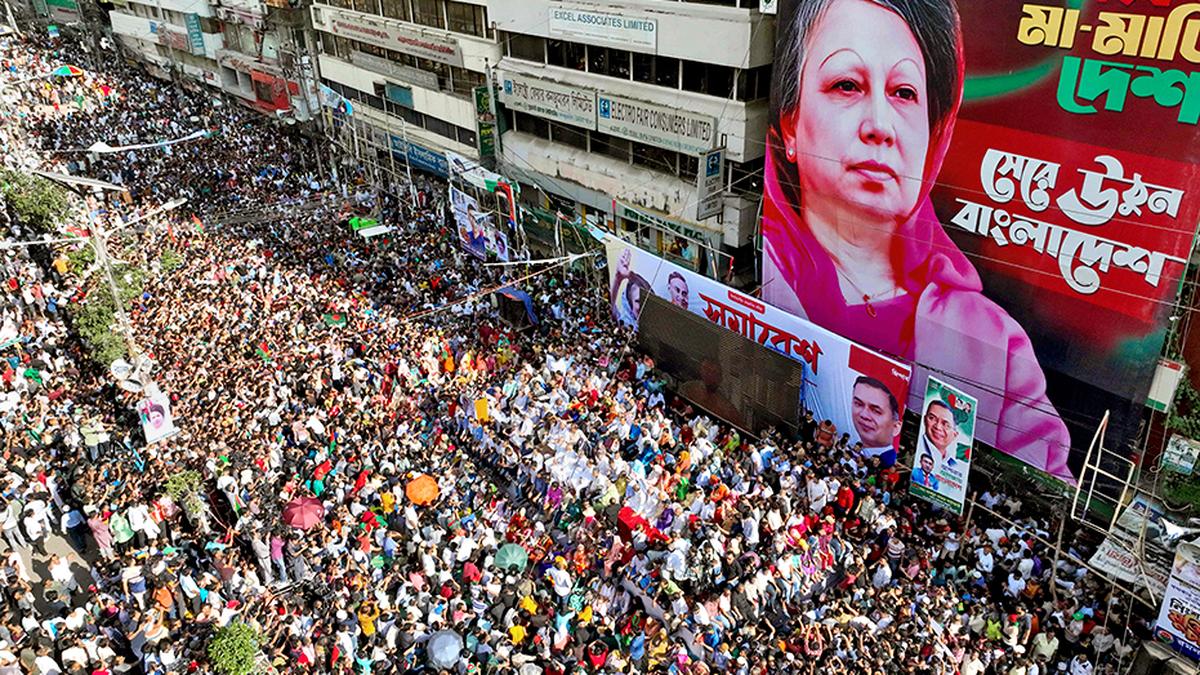

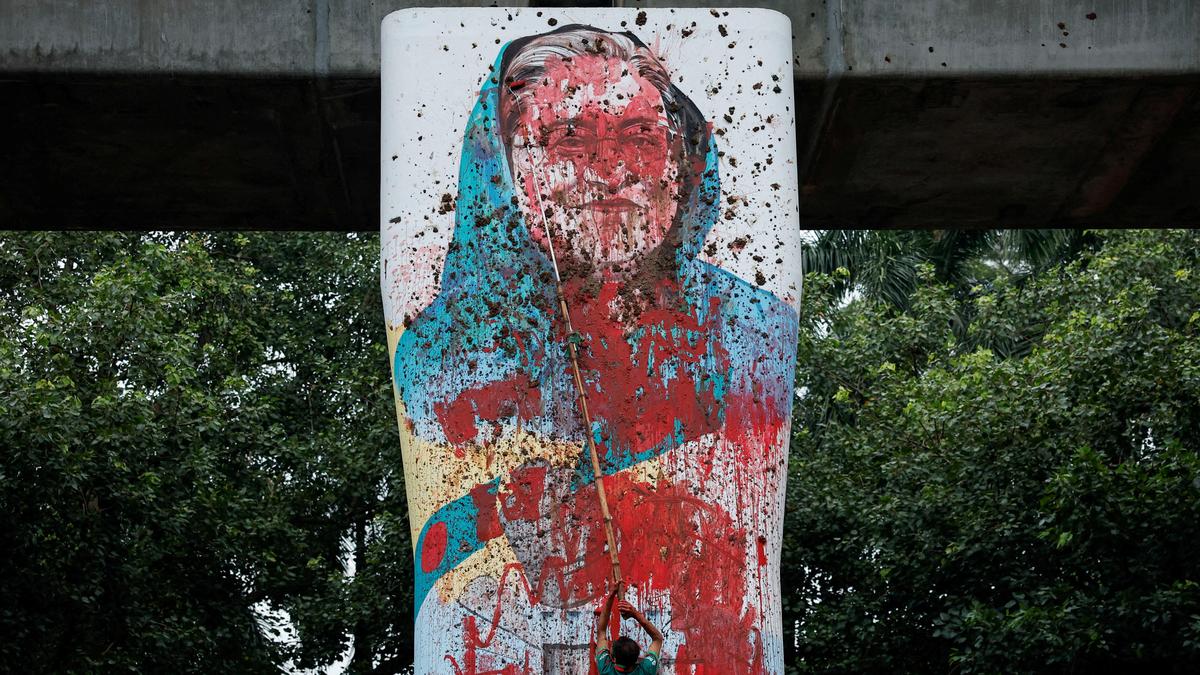

It was a tumultuous year for global politics. European countries saw a further tilt to the right, as did South America. Canada continued under the Liberal Party after Justin Trudeau stepped down. And all eyes are on Bangladesh, which witnessed waves of protests and violence, ahead of elections early next year.
We take a look at the countries which saw significant polls in 2025, and dive into the results.
Canada
What we wrote: Justin Trudeau stepped down as Canada’s Prime Minister on January 6, 2025, after almost nine years in power, amid growing unpopularity in Canada. His minority Liberal Party government, which holds only 154 of 338 seats in the House of Commons, was further weakened after the New Democratic Party ended a 2022 deal to back the party on key votes.
The Canadian Parliament, which was to resume on January 27, resumed in March, allowing the Liberal Party to pick a new leader by March 9.
The Liberal Party has seen a dip in its popularity over the last few years, even as the Conservatives led by Pierre Poilievre have made a strong showing. Also in the field were the left-of-centre Bloc Quebecois, the third-largest party in the House, which seeks to withdraw Quebec from the Canadian confederation.
What happened:Mark Carney was sworn in as the first new Prime Minister in nine years, marking an end to the Trudeau era. He was elected leader of the Liberal Party and sworn in on March 15. A political rookie, Mr. Carney is an economist, and has served as Governor of both the Bank of Canada and of the Bank of England.
In his first order as PM, he ended the unpopular consumer carbon pricing programme, an environmental policy that critics said was driving up prices for goods and energy.
In April, Canada held federal polls, and the Liberal Party won a fourth term. Although it will return as part of a minority government, it did garner its largest share of the popular vote in a decade.
Germany
What we wrote: Germany geared up for a general election to its Bundestag (the lower house of its parliament) on February 23, following the collapse of its “traffic-light” coalition of social democrats, liberals and greens in late 2024. The collapse was triggered by Chancellor Olaf Scholz firing Finance Minister Christian Lindner of the Free Democratic party (FDP), a liberal pro-business party that was part of the coalition.
Other parties in the fray are the Social Democrats (SPD), a centre-left party that is the nation’s oldest political party, led by Olaf Scholz; the Centre-right Christian Democrats, which include CDU and its Bavarian sister-party CSU, to which Angela Merkel belonged and which is now led by corporate lawyer Friedrich Merz; Die Grünen or the Greens led by Robert Habeck, who is presently serving as economy minister, while Annalena Baerbock, another party member, serves as foreign minister; the far-right AfD – Alternative für Deutschland (AfD), which opposes immigration and the Eurozone, and is co-chaired by Alice Weidel; Die Linke — the Left — a leftwing populist party helmed by Jan Van Aken and Heidi Reichinnek; and the BSW — Sahra Wagenknecht Alliance, founded by a former Linke politician.
What happened: The Centre-right Christian Democrats (CDU/CSU) emerged as the largest group in the Bundestag inm February. All the three parties of the traffic-light coalition lost traction and votes, while the far-right AfD doubled its vote share.
Mr. Merz was elected as Chancellor of Germany in May 2025, after forming a government in alliance with Olaf Scholz’s centre-left Social Democrats.

Poland
What we wrote: Poland held presidential elections in May to decide the successor to incumbent President Andrzej Duda from the Law and Justice party (PiS). The chief candidates were Rafał Trzaskowski, the Mayor of Warsaw, who belongs to the Civic Platform party (PO), and Karol Nawrocki, a historian, who is the candidate for PiS.
Prime Minister Donald Tusk (Civic Platform) has led the country since December 2023. Although the Prime Minister is in charge of regular governance, the President still plays a crucial role, having the power to veto government policies.
What happened: Mr. Nawrocki won by a narrow margin against Rafal Trzaskowski in the country’s second round of voting in the presidential elections. This is even as exit polls predicted a loss for Mr. Nawrocki.
Out of a field of 13 candidates, no one individual emerged with a majority in the first round on May 18; the top candidates— Mr. Trzaskowski (with 31.4% of the vote) and Mr. Nawrocki (with 29.5% of the vote) proceeded to a run-off held in June.

Romania
What we wrote: Romania held new presidential elections after the Constitutional Court annulled the first round of voting due to concerns over foreign interference, including Russian influence on TikTok. Centrist, pro-EU candidate Elena Lasconi and far-right, pro-Russian candidate Călin Georgescu had advanced to the second round in this election. The legislative elections, which were not annulled, saw a victory for the Social Democrats.
What happened: Nicusor Dan, the liberal mayor of Bucharest, won the presidential elections. His opponent was nationalist George Simion of the far-right AUR party. Mr. Georgescu was barred from a re-run.

Belarus
What we wrote: In what is being considered a pro-forma election, lawmakers in Belarus have announced that the country’s next presidential election will be held on January 26. This is expected to return authoritarian leader Alexander Lukashenko to power, extending his three decades in power. Mr. Lukashenko has been in power since 1994 and is referred to as “Europe’s last dictator” for suppressing dissent and criticism.
The last election, held in 2020, was deemed fraudulent by the West and the Opposition. Sviatlana Tsikhanouskaya, who ran against Mr. Lukashenko, was subsequently forced to flee to neighbouring Lithuania, where she runs an alternative government-in-exile.
What happened: Mr.Lukashenko returned for his seventh consecutive term.

Italy
What we wrote: An important electoral test awaited Giorgia Meloni in September 2025, where elections were held in six important regions: Puglia, Campania, Le Marche, Tuscany, Valle d’Aosta, and Veneto. In Puglia, MEP Antonio Decaro, chair of the Environment committee and of the Democratic Party could run as Governor.
What happened: None of the six regions changed political sides. Ms. Meloni’s candidates secured wins in Marche and Veneto. National deputy Alberto Stefani won Veneto.
Opposition held on to two southern regions— Mr. Decaro won in Puglia while Roberto Fico, member of Giuseppe Conte’s Five Star Movement, won in Campania. Eugenio Giani of the Democratic Party won in Tuscany, defeating Ms. Meloni’s candidate Alessandro Tomasi, the Mayor of Pistoia. The regional Valdostian Union, which represents the French minority populace, won in Valle d’Aosta.
General elections are expected to take place in 2027.

Kosovo
What we wrote: Kosovar President Vjosa Osmani set February 9, as the date for regular parliamentary elections in the Balkan country.
What happened: Kosovo saw two elections, one in February and one in December. Kosovo Prime Minister Albin Kurti of the Vetevendosje Party may end a year of deadlock and form the government now.
Kurti’s Vetevendosje Party fell short of a majority in February. After months of coalition talks went nowhere, Kosovar President Osmani dissolved Parliament in November and called for a fresh election.

Gabon
What we wrote: Gabon’s military leaders said they would hold a general election in 2025. This follows pressure from the international community to announce a timetable for a return to civilian rule, after General Brice Oligui Nguema seized power from his cousin, President Ali Bongo Ondimba, in August 2023, promising to save the country from a “severe institutional” crisis. Gabon has been under the control of the Bongo family for 55 years.
What happened: Gen. Nguema won by a landslide in elections held in April. He will remain in power for seven years.

Tanzania
What we wrote: Tanzania held general elections in October. Incumbent President Samia Suluhu Hassan, who took over after the death of John Magufuli in 2021 was in the fray for the ruling Chama Cha Mapinduzi party. The Opposition consisted of the Chama Cha Demokrasia na Maendeleo (Chadema) and ACT-Wazalendo parties.
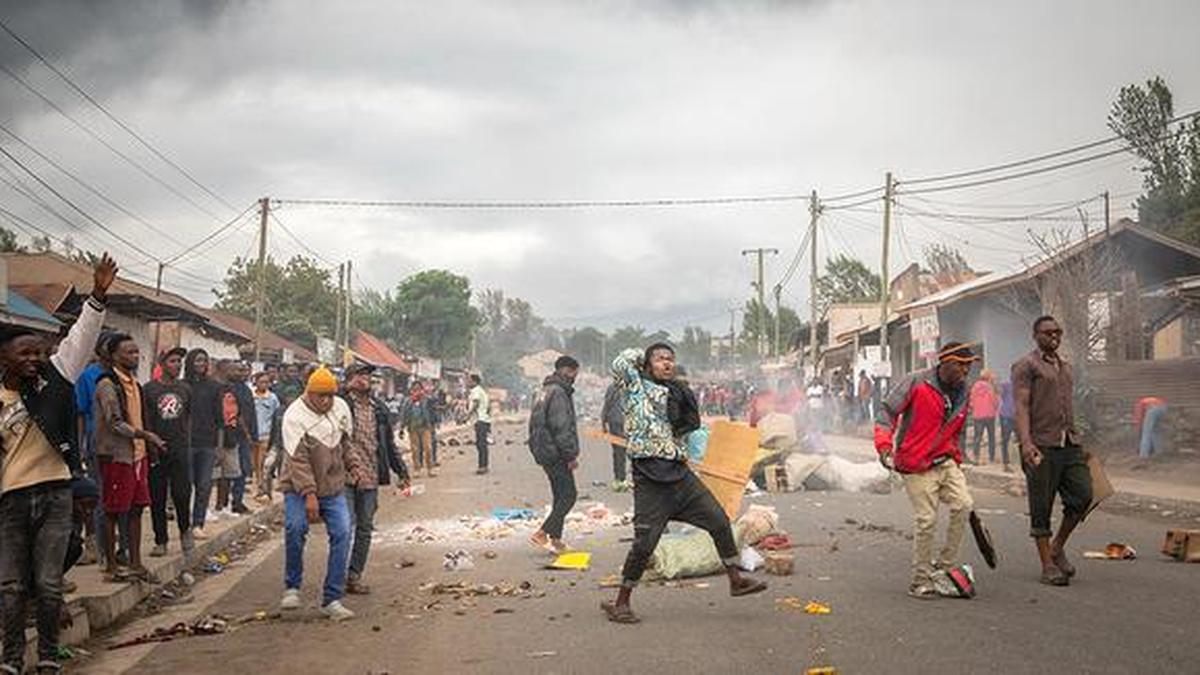
What happened: Ms. Hassan was re-elected in October. This was followed by violent protests, with reports of injury and even death. Several Opposition leaders were also detained.

Bolivia
What we wrote: Bolivia’s general elections took place on August 17, to elect the President, Vice President, members of the Chamber of Deputies, and members of the Chamber of Senators.
Matters have been complicated for the ruling party Movement for Socialism (MAS) after ex-President Evo Morales left in November 2019 after a failed attempt to be re-elected for a fourth term in an election, which was alleged to be fradulent. Mr. Morales, Bolivia’s first Indigenous President, came to power in 2006 and ruled for nearly 14 years. Bolivia’s Constitutional Tribunal in November 2024 barred Mr. Morales from running again for elected office.
The country is now led by Luis Arce, former Economy Minister under Mr. Morales, who is also seeking re-election.
Meanwhile, the Opposition did not put up a strong front. Some leaders, such as Santa Cruz activist Romulo Calvo, Governor Luis Fernando Camacho and former President Jeanine Áñez, are in jail for their alleged involvement in a coup, among other charges. Former interim President Carlos Mesa has not been able to make electoral gains either.
What happened: Rodrigo Paz of the centre-right Christian Democratic Party (PDC) was elected the new President in October, defeating former interim President Jorge “Tuto” Quiroga. In August, the incumbent MAS suffered a defeat in the preliminary election after Mr. Arce opted out of the race. This marks the end of the dominance of MAS for almost two decades.

Honduras
What we wrote: General elections were due by November 2025 to elect the President, members of the National Congress and 20 members of the Central American Parliament. Incumbent President Xiomara Castro will seek to retain power.
What happened: Right wing candidate Nasry Asfura was declared the winner on December 24, after elections were held on November 30. Mr. Asfura will take over on January 27, 2026 for a four-year term.
The runner-up, centrist candidate Salvador Nasralla, has challenged the results in court. The difference in votes between the two candidates was less than 1%. Mr. Nasralla’s legal team filed an appeal with Honduras’ Electoral Justice Tribunal, seeking a review and recount in at least 12 of the 18 departments in Honduras. The election results have also been rejected by the head of Congress, from the ruling Libre Party.

Argentina
What we wrote: Argentina held midterms this year, amid one of its worst economic declines in recent years. Argentine President Javier Milei recently launched his own political party, and winning the 2025 elections would give Mr. Milei’s libertarian La Libertad Avanza (Liberty Advances) party power in Congress. The party currently is a minority in both chambers of Congress, hindering its legislative and policy efforts.
What happened: Mr. Milei emerged victorious in the midterms. His La Libertad Avanza party garnered more than 40% of the vote, while the opposition, the left-leaning Peronists, gained about 31% of the vote. With this victory, Mr. Milei is better positioned to push his reforms in Congress, including free-market economic reforms and austerity measures.
Mr. Milei was supported by U.S President Donald Trump, who nevertheless threatened to pull economic support if he performed poorly in the elections. The Trump administration has offered a potential bailout of $40 billion.

Ecuador
What we wrote: Ecuador held general elections on February 9 to elect its President, 151 assembly members, and five Andean parliamentarians. This follows after former President Guillermo Lasso dissolved the Assembly in May 2023 by executive decree during a socio-economic and security crisis. The frontrunner in the race is incumbent president Daniel Noboa, followed by the Citizen Revolution’s Luisa González, Jean Topic, running for the second time, and indigenous leader Leonidas Iza.
What happened: Mr.Noboa won the elections in the run-off round with around 56% of the vote. He will now serve a full four-year term. Ms. Gonzalez did not immediately accept the results, claiming fraud.
Mr. Noboa has been in power since November 2023, and became known for a tough military crackdown on violent criminal gangs in the country.

Chile
What we wrote: Chile’s presidential election is due to take place on November 16, with a potential run-off between the top two candidates highly likely to take place on December 14. This is owing to Chile’s ballotage system, according to which a candidate requires 50% plus one vote to win.
The ruling coalition is yet to select its presidential candidate, with the incumbent President, Gabriel Boric, barred from running for a second consecutive term. Polls point to a potential win for the Opposition, the right-wing coalition Chile Vamos, led by the former mayor of Providencia, Evelyn Matthei.
What happened: Far right wing candidate José Antonio Kast was elected the next President of Chile. He defeated his challenger, leftist candidate Jeanette Jara, a former Labour Minister under Mr. Boric.
Mr. Kast got 58.16% of the vote while Jara got 41.84% of the vote in the run-off election held in December. Ms. Jara had won the first round in November.

The Philippines
What we wrote: The Philippines held an important midterm election in May 2025. The election for local officials, district representatives to the lower house and 12 senators is often viewed as a referendum on the sitting president. After the end of Ferdinand Marcos’ dictatorship in 1986, Filipino Presidents can only hold one six-year term.
This election is also important for President Ferdinand Marcos Jr. amid a spat with Vice-President Sara Duterte, the daughter of former President Rodrigo Duterte. The two ran as allies in the 2022 elections, where the post for vice-president saw a separate election. Equations worsened after it became clear that Mr. Marcos Jr. did not regard Ms. Sara Duterte as his successor. Ms. Sara Duterte is likely to face an impeachment trial for the mismanagement of funds, which would result in her removal from office, and bar her from a presidential bid in 2028.
Polls have indicated that candidates for Senate backed by Mr. Marcos Jr. may win nine or 10 (of the total 12.)
Any advantage for Ms. Sara Duterte is likely to make things uncomfortable for the Marcos family, which has been corrupt and embroiled in political scandal numerous times.
What happened: The candidates backed by Mr. Marcos Jr. only won half of the Senate’s 12 seats. Christopher Go, the former aide of Mr. Rodrigo Duterte, was re-elected with the highest vote tally.
Meanwhile, Ms. Sara Duterte was impeached in the House of Representatives in February; however, impeachment proceedings were blocked by the Supreme Court in July. The Court has said that a complaint may be refiled in February 2026.
Mr. Rodrigo Duterte was arrested on March 11 in response to an ICC warrant. He, however, was returned as Mayor in Davao City.

Australia
What we wrote: Australia will hold a federal election in 2025. The nation sees a unique system whereby the Prime Minister (currently Anthony Albanese) decides the timing of the election. The latest possible date for the next federal election, however, is May 17.
What happened: Mr. Albanese returned for his second term after a landslide victory for his centre-left Labor Party. It won 94 seats in the 150 seat House of Representatives, increasing its tally from 78 in the previous Parliament. Notably, it also became the first returning government to retain all its seats since 1966.
The opposition Liberal-National Coalition led by Peter Dutton secured 43 seats.

Others
Portugal held a general election in 2025, after the minority government elected in 2024 fell through. This marked the third election in three years for Portugal, which has seen a succession of minority governments. The centre-right Democratic Alliance emerging victorious, but needed to lean on coalition parties to form the government. Luis Montenegro continues as head of government.
Japanelected its first female Prime Minister, the right wing Sanae Takaichi of Liberal Democratic Party in October 2025, after former Prime Minister and LDP head Shigeru Ishiba resigned from his post. Mr. Ishiba’s resignation was prompted by losses for his party in parliamentary elections in October 2024 and July 2025.
Singapore’s ruling party, People’s Action party, won its elections in a landslide in May. This strengthens Lawrence Wong, the incumbent Prime Minister of Singapore, now back in power at the helm of a majority government. PAP reportedly won all but 10 of the 97 seats in Singapore’s unicameral legislature, squelching the hopes of the chief opposition, the Worker’s Party.
Croatia’s incumbent President Zoran Milanović was re-elected following a run-off on January 12 against Dragan Primorac from the ruling conservative party. Mr. Milanovic had won the first round of the presidential elections on December 29, 2024, but missed the required half-way mark by 5,000 votes.
Madagascar has a new leader after an alleged coup. The coup leader Colonel Michael Randrianirina was sworn in as president in October, and appointed Herintsalama Rajaonarivelo as the Prime Minister. Former president Andry Rajoelina, who is in exile, has refused to step down.
Finally, the electoral race for the Mayor of New York captured global attention in 2025, despite being deeply local. Emerging as victor was the maverick Zohran Mamdani, 34, the son of filmmaker Mira Nair and scholar Mahmood Mamdani. This will be the first time an Asian-American and a Muslim is mayor-elect of New York City.