



Skip to content
  • Facebook
  • X
  • Linkedin
  • WhatsApp
  • Associate Journalism
  • About Us
  • Privacy Policy
  • 033-46046046
  • editor@artifex.news
Artifex.News

Artifex.News

Stay Connected. Stay Informed.

  • Breaking News
  • World
  • Nation
  • Sports
  • Business
  • Science
  • Entertainment
  • Lifestyle
  • Toggle search form
  • SEBI comes out with new framework for monitoring intraday position in index options
    SEBI comes out with new framework for monitoring intraday position in index options Business
  • ‘Stick To The Cricket You Have Been Playing’: Jacques Kallis’ Advice For South Africa Ahead Of World Cup
    ‘Stick To The Cricket You Have Been Playing’: Jacques Kallis’ Advice For South Africa Ahead Of World Cup Sports
  • Rupee opens on flat note against U.S. dollar in early trade
    Rupee opens on flat note against U.S. dollar in early trade Business
  • U.S. investigating unauthorized release of classified documents on Israel attack plans
    U.S. investigating unauthorized release of classified documents on Israel attack plans World
  • Israel hails U.N. sanctions on Iran as ‘major development’
    Israel hails U.N. sanctions on Iran as ‘major development’ World
  • Amid War, Hamas Claims It Freed Israeli Woman, Two Children
    Amid War, Hamas Claims It Freed Israeli Woman, Two Children World
  • “Have To Call Them Out”: Matthew Hayden Blasts Lucknow Super Giants For Dismal Show Against Sunrisers Hyderabad
    “Have To Call Them Out”: Matthew Hayden Blasts Lucknow Super Giants For Dismal Show Against Sunrisers Hyderabad Sports
  • Pay Legal Expenses, Husband Told As Court Annuls Child Marriage Of Woman In Jodhpur
    Pay Legal Expenses, Husband Told As Court Annuls Child Marriage Of Woman In Jodhpur Nation
Where does road dust settle in India’s efforts to clean its air?

Where does road dust settle in India’s efforts to clean its air?

Posted on November 24, 2025 By admin


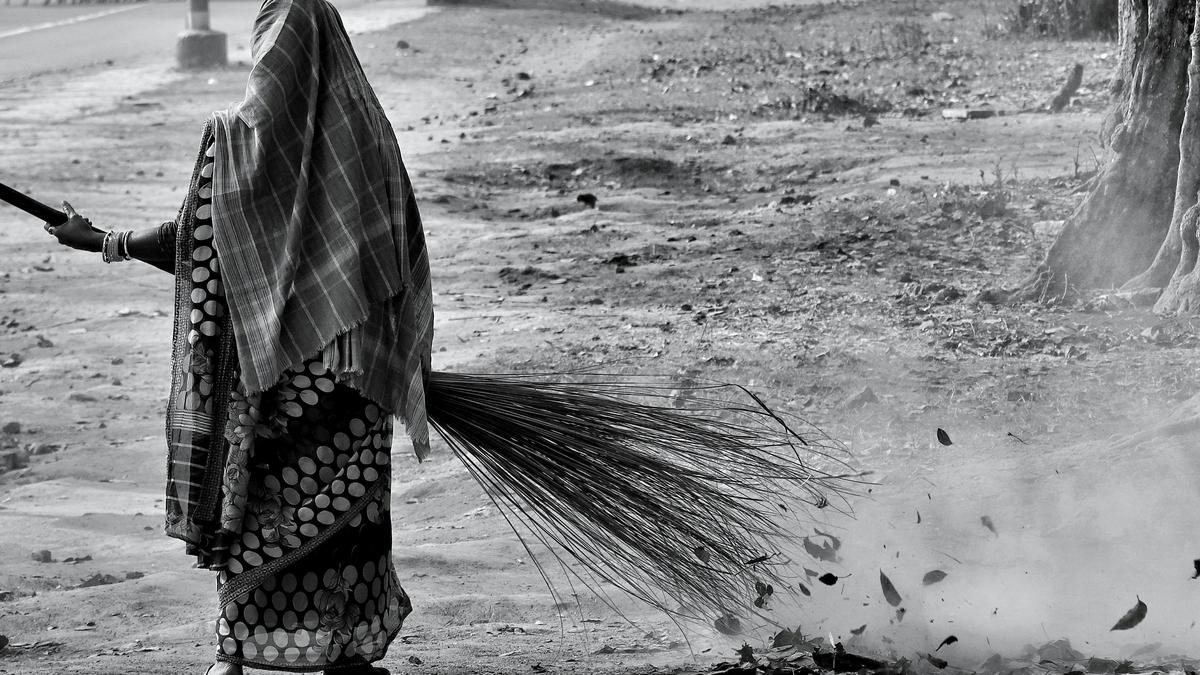
Road dust mainly comprises PM₁₀ and coarse particles and forms a large share of the air we breathe. With the National Clean Air Programme (NCAP) aiming for a 40% reduction in PM₁₀ by 2025-2026, reducing road dust is an urgent priority.

This is reinforced by source apportionment studies across 17 non-attainment cities that have found road dust to be a major contributor to PM10 (20-52%) as well as PM2.5 (8-25%) particles. IIT-Delhi researchers have also recorded that streets in 32 cities across Himachal Pradesh, Punjab, Rajasthan, Uttar Pradesh, and Telangana vary widely vis-à-vis their silt loads, from 0.2 g/m2 to 111.2 g/m²; Delhi averages 14.47 g/m².

Overall, cities in North India have heavier silt loads and are thus dustier than their southern counterparts.

In response, governments have already invested heavily in fighting dust. Per a 2024 reportby the Centre for Science and Environment, ₹19,711 crore was allocated to 131 cities between 2019 and 2025 under the NCAP to improve air quality. By November 2023, nearly 64% of the total fund had been spent on road dust control, far more than what was spent on tackling biomass burning, vehicular pollution, and capacity-building efforts.

While this suggests that there’s a prioritisation, it’s essential to assess effectiveness on the ground.

Policy landscape

Efforts to control road dust have been underway for several years. In January 2018, the Union Environment Ministry issued a notification to mitigate dust at construction sites, mandating paving and blacktopping of roads leading up to such sites. In 2021, the Commission for Air Quality Management in the National Capital Region and Adjoining Areas (CAQM) recommended the establishment of ‘Dust Control and Management Cells’. Following statutory directions from the CAQM, 68 Cells were set up to undertake a comprehensive set of actions, including identifying dust hotspots, paving and repairing roads and roadsides, greening central verges and roadsides, and deploying mechanised road-sweeping machines and anti-smog guns. The CAQM periodically reviews these activities. However, dust from roads and open areas remains a major driver of poor air quality in Delhi-NCR.

To strengthen its approach, the CAQM initiated a study called ‘Addressing vehicular traffic-induced road dust resuspension for air quality action plans’ in 2025. In the pilot phase, 24% of 82 km of assessed road length was found to be in poor condition, 42% moderate, and 34% good. The CAQM also set up a committee to develop a ‘Standard Framework for Controlling Dust Pollution from Roads and Open Areas’.

Both initiatives recommended multiple activities, including paving and greening, for the NCR states as well as additional steps such as digital mapping of all roads in Delhi-NCR and conducting comprehensive road condition surveys.

As is evident, these efforts were focused on Delhi-NCR whereas similar measures and institutional mechanisms are needed across India. Indeed, the Environment (Protection) Act 1986 and the Air (Prevention and Control of Pollution) Act 1981 make broad references to road dust management. The Construction and Demolition Waste Management Rules 2025 don’t outline specific regulations addressing road dust control at the national scale, however. There are also no standard operating procedures to scientifically dispose of the dust collected by manual and mechanised sweeping to prevent resuspension.

Jurisdictional puzzle

While the NCAP, the CAQM guidelines, and city action plans prioritise control options such as paving roads and roadsides, sprinkling water, and so on, the outcomes remain uneven. Even with 64% of the total NCAP fund spent on road repair and maintenance, 29 cities have reported an increase in PM10 concentrations. Of the 68 cities where the local PM10 concentration dropped, 61 were above the National Ambient Air Quality Standards, pointing to the limited effectiveness of extant interventions.

One major challenge is fragmented jurisdiction. Under the NCAP, municipal corporations and State Pollution Control Boards are required to curb road dust. In practice, however, the responsibility is split across multiple agencies. In Delhi, 12 agencies —  including the Municipal Corporation, the Delhi Development Authority, the Central Public Works Department, and the National Highways Authority of India — maintain roads. Similarly, 18 agencies are involved in Uttar Pradesh, 22 in Haryana, and 16 in Rajasthan. Without clearly demarcated roles, funds and accountability become diffused.

Operational constraints add to the problem. Of Delhi’s total road length of 19,000 km, only 8,000 km has been identified for mechanised sweeping. Around 200 mechanised road-sweeping machines (each operating at 40 km/hr) are required to clean this stretch every day. Yet the number of such machines in Delhi is only 85. This gap is much wider in other cities, underscoring the need to properly estimate road length and for machine mapping.

Road dust management guidelines should also be established to define the appropriate type of cleaning and maintenance machinery based on road width, surface type, traffic conditions, debris characteristics, water availability, and seasonal variations.

Finally, to ensure agencies coordinate better, a GIS-based platform should be created to allow them to monitor and resolve complaints in real-time, thus improving accountability. Such a system can be integrated with existing applications, such as the Green Delhi App and Swachhata App, to improve coordination and response.

Practical measures

Dust pollution is mainly caused by unscientific practices during road development and maintenance. The collected dust is typically discarded in landfills or on roadsides, wherefrom the wind easily carries it back into cities, rendering the entire sweeping process ineffective.

Dust suppressant chemicals such as calcium chloride, magnesium chloride, and natural polymer-based agents (e.g. lignosulphate and bitumen-based emulsions) are widely available. However, their effectiveness and impact on soil and road health aren’t well documented. We need scientifically informed mitigation strategies, including guidelines for using dust suppressants and scientific disposal mechanisms for collection.

Addressing road and open-area dust across India will require a holistic and time-bound approach, embedded within a long-term, sustainable urban planning framework. A comprehensive, science-based regulatory mechanism for cleaner road construction and maintenance, considering open roadsides and air quality as critical components of infrastructure development plans, is essential.

Thoughtfully designed and consistently implemented dust control strategies can significantly enhance air quality, protect public health, and help build more resilient and liveable cities.

Charu Tyagi is a senior associate and Swagata Dey heads the Air Quality Policy and Outreach team, both at the Center for Study of Science, Technology and Policy (CSTEP), a research-based think tank.


Source link

Science

Post navigation

Previous Post: Access Denied

Related Posts

  • Russia’s Luna-25 spacecraft enters lunar orbit
    Russia’s Luna-25 spacecraft enters lunar orbit Science
  • How much salt should you take every day?
    How much salt should you take every day? Science
  • Chinese lunar probe returns to Earth with world’s first samples from the far side of the moon
    Chinese lunar probe returns to Earth with world’s first samples from the far side of the moon Science
  • Drought, degrading land take centrestage at UN talks in Riyadh
    Drought, degrading land take centrestage at UN talks in Riyadh Science
  • Understanding ovarian cancer: its causes, symptoms, and screening methods
    Understanding ovarian cancer: its causes, symptoms, and screening methods Science
  • Antarctic winter sea ice hits ‘extreme’ record low
    Antarctic winter sea ice hits ‘extreme’ record low Science

More Related Articles

Lok Sabha Speaker urges ethical adoption of AI to bridge the digital divide Lok Sabha Speaker urges ethical adoption of AI to bridge the digital divide Science
Platelets ‘can replicate benefits of exercise in brain’, shows study Platelets ‘can replicate benefits of exercise in brain’, shows study Science
In Odisha, coal dust is clogging leaves and blocking carbon uptake In Odisha, coal dust is clogging leaves and blocking carbon uptake Science
Tea drinking across India – The Hindu Tea drinking across India – The Hindu Science
Not your everyday forecast: Odd weather you won’t believe is real Not your everyday forecast: Odd weather you won’t believe is real Science
Why are earthquakes frequent in Afghanistan? | Explained Why are earthquakes frequent in Afghanistan? | Explained Science
SiteLock

Archives

  • November 2025
  • October 2025
  • September 2025
  • August 2025
  • July 2025
  • June 2025
  • May 2025
  • April 2025
  • March 2025
  • February 2025
  • January 2025
  • December 2024
  • November 2024
  • October 2024
  • September 2024
  • August 2024
  • July 2024
  • June 2024
  • May 2024
  • April 2024
  • March 2024
  • February 2024
  • January 2024
  • December 2023
  • November 2023
  • October 2023
  • September 2023
  • August 2023
  • July 2023
  • June 2023
  • May 2023
  • April 2023
  • March 2023
  • February 2023
  • January 2023
  • December 2022
  • November 2022
  • October 2022
  • September 2022
  • August 2022
  • July 2022
  • June 2022
  • May 2022

Categories

  • Business
  • Nation
  • Science
  • Sports
  • World

Recent Posts

  • Where does road dust settle in India’s efforts to clean its air?
  • Access Denied
  • Access Denied
  • Stock markets rebound in early trade amid rally in IT stocks, firm global trends
  • Access Denied

Recent Comments

  1. dfb{{98991*97996}}xca on UP Teacher Who Asked Students To Slap Muslim Classmate
  2. "dfbzzzzzzzzbbbccccdddeeexca".replace("z","o") on UP Teacher Who Asked Students To Slap Muslim Classmate
  3. 1}}"}}'}}1%>"%>'%> on UP Teacher Who Asked Students To Slap Muslim Classmate
  4. bfg6520<s1﹥s2ʺs3ʹhjl6520 on UP Teacher Who Asked Students To Slap Muslim Classmate
  5. pHqghUme9356321 on UP Teacher Who Asked Students To Slap Muslim Classmate
  • Heavy Rain, Strong Winds In Odisha, Bengal As Cyclone Dana Makes Landfall
    Heavy Rain, Strong Winds In Odisha, Bengal As Cyclone Dana Makes Landfall Nation
  • Andhra Pradesh Probe Agency Serves Arrest Warrant To TDP Chief Chandrababu Naidu: Report
    Andhra Pradesh Probe Agency Serves Arrest Warrant To TDP Chief Chandrababu Naidu: Report Nation
  • Access Denied Sports
  • US Embassy Warns “Extremists” Planning Attack On Moscow Concert
    US Embassy Warns “Extremists” Planning Attack On Moscow Concert World
  • Jeet Adani On Navi Mumbai Airport’s New Milestone
    Jeet Adani On Navi Mumbai Airport’s New Milestone Nation
  • Walmart announces strategic pilots with India-based startups
    Walmart announces strategic pilots with India-based startups Business
  • Zelenskyy says ready to join Putin, Trump at Budapest summit if invited
    Zelenskyy says ready to join Putin, Trump at Budapest summit if invited World
  • “Captain For Last 10 Years…”: Rohit Sharma Breaks Silence On Mumbai Indians’ Poor Start, Captaincy
    “Captain For Last 10 Years…”: Rohit Sharma Breaks Silence On Mumbai Indians’ Poor Start, Captaincy Sports

Editor-in-Chief:
Mohammad Ariff,
MSW, MAJMC, BSW, DTL, CTS, CNM, CCR, CAL, RSL, ASOC.
editor@artifex.news

Associate Editors:
1. Zenellis R. Tuba,
zenelis@artifex.news
2. Haris Daniyel
daniyel@artifex.news

Photograher:
Rohan Das
rohan@artifex.news

Artifex.News offers Online Paid Internships to college students from India and Abroad. Interns will get a PRESS CARD and other online offers.
Send your CV (Subjectline: Paid Internship) to internship@artifex.news

Links:
Associate Journalism
About Us
Privacy Policy

News Links:
Breaking News
World
Nation
Sports
Business
Entertainment
Lifestyle

Registered Office:
72/A, Elliot Road, Kolkata - 700016
Tel: 033-22277777, 033-22172217
Email: office@artifex.news

Editorial Office / News Desk:
No. 13, Mezzanine Floor, Esplanade Metro Rail Station,
12 J. L. Nehru Road, Kolkata - 700069.
(Entry from Gate No. 5)
Tel: 033-46011099, 033-46046046
Email: editor@artifex.news

Copyright © 2023 Artifex.News Newsportal designed by Artifex Infotech.