



Skip to content
  • Facebook
  • X
  • Linkedin
  • WhatsApp
  • YouTube
  • Associate Journalism
  • About Us
  • Privacy Policy
  • 033-46046046
  • editor@artifex.news
Artifex.News

Artifex.News

Stay Connected. Stay Informed.

  • Breaking News
  • World
  • Nation
  • Sports
  • Business
  • Science
  • Entertainment
  • Lifestyle
  • Toggle search form
  • Access Denied Sports
  • Congress Meets Poll Commission After Haryana Setback
    Congress Meets Poll Commission After Haryana Setback Nation
  • Biden names technology hubs for 32 states and Puerto Rico to help the industry and create jobs
    Biden names technology hubs for 32 states and Puerto Rico to help the industry and create jobs World
  • Mark Wood Bowls 151.2 Kmph Delivery, Rohit Sharma’s Response Even Better. Watch
    Mark Wood Bowls 151.2 Kmph Delivery, Rohit Sharma’s Response Even Better. Watch Sports
  • Cops Probe Dowry Harassment By Husband, Family
    Cops Probe Dowry Harassment By Husband, Family Nation
  • Actor Mohan Babu Visits Journalist After Assault, Personally Apologises
    Actor Mohan Babu Visits Journalist After Assault, Personally Apologises Nation
  • Access Denied Sports
  • The Hindu Morning Digest: July 29, 2024
    The Hindu Morning Digest: July 29, 2024 World
The rational ape: study says chimpanzees reason through their beliefs

The rational ape: study says chimpanzees reason through their beliefs

Posted on November 24, 2025 By admin


When, in 1960, the British primatologist Jane Goodall first observed chimpanzees at Gombe National Park in Tanzania using twigs to fish termites out of anthills, she was making scientific history. Researchers had until then believed only humans could use tools. Goodall’s discovery erased that line as well as raised important questions about what it means to be human.

Now, a study published in Science on October 30 has suggested that another supposedly uniquely human trait — the ability to weigh evidence, revise beliefs, and change one’s mind — may not be ours alone. (This is of course setting aside machines.)

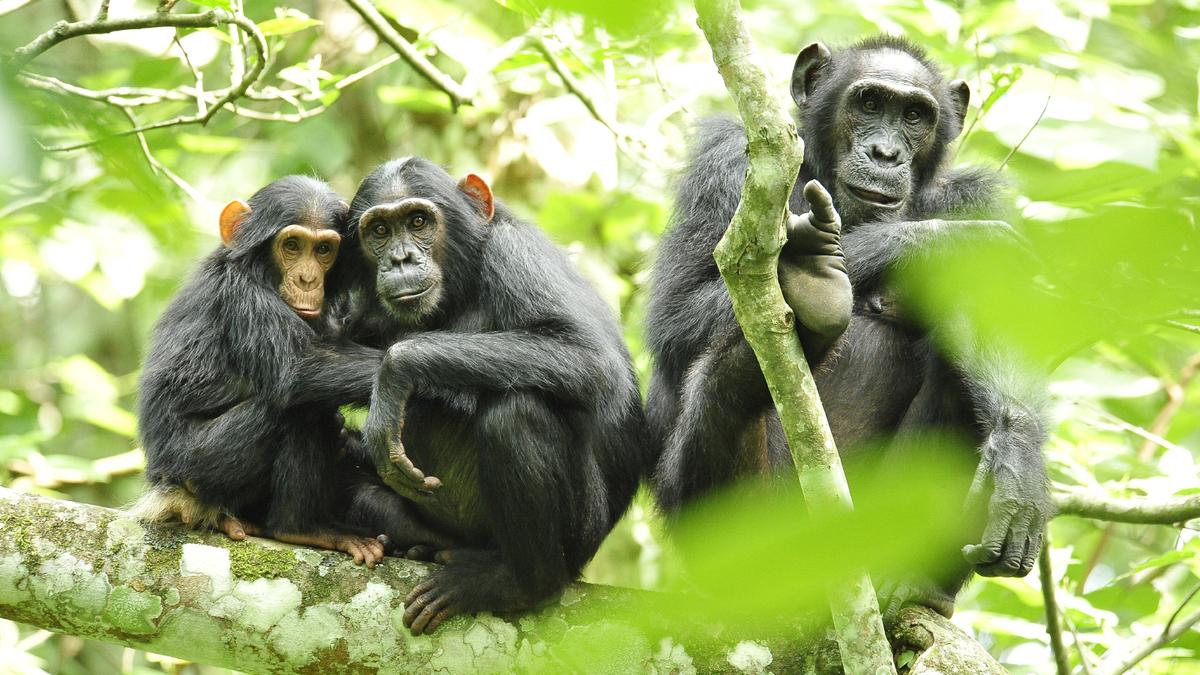
A team of experts from the Netherlands, Uganda, the UK, and the US observed 15-23 chimpanzees at the Ngamba Island Chimpanzee Sanctuary in Uganda through a series of carefully designed behavioural tests. The question they were trying to answer was simple: when faced with conflicting clues about where food is hidden, do chimpanzees follow the most recent signal or do they combine information, remember it, and update their beliefs, much like humans do when they think rationally?

Five tests

The researchers used five simple tests to examine how chimpanzees revised their beliefs.

“To run this study, we really had to break it down and ask: what is rationality at its roots?” Utrecht University assistant professor and the study’s lead author Hanna Schleihauf said. “What are its most fundamental components? And how do you test this in a non-verbal way?”

The team used a Bayesian model to generate predictions about the great apes’ decisions and compared them with their actual behaviour. A Bayesian model is a statistical way to understand or predict something by continuously updating one’s beliefs with new evidence.

The first test checked how chimpanzees responded to strong and weak clues. A strong clue could be in the form of seeing food dropped into a container; a weak clue could be hearing food rattling inside the container. The researchers also switched the order in which these clues appeared.

This way, the team observed that when the strong clue came second, the chimpanzees were more likely to change their original choice, suggesting they weren’t simply reacting to the most recent signal but were weighing how reliable each clue could be.

The second test examined whether this pattern held when the team swapped the clues. This time, the strong clue was auditory while the weak clue involved vague movements or traces of food. As before, the chimpanzees consistently favoured the stronger, more reliable clues regardless of when it appeared.

The third test explored how well the chimpanzees remembered the clues. The scientists introduced three containers, one with a strong clue, one with a weak clue, and a third with no clues. After the chimpanzees picked the container with the strongest clue, the researchers removed it and presented them with the remaining two (somewhat like the Monty Hall problem for humans). The chimpanzees more often than not picked the container with the weak clue rather than the one with no information, suggesting they kept multiple possibilities in mind rather than focus solely on the strongest clue.

Next, the scientists checked whether the chimpanzees could differentiate between information they already had and something new. The great apes were made to hear either the same sounds of food rattling in a can twice or a new sound the second time. The chimpanzees changed their choice only when the second signal added something new, indicating they could tell old information from genuinely new evidence.

The final test explored how the chimpanzees responded when their initial belief was undermined. When the scientists presented a “defeater” clue that directly contradicted a prior strong clue, for instance by revealing that a rattling sound had come from a pebble rather than food, the chimpanzees revised their choices. However, they ignored the same ‘defeater’ when it wasn’t linked to previous positive evidence.

Not uniquely human

Taken together, the tests show the chimpanzees didn’t simply respond to the last or loudest clues. Instead they evaluated how relevant and reliable each piece of information was, kept multiple possibilities open, and updated their choices in ways that resemble rational, evidence-based reasoning in humans.

“This shows [the study] that they are aware of the reasons for their choices, a skill that has been believed to be uniquely human,” Prof. Schleihauf said.

How would this sort of rational thinking turn up in the everyday lives of wild chimpanzees? Since this study was carried out in semi-captive conditions and with rescued chimpanzees, the researchers could offer only hypothetical examples.

As Prof. Schleihauf said: “Imagine a chimpanzee sees a red fruit on the ground and walks towards a tree because it assumes the fruit must have fallen from there. But when it reaches the spot, it realises the ‘fruit’ was only a cluster of red leaves. In that moment, the chimpanzee should revise its belief: it should no longer think that this tree is full of ripe fruit.”

‘Bigger questions’

According to Tetsuro Matsuzawa, a primatologist and former director of Kyoto University Primate Research Institute (and who wasn’t involved in the study), it would be extremely difficult to observe such traits in wild chimpanzees in their daily lives because researchers simply wouldn’t be able to make enough repeat observations to show reliably that chimpanzees can revise their beliefs in ways demonstrated in the study.

Nonetheless, he added, “This study also raises bigger questions about the evolutionary roots of human rationality. It shows that rational thinking is not limited to humans, and prompts us to ask how much of this ability is shared with chimpanzees and other great apes, a question now brought to the forefront.”

Ipsita Herlekar is an independent science writer.

Published – November 24, 2025 05:30 am IST



Source link

Science

Post navigation

Previous Post: Sudan Army chief slams Quad truce proposal as ‘worst yet’
Next Post: What Gen Z is really talking about when they talk politics

Related Posts

  • Where is the ‘rainbow capital’ of the world?
    Where is the ‘rainbow capital’ of the world? Science
  • The Science Quiz: Happy Children’s Day
    The Science Quiz: Happy Children’s Day Science
  • Aerobic exercise creates a muscle protein that boosts mouse memory
    Aerobic exercise creates a muscle protein that boosts mouse memory Science
  • India’s space startup calls off maiden rocket launch for a fourth time
    India’s space startup calls off maiden rocket launch for a fourth time Science
  • Microbe might spark first stages of ulcerative colitis: new study
    Microbe might spark first stages of ulcerative colitis: new study Science
  • Astronomers spot storm on another star for first time
    Astronomers spot storm on another star for first time Science

More Related Articles

How AI helped promote community-led development in Rajasthan How AI helped promote community-led development in Rajasthan Science
IISc announces distinguished alumni awards for 2023 IISc announces distinguished alumni awards for 2023 Science
Forest loss from SE Asia rubber is up to 3 times more than thought: study Forest loss from SE Asia rubber is up to 3 times more than thought: study Science
New book throws light on the people who helped build India’s first rockets New book throws light on the people who helped build India’s first rockets Science
India’s space economy has potential to reach  billion by 2033 with about 8% global share India’s space economy has potential to reach $44 billion by 2033 with about 8% global share Science
European carbon removal specialists to support new projects in India European carbon removal specialists to support new projects in India Science
SiteLock

Archives

  • May 2026
  • April 2026
  • March 2026
  • February 2026
  • January 2026
  • December 2025
  • November 2025
  • October 2025
  • September 2025
  • August 2025
  • July 2025
  • June 2025
  • May 2025
  • April 2025
  • March 2025
  • February 2025
  • January 2025
  • December 2024
  • November 2024
  • October 2024
  • September 2024
  • August 2024
  • July 2024
  • June 2024
  • May 2024
  • April 2024
  • March 2024
  • February 2024
  • January 2024
  • December 2023
  • November 2023
  • October 2023
  • September 2023
  • August 2023
  • July 2023
  • June 2023
  • May 2023
  • April 2023
  • March 2023
  • February 2023
  • January 2023
  • December 2022
  • November 2022
  • October 2022
  • September 2022
  • August 2022
  • July 2022
  • June 2022
  • May 2022

Categories

  • Business
  • Nation
  • Science
  • Sports
  • World

Recent Posts

  • South Coast Railway zone: Visakhapatnam operations to begin June 1; CPI calls it 40-year triumph
  • FIR against Tumakuru madrasa management after 24 runaway children allege abuse and forced labour
  • Six die in an accident in Tiruppur district
  • Stock markets pare early gains; trade lower
  • Watch: Trump: ‘Believe it or not, we’re going to get a settlement between Russia and Ukraine’

Recent Comments

  1. DavidAnymn on UP Teacher Who Asked Students To Slap Muslim Classmate
  2. Jesusetexy on UP Teacher Who Asked Students To Slap Muslim Classmate
  3. JeffryFok on UP Teacher Who Asked Students To Slap Muslim Classmate
  4. StanleyPeapy on UP Teacher Who Asked Students To Slap Muslim Classmate
  5. RonaldLam on UP Teacher Who Asked Students To Slap Muslim Classmate
  • Access Denied Sports
  • Venezuela arrests Spain, U.S. and Czech nationals for ‘destabilisation’
    Venezuela arrests Spain, U.S. and Czech nationals for ‘destabilisation’ World
  • BJP MP Tejasvi Surya’s Swipe At INDIA Bloc
    BJP MP Tejasvi Surya’s Swipe At INDIA Bloc Nation
  • Bhutan PM At NDTV World Summit
    Bhutan PM At NDTV World Summit World
  • What is sonoluminescence?
    What is sonoluminescence? Science
  • Jharkhand Assembly Election 2024 LIVE: Phase 1 In Jharkhand, Priyanka Gandhi’s Test In Wayanad Today: 10 Facts
    Jharkhand Assembly Election 2024 LIVE: Phase 1 In Jharkhand, Priyanka Gandhi’s Test In Wayanad Today: 10 Facts Nation
  • Access Denied Business
  • Markets rebound in early trade on rally in global equities, foreign fund inflows
    Markets rebound in early trade on rally in global equities, foreign fund inflows Business

Editor-in-Chief:
Mohammad Ariff,
MSW, MAJMC, BSW, DTL, CTS, CNM, CCR, CAL, RSL, ASOC.
editor@artifex.news

Associate Editors:
1. Zenellis R. Tuba,
zenelis@artifex.news
2. Haris Daniyel
daniyel@artifex.news

Photograher:
Rohan Das
rohan@artifex.news

Artifex.News offers Online Paid Internships to college students from India and Abroad. Interns will get a PRESS CARD and other online offers.
Send your CV (Subjectline: Paid Internship) to internship@artifex.news

Links:
Associate Journalism
About Us
Privacy Policy

News Links:
Breaking News
World
Nation
Sports
Business
Entertainment
Lifestyle

Registered Office:
72/A, Elliot Road, Kolkata - 700016
Tel: 033-22277777, 033-22172217
Email: office@artifex.news

Editorial Office / News Desk:
No. 13, Mezzanine Floor, Esplanade Metro Rail Station,
12 J. L. Nehru Road, Kolkata - 700069.
(Entry from Gate No. 5)
Tel: 033-46011099, 033-46046046
Email: editor@artifex.news

Copyright © 2023 Artifex.News Newsportal designed by Artifex Infotech.