

Skip to content
  • Facebook
  • X
  • Linkedin
  • WhatsApp
  • YouTube
  • Associate Journalism
  • About Us
  • Privacy Policy
  • 033-46046046
  • editor@artifex.news
Artifex.News

Artifex.News

Stay Connected. Stay Informed.

  • Breaking News
  • World
  • Nation
  • Sports
  • Business
  • Science
  • Entertainment
  • Lifestyle
  • Toggle search form
  • Saudi Woman Jailed For 11 Years Over Social Media Posts, Says Amnesty
    Saudi Woman Jailed For 11 Years Over Social Media Posts, Says Amnesty World
  • Access Denied World
  • Finance Ministry’s financial inclusion push sees 61 lakh new bank accounts, 2.6 crore insurance enrolments so far
    Finance Ministry’s financial inclusion push sees 61 lakh new bank accounts, 2.6 crore insurance enrolments so far Business
  • T20 World Cup 2024: Rishabh Pant — the breath of fresh air India needed at No. 3
    T20 World Cup 2024: Rishabh Pant — the breath of fresh air India needed at No. 3 Sports
  • “Yet To Find Perfect Approach”: Pakistan Test Skipper Shan Masood Ahead Of Bangladesh Series
    “Yet To Find Perfect Approach”: Pakistan Test Skipper Shan Masood Ahead Of Bangladesh Series Sports
  • Indian-Origin Man Shot Dead During Robbery In Texas Came To US 8 Months Ago
    Indian-Origin Man Shot Dead During Robbery In Texas Came To US 8 Months Ago World
  • Stock markets rebound in early trade after seven days of fall Business
  • Access Denied World
Time to sort out India’s cereal mess

Time to sort out India’s cereal mess

Posted on November 18, 2025 By admin


The recent controversy in Tamil Nadu over paddy procurement during the short-term kuruvai season has only strengthened the need for a relook at the procurement system of foodgrains as a whole. In this case — as in many States — the Tamil Nadu Civil Supplies Corporation (TNCSC), which procures paddy on behalf of the Food Corporation of India (FCI), found itself in a spot because of time overruns and charges of corruption. One of the reasons cited is the rise in the coverage of the crop during the season, by about two lakh acres, which was known as early as mid-August. This is because farmers feel it is a safe bet to grow paddy rather than other crops due to minimum assured returns.

Paddy procurement data

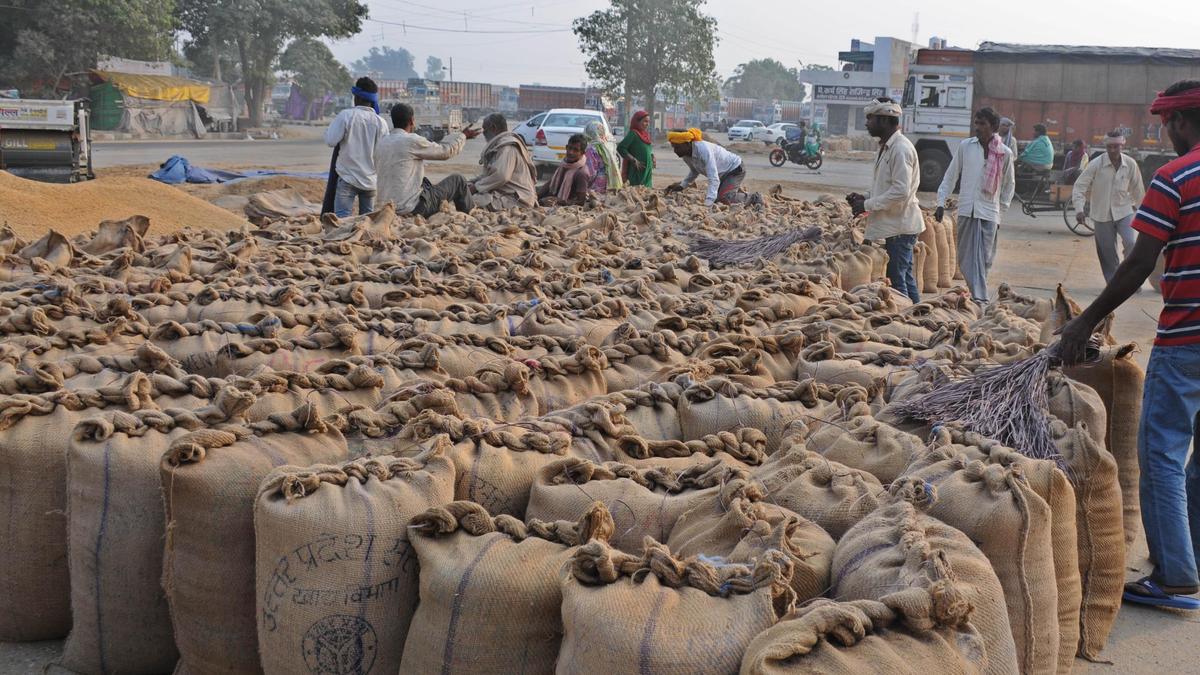
The glut is not restricted to Tamil Nadu. Going by the data of the Union Ministry of Consumer Affairs, Food and Public Distribution, the procurement of paddy (in terms of rice) all over the country was nearly 119.86 lakh tonnes as on October 31, 2025 compared to 82.08 lakh tonnes on the corresponding day last year. In the last three years, with regard to rice and wheat, the quarterly opening stock position, as on October 1, was consistently higher than what is prescribed under the norms for the central pool. In the case of rice, the quantity is at least two times more than the requirement. In October this year, the stock was 356.1 lakh tonnes against the norm of 102.5 lakh tonnes.

Compared to wheat, rice is still abundant, if one goes by the Union government’s data for the last three years on procurement and offtake under the National Food Security Act (NFSA) and other schemes. Between April 2022 and March 2025, the procurement of rice at the all-India level hovered around 525 lakh tonnes-547 lakh tonnes every year, whereas annual offtake under the Public Distribution System (PDS) was in the range of 392 lakh tonnes- 427 lakh tonnes.

Significantly, in the case of wheat, the utilisation under the PDS exceeded the quantity of procurement in two of the last three years (barring 2024-25). At the same time, it must be noted that the Union government spends around ₹2 lakh crore every year in food subsidy.

While, on the one hand, the country is grappling with surplus stocks of rice, on the other it is incurring a huge expenditure in the import of pulses and oilseeds, which are two essential commodities that are central in every Indian household. Ironically, in the case of pulses, India is the largest producer in the world — 252.4 lakh tonnes in 2024-25. The two years, from 2023-24, saw a substantial fall in the procurement of notified pulses at minimum support prices (MSP) through agencies which included the National Agricultural Cooperative Marketing Federation of India.

Edible oil imports

According to the annual report of the Union Ministry of Agriculture and Farmers Welfare for 2024-25, the country imported edible oil (₹1.2 lakh crore) and pulses (₹30,000 crore) during 2023-24. In the case of edible oil, about 55% of the demand is met only through imports. Needless to say, the Russia-Ukraine war, which began in February 2022, is a factor that contributed to the steep rise in the cost of edible oil imports which was around ₹82,000 crore in 2020-21, though the quantity imported remained between 135 lakh tonnes-157 lakh tonnes a year in the last six years.

Ironically, the country’s production of oilseeds, since 2014, crossed the 400-lakh-tonne mark only once, despite there being no large change in the area covered, which was around 25 million hectares. For about 25 years, experts and the media have been holding the government’s decision in the 1990s to allow the import of cheaper edible oil responsible for the adverse effect on domestic production. Yet, the response to counter the impact has not been adequate.

The situation raises a fundamental question: whether the country, in the name of ensuring food security, is following a sustainable policy of procurement at least with regard to rice. It also raises other pertinent questions. Is paddy cultivation being encouraged at the cost of crop rotation? Also, why is it that the country’s efforts to improve pulse and oilseed production have not been spectacular unlike in the case of paddy and wheat about 55 years ago? And, should India continue to have the existing arrangement of one or the other central agency in the procurement, storage, transportation and allocation of foodgrains in bulk to the States?

The authorities may protest, if any study is conducted with regard to leakage in the PDS (which was originally meant for managing food supplies during scarcity), as they did about a year ago when an Indian Council for Research on International Economic Relations (ICRIER) report had stated that there was about a 28% loss of rice and wheat during distribution. It is also well known that the system is far from perfect.

Incentivise crop diversification

To wean paddy-growing farmers from the cereal, crop diversification can be tried out after carrying out area-specific market studies of demand and supply with the involvement of every stakeholder. . One reason why farmers have not taken to diversification in a big way is uncertainty about success if there is a crop switch. Their apprehension can be allayed only by offering financial support and proper guidance. As it is clear that the country is producing more rice than required, the government should allow farmers to freely export rice and not resort to restrictions in a knee-jerk manner.

Many a time, primary procurers of agricultural products are in the dark about the suppliers. For instance, papad manufacturers getting to tie-up directly with farmers who raise blackgram or have the means to do so, will result in a win-win situation for both. If such farmers are able to organise themselves as farmers producers’ organisations (FPOs), the results will be more durable. The Centre and the States can facilitate such an arrangement.

As an institution, FPOs are still in a nascent stage. Their services can be tapped by the authorities for a range of purposes — educating farmers about soil health; sensitising them to go in for crop diversification; preparing the groundwork for market studies, and establishing the supply chain.

As in West Bengal, FPOs can be utilised for paddy procurement to reduce the load on existing players. Self-help groups and cooperative societies should also be encouraged more in this respect. Wherever required, all such new entrants should be covered under capacity building programmes.

Changes in such a complex system cannot happen overnight but a beginning can be made. It is time that agriculture experts, farmers, food security specialists, policy makers and planners collectively deliberated on ways to plug the loopholes in the system, if not reform it.

Published – November 19, 2025 12:16 am IST


Source link

Business Tags:Food Corporation of India, import of edible oil, india, National Agricultural Cooperative Marketing Federation of India, procurement of paddy, procurement system of foodgrains, Public Distribution System, Russia -Ukraine war, short-term kuruvai season, Tamil Nadu and paddy procurement, Tamil Nadu Civil Supplies Corporation, time overruns and charges of corruption, Union Ministry of Consumer Affairs Food and Public Distribution

Post navigation

Previous Post: Access Denied
Next Post: Access Denied

Related Posts

  • Budget 2026-27: ‘Tourism can go from threat to tool for empowerment’
    Budget 2026-27: ‘Tourism can go from threat to tool for empowerment’ Business
  • Karur Vysya Bank to open 100 new branches in FY25: MD & CEO
    Karur Vysya Bank to open 100 new branches in FY25: MD & CEO Business
  • Access Denied Business
  • Rupee turns flat against U.S. dollar in early trade
    Rupee turns flat against U.S. dollar in early trade Business
  • Access Denied Business
  • New Delhi To Cut Tariffs To 40% For Mercedes, Other Players, Reports Say Business

More Related Articles

2024 Interim Budget | Inclusive, innovative, sign of continuity: PM Modi 2024 Interim Budget | Inclusive, innovative, sign of continuity: PM Modi Business
Access Denied Business
Tesla under investigation after parents say faulty door handles trapped their kids in the back Tesla under investigation after parents say faulty door handles trapped their kids in the back Business
Why are Indian spices facing the heat? | Explained Why are Indian spices facing the heat? | Explained Business
Manufacturing PMI at 2-year low in December 2025 on easing new orders, output and employment Manufacturing PMI at 2-year low in December 2025 on easing new orders, output and employment Business
Access Denied Business
SiteLock

Archives

  • May 2026
  • April 2026
  • March 2026
  • February 2026
  • January 2026
  • December 2025
  • November 2025
  • October 2025
  • September 2025
  • August 2025
  • July 2025
  • June 2025
  • May 2025
  • April 2025
  • March 2025
  • February 2025
  • January 2025
  • December 2024
  • November 2024
  • October 2024
  • September 2024
  • August 2024
  • July 2024
  • June 2024
  • May 2024
  • April 2024
  • March 2024
  • February 2024
  • January 2024
  • December 2023
  • November 2023
  • October 2023
  • September 2023
  • August 2023
  • July 2023
  • June 2023
  • May 2023
  • April 2023
  • March 2023
  • February 2023
  • January 2023
  • December 2022
  • November 2022
  • October 2022
  • September 2022
  • August 2022
  • July 2022
  • June 2022
  • May 2022

Categories

  • Business
  • Nation
  • Science
  • Sports
  • World

Recent Posts

  • Xi warns Trump Taiwan issue could lead to ‘conflict’ as U.S.-China summit starts
  • New pop-ups and menus to try in Bengaluru this May
  • Congress MLA-elects make a beeline for Indira Bhavan as AICC inches closer to announcing its Chief Minister pick for Kerala
  • Woman gang-raped in sleeper bus in New Delhi
  • Lebanon, Israel to hold new talks in U.S. as ceasefire nears end

Recent Comments

  1. Davidcag on UP Teacher Who Asked Students To Slap Muslim Classmate
  2. OrvalMaync on UP Teacher Who Asked Students To Slap Muslim Classmate
  3. Jeffreyroure on UP Teacher Who Asked Students To Slap Muslim Classmate
  4. Stevemonge on UP Teacher Who Asked Students To Slap Muslim Classmate
  5. RichardClage on UP Teacher Who Asked Students To Slap Muslim Classmate
  • DoT’s WhatsApp SIM-binding mandate faces pushback from Broadband India Forum
    DoT’s WhatsApp SIM-binding mandate faces pushback from Broadband India Forum Business
  • 5 Soldiers Injured In Terror Attack On Army Vehicle In J&K’s Gulmarg
    5 Soldiers Injured In Terror Attack On Army Vehicle In J&K’s Gulmarg Nation
  • Spiritual Leader Kripalu Maharaj’s Daughter, 75, Dies In Road Accident: Cops
    Spiritual Leader Kripalu Maharaj’s Daughter, 75, Dies In Road Accident: Cops Nation
  • Access Denied
    Access Denied Nation
  • Access Denied
    Access Denied Nation
  • Why no action taken against health official accused of harassing lady doctor in a Delhi govt hospital: AAP asks L-G Saxena
    Why no action taken against health official accused of harassing lady doctor in a Delhi govt hospital: AAP asks L-G Saxena Nation
  • Access Denied Sports
  • Getting Weird Notifications On Gmail? Google Agrees The App Is Broken Business

Editor-in-Chief:
Mohammad Ariff,
MSW, MAJMC, BSW, DTL, CTS, CNM, CCR, CAL, RSL, ASOC.
editor@artifex.news

Associate Editors:
1. Zenellis R. Tuba,
zenelis@artifex.news
2. Haris Daniyel
daniyel@artifex.news

Photograher:
Rohan Das
rohan@artifex.news

Artifex.News offers Online Paid Internships to college students from India and Abroad. Interns will get a PRESS CARD and other online offers.
Send your CV (Subjectline: Paid Internship) to internship@artifex.news

Links:
Associate Journalism
About Us
Privacy Policy

News Links:
Breaking News
World
Nation
Sports
Business
Entertainment
Lifestyle

Registered Office:
72/A, Elliot Road, Kolkata - 700016
Tel: 033-22277777, 033-22172217
Email: office@artifex.news

Editorial Office / News Desk:
No. 13, Mezzanine Floor, Esplanade Metro Rail Station,
12 J. L. Nehru Road, Kolkata - 700069.
(Entry from Gate No. 5)
Tel: 033-46011099, 033-46046046
Email: editor@artifex.news

Copyright © 2023 Artifex.News Newsportal designed by Artifex Infotech.