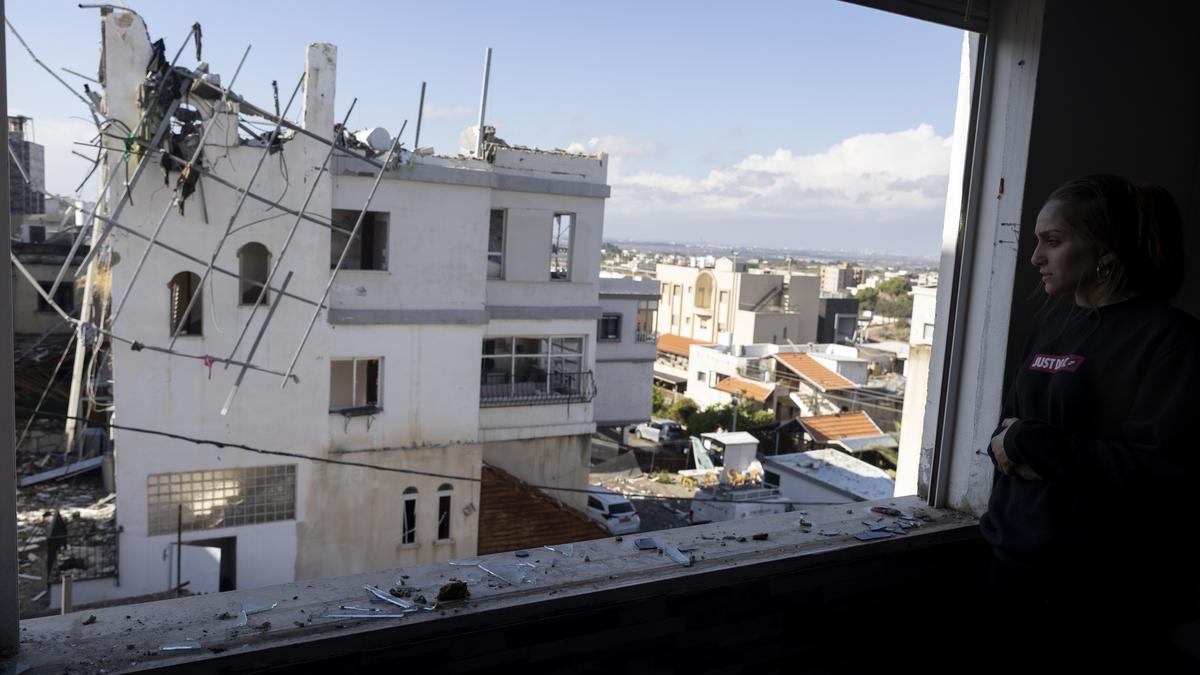





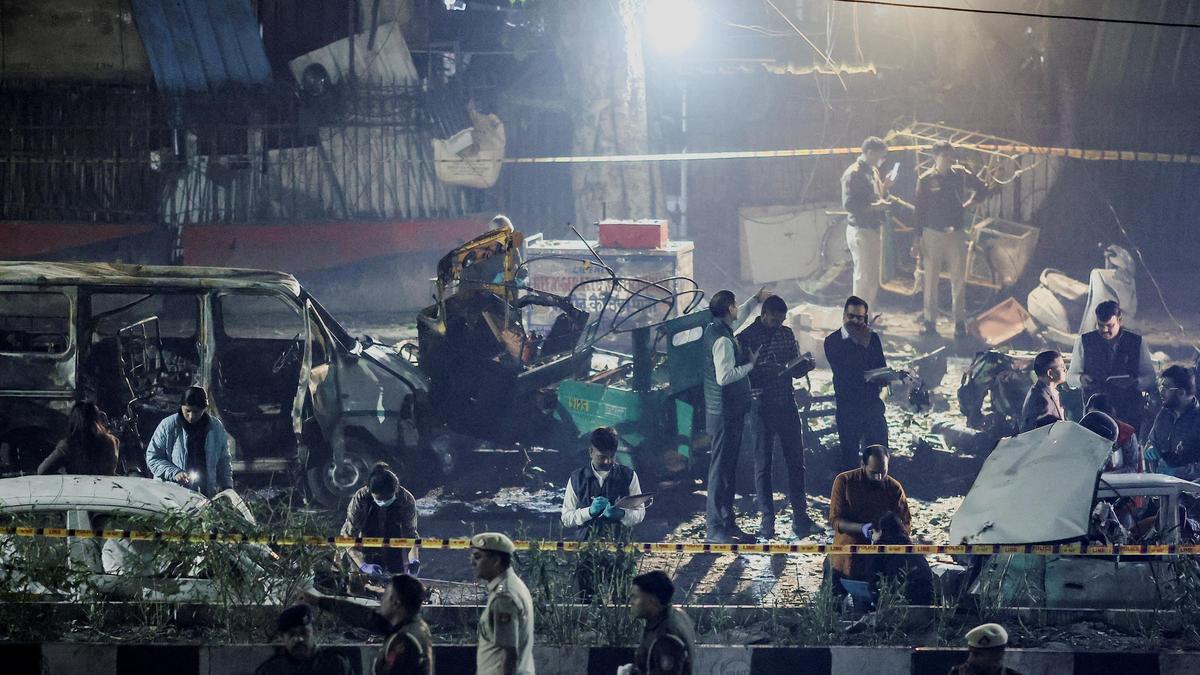
The story so far: On November 10, New Delhi witnessed a massive explosion near the Red Fort complex. An i20 car parked at the signal of the complex exploded, destroying several nearby cars, buses, and the people inside them. As of now, 13 people have been confirmed dead.
What do forensic experts do?
Experts of the Explosives Department of the Delhi Forensic Laboratory visited the scene within half an hour along with police personnel. The primary job of forensic experts in such situations is to observe and analyse the cause from a scientific perspective. They collect necessary samples and arrange for quick laboratory tests so that the cause of the accident can be found, or the identities of the people involved in the crime can be verified in a science-based manner.
It is worth noting that various media houses often report that forensic members collect samples from the site, which is partly accurate; the site does provide a wealth of information for any skilled forensic expert. However, an explosion is different from other crimes; here everything is shattered in an instant. Explosions generate intense pressure and heat, causing everything at the scene to burn to ashes, thereby complicating the work of experts. Despite the challenges, they persist in their efforts. Locard’s principle states that a criminal will leave something at the scene and bring something when he arrives; both are equally important as evidence in forensics. Thus, there must be a sample linking the suspect to the scene, from which it could be possible to guess the intensity of the explosion, the source, and what kind of explosives were used.
Photographers are also present and take pictures of the site from different angles, and experts make a sketch of it, which serve as a guideline for various stages of analysis. Along with this, various burnt pieces (which experts call debris), broken parts of the car, carbon powder, etc. are collected from the scene. These samples are then analysed by explosives experts in the laboratory using spectroscopic and chromatographic techniques to determine the type of chemicals used.
During the on-site inspection, it is necessary to figure out if any piece of electronic gadget has been found, because in remote-controlled explosions, an auto-timer, the best activation technique, is usually used. However, no timer or electronic circuit has been found in the Delhi incident.
What kind of tests are done?
After gathering and analysing the initial data, experts then try to reconstruct the crime scene to better understand the explosion’s timing. For this, experts use Fourier Transform Infrared Spectroscopy (FTIR) and Attenuated Total Reflectance-FTIR (ATR-FTIR). In these tests, forensic experts analyse the spectrum of the absorbed light to find out how the collected samples interact with infrared light.
The chemical composition of explosives is detected using field-specific Raman spectroscopy. Advanced Scanning Electron Microscopy (SEM) is used to analyse the morphology of the fragments found after the explosion, while Energy Dispersive X-ray (EDX) techniques are used for fundamental analysis of the residues. Scientists also use thermal analysis to determine information about explosives, such as chemical activity and stability.
Additionally, fire is an important factor in any explosion — how it spreads, how far it spreads, and the total loss caused by fire all depend on statistical data. That’s why experts use laser-based scene mapping, flashpoint testing, etc. to try to determine the source of the fire and the presence of any combustible material that caused it to spread so much. Therein they decide whether it was an accident or an intentional explosion.
Are only explosives experts involved?
In the current incident, the role of the vehicle is crucial. Therefore, CCTV footage of the car needs to be thoroughly examined to find out whether anyone got in or got down in order to form an idea about the attacker. A cyber-forensic expert is necessary to achieve this.
Again, experience says that in any accident, especially in the case of organised heinous crimes like explosions, the engine number and the chassis (the metal frame of a vehicle onto which the other parts fit) number of the cars are changed before they are used for the crime purpose, so it is necessary to find out the actual engine number and chassis number of the car with the help of ‘thermochemical examination,’ which is popularly known as etching. Typically, the investigating agency employs a forensic physicist for this. Moreover, DNA analysis of the body parts found at the crime scene is a must, as their families are waiting.
Therefore, in the event of an explosion, multiple divisions of a forensic science laboratory must collaborate to assist investigators in solving the crime and to ensure that the scientific analysis of various evidence is presented before a court of law.
Shamim Haque Mondal is a researcher in the Physics Division, State Forensic Science Laboratory, Kolkata.
Published – November 12, 2025 08:30 am IST