


A decade has passed since the member countries of the United Nations Framework Convention on Climate Change (UNFCCC) adopted the Paris Agreement — a milestone global pact that committed them to keeping the world’s average surface temperature from rising well under 2ºC and striving to limit it to 1.5ºC above pre-industrial levels.
However, climate finance has lagged, global emissions continue to rise, and the gap between pledges and practice has only widened since.
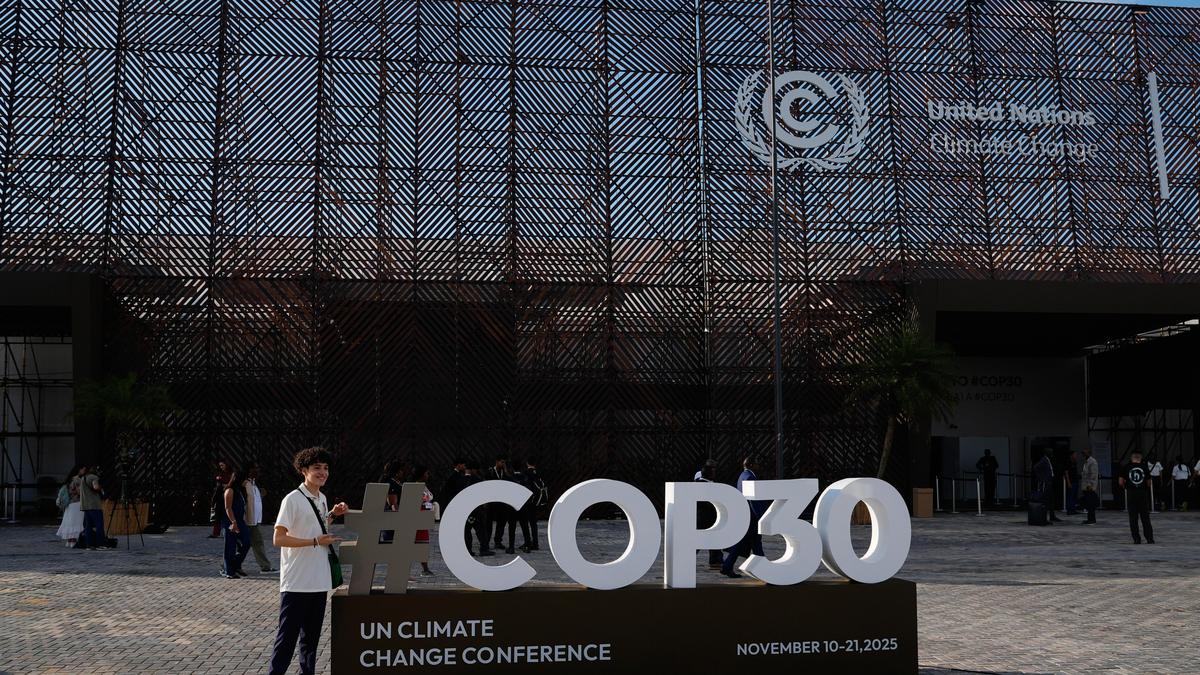
Against the backdrop of record-breaking heat, intensifying climate consequences, and a mounting public frustration with global inaction, the 30th Conference of Parties (COP30) of the UNFCCC begins at Belém in Brazil today.
It is both symbolic and strategic that COP30 is being hosted in Belém, which is a point of entry to the Amazon rainforest. The Amazon is one of the world’s largest and most important carbon sinks (estimated at 150-200 billion tonnes) and biodiversity reserves on the planet — and it is threatened by deforestation and land conversion to non-forest use. As a result, it is tipping towards irreversible decline.
Equity and inclusion are central to climate negotiations. But paradoxically, even before the negotiations began, COP30 faced an unexpected test: inclusion. This is because Belém has limited logistical options, leaving hotel room rates to skyrocket and rendering it difficult for representatives from low-income nations and civil society organisations to participate. Such logistical exclusions have, in some ways, undercut the moral weight of the process.
‘Implementation COP’
For starters, COP30 is being called the ‘Implementation COP’ because it is expected to be a watershed event where commitments are expected to be translated into concrete action. Guided by the Global Stocktake (GST) — which is a mandatory review that countries have to undertake every five years to assess their progress on addressing climate change, identify gaps, and draft plans — COP30 is expected to advance mitigation, adaptation, and means of implementation.
Its programme will thus focus on six key areas, including energy, industry, and transport transitions; stewardship of forests, oceans, and biodiversity; transformation of food systems; resilience in cities, infrastructure, and water; and human and social development.
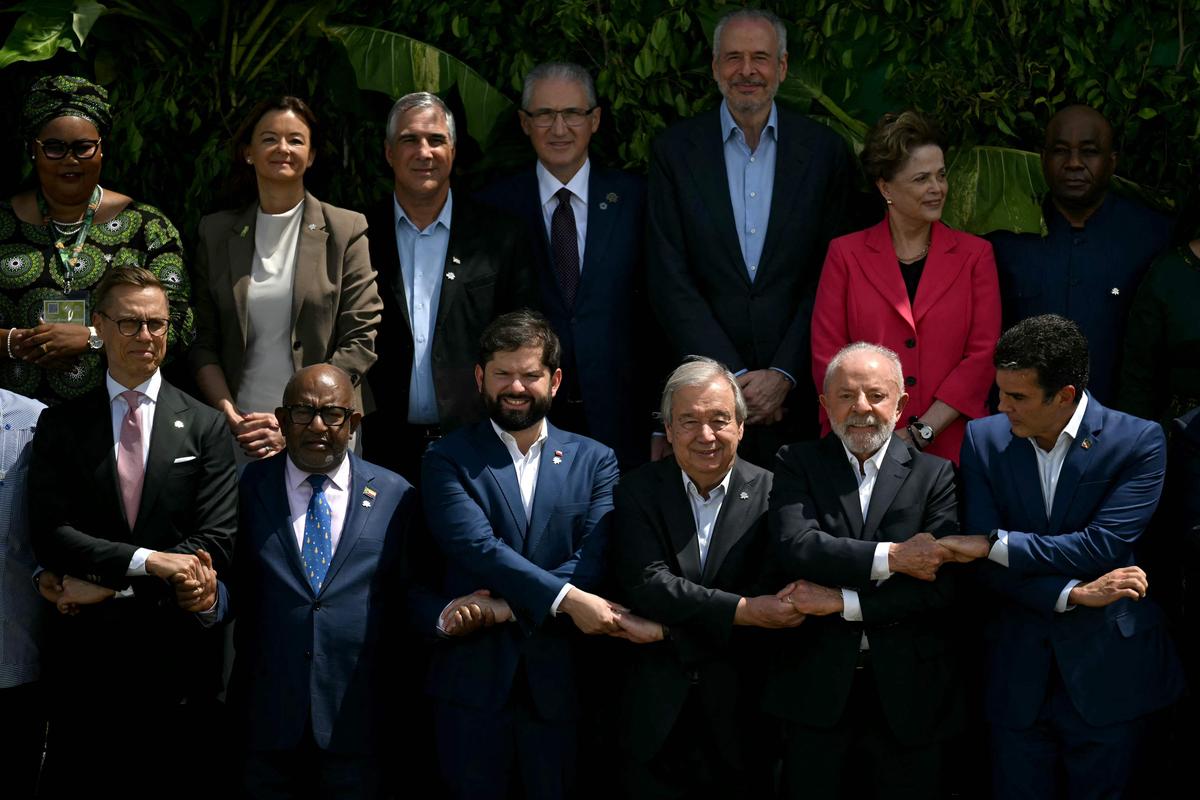
(L-R) Finland’s President Alexander Stubb, Comoros’s President Assoumani Azali, Chile’s President Gabriel Boric, UN Secretary General Antonio Guterres, Brazil’s President Luiz Inacio Lula da Silva, and Para’s Governor Helder Barbalho pose for the photo at the Leaders Summit ahead of the COP30 UN climate conference in Belém, Brazil on November 7, 2025.
| Photo Credit:
AFP
The Baku-to-Belém Roadmap on Climate Finance is a plan led by the COP presidency, developed by Azerbaijan and Brazil under the UNFCCC’s guidance, to show how countries and institutions could scale finance for developing nations to at least $1.3 trillion a year by 2035. It’s less a binding pledge and more a menu of actions to inform negotiations after the $300-billion New Collective Quantified Goal (NCQG) decision at COP29. Now, as the first major stocktake after the Roadmap, participants are looking at COP30 to set a new collective goal for 2035. In addition to revisiting emission reduction and climate finance goals, it’s also expected to reaffirm the fact that protecting forests and indigenous communities is central to global climate resilience.
Ultimately, COP30 will seek to mobilise all actors to accelerate climate action.
Adaptation in negotiations
Climate adaptation is imperative for the survival of millions of people in the Global South. But because adaptation is context-specific, what works in a coastal delta is unlikely to work in a mountain village. As a result, negotiations surrounding the Global Goal on Adaptation (GGA) have been difficult. The GGA aims to establish quantifiable goals and metrics for resilience, organise funding that matches the need, and create a system for accounting and quantifying adaptation outcomes. This long-delayed framework is expected to be established at COP30.
As discussions progress, experts around the world emphasise the need to consider local and indigenous knowledge systems in this process. Across India, for example, traditional seed varieties, water-harvesting structures, and community-based ecosystem restoration efforts offer proven models of resilience.

Finance: the missing piece
Under the Paris Agreement, economically developed countries pledged $100 billion per year to finance climate action in developing nations. At COP29, a breakthrough agreement called the NCQG on Climate Finance was reached. This target is expected to triple climate finance from $100 billion to $300 billion annually by 2035 and scale up finance from all actors, both public and private, to $1.3 trillion per year by 2035.
However, it should be noted that the $300 billion is significantly less than the estimated trillions of dollars needed by economically developing countries, with the latter arguing that the use of ‘all actors’ to scale up finance has diluted the common but differentiated responsibilities principle, which also includes historical emissions. ‘All actors’ means every potential source of climate finance, not just developed-country governments. It lumps together public treasuries, multilateral development banks, private investors, philanthropies, sub-national authorities, and even developing countries’ own private sectors.
The Loss and Damage Fund, set up in COP28, is also grossly underfunded, receiving less than a billion dollars against an annual need running into hundreds of billions of dollars. For developing countries, this finance is an enabler of ambition, enhancing preparedness for extreme climate events, expanding climate-resilient agriculture, and accelerating the adoption of renewable energy.
COP30 is expected to finalise the reporting requirements and financing arrangements under the NCQG. One looming question at Belém is: will a credible pathway emerge for moving from the $300 billion to the $1.3 trillion target and build confidence in developing countries? And will Belém also finalise the modalities of finance: who will pay, who will gain, and how it will be accounted for?
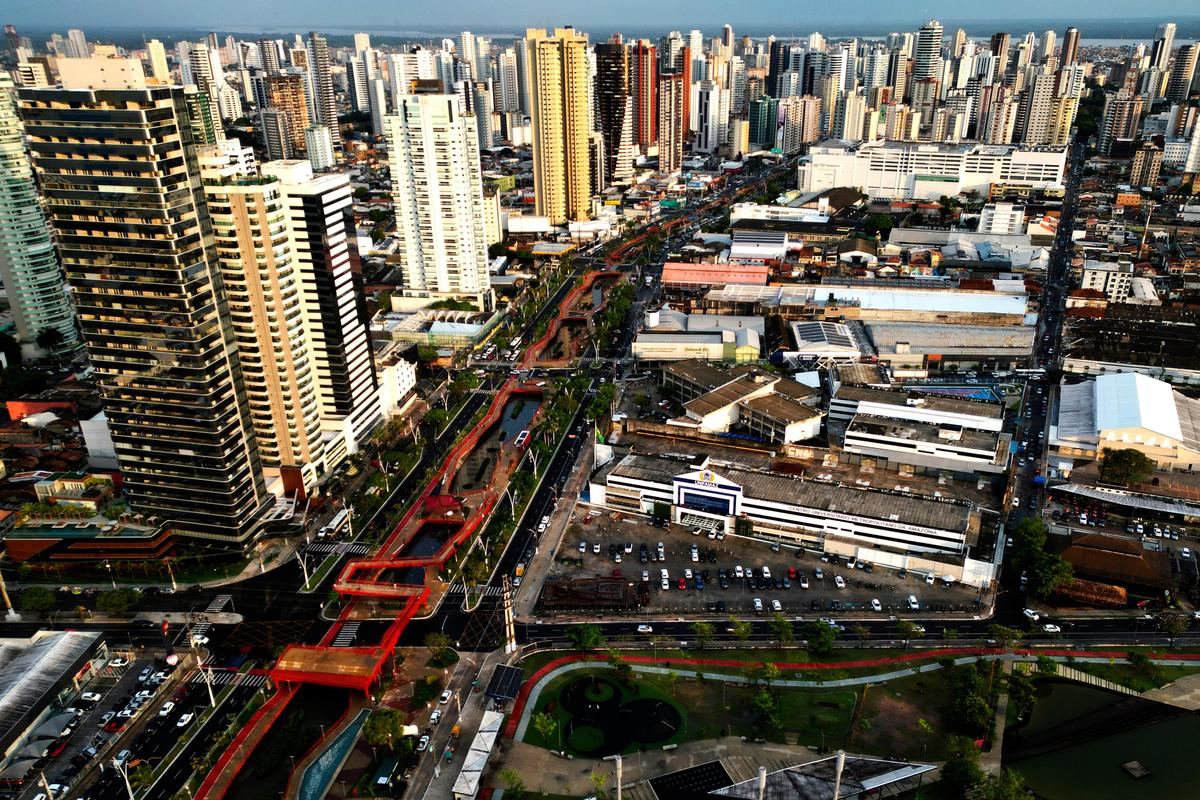
A bird’s eye view of Belém on October 31, 2025.
| Photo Credit:
AP
Transition and ambition
Transitions must be fair as economies move towards net zero (i.e. that humans add no net greenhouse gases to the atmosphere over a period; emissions are reduced almost to zero, and any residual sources are balanced by removals, e.g. restoring forests and carbon capture) — and transformation can’t be fuelled solely by finance. Access to reasonably priced technology and capacity building are equally important for many developing countries, be it efficient water systems, resilient crops, or clean energy, which are frequently hindered by high costs or intellectual property issues.
Beyond promises, COP30 should lead to North-South collaborations for training, innovation, and technology sharing. Otherwise, climate transition runs the risk of becoming yet another area of inequality. In countries like India, investments in low-carbon manufacturing, renewable energy, ecosystem restoration, green skills development, small businesses, and alternative livelihoods must all be part of a ‘just transition’.
Countries were expected to update their Nationally Determined Contributions (NDCs) through 2035 and submit them by February 2025. However, according to Climate Action Tracker, many countries are yet to submit their reports. The ones submitted so far account for only 19% of global emissions.
Negotiations at COP30 are expected to address the insufficient ambition of climate targets and reveal whether countries are prepared to put aside rhetoric and match science and ambition, a significant challenge in the absence of climate finance.

Climate-nature nexus
A key spotlight of Belém is the long-overdue integration of climate and biodiversity agendas. Brazil is pushing for an innovative financing model for conservation, known as the ‘Tropical Forest Forever Facility’. The proposal aims to compensate more than 70 developing countries with tropical forests for their efforts to preserve them.
This growing recognition that climate and biodiversity crises are interlinked could make climate finance more effective, directing funds to ecosystem restoration, agroforestry, and community-led conservation.

Brazil President Luiz Inacio Lula da Silva flashes two thumbs-up during the COP30 UN Climate Summit in Belém, Brazil, November 7, 2025.
| Photo Credit:
AP
India at COP30
At Belém, India will be championing climate justice and the principle of common but differentiated responsibilities, urging developed nations to take the lead in emission cuts and financial support. In fact, at the mid-year climate talks in Bonn, India played a pivotal role in coordinating the G77+China bloc of developing countries to advocate for a fair and predictable finance goal under the NCQG framework.
This positioning reinforces India’s role as both a responsible power and a representative of broader southern concerns while serving as a bridge between the Global North and South.
However, while India’s domestic targets are ambitious, efforts in the institutional landscape remain a work in progress, as reflected in initiatives such as green budgeting, sovereign green bonds, and the proposed national carbon market expected by 2026. This gap must be viewed in the context of India’s developmental realities, which continue to shape its climate choices and actions.
The stakes could not be higher at COP30. The Amazon setting underscores the urgency of protecting the world’s ecosystems while tackling emissions. For India, it is a moment to shape the conversation, striking a balance between domestic imperatives and global responsibilities. What unfolds in Belém will go a long way towards determining whether the international community can still bend the curve of emissions and whether emerging economies, such as India, can secure the space and support they need for economic growth that is resilient to climate change.
Indu K. Murthy heads the Climate, Environment and Sustainability and Air Quality sectors at the Center for Study of Science, Technology and Policy (CSTEP), a research-based think tank.