

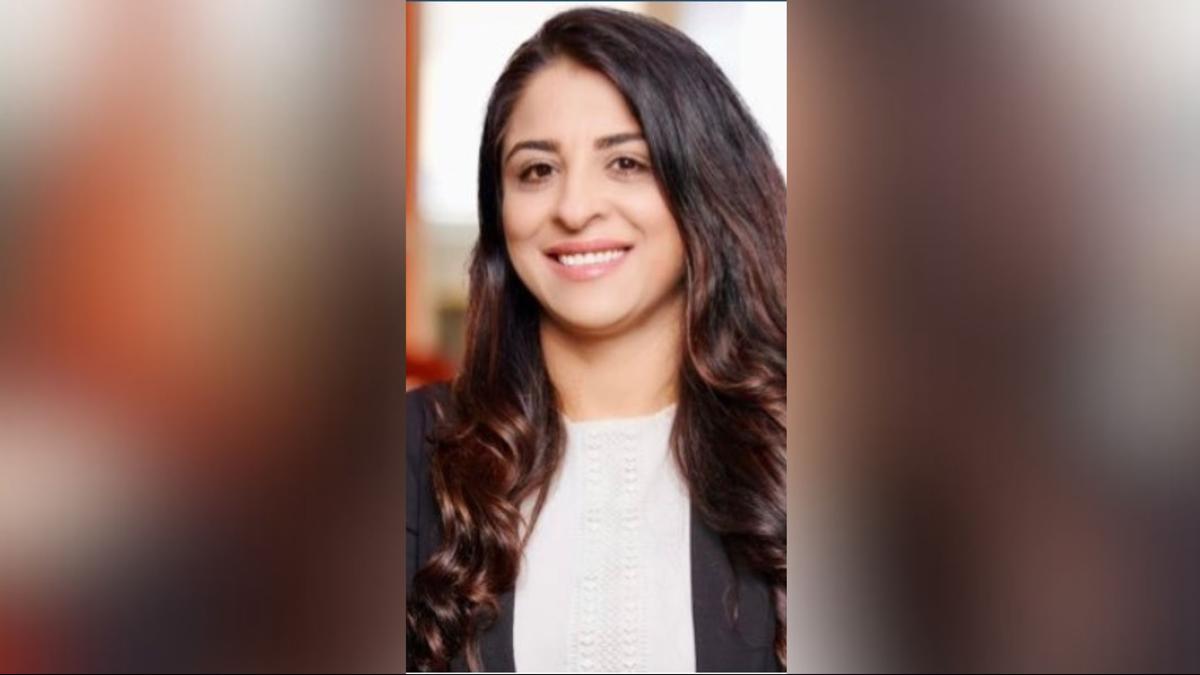
In the 1990s, the Taliban failed to earn legitimacy. This time, their priority is to get recognised by regional countries. That’s why they are reaching out to countries like India, says Nilofar Sakhi, associate research professor at the Elliott School of International Affairs at George Washington University and president of the Andiana Foundation.
In an interview with The Hindu, Dr. Sakhi said economic pain and social repression within Afghanistan are leading to widespread discontent among Afghan people towards the Taliban regime.
Edited excerpts.
Taliban’s Foreign Minister Amir Khan Muttaqi recently concluded his visit to India. In the 1990s, India had supported the anti-Taliban forces. And this time, both India and the Taliban show interest in mutual engagement. How do you look at the visit and overall India-Taliban ties?

Let me start with the dynamics inside Afghanistan, especially with the Taliban and how they see their relationship with the regional countries, including India. Since the Taliban takeover in August 2021, they have been trying to gain legitimacy. Because in the 1990s, that was the main issue–they never got recognition. This time, their overarching goal is to gain legitimacy for both to sustain the regime and to gain more resources and money. So they started first to reach out to Western countries through the Doha process; they started negotiating with the United States on different issues, but it did not take them anywhere in terms of recognition. That’s why they started the next phase — engage with the East, particularly regional countries. They started expanding their reach to Russia and, to the Central Asian states, particularly Uzbekistan, and then China. And the next was India.
There are two perspectives inside Afghanistan about India. People of Afghanistan see India as friend, because of India’s investment and development activities. Therefore, there is always a soft heart among Afghans towards India. Then the Taliban come in. The Taliban are in the power game right now. They are running the government and, they are doing politics. They see India as a good partner in terms of those investments that India had made in the Republic [the previous government]. There is also the Pakistan factor — when India and the Taliban reach out to each other, the Pakistan factor is always there in the calculation.

You recently argued that Russia’s decision to recognise the Taliban regime was a mistake. Would you make the same argument if India recognises the Taliban?
That’s a mistake. Yes, trusting the Taliban [would be a mistake]. I’m a student of security and peace, and I also study and follow jihadism and militancy, into linkages between militant groups in the region. And, the Taliban still have close ties with all these transnational militant groups, and they haven’t cut any ties, according to different reports.
They haven’t cut ties with al-Qaeda. And we have seen their close relationship with the TTP [Tehreek-e-Taliban Pakistan]. Central Asian militant groups that are having close ties with the Taliban are there in Afghanistan. And the Taliban do provide sanctuary to them. So treating such a group as a political or strategic partner is a mistake. If Moscow is doing that, it’s a mistake. If India is doing that, that’s a mistake, because that is going to backfire at some point.
Right now the Taliban are quiet because they are ruling the country. They have the power, for what they have to fight right now. They used extremism in order to gain this power. But they there is no guarantee that groups like the Taliban, which is a militant group by nature, will be quiet if their interests are not met through bilateral relationship.
When Muttaqi was in India, Pakistan bombed Kabul. Pakistan and the Taliban were previously patron and client. What’s happening between them?
I think we should use the Pakistan-Afghanistan relationship as a good case study to understand what happens when you trust a militant group. Pakistan was the main supporter of the Taliban in Afghanistan. They gave rise to them, nurtured them, and strengthened them. They were friends during different time periods. What exactly happened? That’s my case. You cannot trust trust a militant group.
Pakistan did a wrong calculation. When the Taliban took power, there was a surge in TTP attacks inside Pakistan because the TTP got inspired by the Taliban’s rule. On the other hand, the Taliban in Afghanistan were giving them [TTP] an environment to recruitment, and weaponry support and everything. The strategic mistake of the of Pakistan establishment was that they thought the Taliban would be their strategic partner in the region. And their strategic interest is to reduce the influence of India inside Afghanistan. They also want to have connected to the Central Asian market. So they want to strengthen their own presence inside Afghanistan. That was the goal and the Taliban were seen as a strategic partner, which was a mistake. The Afghan Taliban and the TTP are closely related. There are also family relationships. There are intermarriages and business transactions. You cannot disconnect them. If the Taliban say they don’t have ties with the TTP, it’s a lie.
How how strong the Taliban are internally in Afghanistan? Are there any strong opposition?
Let me put it this way: the Taliban in the 1990s and the Taliban of today are the same. The situation in Afghanistan is different. The situation in the region has changed. When Taliban took over in the 1990s, there was a civil war before that and the country was already in political and economic, crises. When the Taliban took over [in 2021], the country had been through 20 years of a republic where there was a lot of development.
Some argue that 20 years did not achieve anything. There were a lot of achievements and progress during the 20 years of the Republic [2001-2021]. I’m not defending any government, I’m defending the processes that happened, the conditions of the human rights that happened. The Taliban took over the structures of the government that were already put in place. The situation was much better than than the 1990s. Also, there is less appetite from the international community and the regional countries for any kind of intervention — political intervention, of course, not military. Nobody supports that. But at least is political intervention. The reason is that that everybody’s tired. Everybody’s tired and they are saying, okay, let’s go with this status quo. But it doesn’t mean that Taliban are strong.
Do you think the the status quo is sustainable?
The status quo will continue until the people rise. There is widespread resentment among the public towards the Taliban. There are two dynamics inside the country that could lead the people to rise at some point or show dissatisfaction with the current regime . One is, of course, the economic, issues. The Taliban are not able to better the economic situation. The second is, freedom, human rights violation and suppression. And we have seen it around the world — if the people are fearful of standing on the street or fighting on the street, they do other mechanism to show their dissatisfaction. For example, they create groups, they join militias, they will be connected to other kind of political processes that is against the regime. That’s why I would say that if this level of suppression of individual freedom and or overall freedoms of people continues, people will show their dissatisfaction in different forms and formats. And if people don’t have food at their table, they will fight for it.
The human rights situation you have referred to is distinctively bad in the case of Afghanistan. Women in Afghanistan, half of the population, are kept out of schools, colleges and workforce. Why?
We are dealing with a particular militant outfit here. Why the Taliban are instituting this kind of structural discrimination against women or other sections of society? The short answer is ideology. The Taliban frame it differently. If you listen to the Taliban’s public statements about this particular issue, they say this is culture, which is wrong. I actually lived in different parts of Afghanistan, and we are talking based on experiences. This is not culture at all. This is purely an ideological approach, their own interpretation of religion that they have put in place. And second, I sometimes see they are using this issue as a negotiation tool, with the West or the powers that they want to gain something from.
Are there different factions within the Taliban, because there were reports suggesting that there is one Kandahar faction and there is one Kabul faction?
We have been hearing the same. But to be honest, from the last four and a half years, you haven’t seen any kind of changes. At the end of the day, the Taliban want to show a united front to the world and the region. And their policies haven’t changed either. Even the so-called moderate ones haven’t been able to bring in any change on, say, the issue of girls education. There hasn’t been a single step forward to open the schools for girls. So where are the moderate Taliban? I don’t buy that argument. Talib is Talib and the Taliban’s ideology is the Taliban’s ideology across all Taliban, including any Taliban in the region.