




Skip to content
  • Facebook
  • X
  • Linkedin
  • WhatsApp
  • Associate Journalism
  • About Us
  • Privacy Policy
  • 033-46046046
  • editor@artifex.news
Artifex.News

Artifex.News

Stay Connected. Stay Informed.

  • Breaking News
  • World
  • Nation
  • Sports
  • Business
  • Science
  • Entertainment
  • Lifestyle
  • Toggle search form
  • IPS Officer Rajwinder Singh Bhatti Takes Charge As CISF Director General
    IPS Officer Rajwinder Singh Bhatti Takes Charge As CISF Director General Nation
  • Israeli TV reporter who lost ability to speak clearly, seeks AI’s help to get back on air
    Israeli TV reporter who lost ability to speak clearly, seeks AI’s help to get back on air World
  • On India vs Pakistan World Cup Clash, Ramiz Raja’s Bold ‘Outside Chance’ Declaration
    On India vs Pakistan World Cup Clash, Ramiz Raja’s Bold ‘Outside Chance’ Declaration Sports
  • “I Don’t Need To Commit To 2026 FIFA World Cup”: Lionel Messi Ahead Of 2024 Copa America
    “I Don’t Need To Commit To 2026 FIFA World Cup”: Lionel Messi Ahead Of 2024 Copa America Sports
  • GST 2.0: Audi India announces price cut to over ₹7.8 lakh to pass on GST benefits
    GST 2.0: Audi India announces price cut to over ₹7.8 lakh to pass on GST benefits Business
  • Access Denied Sports
  • “Hezbollah Doesn’t Want You To Watch This Video”: Israel Defence Forces’ Post
    “Hezbollah Doesn’t Want You To Watch This Video”: Israel Defence Forces’ Post World
  • “Rs 45 Lakh Per Match To Players”: BCCI’s Big Step To Promote Test Cricket, Allocates Rs 40 Crore
    “Rs 45 Lakh Per Match To Players”: BCCI’s Big Step To Promote Test Cricket, Allocates Rs 40 Crore Sports
Snow leopards are the world’s least genetically diverse big cat

Snow leopards are the world’s least genetically diverse big cat

Posted on October 14, 2025 By admin


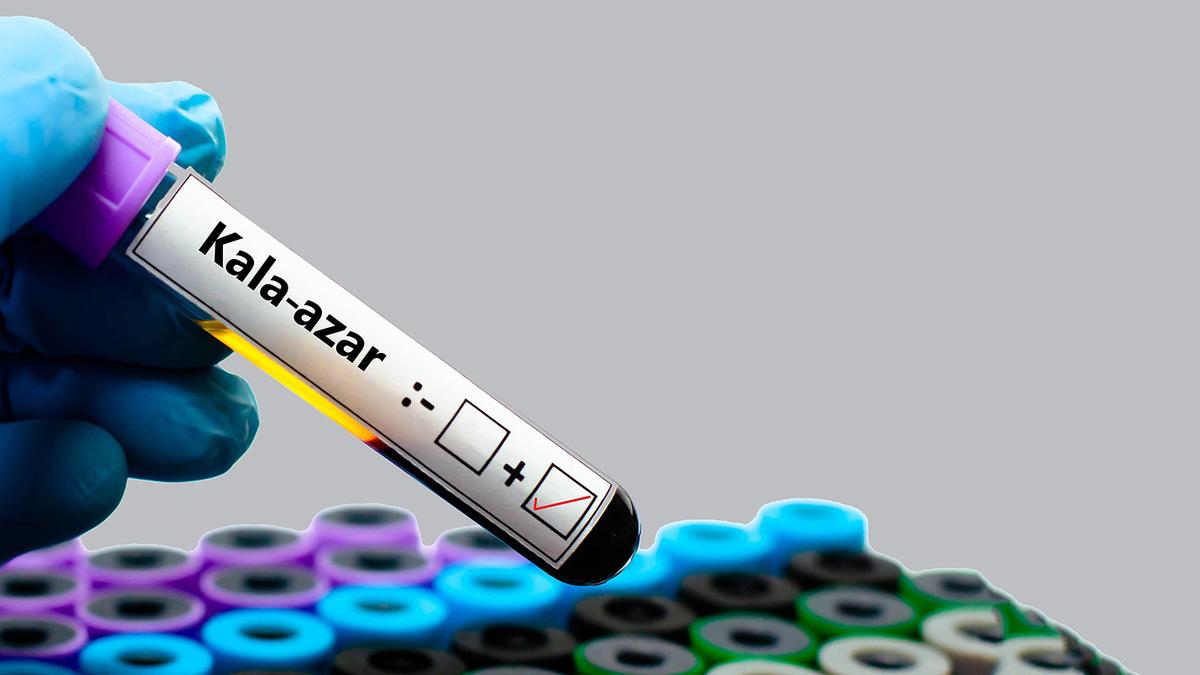
The snow leopard, the agile “ghost of the mountains” that inhabits the rugged ranges of 12 Asian countries, including India, has the lowest genetic diversity of any big cat species in the world, even lower than that of the dwindling cheetah.

A new study led by researchers at Stanford University, published in Proceedings of the National Academy of Sciences (PNAS) on October 7, explained the implications of this phenomenon.

The researchers used whole-genome sequencing data for 37 snow leopards and concluded that the low genetic diversity is, however, “likely due to a persistently small population size throughout their evolutionary history rather than recent inbreeding.”

‘Purging’ of mutations

This means that “mutations that could potentially cause health issues in snow leopards have been removed from the population over many generations,” lead author Katie Solari, a research scientist in biology in Stanford, told The Hindu.

The PNAS paper added: “We found snow leopards to have the lowest heterozygosity of any big cat species, with heterozygosity for every snow leopard sample included in this study falling lower than that observed in any other big cat.” This included cheetahs, “which have long been considered the archetype of low heterozygosity in big cats.”

The good news is that snow leopards, compared to several Panthera species, have significantly less highly deleterious homozygous load – genes inherited from the mother and father that have fewer instances of duplicated copies of potentially harmful mutations that are connected with health issues.

This, the authors said, suggests effective “purging” of bad mutations during their evolutionary history at small population sizes.

“If a negative trait surfaced, those individuals died before reproducing or their progeny were less successful. This purging, facilitated by historic inbreeding, allowed the snow leopard population to remain relatively healthy even at their small numbers,” an article in the Stanford Report read.

In fact, “the inbreeding coefficient of snow leopards is significantly higher than other big cats and was even significantly lower than the Asian leopard and puma, indicating that the lower genetic diversity observed in snow leopards is not explained by higher inbreeding,” per the research paper.

Dr. Solari told The Hindu that the very low genetic diversity and small population sizes means they may not be able to adapt well to future anthropogenic challenges. 

Critical to Asia’s mountains

The wild feline indeed faces a long list of threats today: climate change, habitat loss, decreased availability of primary prey (mountain ungulates such as the Siberian ibex), retaliatory killings for livestock predation, and poaching for their skin. All this while climate change in Asia’s high mountain threatens their future. Despite this, snow leopards, which were first listed as ‘endangered’ were controversially downlisted to ‘vulnerable’ in 2017 as they did not meet certain criteria for population size.

There are no more than 4,500 to 7,500 individuals, each critical to the Asian mountain ecosystem “that offers immense ecosystem services — acting as an important source of carbon storage and providing water to almost two billion people.”

Hearteningly, however, the international community has worked for decades to establish a sustainable zoo population: in 2008 there were 445 snow leopards across 205 institutions globally, the paper read.

The snow leopard, distinguished by an unusually long tail, which acts as a rudder to help it keep its balance as it traverses its rough terrain, happens to be the least genetically studied of all big cat species. There is, however, evidence of continuous habitat connectivity across at least 75 km in Pakistan and around 1,000 km in Mongolia, and the animal is known to cross long distances between mountain ranges, according to the study.

‘Very poorly studies’

As for India, a pioneering survey last year estimated that 718 snow leopards exist in the wild: in Ladakh 477, in Uttarakhand 124, Himachal Pradesh 51, Arunachal Pradesh 36, Sikkim 21, and in Jammu and Kashmir nine. The Indian snow leopard accounts for 10-15 per cent of the global population.

“Of the 12 countries with wild snow leopards, India has the highest numbers after China and Mongolia. That makes India one of the most important countries for the conservation of this species,” Kulbhushansingh Suryawanshi, with the India programme of the Snow Leopard Trust at the Nature Conservation Foundation (NCF), Mysore, told The Hindu.

He added that the genetic diversity of leopards in India “is very poorly studied … We need to sample across the high mountains to understand the genetic diversity of snow leopards in India.”

India’s Project Snow Leopard, dedicated to the conservation of snow leopards and NGOs such as the NCF, has been working on snow leopard conservation for 27 years, Local community members from snow leopard habitats such as Ladakh, Jammu and Kashmir, Himachal Pradesh, Uttarakhand, Sikkim and Arunachal are key partners in the conservation of snow leopards,” said Dr. Suryawanshi.

But the snow leopard in India is threatened by land use change and climate change, he said.

“Almost the entire snow leopard habitat in India is within 50-100 km from the international border. Large-scale infrastructure is changing the face of this region. Climate change-induced warming and floods are impacting the wildlife of this landscape, including the snow leopards to a large extent.”

Maintaining integrity

Dr. Suryawanshi, who is a co-author of the paper, said the main challenge of studying snow leopards is in “getting the samples.” Bureaucratic hurdles in getting permissions to study snow leopards generally slow down research, he said.

“In addition, the timelines of funding and permissions often do not match. The Stanford study collaborated with researchers around the world and only then were they able to put together enough samples to make an assessment of the genetic diversity of snow leopards. We need to collect a similar number of samples from within India to understand the genetic diversity of snow leopards in the country.”

On the future fate of snow leopards of the fragile high-elevation landscape of the Himalayas, “we need to treat these landscapes and the people that live here with respect,” said Dr. Suryawanshi. “The effects of rampant large infrastructure projects are clearly visible in the scale of destruction in the recurrent floods that occur every monsoon.”

Maintaining the integrity of the snow leopard’s habitat is crucial for the long-term conservation of this charismatic species of the Himalaya, Dr. Suryawanshi added.


Source link

Science

Post navigation

Previous Post: Access Denied
Next Post: Access Denied

Related Posts

  • Why do fish in schools have an easier time swimming in rough waters?
    Why do fish in schools have an easier time swimming in rough waters? Science
  • ISRO to conduct first test flight of Gaganyaan mission on October 21
    ISRO to conduct first test flight of Gaganyaan mission on October 21 Science
  • Machine learning can help blood tests have a separate ‘normal’ for each patient
    Machine learning can help blood tests have a separate ‘normal’ for each patient Science
  • Young mammoth remains found nearly intact in Siberian permafrost
    Young mammoth remains found nearly intact in Siberian permafrost Science
  • Google’s Willow quantum processor — how it works, why it matters
    Google’s Willow quantum processor — how it works, why it matters Science
  • Why India’s Green Revolution isn’t a blueprint to feed a hungry planet
    Why India’s Green Revolution isn’t a blueprint to feed a hungry planet Science

More Related Articles

GSLV-F14 Launch: GSLV-F14 carrying INSAT-3DS to lift off on Feb 17: ISRO GSLV-F14 Launch: GSLV-F14 carrying INSAT-3DS to lift off on Feb 17: ISRO Science
In breakthrough, scientists find pressure sensor in fat tissue In breakthrough, scientists find pressure sensor in fat tissue Science
What was the tussle over Covaxin IPR? | Explained What was the tussle over Covaxin IPR? | Explained Science
As thoughts become digitised, who will protect our neurorights? | Explained As thoughts become digitised, who will protect our neurorights? | Explained Science
Is pregnancy-related brain impairment also seen in fish? Is pregnancy-related brain impairment also seen in fish? Science
Sci-Five | The Hindu Science Quiz: On Frogs Sci-Five | The Hindu Science Quiz: On Frogs Science
SiteLock

Archives

  • October 2025
  • September 2025
  • August 2025
  • July 2025
  • June 2025
  • May 2025
  • April 2025
  • March 2025
  • February 2025
  • January 2025
  • December 2024
  • November 2024
  • October 2024
  • September 2024
  • August 2024
  • July 2024
  • June 2024
  • May 2024
  • April 2024
  • March 2024
  • February 2024
  • January 2024
  • December 2023
  • November 2023
  • October 2023
  • September 2023
  • August 2023
  • July 2023
  • June 2023
  • May 2023
  • April 2023
  • March 2023
  • February 2023
  • January 2023
  • December 2022
  • November 2022
  • October 2022
  • September 2022
  • August 2022
  • July 2022
  • June 2022
  • May 2022

Categories

  • Business
  • Nation
  • Science
  • Sports
  • World

Recent Posts

  • Access Denied
  • Access Denied
  • Access Denied
  • Four people dead in Kenya as security disperses crowd viewing Odinga body
  • Access Denied

Recent Comments

  1. dfb{{98991*97996}}xca on UP Teacher Who Asked Students To Slap Muslim Classmate
  2. "dfbzzzzzzzzbbbccccdddeeexca".replace("z","o") on UP Teacher Who Asked Students To Slap Muslim Classmate
  3. 1}}"}}'}}1%>"%>'%> on UP Teacher Who Asked Students To Slap Muslim Classmate
  4. bfg6520<s1﹥s2ʺs3ʹhjl6520 on UP Teacher Who Asked Students To Slap Muslim Classmate
  5. pHqghUme9356321 on UP Teacher Who Asked Students To Slap Muslim Classmate
  • IPL 2025: MS Dhoni Set For Rs 4 Crore Retention Talks With CSK. What We Know So Far
    IPL 2025: MS Dhoni Set For Rs 4 Crore Retention Talks With CSK. What We Know So Far Sports
  • India to remain strategic partner despite concerns over its ties with Russia: U.S.
    India to remain strategic partner despite concerns over its ties with Russia: U.S. World
  • What Is Sim Swapping Scam? How To Protect Yourself?
    What Is Sim Swapping Scam? How To Protect Yourself? Nation
  • “Pakistan Has To Decide…”: India Great’s Blunt Take On Champions Trophy Row
    “Pakistan Has To Decide…”: India Great’s Blunt Take On Champions Trophy Row Sports
  • India – The Hindu
    India – The Hindu Sports
  • U.S. presidential election 2024 | What matters to the Indian American voter?
    U.S. presidential election 2024 | What matters to the Indian American voter? World
  • 12 Trains Cancelled, Several Diverted After Andhra Train Accident
    12 Trains Cancelled, Several Diverted After Andhra Train Accident Nation
  • Jodhpur Hindu Refugees Celebrate As Centre Notifies CAA Rules
    Jodhpur Hindu Refugees Celebrate As Centre Notifies CAA Rules Nation

Editor-in-Chief:
Mohammad Ariff,
MSW, MAJMC, BSW, DTL, CTS, CNM, CCR, CAL, RSL, ASOC.
editor@artifex.news

Associate Editors:
1. Zenellis R. Tuba,
zenelis@artifex.news
2. Haris Daniyel
daniyel@artifex.news

Photograher:
Rohan Das
rohan@artifex.news

Artifex.News offers Online Paid Internships to college students from India and Abroad. Interns will get a PRESS CARD and other online offers.
Send your CV (Subjectline: Paid Internship) to internship@artifex.news

Links:
Associate Journalism
About Us
Privacy Policy

News Links:
Breaking News
World
Nation
Sports
Business
Entertainment
Lifestyle

Registered Office:
72/A, Elliot Road, Kolkata - 700016
Tel: 033-22277777, 033-22172217
Email: office@artifex.news

Editorial Office / News Desk:
No. 13, Mezzanine Floor, Esplanade Metro Rail Station,
12 J. L. Nehru Road, Kolkata - 700069.
(Entry from Gate No. 5)
Tel: 033-46011099, 033-46046046
Email: editor@artifex.news

Copyright © 2023 Artifex.News Newsportal designed by Artifex Infotech.