

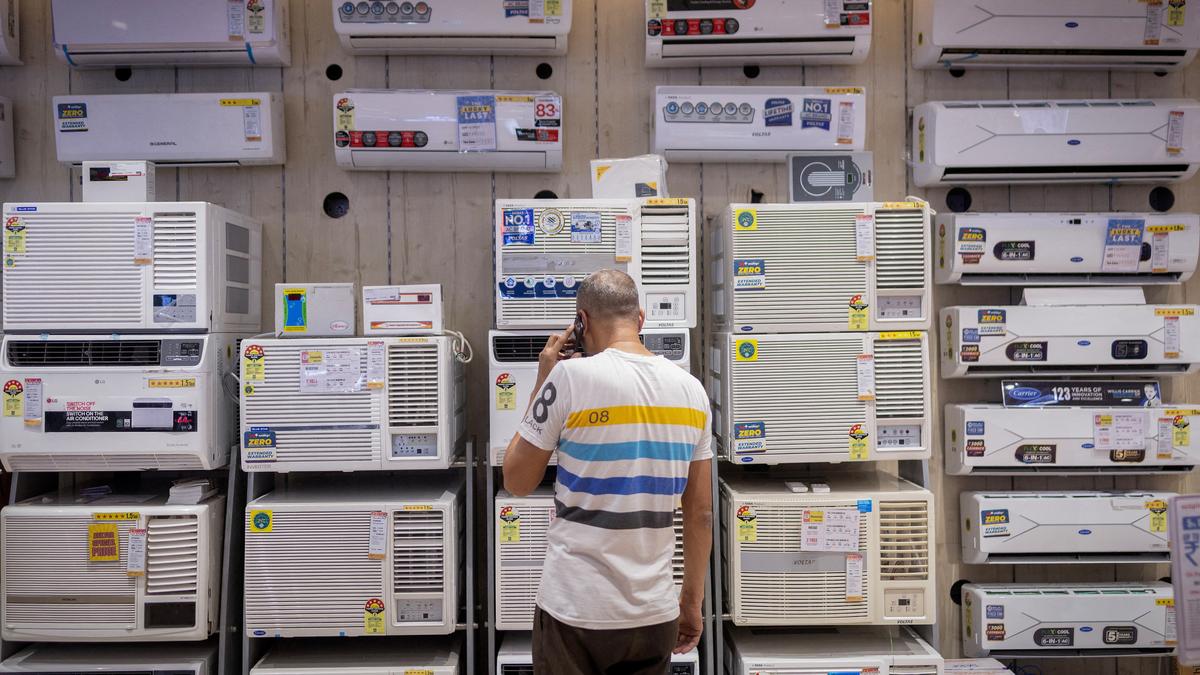
In June 2025, the Government of India (GoI) proposed that all new air conditioning systems (ACs) in homes, commercial spaces and vehicles must operate within the temperature range of 20º C to 28º C, with 24º C as the default setting. The Bureau of Energy Efficiency (BEE) estimates that this proposal could save 20 billion units of energy annually, amounting to ₹10,000 crore and emissions reduction of 16 million tonnes. While such energy-saving measures are important, especially during periods of potential energy shortage, there are more fundamental issues that need to be addressed. Access to air conditioning is currently severely limited in developing countries, including India. Enhancing this access is urgently required as a public health safeguard and a necessity for adaptation to climate change. By treating cooling primarily as an energy and emissions concern, the need to universalise access to cooling and provision of public facilities that can protect vulnerable populations from heat stress often gets sidelined.
In India, access to air conditioning remains severely inadequate, and the main challenge is not excessive consumption but insufficiency. As rising temperatures undermine both well-being and livelihoods, cooling is no longer a matter of comfort for the global South, but a frontline adaptation need. Yet, in 2021, only 13% of urban and 1% of rural households in India owned an AC. While efficiency and behavioural measures can reduce the emissions footprint of existing users, without simultaneously prioritising access to the most vulnerable, such policies risk becoming symbolic gestures that are ineffective in confronting deeper inequities at the heart of climate justice.
Weathering inequalities
While the national average of AC ownership in India is approximately 5%, it is overwhelmingly concentrated amongst the urban rich. For example, in 2021, the richest 10% in India, mostly residing in urban areas, owned 72% of the total ACs. This disparity is also reflected in interstate and regional differences. For instance, in Delhi, over 32% households owned at least one AC, while the figure dropped to 1% for low-income States such as Bihar and Odisha. Despite rising temperatures in these States, public provisioning of cooling infrastructure remains severely limited, along with issues related to unreliable power supply, high appliance costs and poor building design.
The inter-country cooling divide is even more stark and inequitable. Developed countries have long enjoyed near universal access to thermal comfort, primarily through widespread heating systems, but more recently through the increased adoption of air conditioning. In 2020, nearly 90% households in the U.S. and Japan owned an AC, as compared to 22% in Central and South America and only 6% in Sub-Saharan Africa. The per capita electricity consumption for space cooling is 7 billion joules in the U.S., which is over 28-times higher than in India, 19-times higher than in Indonesia and 13-times higher than in Brazil. During the European heatwave, which peaked around 42º C in cities like London and Paris, urgent public investments were made in cooling infrastructure, with the current AC ownership doubling in Europe since 1990, and the International Energy Agency (IEA) projecting a four-fold increase by 2050. While several major cities in the global South routinely record temperatures above 40º C, the international discourse around their rising cooling demand is widely framed as a mitigation problem, while it is justified as a necessary adaptation measure for the North, indicating a troubling hypocrisy.
Imperative of cooling
The World Health Organisation (WHO) estimates that between 2000 and 2019, heat exposure contributed to approximately 489,000 global deaths, with India alone recording more than 20,000 heat-related deaths in this period. While extreme heat is increasingly recognised as one of the prominent health threats in the global South, the resulting mortality or morbidity rate is not solely a function of rising temperatures. It in fact reflects the acute shortage of protective infrastructure such as thermally secured housing, reliable electricity supply and adequately equipped public health systems. In 2022, the majority of the health care facilities in high-income countries had a reliable power supply, whereas nearly one billion people in the lower-middle and low-income countries were served by facilities with unreliable or no power supply. In South Asia and Sub-Saharan Africa (SSA), 12% and 15% health centres, respectively, had no electricity, while only 50% hospitals in SSA reported having a reliable power supply.
Without adequate energy infrastructure, providing essential services such as neonatal care, climate-controlled emergency rooms, and vaccine refrigeration becomes precarious as they rely on stable cooling systems. During periods of extreme heat, countries like Kenya, Ghana and Burkina Faso have recorded sharp spikes in cardiovascular, respiratory and renal conditions that cannot be treated safely in overheated and underpowered facilities. Beyond hospitals, the lack of cooling access also undermines workspace safety and labour productivity. The International Labour Organisation (ILO) suggests that in 2020, globally, over 70% of the workforce was exposed to excessive heat, causing 23 million occupational injuries and claiming nearly 19,000 lives. These impacts were felt disproportionately in poor countries of Africa, South Asia and Arab States, where informal employment dominates, and workers usually lack health insurance and access to cooled and ventilated workspaces.
In India, almost 80% of the labour force is engaged in sectors such as agriculture, construction and street vending; jobs that require strenuous outdoor activities. Recognising this vulnerability, several Indian States and cities have developed heat action plans that include early warning systems, information sharing, heat shelters and public awareness campaigns. However, their implementation is often constrained due to underfunding, limited institutional coordination and weak legal foundations. As a result, millions of workers continue to face heightened risks of heat-related illnesses and income loss. Addressing these intersecting challenges in the global South requires an urgent need to integrate heat resilience as a core development priority through policies that focus on stronger labour protection, targeted social safety nets and comprehensive heat action plans.
Climate justice over efficiency
Developed countries have long ensured robust heating systems, supported by decades of unchecked emissions and generous public subsidies. Today, developing countries face a similar need for cooling, but under far harsher terms – limited financial resources, crippling energy poverty and mounting international pressure to decarbonise. In 2022, global carbon emissions from cooling stood at one billion tonnes per year, still four times lower than the heating-related emissions that are mostly concentrated in the North. However, global cooling demand is projected to triple by 2050, with India alone expected to see an eightfold increase from 2020 levels.
In a carbon-constrained world, efficient and sustainable cooling solutions are instrumental, but the rhetoric of efficiency often ignores the fact that such interventions require significant upfront capital, technological access and institutional support. As low-income nations already face staggering challenges due to economic and energy poverty, without large-scale investments in public infrastructure and access to finance from the Global North, cooling will remain unaffordable for billions in the Global South. Closing this gap is important to prevent avoidable deaths, protect livelihoods and build climate-resilient public systems. Therefore, cooling must not be treated as a climate liability to be rationed, but as a non-negotiable development right that is crucial for strengthening equity and enabling adaptation.
Published – September 26, 2025 08:30 am IST