

Skip to content
  • Facebook
  • X
  • Linkedin
  • WhatsApp
  • YouTube
  • Associate Journalism
  • About Us
  • Privacy Policy
  • 033-46046046
  • editor@artifex.news
Artifex.News

Artifex.News

Stay Connected. Stay Informed.

  • Breaking News
  • World
  • Nation
  • Sports
  • Business
  • Science
  • Entertainment
  • Lifestyle
  • Toggle search form
  • Access Denied
    Access Denied Nation
  • Israel army orders residents of three areas in southern Beirut to evacuate
    Israel army orders residents of three areas in southern Beirut to evacuate World
  • Presidential Reference hearing live: Bench of 5 judges to resume hearing
    Presidential Reference hearing live: Bench of 5 judges to resume hearing Nation
  • How Rise In Ocean Temperatures Is Threatening Marine Life
    How Rise In Ocean Temperatures Is Threatening Marine Life World
  • Access Denied
    Access Denied Nation
  • Access Denied
    Access Denied Nation
  • 2023 Nobel Prize in Physics: Seeing electrons through brief pulses of light | Explained
    2023 Nobel Prize in Physics: Seeing electrons through brief pulses of light | Explained Science
  • Access Denied Sports
The hard truth about out-of-pocket health expenditure

The hard truth about out-of-pocket health expenditure

Posted on September 22, 2025 By admin


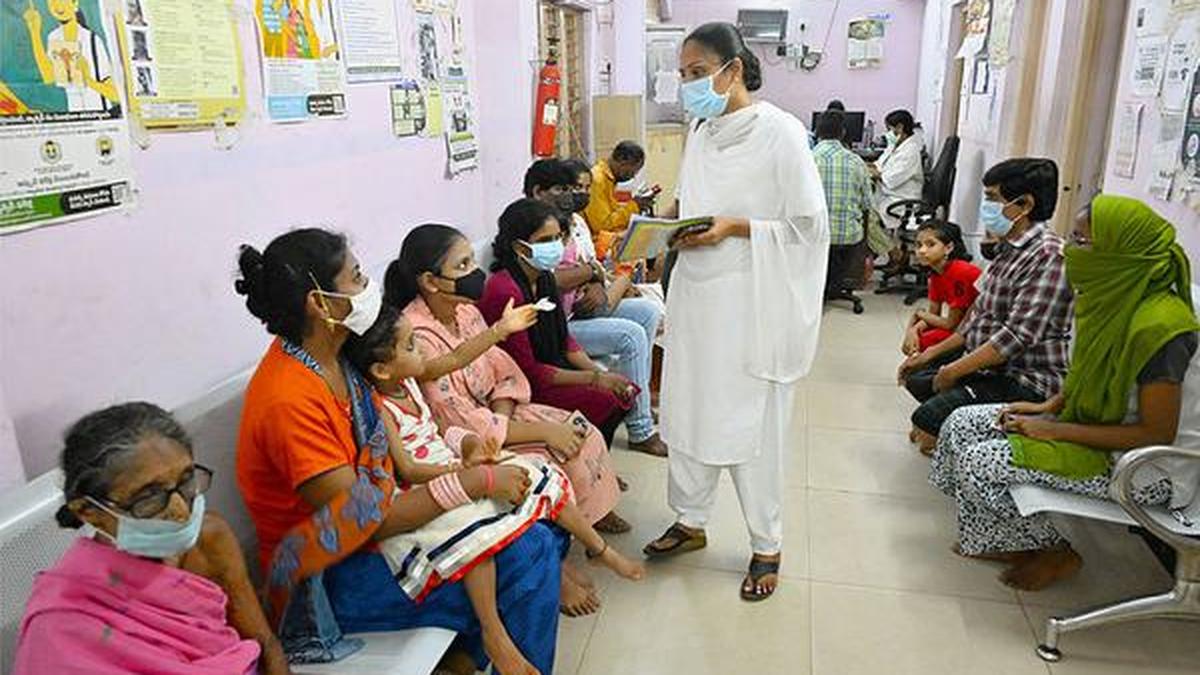
In India, direct out-of-pocket expenditure (OOPE) by households is the main source of financing for health care. In an OOPE-based system, when a family member falls ill, we either dip into our savings, sell assets, or borrow to meet health-care expenditures. If one is poor, the option is either to forgo care and die or get pushed into further destitution due to the costs of care. Children are taken out of school, women work longer hours to earn a little more and make do with meagre meal(s). As families cope with health shocks, the vicious cycle of poverty and ill-health intensifies.

India’s National Health Account (NHA) estimates show a declining trend in OOPE as a proportion of total health expenditure as well as GDP. Various recent policy initiatives of the government of the day are being credited for this decline. A decline in OOPE, if materialised, is a positive development. However, it is prudent to scrutinise the estimates derived from the National Sample Surveys (NSS) before jumping to convenient conclusions.

Click to subscribe to our Data newsletter

We conducted a comparative analysis of the NHA estimates with other large sample surveys and National Income Accounts estimates. Our results point to the need for revisiting the argued decline in OOPE and to adopt a more cautious and comparative approach.

NHA captures spending on health by various sources, tracks the schemes through which these funds are channelised to various providers in a given period of time for a given geography. It derives OOPE estimates from various household surveys, mainly using the National Sample Survey (NSS). For some components not covered under NSS, the National Family Health Surveys (NFHS) and private databases on the sale of medicines are used. The latest health round of the NSS was for 2017-18 (75th round), which forms the basis of the 2017-18 NHA estimates. The NHA 2017-18 reported a steep decline in OOPE as a proportion of health expenditure, from 64% in 2013-14 and 49% in 2017-18. For subsequent rounds, OOPE estimates are an extrapolation of 2017-18 estimates, adjusting them for price rise. For the latest year of NHA (2021-22), the share has come down to 39%. The chart below shows out-of-pocket expenditure as a share of total expenditure.

The decline in OOPE, based on the NSS 75th round, however, needs further scrutiny. This could largely be on account of a decline in ailment reporting and utilisation of hospitalisation services, rather than any reduction in the cost of health-care services. Sources such as Longitudinal Ageing Study in India (LASI) show a much higher level of utilisation of hospitalisation services by the elderly.

One of the latest sources of OOPE estimates is the Consumer Expenditure Survey (CES)-2022-23. This data show that OOPE as a share of household consumption expenditure (HCE) is on a steady rise. Between 2011-12 and 2022-23, the share of OOPE in HCE has increased to 5.9% from 5.5% in rural areas and from 6.9% to 7.1% in urban areas. If OOPE had truly declined in this period, its share in HCE should have also declined. An increased proportion of the household budget going for health indicates that health care is becoming more expensive. The chart below shows out-of-pocket expenditure as a share of household consumption expenditure.

The NHA OOPE estimates have not been able to capture the massive distress caused by COVID-19. As you would note, the NHA numbers show a secular decline. Since none of the NSS rounds has data for the COVID-19 period, we have used the Consumer Pyramids Household Survey conducted by Centre for Monitoring Indian Economy (CPHS-CMIE), which surveys each household at least thrice a year. Since the CMIE has its limitations, it may not be compared with the NSS in absolute. To make them comparable, we have indexed both the CMIE and NHA OOPE absolute numbers as 100 (2016-17) and traced the trend over time. The NHA numbers show a steep decline in 2017-18 and then a very gradual crawling up. In comparison, the CMIE estimates show a steep decline during the COVID-19 years and then a ‘V’ shaped increase in OOPE. Current NHA estimates miss out these fluctuations completely, hence seeming unrealistic. The chart below shows trends in out-of-pocket expenditure indices derived from CMIE and NHA estimates.

The NHA is supposed to be a satellite account of the National Income Account (NIA). NIA estimates private final consumption expenditure on health as well. NIA estimates of the share of household spending on health in GDP depict a steady increase over these years, while NHA numbers show a decline.. Apart from direct OOPE, households also spend on insurance premiums. Even if we take both into account, we still see a steep unexplained decline in NHA estimates, while NIA estimates show a continuous rise.

Current NHA estimates remain conveniently confined within their methodological limitations and help draw politically motivated policy conclusions. The problem is that it depends heavily on one data set, which, for various reasons, has not been able to capture the reality pertaining to the hardships that households are facing in seeking health care. While medicine prices are skyrocketing, all other evidence indicates that health care is getting costlier.

The NSS Morbidity round remains one of the most important sources of details of how and where households spend money. As we have demonstrated in our recent paper for Economic and Political Weekly, sources such as Longitudinal Ageing Study in India (LASI) show a much higher level of utilisation of hospitalisation services by the elderly. The NSS health round estimates need to be complemented with various other data sources and methods to produce more realistic macro health policy numbers for national health accounts.

Source: NHA, National Health Systems Resource Centre, Ministry of Health and Family Welfare, National Income Accounts, PFCE

Indranil is a Professor at the School of Government and Public Policy, O.P Jindal Global University, Sonipat, Haryana.

Montu Bose is an Assistant Professor at the School of Health Systems Studies, TISS, Mumbai. With CMIE data inputs from Akarsh CO, Research Associate, O.P. Jindal Global University.

imukhopadhyay@jgu.edu.in, monbose@gmail.com

Also read: Urban consumers are worried about their income levels

Published – September 22, 2025 08:00 am IST


Source link

Business Tags:accuracy of out of pocket expenditure calculations data, health out of pocket expenditure trends explained, how is oope in health calculated, how much indians are spending on healthcare, out of pocket expenditure decline health india

Post navigation

Previous Post: Access Denied
Next Post: Access Denied

Related Posts

  • Access Denied Business
  • PVV Infra board approves to raise ₹49.50 crore though rights issue
    PVV Infra board approves to raise ₹49.50 crore though rights issue Business
  • Rupee drops 8 paise to close at 84.74 against U.S. dollar
    Rupee drops 8 paise to close at 84.74 against U.S. dollar Business
  • Centre lifts sugar export ban partially, industry welcomes move
    Centre lifts sugar export ban partially, industry welcomes move Business
  • After Fitch, Moody’s also switches outlook on Adani group firms to ‘negative’
    After Fitch, Moody’s also switches outlook on Adani group firms to ‘negative’ Business
  • Access Denied Business

More Related Articles

Explained | Why did the government impose a ceiling on wheat stocks? Explained | Why did the government impose a ceiling on wheat stocks? Business
Centre’s Fiscal Deficit Touches 39% Of Full-Year Target In FY24’s 1st Half Centre’s Fiscal Deficit Touches 39% Of Full-Year Target In FY24’s 1st Half Business
Balancing risk perceptions in transition to a responsible renewable-energy system  Balancing risk perceptions in transition to a responsible renewable-energy system  Business
Access Denied Business
Access Denied Access Denied Business
Access Denied Business
SiteLock

Archives

  • May 2026
  • April 2026
  • March 2026
  • February 2026
  • January 2026
  • December 2025
  • November 2025
  • October 2025
  • September 2025
  • August 2025
  • July 2025
  • June 2025
  • May 2025
  • April 2025
  • March 2025
  • February 2025
  • January 2025
  • December 2024
  • November 2024
  • October 2024
  • September 2024
  • August 2024
  • July 2024
  • June 2024
  • May 2024
  • April 2024
  • March 2024
  • February 2024
  • January 2024
  • December 2023
  • November 2023
  • October 2023
  • September 2023
  • August 2023
  • July 2023
  • June 2023
  • May 2023
  • April 2023
  • March 2023
  • February 2023
  • January 2023
  • December 2022
  • November 2022
  • October 2022
  • September 2022
  • August 2022
  • July 2022
  • June 2022
  • May 2022

Categories

  • Business
  • Nation
  • Science
  • Sports
  • World

Recent Posts

  • Visakhapatnam gets ₹1,501.03 crore Centre nod for water, drainage projects; Madhurawada gets lion’s share
  • Cipla misses Q4 profit estimates on weak U.S. sales
  • U.K. police pull bodies of three women from sea at Brighton
  • Akshay Kumar, Vidya Balan’s untitled comedy with Anees Bazmee gets release date
  • Small study hints that revving up immune cells might help fight HIV

Recent Comments

  1. WilliamGoT on UP Teacher Who Asked Students To Slap Muslim Classmate
  2. StanleyPeapy on UP Teacher Who Asked Students To Slap Muslim Classmate
  3. WilliamTOP on UP Teacher Who Asked Students To Slap Muslim Classmate
  4. DavidAnymn on UP Teacher Who Asked Students To Slap Muslim Classmate
  5. Jesusetexy on UP Teacher Who Asked Students To Slap Muslim Classmate
  • EPFO Reports Highest Ever Monthly Payroll Additions In July 2024
    EPFO Reports Highest Ever Monthly Payroll Additions In July 2024 Nation
  • Cricket World Cup 2023: List Of Injured Players Who Will Miss Out On Marquee Event
    Cricket World Cup 2023: List Of Injured Players Who Will Miss Out On Marquee Event Sports
  • Access Denied Sports
  • Paris Saint-Germain Held Again In Draw With Auxerre
    Paris Saint-Germain Held Again In Draw With Auxerre Sports
  • Russia’s We Maintain Contact With Hamas Remark As Israel Plans Hostage Rescue
    Russia’s We Maintain Contact With Hamas Remark As Israel Plans Hostage Rescue World
  • Adani Enterprises’ 1st Retail Bond Fully Subscribed
    Adani Enterprises’ 1st Retail Bond Fully Subscribed Nation
  • Israeli strikes kill nine people in Gaza, mediators strive for a truce deal
    Israeli strikes kill nine people in Gaza, mediators strive for a truce deal World
  • Access Denied Sports

Editor-in-Chief:
Mohammad Ariff,
MSW, MAJMC, BSW, DTL, CTS, CNM, CCR, CAL, RSL, ASOC.
editor@artifex.news

Associate Editors:
1. Zenellis R. Tuba,
zenelis@artifex.news
2. Haris Daniyel
daniyel@artifex.news

Photograher:
Rohan Das
rohan@artifex.news

Artifex.News offers Online Paid Internships to college students from India and Abroad. Interns will get a PRESS CARD and other online offers.
Send your CV (Subjectline: Paid Internship) to internship@artifex.news

Links:
Associate Journalism
About Us
Privacy Policy

News Links:
Breaking News
World
Nation
Sports
Business
Entertainment
Lifestyle

Registered Office:
72/A, Elliot Road, Kolkata - 700016
Tel: 033-22277777, 033-22172217
Email: office@artifex.news

Editorial Office / News Desk:
No. 13, Mezzanine Floor, Esplanade Metro Rail Station,
12 J. L. Nehru Road, Kolkata - 700069.
(Entry from Gate No. 5)
Tel: 033-46011099, 033-46046046
Email: editor@artifex.news

Copyright © 2023 Artifex.News Newsportal designed by Artifex Infotech.