
Skip to content
  • Facebook
  • X
  • Linkedin
  • WhatsApp
  • YouTube
  • Associate Journalism
  • About Us
  • Privacy Policy
  • 033-46046046
  • editor@artifex.news
Artifex.News

Artifex.News

Stay Connected. Stay Informed.

  • Breaking News
  • World
  • Nation
  • Sports
  • Business
  • Science
  • Entertainment
  • Lifestyle
  • Toggle search form
  • Access Denied
    Access Denied Nation
  • Access Denied
    Access Denied Nation
  • Access Denied Sports
  • Donald Trump’s Tariff Talk Spurs Global Jitters, Countries May “Retaliate”
    Donald Trump’s Tariff Talk Spurs Global Jitters, Countries May “Retaliate” World
  • Hockey Women’s World Cup Qualifiers | India keen to ride on home comforts
    Hockey Women’s World Cup Qualifiers | India keen to ride on home comforts Sports
  • Access Denied Business
  • Access Denied
    Access Denied Nation
  • “Slightly Spicy Though…”: Babar Azam’s Honest Verdict On Hyderabadi Biryani
    “Slightly Spicy Though…”: Babar Azam’s Honest Verdict On Hyderabadi Biryani Sports
Why are European nations now moving to recognise Palestine? | Explained

Why are European nations now moving to recognise Palestine? | Explained

Posted on September 12, 2025 By admin


The story so far:

In a significant diplomatic shift, several European nations, including Spain, Ireland, and Norway, have formally recognised the state of Palestine. The move has created a ripple effect, prompting major powers like France to clarify their own positions. French President Emmanuel Macron stated he is “totally ready to recognise a Palestinian state,” but stressed such a move “must come at a useful moment.” This wave of recognition is the culmination of overlapping geopolitical, moral, and domestic pressures that have reached a tipping point.

What makes recognition urgent now?

The primary catalyst has been the war in Gaza following the October 7 attacks. The scale of the subsequent Israeli military response, resulting in widespread destruction and a humanitarian catastrophe, has shocked European sensibilities and made the previous status quo untenable. This has been compounded by the official stance of Israeli Prime Minister Benjamin Netanyahu’s government, which has rejected the two-state solution, the foundational principle of decades of international diplomacy. The legal proceedings at the International Court of Justice, where South Africa has accused Israel of violating the Genocide Convention, have further intensified the pressure on European nations to take a definitive stance. For many governments, recognition is no longer a final reward for a settlement but a necessary act to preserve the very possibility of a two-state solution.

How has Ukraine reshaped Europe’s stance on sovereignty?

The Russian invasion of Ukraine in 2022 forced Europe to adopt a principled stand on national sovereignty and the inadmissibility of acquiring land by force. However, this robust defence of international law has thrown Europe’s decades-long inaction on the Israeli occupation of Palestinian territories into sharp relief. Intellectuals, media commentators, and civil society across the continent have increasingly pointed out this glaring hypocrisy, weakening the moral authority of European foreign policy. Governments now face immense pressure to demonstrate consistency. This “consistency gap” has become a significant liability, prompting a re-evaluation of their position. Recognising Palestine is thus partly an attempt to realign their policies and project a more coherent and principled stance on the world stage.

What are the domestic political pressures inside European countries?

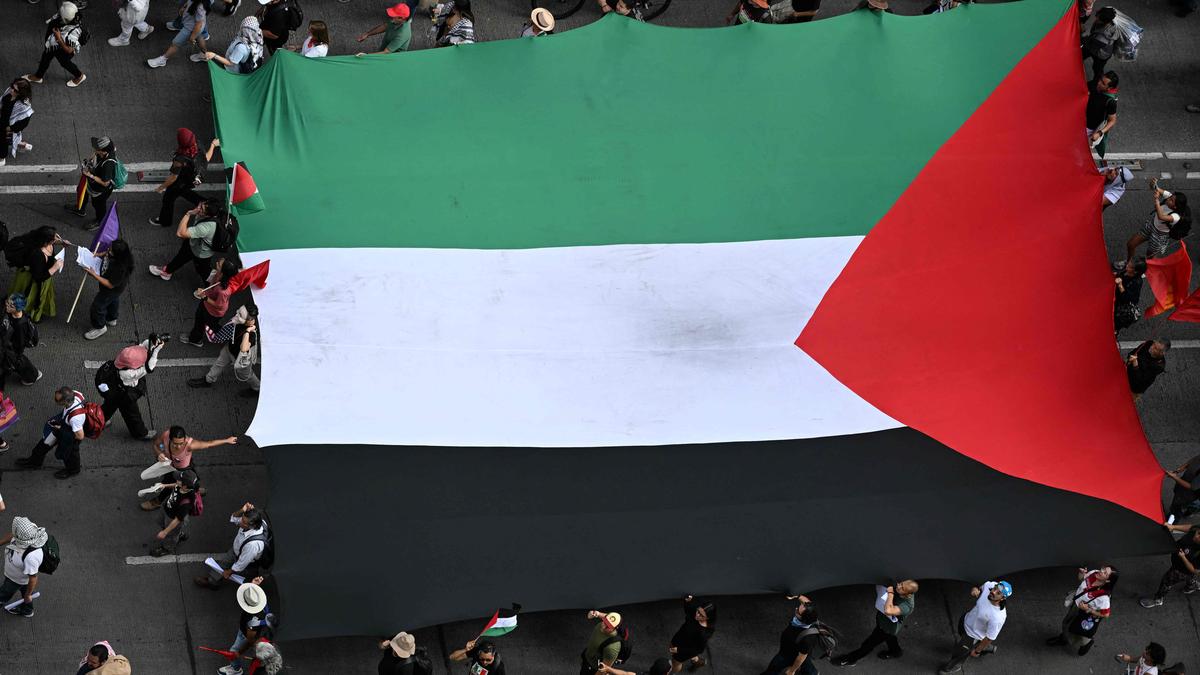
The foreign policy shift is also a direct response to roiling domestic politics. Across Europe, public opinion has shifted palpably. The European Parliament’s own Eurobarometer survey (2023) showed that 72% of Europeans support upholding international law in all conflicts — a principle increasingly seen as applying to Palestine as well. The harrowing images from Gaza have fuelled massive public demonstrations, student-led university encampments from Paris to Dublin, and relentless advocacy from human rights organisations. Youth and progressive constituencies, which form a crucial voter base for many ruling centre-left and green parties, are demanding concrete action beyond mere condemnation. For these governments, the political cost of inaction is rising steeply. Being perceived as passive is becoming a significant electoral risk, making recognition a signal to the domestic audience that their government is aligned with the evolving moral consensus of its electorate.

Why are some countries moving faster than others?

The varied pace of recognition reveals the deep historical and political fault lines within Europe. Countries like Spain, Ireland, and Norway share a history of sympathy for the Palestinian cause, rooted in their own experiences with national struggle or a tradition of social democratic internationalism. Norway was host to the 1993 Oslo Accords; its recognition of Palestine in 2024 was seen as admitting that the negotiated path has collapsed, and new leverage is needed. In stark contrast, nations like Germany and Austria remain reluctant, constrained by the profound historical responsibility of the Holocaust, which has forged an ironclad commitment to Israel’s security. Meanwhile, many eastern European countries, such as Poland and Hungary, recognised Palestine decades ago under Soviet influence. However, today these same countries tend to align their foreign policy closely with the U.S. and are hesitant to take a leading role on the issue, prioritising transatlantic unity.

How are these moves coordinated at the European Union level?

This patchwork approach is a direct consequence of the European Union’s institutional structure. The European Union’s Common Foreign and Security Policy requires unanimity among all 27 member states to form a collective position — a consensus that is currently impossible to achieve. As a result, the decision on recognition has been left to individual member states. However, these are not entirely isolated actions. The moves by Spain, Ireland, and Norway were deliberately coordinated to create a greater political impact. This “like-minded group” approach builds momentum; when one set of countries acts, it provides political cover and encouragement for others to follow. While a unified EU position remains distant, this state-by-state process is creating a de facto shift in Europe’s collective posture. The war in Gaza, the intellectual contradiction exposed by the Ukraine conflict, and rising domestic political activism have forced a change.

This is a symbolic shift in how a growing part of Europe wants to project its values and power globally. While recognition itself does not end the occupation or the conflict, it signals unequivocally that many in Europe are no longer comfortable being passive spectators to the dismantling of the two-state solution.

Franciszek Snarski is a graduate of Sciences Po, Paris

Published – September 12, 2025 08:30 am IST


Source link

World

Post navigation

Previous Post: Access Denied
Next Post: Access Denied

Related Posts

  • A Street In UAE Named After 84-Year-Old Doctor of Indian Origin George Matthew
    A Street In UAE Named After 84-Year-Old Doctor of Indian Origin George Matthew World
  • The Hindu Morning Digest, March 03, 2024
    The Hindu Morning Digest, March 03, 2024 World
  • Gaza’s Largest Al-Shifa Hospital An Empty Shell With Human Graves: WHO
    Gaza’s Largest Al-Shifa Hospital An Empty Shell With Human Graves: WHO World
  • Afghanistan’s London embassy to close after its diplomats were disowned by the Taliban
    Afghanistan’s London embassy to close after its diplomats were disowned by the Taliban World
  • India sends first consignment of Bailey bridge components to flood-hit Nepal
    India sends first consignment of Bailey bridge components to flood-hit Nepal World
  • How The Internet Went From Being Fun To Frustrating
    How The Internet Went From Being Fun To Frustrating World

More Related Articles

Mexican Drug Lord ‘El Mayo’ And El Chapo’s Son Arrested In US Mexican Drug Lord ‘El Mayo’ And El Chapo’s Son Arrested In US World
Taliban investigates explosion close to Government buildings in Kabul Taliban investigates explosion close to Government buildings in Kabul World
Access Denied World
Iran designated as a state sponsor of wrongful detention, says Rubio Iran designated as a state sponsor of wrongful detention, says Rubio World
Watch: From fireworks to quiet prayers: How the rest of the world celebrated New Year World
Trump appoints former PayPal exec David Sacks as AI and crypto czar Trump appoints former PayPal exec David Sacks as AI and crypto czar World
SiteLock

Archives

  • September 2026
  • August 2026
  • July 2026
  • June 2026
  • May 2026
  • April 2026
  • March 2026
  • February 2026
  • January 2026
  • December 2025
  • November 2025
  • October 2025
  • September 2025
  • August 2025
  • July 2025
  • June 2025
  • May 2025
  • April 2025
  • March 2025
  • February 2025
  • January 2025
  • December 2024
  • November 2024
  • October 2024
  • September 2024
  • August 2024
  • July 2024
  • June 2024
  • May 2024
  • April 2024
  • March 2024
  • February 2024
  • January 2024
  • December 2023
  • November 2023
  • October 2023
  • September 2023
  • August 2023
  • July 2023
  • June 2023
  • May 2023
  • April 2023
  • March 2023
  • February 2023
  • January 2023
  • December 2022
  • November 2022
  • October 2022
  • September 2022
  • August 2022
  • July 2022
  • June 2022
  • May 2022

Categories

  • Business
  • Nation
  • Science
  • Sports
  • World

Recent Posts

  • IIT Bombay faculty member booked for caste abuse, suicide abetment
  • Arjun finds form as India beats Spain; Savitha stars for women
  • CWC chief flags ‘malpractices’ in phytosanitary certification, pitches integrated logistics to boost agri-exports
  • Handloom weavers block Tenkasi-Madurai road
  • Ecologists urge scientists and policymakers to study imminent ‘Super’ El Niño to prepare for the future

Recent Comments

  1. AlvinNet on UP Teacher Who Asked Students To Slap Muslim Classmate
  2. AlvinNet on UP Teacher Who Asked Students To Slap Muslim Classmate
  3. Jamesslits on UP Teacher Who Asked Students To Slap Muslim Classmate
  4. MichaelClear on UP Teacher Who Asked Students To Slap Muslim Classmate
  5. Jamesslits on UP Teacher Who Asked Students To Slap Muslim Classmate
  • Access Denied Business
  • India’s exports contract 2.38% to .43 billion in January
    India’s exports contract 2.38% to $36.43 billion in January Business
  • G20 Pact Unveiled, “100% Consensus”, Including On Ukraine: 10 Points
    G20 Pact Unveiled, “100% Consensus”, Including On Ukraine: 10 Points Nation
  • At least 14 dead as Ukraine, Russia exchange strikes
    At least 14 dead as Ukraine, Russia exchange strikes World
  • PM Narendra Modi Blasts Congress, Says ‘Quota Based On Religion Will Destroy Generations’
    PM Narendra Modi Blasts Congress, Says ‘Quota Based On Religion Will Destroy Generations’ Nation
  • Slovak PM Robert Fico’s “Life In Danger” After Assassination Attempt
    Slovak PM Robert Fico’s “Life In Danger” After Assassination Attempt World
  • Vipraj relishing the challenges on his maiden tour
    Vipraj relishing the challenges on his maiden tour Sports
  • Israel PM Netanyahu Vows “Merciless Strikes” On Hezbollah, Including Beirut
    Israel PM Netanyahu Vows “Merciless Strikes” On Hezbollah, Including Beirut World

Editor-in-Chief:
Mohammad Ariff,
MSW, MAJMC, BSW, DTL, CTS, CNM, CCR, CAL, RSL, ASOC.
editor@artifex.news

Associate Editors:
1. Zenellis R. Tuba,
zenelis@artifex.news
2. Haris Daniyel
daniyel@artifex.news

Photograher:
Rohan Das
rohan@artifex.news

Artifex.News offers Online Paid Internships to college students from India and Abroad. Interns will get a PRESS CARD and other online offers.
Send your CV (Subjectline: Paid Internship) to internship@artifex.news

Links:
Associate Journalism
About Us
Privacy Policy

News Links:
Breaking News
World
Nation
Sports
Business
Entertainment
Lifestyle

Registered Office:
72/A, Elliot Road, Kolkata - 700016
Tel: 033-22277777, 033-22172217
Email: office@artifex.news

Editorial Office / News Desk:
No. 13, Mezzanine Floor, Esplanade Metro Rail Station,
12 J. L. Nehru Road, Kolkata - 700069.
(Entry from Gate No. 5)
Tel: 033-46011099, 033-46046046
Email: editor@artifex.news

Copyright © 2023 Artifex.News Newsportal designed by Artifex Infotech.