Skip to content
  • Facebook
  • X
  • Linkedin
  • WhatsApp
  • Associate Journalism
  • About Us
  • Privacy Policy
  • 033-46046046
  • editor@artifex.news
Artifex.News

Artifex.News

Stay Connected. Stay Informed.

  • Breaking News
  • World
  • Nation
  • Sports
  • Business
  • Science
  • Entertainment
  • Lifestyle
  • Toggle search form
  • Uddhav Thackeray On Devendra Fadnavis’ 2019 Promise Involving Son Aaditya
    Uddhav Thackeray On Devendra Fadnavis’ 2019 Promise Involving Son Aaditya Nation
  • Centre estimates dip in onion, potato production this year
    Centre estimates dip in onion, potato production this year Business
  • Supreme Court on High Court’s Remark On Widow, Make-Up
    Supreme Court on High Court’s Remark On Widow, Make-Up Nation
  • Eriksen Scores On Emotional Euro Return As Denmark Held By Slovenia
    Eriksen Scores On Emotional Euro Return As Denmark Held By Slovenia Sports
  • Access Denied Sports
  • Pakistan Coach Blames ‘Foreign Conditions’ In India For Cricket World Cup Debacle
    Pakistan Coach Blames ‘Foreign Conditions’ In India For Cricket World Cup Debacle Sports
  • A Fresh Look At Madhya Pradesh Underworld
    A Fresh Look At Madhya Pradesh Underworld Nation
  • Need X-factor players like Dube in a World Cup, says Stephen Fleming
    Need X-factor players like Dube in a World Cup, says Stephen Fleming Sports
Only united action can stop the hyacinth’s invasion

Only united action can stop the hyacinth’s invasion

Posted on August 14, 2025 By admin


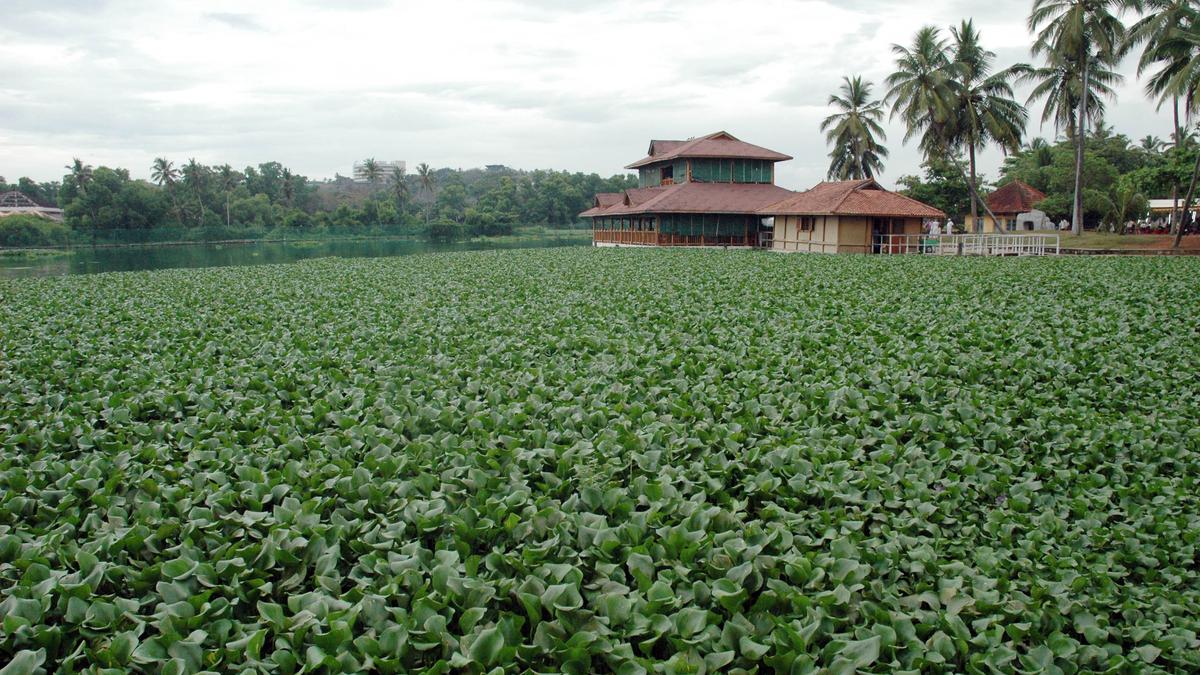
Every monsoon, a quiet menace surges across India’s waterways, turning glistening rivers, backwaters and lakes into green deserts. This threat is the water hyacinth (Eichhornia crassipes), an innocuous-looking aquatic plant which has delicate lilac flowers that belies its destructive power. Nowhere is its impact more pervasive than in Kerala — a State renowned for its intricate network of backwaters and the famed Vembanad Lake.

Introduced in India during colonial rule as an ornamental plant, the water hyacinth’s prodigious growth has since overwhelmed the very ecosystems and communities it decorates. Today, it is estimated that over 2,00,000 hectares of inland waters nationwide have been smothered by this weed, disrupting the lives and livelihoods of countless Indians.

Crisis in Kerala

Farmers and fishermen are among the hardest hit. For paddy cultivators along the Kuttanad region of Kerala — known as the ‘rice bowl of Kerala’ — water hyacinth mats block irrigation channels, impede water flow, and choke fields, driving up the costs and efforts required to sustain agriculture. Fishermen find their traditional trade impossible as the dense mats strangle fish nurseries, undermine native fish populations, block access, and even damage nets and boats.

Worse, water hyacinth devastates aquatic biodiversity. By preventing sunlight and oxygen from penetrating the water’s surface, these floating jungles suffocate everything below. Aquatic flora and fauna, already fighting pollution and over-extraction, are now forced to contend with ecological asphyxiation, unravelling entire food webs. The weed’s unchecked proliferation is a direct threat to ecotourism as well. Vembanad Lake, a Ramsar-recognised wetland of international importance and a lifeline for lakhs of people, is emblematic of this crisis, with tourism and transport now at risk.

Yet, the hidden danger of the water hyacinth extends beyond livelihoods and biodiversity. As the plant rapidly accumulates and then decays, it releases methane — a greenhouse gas over 25 times more potent than carbon dioxide at trapping heat.

Experiments that must be scaled up

Recognising the need for solutions, innovators and communities across India have experimented with turning this ‘pest’ into a resource. In Odisha, imaginative women’s self-help groups skilfully weave water hyacinth into handicrafts, baskets and furniture. In Assam and West Bengal, it has been transformed into paper and biogas production.

These experiments, though promising, remain isolated in scope and scale. What is urgently required is policy support, financial incentives and a robust value chain to scale them up.

Despite the creativity at the grass-roots, what is missing is a coordinated policy thrust in the effective management of the hyacinth menace. Currently, responsibility is diffused across multiple government departments — agriculture, fisheries, environment, irrigation — often leading to piecemeal and short-term efforts. The situation demands a single-point accountability mechanism and a national policy with region-specific implementation strategies. There is a need for coordinated removal drives using scientific methods and mechanisation with appropriate technology suited to local conditions in places such as Kerala where labour is not easily available. Innovators need to be incentivised and private sector partnerships established for value addition. Research into viable products (crafts, biofuels, compost textiles) also needs to be promoted and disseminated.

Solving the water hyacinth crisis is a mammoth task, but it is by no means insurmountable. Recently, Jain University in Kochi organised a brainstorming workshop under its Future Kerala Mission, bringing together experts, grass-roots practitioners, policymakers and businesses to reimagine water hyacinth as a bearer of sustainable livelihoods — rather than just viewing it as a pest.

The University has since decided to launch an awareness campaign and to release a discussion paper, inviting inputs that incorporate scientific and local knowledge systems. By fusing academic research, policy engagement, and community experience, the University hopes to spur a shift from sporadic experiments to systematic, sustainable solutions.

Need for united action

India’s rivers and lakes are too precious to be stifled by neglect — or by a single invasive plant. The water hyacinth menace calls for urgency, accountability and united action. Let every community, government department, entrepreneur and citizen recognise that this is not just an ecological problem but a crucible for rural livelihoods, food security, climate resilience and a green economy.

Let us, together, drain the swamp — not just of water hyacinth, but of the inertia that allows such a menace to flourish. The time for action is now.

Venu Rajamony is Chairman, Future Kerala Mission, Jain (deemed to be) University, Kochi and a former Ambassador of India to the Netherlands

Published – August 15, 2025 12:08 am IST


Source link

Science Tags:hectares of inland waters, India’s rivers and lakes, Kerala’s network of backwaters and Vembanad Lake, lives and livelihoods of Indians, methane and hyacinth, ornamental plant and water hyacinth, paddy cultivators along the Kuttanad region of Kerala, threat from the water hyacinth, Vembanad Lake as a Ramsar-recognised wetland, water hyacinth and aquatic biodiversity

Post navigation

Previous Post: Access Denied
Next Post: Science and nation-building – The Hindu

Related Posts

  • Race for Sun heats up: These are various solar missions
    Race for Sun heats up: These are various solar missions Science
  • Trilobite fossils from upstate New York reveal extra set of legs
    Trilobite fossils from upstate New York reveal extra set of legs Science
  • Study traces Turkey quake to interrupted ‘chat’ between fault lines
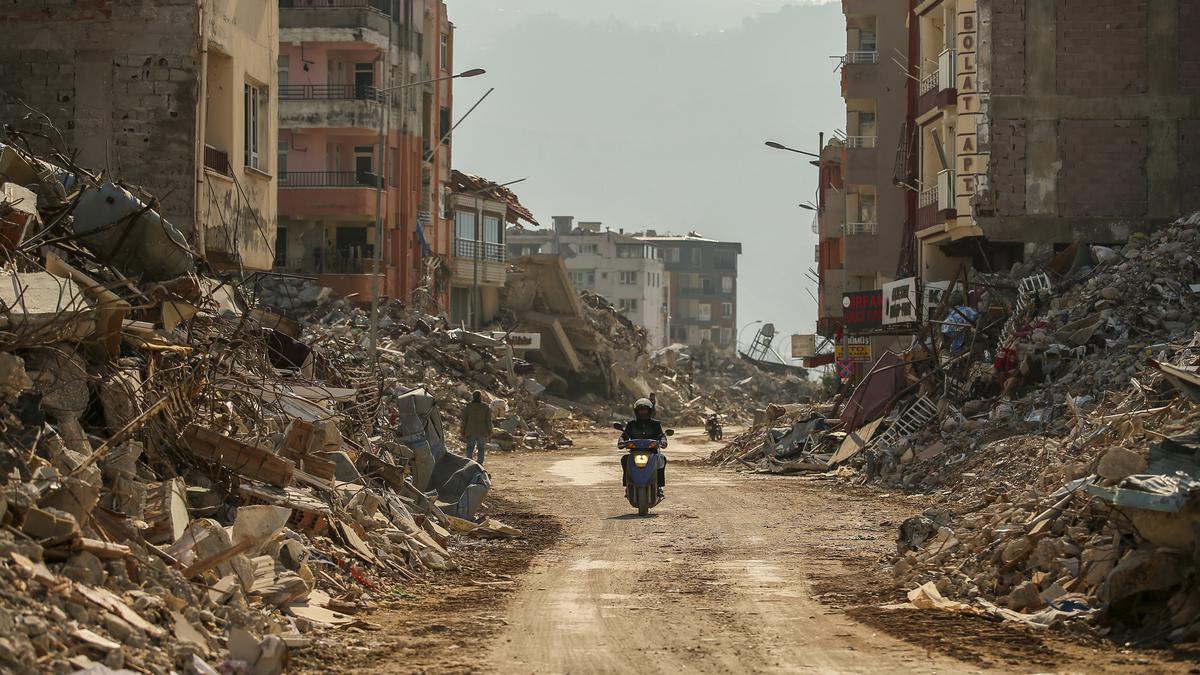
    Study traces Turkey quake to interrupted ‘chat’ between fault lines Science
  • Science for all: First real-time video of how an embryo implants itself produced
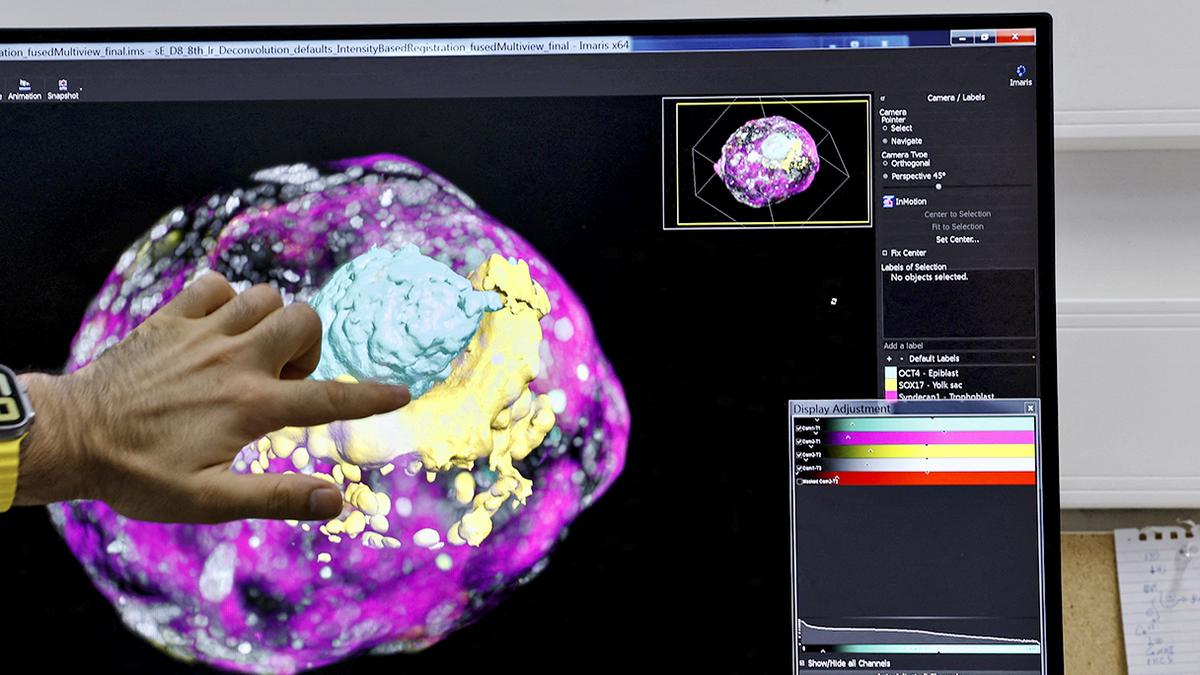
    Science for all: First real-time video of how an embryo implants itself produced Science
  • Ketamine pill offers hope, and risks, for treatment-resistant depression
    Ketamine pill offers hope, and risks, for treatment-resistant depression Science
  • Reproduce or it didn’t happen: why replicable science is better science
    Reproduce or it didn’t happen: why replicable science is better science Science

More Related Articles

‘Misperception stops healthcare providers from prescribing life-saving ORS for child diarrhoea’  ‘Misperception stops healthcare providers from prescribing life-saving ORS for child diarrhoea’  Science
Webb telescope observes violence around Milky Way’s central black hole Webb telescope observes violence around Milky Way’s central black hole Science
Pfizer reports patient death in Duchenne gene therapy study Pfizer reports patient death in Duchenne gene therapy study Science
On amplifiers: how do they work and what are the different kinds? On amplifiers: how do they work and what are the different kinds? Science
The Science Quiz | Remembering a star that was briefly the brightest… The Science Quiz | Remembering a star that was briefly the brightest… Science
Northern Lights: Severe solar storm triggers rare auroral arc in Ladakh sky Northern Lights: Severe solar storm triggers rare auroral arc in Ladakh sky Science
SiteLock

Archives

  • August 2025
  • July 2025
  • June 2025
  • May 2025
  • March 2025
  • February 2025
  • January 2025
  • December 2024
  • November 2024
  • October 2024
  • September 2024
  • August 2024
  • July 2024
  • June 2024
  • May 2024
  • April 2024
  • March 2024
  • February 2024
  • January 2024
  • December 2023
  • November 2023
  • October 2023
  • September 2023
  • August 2023
  • July 2023
  • June 2023
  • May 2023
  • April 2023
  • March 2023
  • February 2023
  • January 2023
  • December 2022
  • November 2022
  • October 2022
  • September 2022
  • August 2022
  • July 2022
  • June 2022
  • May 2022

Categories

  • Business
  • Nation
  • Science
  • Sports
  • World

Recent Posts

  • What’s the issue with the way Africa is shown on maps? | Explained
  • Rupee declines 11 paise to 87.36 against U.S. dollar in early trade
  • Access Denied
  • Access Denied
  • OpenAI establishes Indian unit, plans to open office in New Delhi

Recent Comments

  1. dfb{{98991*97996}}xca on UP Teacher Who Asked Students To Slap Muslim Classmate
  2. "dfbzzzzzzzzbbbccccdddeeexca".replace("z","o") on UP Teacher Who Asked Students To Slap Muslim Classmate
  3. 1}}"}}'}}1%>"%>'%> on UP Teacher Who Asked Students To Slap Muslim Classmate
  4. bfg6520<s1﹥s2ʺs3ʹhjl6520 on UP Teacher Who Asked Students To Slap Muslim Classmate
  5. pHqghUme9356321 on UP Teacher Who Asked Students To Slap Muslim Classmate
  • Kim Jong Un Leads Test Of New Missile That Can Hit US Bases
    Kim Jong Un Leads Test Of New Missile That Can Hit US Bases World
  • Nirav Modi Transferred To Privately-Run Prison In London
    Nirav Modi Transferred To Privately-Run Prison In London Nation
  • X User Says Donald Trump Should Return To The Platform, Elon Musk Agrees
    X User Says Donald Trump Should Return To The Platform, Elon Musk Agrees World
  • US Woman Headed Gang That Stole Make-Up Products Worth  Million, Sold On Amazon
    US Woman Headed Gang That Stole Make-Up Products Worth $8 Million, Sold On Amazon World
  • ‘Impossible To Win The IPL’: England Great’s Harrowing Verdict On RCB
    ‘Impossible To Win The IPL’: England Great’s Harrowing Verdict On RCB Sports
  • Train Services To Begin Soon On World’s Highest Railway Bridge In Chenab
    Train Services To Begin Soon On World’s Highest Railway Bridge In Chenab Nation
  • All 5 Arrested For Gang-Raping Minor In Public-Bus In Dehradun
    All 5 Arrested For Gang-Raping Minor In Public-Bus In Dehradun Nation
  • AAP To Make Electoral Debut In Northeast By Contesting Mizoram Polls
    AAP To Make Electoral Debut In Northeast By Contesting Mizoram Polls Nation

Editor-in-Chief:
Mohammad Ariff,
MSW, MAJMC, BSW, DTL, CTS, CNM, CCR, CAL, RSL, ASOC.
editor@artifex.news

Associate Editors:
1. Zenellis R. Tuba,
zenelis@artifex.news
2. Haris Daniyel
daniyel@artifex.news

Photograher:
Rohan Das
rohan@artifex.news

Artifex.News offers Online Paid Internships to college students from India and Abroad. Interns will get a PRESS CARD and other online offers.
Send your CV (Subjectline: Paid Internship) to internship@artifex.news

Links:
Associate Journalism
About Us
Privacy Policy

News Links:
Breaking News
World
Nation
Sports
Business
Entertainment
Lifestyle

Registered Office:
72/A, Elliot Road, Kolkata - 700016
Tel: 033-22277777, 033-22172217
Email: office@artifex.news

Editorial Office / News Desk:
No. 13, Mezzanine Floor, Esplanade Metro Rail Station,
12 J. L. Nehru Road, Kolkata - 700069.
(Entry from Gate No. 5)
Tel: 033-46011099, 033-46046046
Email: editor@artifex.news

Copyright © 2023 Artifex.News Newsportal designed by Artifex Infotech.