
78 Years of Freedom
The Narendra Modi government’s quest to bolster the domestic manufacturing sector is not the first time a government has tried this. In fact, the manufacturing sector has been the focus of government policy — in one way or the other — ever since 1956, to relatively modest success.
At the time of Independence or thereabouts, the Indian economy looked very different from its current state both in terms of size as well as composition. At the time, agriculture was the overwhelmingly dominant driver of the economy, contributing about half of the country’s Gross Domestic Product (GDP), as per data with the Reserve Bank of India.
The nascent manufacturing sector, on the other hand, made up about 11% of the GDP. Now, the services sector has taken over the dominant role vacated by agriculture, while manufacturing has remained largely where it was.
The first Five Year Plan (1951-56) focused on the idea of increasing domestic savings, since it was presumed that higher savings would directly translate into higher investments. This policy, however, ran into a fundamental problem: investments could not materially increase as the country did not have a domestic capital goods producing sector.
The second Five Year Plan (1956-61), based on the ideas of PC Mahalanobis, and successive Plans sought to address this by increasing investments in the capital goods producing sectors themselves. The idea was to increase government investment in capital goods production, while the micro, small, and medium enterprises (MSMEs) would cater to the consumer goods market.
As the economist and professor Aditya Bhattacharjea noted in a paper published in Springer Nature: “With long-run growth being seen as the means for reducing widespread poverty, the model provided an intellectual justification for increasing investments in the capital goods sector of a labour-abundant country.”
So, what followed was that growth rates of both investment in and output of the machinery, metals, and chemicals industries outpaced those of consumer goods industries.
The Mahalanobis model did not incorporate specific industry-wise policies, but it had a few broad themes that came to characterise India’s industrial policy over the country’s first three decades since Independence.
The first and most obvious theme was the huge role of the public sector. The feeling at the time was — not unlike what the Modi government felt in the wake of the COVID-19 pandemic — that private sector investment would not be picking up the load for some time, and so the public sector would have to do the heavy lifting.
The 1948 Industrial Policy Resolution (IPR) reserved the production of arms and ammunition for the Union government, and new investments in sectors as diverse as iron and steel, aircraft, ships, telephone, telegraph and wireless equipment were kept as the exclusive domain of central public sector enterprises.
The 1956 IPR, which came after the historic Avadi session of the Indian National Congress in 1955, expanded the reserved list to 14 sectors. The driving ideology was that the government and the public sector would assume the “commanding heights” of the economy.
The second and equally significant theme of this thought process was the use of licensing as a means to ensure that scarce resources were allocated to priority sectors.
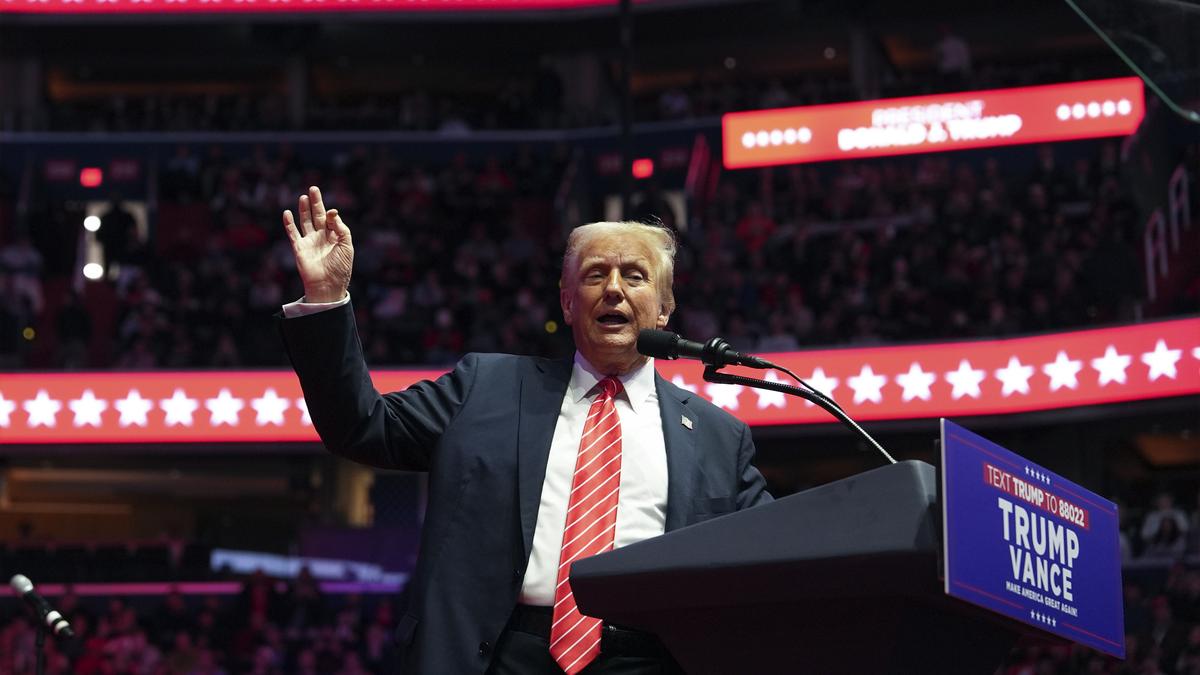
Third, the belief was that the domestic industry would need to be protected from international competition, and this protection took the form of high tariffs — something U.S. President Donald Trump seems to have a problem with even today — and import licensing.

By 1980, the share of manufacturing in India’s GDP had grown to about 16-17%. According to some economists like Pulapre Balakrishnan, the real growth in the manufacturing sector took off from here, and not from the 1991 liberalisation, as is often assumed.
This, they said, was due to a few policy changes enacted by the government of the time: allowing up to 25% automatic expansion of licensed capacities, allowing manufacturing licences to be used to produce other items within the same broad industrial category, and significant relaxation of price controls on cement and steel.
The 1991 reforms and the resultant end of the ‘licence raj’, the opening up of the economy to the private sector and international competition further helped things, with the manufacturing sector growing strongly and contributing a steady 15-18% of a rapidly-growing GDP till about 2015.
Steep fall
That year saw a marked change, however, with the share of manufacturing in GDP consistently falling for the next decade. A major reason for this change was the non-performing assets (NPA) crisis in the banking sector. Profligate lending by banks in the 2009-14 period led to a build-up of bad loans, which came to light in 2015-18 following an Asset Quality Review of the banking sector. Such was the crisis and its fallout that bank lending to large industry virtually dried up.
This, coupled with the loan-fuelled over-capacity that had been created during the 2009-14 period meant that companies did not need to invest in additional capacity to meet demand, and could not find adequate credit even if they wanted to invest.
Underpinning all of this was the increased reliance on imports from China, which virtually converted large parts of Indian manufacturing into assembly and repackaging units. Of course, the COVID-19 pandemic also severely hampered both demand and investments in India.
The Modi government’s Make in India efforts, thus, could not prevent the share of manufacturing in GDP falling from 15.6% in 2015-16 to 12.6% in 2024-25 — the lowest share in 71 years.
Another problem faced by the Modi government, something all previous governments also faced, was that a lot of the reforms to drive manufacturing were needed at the State level. So, while the Union government has put in place the framework for land and labour reforms that could potentially increase the scale of Indian manufacturing, they are held up as most State governments are not cooperating.

The services sector, on the other hand, has gone from strength to strength on the back of the IT boom. So, where services made up 37% of the GDP in 1950, this grew to 42% by 1996-97. Thereafter, the acceleration was rapid, with the sector now making up nearly 58% of the GDP.
So, 78 years after Independence, the manufacturing sector remains an also-ran in India’s growth story, despite fervent attempts by government after government. The services sector, on the other hand, has blossomed outside the government’s focus.
Published – August 15, 2025 03:26 am IST