




Skip to content
  • Facebook
  • X
  • Linkedin
  • WhatsApp
  • YouTube
  • Associate Journalism
  • About Us
  • Privacy Policy
  • 033-46046046
  • editor@artifex.news
Artifex.News

Artifex.News

Stay Connected. Stay Informed.

  • Breaking News
  • World
  • Nation
  • Sports
  • Business
  • Science
  • Entertainment
  • Lifestyle
  • Toggle search form
  • LIC gets 3 more years to meet SEBI’s 10% public holding norm
    LIC gets 3 more years to meet SEBI’s 10% public holding norm Business
  • S Jaishankar Slams Congress Over Katchatheevu Island
    S Jaishankar Slams Congress Over Katchatheevu Island Nation
  • Access Denied Business
  • Rupee rises nine paise to close at 82.96 against U.S. dollar
    Rupee rises nine paise to close at 82.96 against U.S. dollar Business
  • Access Denied World
  • IPL | I would like to see Dhoni smash the ball the way he loves to, says Vijay
    IPL | I would like to see Dhoni smash the ball the way he loves to, says Vijay Sports
  • Access Denied
    Access Denied Nation
  • Access Denied World
Can gut microbes help flush out forever chemicals in your body? Here is what experts have to say

Can gut microbes help flush out forever chemicals in your body? Here is what experts have to say

Posted on July 31, 2025 By admin


Could your gut help clear out toxic “forever chemicals”?

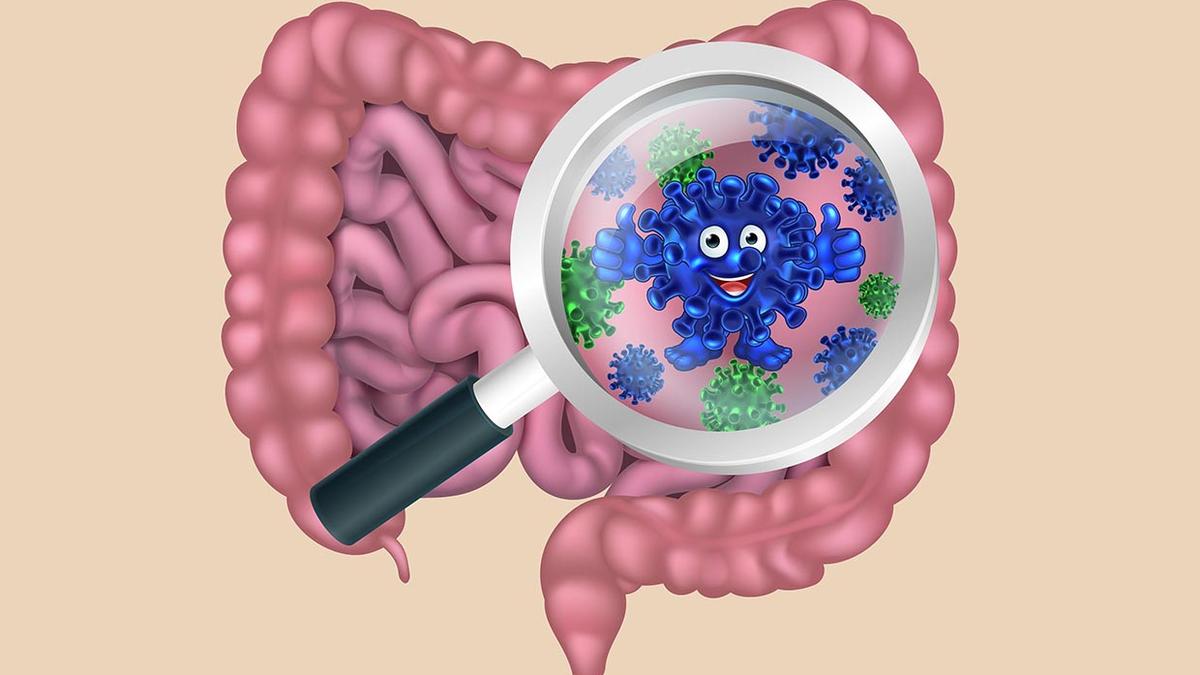
Scientists are beginning to explore the possibility that certain gut bacteria might help remove per- and polyfluoroalkyl substances (PFAS) – colloquially known as forever chemicals – a class of chemicals linked to cancer and other health harms from the body.

A study published in Nature Microbiology found that certain gut bacteria were able to absorb PFAS, allowing mice with these microbes in their gut to excrete the chemicals through faeces. The findings add to growing interest in how gut microbes could influence the body’s handling of environmental pollutants.

What are PFAS and how do they accumulate in the body?

PFAS are a large class of synthetic chemicals often called “forever chemicals” due to their strong carbon-fluorine bonds, which make them highly resistant to degradation in the body or environment.

“These chemicals have been used since the 1940s across everyday products, from nonstick cookware and food packaging to firefighting foams,” said Uday Nagesh Shivagi, senior consultant and clinical lead in medical gastroenterology at Narayana Health, Bengaluru.

These chemicals primarily enter the body through ingestion of tainted water or contaminated food like fish, meat, or eggs. Inhalation of contaminated dust and skin contact with PFAS containing items are also possible, though less prominent.

Once inside, PFAS bind to serum proteins like albumin and accumulate in organs like the liver and kidneys, as well as in the bile staying in the body for years, explained C. Kolandasamy, senior consultant, department of surgical gastroenterology, Rela Hospital, Chennai. The process of enterohepatic circulation in which substances excreted in bile re-enter the intestines and are reabsorbed into the bloodstream can further prolong their half-life in the body. .

“Some of these chemicals, like PFOS or PFOA, can remain with half-lives of over 8 years,” Dr. Shivagi explained.

Can gut bacteria help eliminate PFAS?

In the recent study , researchers observed that mice carrying specific types of gut bacteria were able to excrete PFAS more effectively through faeces, compared to germ-free mice. “This research gives us early clues about how the gut microbiome might influence PFAS elimination,” Dr. Kolandasamy said. “Certain bacteria appear to bind to PFAS molecules, preventing their absorption and helping excrete them via faeces.”

The mechanism is not one of chemical breakdown, but rather of sequestration, where microbes like Lactobacillus or Bacteroides bind to PFAS in the gut and trap them for elimination. Some microbial metabolites, such as bile acid conjugates, may also play a role in promoting excretion.

“Not all microbes do this,” cautioned Kayalavizhi Jayaraman, consultant gastroenterologist, Prashanth Hospitals, Chennai, “Animal studies have shown that strains like Bacteroides can accumulate PFAS within them. While it’s tempting to think of these microbes as filters, much more research is needed before recommending them for PFAS clearance.” The idea is scientifically compelling but still at a preclinical stage.

“So far, the most convincing data comes from lab and animal studies,” said Dr. Kolandasamy. “Mice with a diverse microbiome show reduced PFAS absorption compared to germ-free mice. However, no human clinical trials have conclusively demonstrated that boosting specific gut bacteria reduces PFAS levels.”

Dr. Jayaraman added that human evidence is mostly observational at this point. “We do see associations between PFAS exposure and gut dysbiosis — meaning changes in microbial diversity, but studies on actively changing the human microbiome to eliminate PFAS are still lacking.”

Role of diet and gut health

While there is no specific diet proven to eliminate PFAS, certain dietary strategies could support the gut’s natural filtering functions.

“Dietary fibre has shown potential,” said Dr. Kolandasamy. “Fiber can bind to bile acids, which also carry PFAS, promoting their excretion. Similarly, probiotics, particularly those containing Lactobacillus strains have shown reduced PFAS absorption in rodent models.”

Pilot studies have also explored the use of bile acid sequestrants such as the cholesterol-lowering drug cholestyramine to lower serum PFAS levels. “These findings suggest gut-focused therapies could be promising in the future,” he added.

Dr. Jayaraman emphasised a preventive approach. “While we don’t yet have a diet protocol to clear PFAS, eating wholesome foods, increasing fibre, and limiting processed and packaged food items may support overall gut health and resilience. It is also wise to avoid non-stick cookware and limit known PFAS exposures.”

Future research

With growing awareness of chemical exposures in everyday life, researchers are exploring whether microbiome-based therapies such as designer probiotics or even faecal microbiota transplantation (FMT) could one day help detoxify environmental chemicals like PFAS.

“There is already interest in engineering bacteria that express PFAS-binding proteins,” said Dr. Kolandasamy. “But these are still early-stage concepts, and there are regulatory and scientific challenges to overcome.”

Aditya Kulkarni, consultant, Paediatric Gastroenterology and Hepatology, Narayana Health SRCC children’s Hospital, Mumbai said “While it’s exciting to imagine a future where a probiotic capsule could help clear toxins, we need years, if not decades of research, to reach that point. Until then, the focus should remain on minimising exposure and supporting gut health naturally.”

This is a field worth watching,” said Dr. Kolandasamy, “but for now, prevention and awareness remain the best defense.”

Published – July 31, 2025 03:16 pm IST



Source link

Science Tags:Forever Chemicals, Gut bacteria research, Gut microbes, PFAS

Post navigation

Previous Post: Access Denied
Next Post: Access Denied

Related Posts

  • Indian astrophysicist receives COSPAR Harrie Massey Award 2024  
    Indian astrophysicist receives COSPAR Harrie Massey Award 2024   Science
  • Science for all newsletter scientists find a new tile shape
    Science for all newsletter scientists find a new tile shape Science
  • Brain undergoes major changes in pregnancy, some fleeting, some enduring, new study shows
    Brain undergoes major changes in pregnancy, some fleeting, some enduring, new study shows Science
  • With Sci-Hub gone, will the ‘One Nation, One Subscription’ scheme step up?
    With Sci-Hub gone, will the ‘One Nation, One Subscription’ scheme step up? Science
  • Studies provide more insight into the internal structure of Mars 
    Studies provide more insight into the internal structure of Mars  Science
  • JNCASR researchers develop photocatalyst to convert carbon dioxide to ethylene
    JNCASR researchers develop photocatalyst to convert carbon dioxide to ethylene Science

More Related Articles

Did neanderthals use glue to create stone tools? Did neanderthals use glue to create stone tools? Science
Scientists find elusive Pines’ demon particle after 67 years Scientists find elusive Pines’ demon particle after 67 years Science
The gravitational constant – The Hindu The gravitational constant – The Hindu Science
The cost of convenience: health hazards as a side effect of using digital tools The cost of convenience: health hazards as a side effect of using digital tools Science
NZ treaty may allow people to sue on ‘behalf of whales’ NZ treaty may allow people to sue on ‘behalf of whales’ Science
What are ‘Bharat Small Reactors’ and small modular reactors? What are ‘Bharat Small Reactors’ and small modular reactors? Science
SiteLock

Archives

  • May 2026
  • April 2026
  • March 2026
  • February 2026
  • January 2026
  • December 2025
  • November 2025
  • October 2025
  • September 2025
  • August 2025
  • July 2025
  • June 2025
  • May 2025
  • April 2025
  • March 2025
  • February 2025
  • January 2025
  • December 2024
  • November 2024
  • October 2024
  • September 2024
  • August 2024
  • July 2024
  • June 2024
  • May 2024
  • April 2024
  • March 2024
  • February 2024
  • January 2024
  • December 2023
  • November 2023
  • October 2023
  • September 2023
  • August 2023
  • July 2023
  • June 2023
  • May 2023
  • April 2023
  • March 2023
  • February 2023
  • January 2023
  • December 2022
  • November 2022
  • October 2022
  • September 2022
  • August 2022
  • July 2022
  • June 2022
  • May 2022

Categories

  • Business
  • Nation
  • Science
  • Sports
  • World

Recent Posts

  • Learn from Sri Lanka’s experience on impact of fertilizer supply chains: experts
  • Sewage pollution of Cooum, groundwater depletion raise alarm
  • Netanyahu’s office says he visited UAE secretly during the Iran war
  • Device with low-grade explosives found inside private hospital in Pune; ATS joins probe
  • Punjab Kings seeks turnaround against Mumbai Indians

Recent Comments

  1. RichardClage on UP Teacher Who Asked Students To Slap Muslim Classmate
  2. JeffryFok on UP Teacher Who Asked Students To Slap Muslim Classmate
  3. DerrickSef on UP Teacher Who Asked Students To Slap Muslim Classmate
  4. Leonardren on UP Teacher Who Asked Students To Slap Muslim Classmate
  5. NathanQuins on UP Teacher Who Asked Students To Slap Muslim Classmate
  • After Trinamool MLA’s ‘Babri Masjid’ Plan, BJP Announces Ram Temple Project In West Bengal
    After Trinamool MLA’s ‘Babri Masjid’ Plan, BJP Announces Ram Temple Project In West Bengal Nation
  • Access Denied
    Access Denied Nation
  • Access Denied
    Access Denied Nation
  • Gautam Gambhir and W.V. Raman interviewed for head coach post
    Gautam Gambhir and W.V. Raman interviewed for head coach post Sports
  • PM Narendra Modi Attacks Congress, Rajiv Gandhi, Rahul Gandhi, Jawaharlal Nehru, Indira Gandhi Over Caste Based Reservation
    PM Narendra Modi Attacks Congress, Rajiv Gandhi, Rahul Gandhi, Jawaharlal Nehru, Indira Gandhi Over Caste Based Reservation Nation
  • World Cup 2023 Points Table: India No Longer Top-placed In Standings After New Zealand’s Win vs Afghanistan
    World Cup 2023 Points Table: India No Longer Top-placed In Standings After New Zealand’s Win vs Afghanistan Sports
  • Israel rescuers say four bodies recovered from Iran strike site
    Israel rescuers say four bodies recovered from Iran strike site World
  • Virat Kohli, Rohit Sharma Fired “Wrong Side Of 30” Warning After Gautam Gambhir’s India Coach Interview
    Virat Kohli, Rohit Sharma Fired “Wrong Side Of 30” Warning After Gautam Gambhir’s India Coach Interview Sports

Editor-in-Chief:
Mohammad Ariff,
MSW, MAJMC, BSW, DTL, CTS, CNM, CCR, CAL, RSL, ASOC.
editor@artifex.news

Associate Editors:
1. Zenellis R. Tuba,
zenelis@artifex.news
2. Haris Daniyel
daniyel@artifex.news

Photograher:
Rohan Das
rohan@artifex.news

Artifex.News offers Online Paid Internships to college students from India and Abroad. Interns will get a PRESS CARD and other online offers.
Send your CV (Subjectline: Paid Internship) to internship@artifex.news

Links:
Associate Journalism
About Us
Privacy Policy

News Links:
Breaking News
World
Nation
Sports
Business
Entertainment
Lifestyle

Registered Office:
72/A, Elliot Road, Kolkata - 700016
Tel: 033-22277777, 033-22172217
Email: office@artifex.news

Editorial Office / News Desk:
No. 13, Mezzanine Floor, Esplanade Metro Rail Station,
12 J. L. Nehru Road, Kolkata - 700069.
(Entry from Gate No. 5)
Tel: 033-46011099, 033-46046046
Email: editor@artifex.news

Copyright © 2023 Artifex.News Newsportal designed by Artifex Infotech.