

Skip to content
  • Facebook
  • X
  • Linkedin
  • WhatsApp
  • YouTube
  • Associate Journalism
  • About Us
  • Privacy Policy
  • 033-46046046
  • editor@artifex.news
Artifex.News

Artifex.News

Stay Connected. Stay Informed.

  • Breaking News
  • World
  • Nation
  • Sports
  • Business
  • Science
  • Entertainment
  • Lifestyle
  • Toggle search form
  • Severe Heatwave Conditions Likely Tomorrow In Delhi, Haryana, UP, Bihar
    Severe Heatwave Conditions Likely Tomorrow In Delhi, Haryana, UP, Bihar Nation
  • “Avoiding Mention Of Khalistanis”: Canadian MP Slams Politicians
    “Avoiding Mention Of Khalistanis”: Canadian MP Slams Politicians World
  • Karnataka Minister’s Toyota Innova Crashes Into Tree, Was Avoiding Dog
    Karnataka Minister’s Toyota Innova Crashes Into Tree, Was Avoiding Dog Nation
  • Ola Mobility Starts Operations At Ayodhya Airport
    Ola Mobility Starts Operations At Ayodhya Airport Nation
  • How New India-Bangladesh Rail Link Will Bring Northeast Closer
    How New India-Bangladesh Rail Link Will Bring Northeast Closer Nation
  • National Company Law Tribunal admits Aban Offshore under insolvency process
    National Company Law Tribunal admits Aban Offshore under insolvency process Business
  • Access Denied Sports
  • Indian Cricket Team Wear Black Armbands In T20 WC Super 8 Game vs Afghanistan. Reason Is Emotional
    Indian Cricket Team Wear Black Armbands In T20 WC Super 8 Game vs Afghanistan. Reason Is Emotional Sports
A ban, a split verdict, and a health concern

A ban, a split verdict, and a health concern

Posted on June 3, 2025 By admin


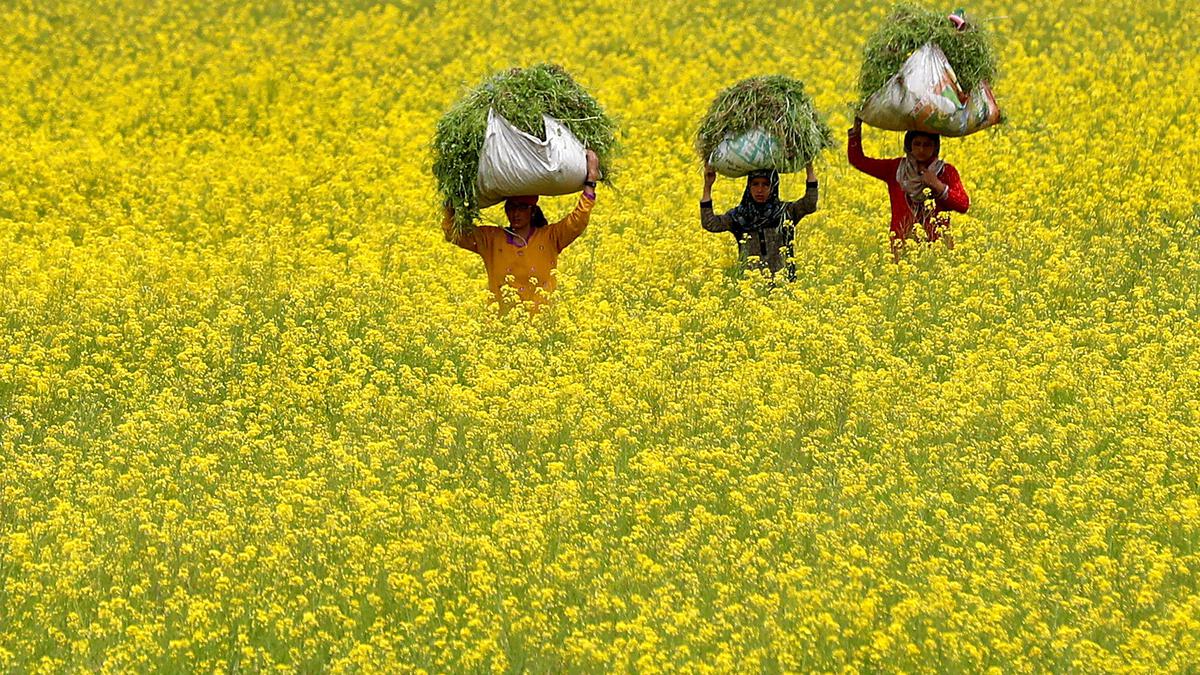
Women carry fodder for their cattle through a mustard field on the outskirts of Srinagar. File
| Photo Credit: Reuters

Rapeseed-mustard oil (hereafter ‘mustard oil’) is the third-largest edible oil consumed in India. Two executive and judicial decisions on mustard oil — one from 2021 and another from 2024 — have major public health implications, but have hardly received the public attention and scrutiny they deserve. In the first decision, the Food Safety and Standards Authority of India (FSSAI) prohibited the manufacturing and sale of blended mustard oil in India, effective from June 8, 2021. As per Indian food safety laws, selling an edible oil mixed with another edible oil is permitted, provided the proportion of an oil blended with another oil is within 20%. Reports suggest that FSSAI’s ban decision was aimed at preventing the adulteration of mustard oil and boosting domestic mustard crop output. In the second, the Supreme Court ruled on July 23, 2024, against approval granted by the Central government for the environmental release of India’s indigenously developed genetically modified (GM) mustard named Dhara Mustard Hybrid-11 (DMH-11). A major ground on which one of the two judges pronounced a judgment against DMH-11 was the insufficient assessment of the impact on human health of DMH-11. A common policy goal behind these two decisions was to protect the health of Indian mustard oil consumers. However, a closer look at the facts shows that this goal cannot be fully achieved through these two decisions.

Erucic acid

The mustard oil extracted from the Indian mustard crop contains high levels of a unique fatty acid called erucic acid (40% to 54% of total fatty acid). This is significantly higher than the internationally accepted level of <5%. Mustard oil containing high erucic acid is considered undesirable for human consumption, particularly in advanced countries such as the U.S., Canada, and Europe. Lab experiments demonstrated that animals fed with high erucic acid-containing mustard oil suffered from heart diseases, retarded growth, premature tissue death, and adverse changes to the liver, kidney, skeletal muscle, and adrenal glands. Though there is no conclusive evidence of a similar health impacts on humans, the stigma of the high erucic acid in mustard oil prevails in advanced economies. In those countries, the erucic acid content of mustard oil is strictly controlled by using canola oil for culinary purposes. Canola crop (oil), developed by Canada, contains less than 2% erucic acid content.

Edible oil blending

Due to unfavourable climatic conditions, India has not succeeded in developing a high-yielding canola-quality mustard crop. Hence, the easiest way to reduce the high erucic acid content in mustard oil is to blend it with other edible oils. Several scientific studies have proved the lower presence of erucic acid in blended mustard oil. Also, since blended mustard oil is rich in unsaturated fatty acid, consuming it lowers LDL cholesterol and increases HDL cholesterol. One primary concern with edible oil blending is adulteration with artificial flavours and poisonous substances. A nationwide survey by FSSAI in August 2020 found that 24.21% of the 4,461 edible oil samples collected did not meet the quality parameters criteria. A maximum number of adulteration and contamination was found in mustard oil.

Instead of a ban, the sale of blended mustard oil can be allowed but in packaged/branded form with an explicit declaration regarding the oils that have been blended. The share of branded edible oil consumed in India is less than 30%. Strict implementation of the food safety and standards laws and strengthening of food safety infrastructure are also essential in preventing adulteration. Since health is a State subject, the food safety administration at the State level has to play a vital role in this regard. As per industry sources, the proportion of other oils blended with mustard oil in India ranges from 5% to 50%. Though this does not conform with the law, which allows blending up to 20%, it has the unintended positive consequence of reducing the erucic acid content. Hence, the sale of blended mustard oil should not be banned entirely.

GM mustard

Alternatively, the erucic acid content in Indian mustard oil can be reduced by cultivating the indigenous GM mustard crop DMH-11, which, apart from higher yield, has a lower erucic acid content (30-35%) compared to the traditional Indian mustard crops (40-54%). As a result, the oil extracted from DMH–11 requires a lower quantity of other edible oils for blending to reduce erucic acid content. This, in turn, helps to reduce the imports of other edible oils. India is the world’s largest importer of edible oils. Its edible oil import bill is pegged at $20.56 billion by NITI Aayog.

Therefore, the erucic acid-reducing property of DMH–11 and the associated health and economic benefits (in terms of reduced edible oil imports) need to be factored in by all the stakeholders while deciding on the approval of the GM mustard crop. The development of the indigenous DMH-11 with a lower erucic acid content is by no means a notable achievement by Indian genetic scientists. After years of research, Canada and Europe have successfully introduced low-erucic acid traits into their rapeseed cultivars. Hence, plant breeding programmes aimed at reducing the erucic acid content in the mustard crop to an internationally accepted level of <5% should be given top priority in India’s indigenous GM mustard crop development programmes.

Sthanu R Nair, Professor of Economics, Indian Institute of Management Kozhikode. Views are personal

Published – June 04, 2025 01:49 am IST



Source link

Business Tags:DMH-11, erucic acid-reducing property, GM mustard crop

Post navigation

Previous Post: Small tea growers seek regulation of leaf agents, weather-based crop insurance
Next Post: ‘Disclose PEDs to insurers’ – The Hindu

Related Posts

  • AIBEA warns of nationwide strike demanding immediate recruitment of bank staff
    AIBEA warns of nationwide strike demanding immediate recruitment of bank staff Business
  • Labour experts welcome labour codes, but urge Govt to address likely teething issues
    Labour experts welcome labour codes, but urge Govt to address likely teething issues Business
  • Access Denied Business
  • Access Denied Business
  • Access Denied Business
  • Access Denied Business

More Related Articles

Access Denied Business
TVS Emerald raises ₹425 crore equity from IFC for new housing projects TVS Emerald raises ₹425 crore equity from IFC for new housing projects Business
Access Denied Business
Budget proposes five schemes with outlay of ₹2 lakh crore to generate jobs for youth Budget proposes five schemes with outlay of ₹2 lakh crore to generate jobs for youth Business
Access Denied Business
SiteLock

Archives

  • May 2026
  • April 2026
  • March 2026
  • February 2026
  • January 2026
  • December 2025
  • November 2025
  • October 2025
  • September 2025
  • August 2025
  • July 2025
  • June 2025
  • May 2025
  • April 2025
  • March 2025
  • February 2025
  • January 2025
  • December 2024
  • November 2024
  • October 2024
  • September 2024
  • August 2024
  • July 2024
  • June 2024
  • May 2024
  • April 2024
  • March 2024
  • February 2024
  • January 2024
  • December 2023
  • November 2023
  • October 2023
  • September 2023
  • August 2023
  • July 2023
  • June 2023
  • May 2023
  • April 2023
  • March 2023
  • February 2023
  • January 2023
  • December 2022
  • November 2022
  • October 2022
  • September 2022
  • August 2022
  • July 2022
  • June 2022
  • May 2022

Categories

  • Business
  • Nation
  • Science
  • Sports
  • World

Recent Posts

  • MLA-elect V. Muraleedharan slams delay in Kerala government formation, warns of governance vacuum
  • Investors continue selling as PM Modi signals crisis readiness
  • NEET-UG candidates in Tamil Nadu upset over exam cancellation
  • At least 100 killed in Nigerian airstrike on Zamfara market, says Amnesty
  • Hezbollah chief says his Iran-backed group’s weapons not part of negotiations with Israel

Recent Comments

  1. AaronThymn on UP Teacher Who Asked Students To Slap Muslim Classmate
  2. Matthewerano on UP Teacher Who Asked Students To Slap Muslim Classmate
  3. JorgeBousa on UP Teacher Who Asked Students To Slap Muslim Classmate
  4. Jamesemifs on UP Teacher Who Asked Students To Slap Muslim Classmate
  5. Martinpex on UP Teacher Who Asked Students To Slap Muslim Classmate
  • Access Denied Business
  • Access Denied Sports
  • Shakib Al Hasan, Litton Das Axed As Bangladesh Name 15-Player Squad For Champions Trophy
    Shakib Al Hasan, Litton Das Axed As Bangladesh Name 15-Player Squad For Champions Trophy Sports
  • Gautam Adani US Indictment: Who are the seven others charged with defrauding American investors?
    Gautam Adani US Indictment: Who are the seven others charged with defrauding American investors? Business
  • NTF sub-committee proposes safety protocols, workload limits and grievance redressal
    NTF sub-committee proposes safety protocols, workload limits and grievance redressal Nation
  • Majority consensus reached on Iran’s next Supreme Leader
    Majority consensus reached on Iran’s next Supreme Leader World
  • Access Denied
    Access Denied Nation
  • Australia Look To Cement Dominance In Women’s T20 World Cup
    Australia Look To Cement Dominance In Women’s T20 World Cup Sports

Editor-in-Chief:
Mohammad Ariff,
MSW, MAJMC, BSW, DTL, CTS, CNM, CCR, CAL, RSL, ASOC.
editor@artifex.news

Associate Editors:
1. Zenellis R. Tuba,
zenelis@artifex.news
2. Haris Daniyel
daniyel@artifex.news

Photograher:
Rohan Das
rohan@artifex.news

Artifex.News offers Online Paid Internships to college students from India and Abroad. Interns will get a PRESS CARD and other online offers.
Send your CV (Subjectline: Paid Internship) to internship@artifex.news

Links:
Associate Journalism
About Us
Privacy Policy

News Links:
Breaking News
World
Nation
Sports
Business
Entertainment
Lifestyle

Registered Office:
72/A, Elliot Road, Kolkata - 700016
Tel: 033-22277777, 033-22172217
Email: office@artifex.news

Editorial Office / News Desk:
No. 13, Mezzanine Floor, Esplanade Metro Rail Station,
12 J. L. Nehru Road, Kolkata - 700069.
(Entry from Gate No. 5)
Tel: 033-46011099, 033-46046046
Email: editor@artifex.news

Copyright © 2023 Artifex.News Newsportal designed by Artifex Infotech.