
Skip to content
  • Facebook
  • X
  • Linkedin
  • WhatsApp
  • Associate Journalism
  • About Us
  • Privacy Policy
  • 033-46046046
  • editor@artifex.news
Artifex.News

Artifex.News

Stay Connected. Stay Informed.

  • Breaking News
  • World
  • Nation
  • Sports
  • Business
  • Science
  • Entertainment
  • Lifestyle
  • Toggle search form
  • This Is Where IMF’s Gita Gopinath Spent Hours During Her College Days In Delhi Nation
  • Linguistic Diversity At Lok Sabha Oath Ceremony Nation
  • Netanyahu promises ‘victory’ despite ‘painful losses’ in Gaza World
  • ₹2,000 currency note can be deposited in RBI Issue Offices after October 7 Business
  • North Korea fires cruise missiles into the sea after U.S.-South Korean military drills end World
  • Joe Biden Accused Of Impeachable Offence Ahead Of Democratic Convention World
  • Poland Denies Military Helicopter Breached Belarus Airspace World
  • Chang’e 6 | From the Moon’s far side Science

On building resilient telecom infrastructure | Explained

Posted on February 20, 2025 By admin


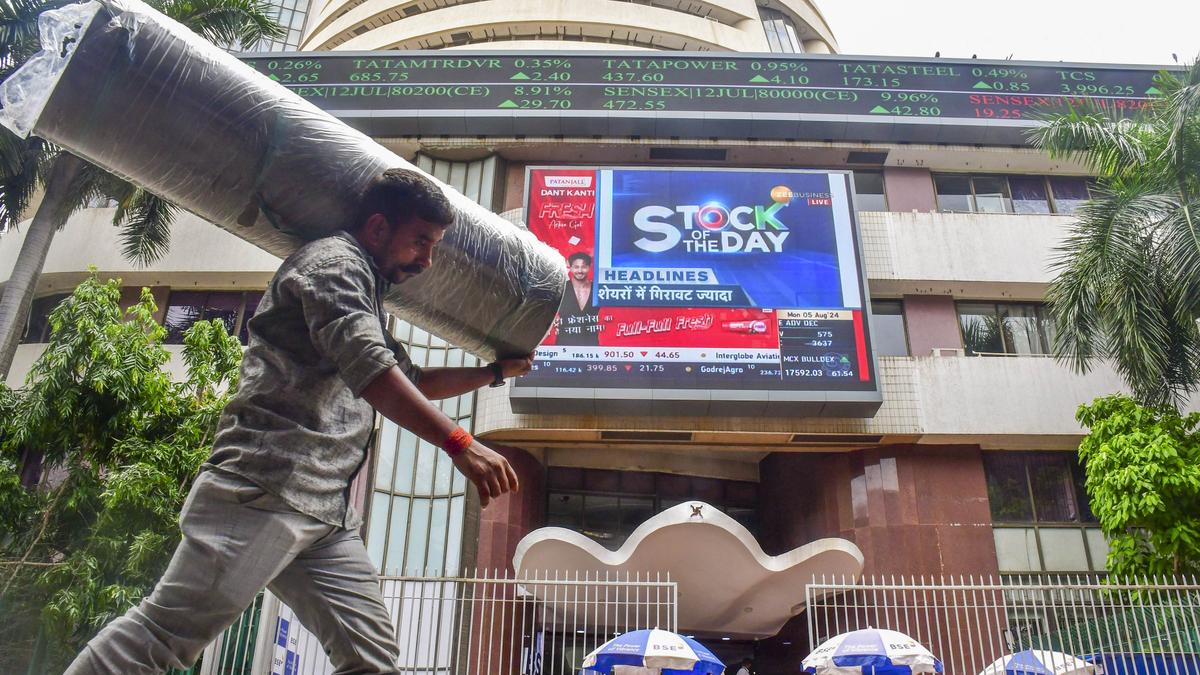
BBMP officials remove Optical Fibre Cables (OFC) which were hanging at Avenue Road, Bengaluru in 2018.
| Photo Credit: File Photo

The story so far: The Coalition for Disaster Resilient Infrastructure (CDRI), a multilateral organisation launched by Prime Minister Narendra Modi in 2019, put out a report earlier this month studying Indian telecom networks’ preparedness in the event of disasters. The report suggests ways in which State governments can better prepare for calamities that may impact telecom networks.

Why is it important?

Telecom networks are crucial to handling disasters, because they allow the State and National Disaster Management Authorities to communicate quickly with local municipalities and the State and Union governments; something that is important when lives and property are at stake. Telecom networks are particularly vulnerable, as they comprise cabling that may not be fully underground, towers that may not be able to withstand high wind speeds, and because they rely on a steady flow of electricity, which is frequently disrupted by disasters like cyclones and earthquakes.

How are they impacted in disasters?

On top of towers being hit by high-speed winds, overland cables — as opposed to underground ones, which can be protected from many disasters — can snap. Coastal regions face elevated risks, as that is where undersea cables connect India with the global internet. If the landing stations of these cables are impacted, there can be massive network disruptions as telecom operators try to reroute traffic through other cables.

The lack of power during disasters remains a major issue. “When I first joined here, I did my own analysis of data of telecom outages since 2016, and found that the real issue was power,” Sanjay Agrawal, deputy director general of disaster management at the Department of Telecommunications said.

What can be done?

Severed undersea cables have a time-consuming repair process that involves a repair vessel arriving near the coast and rejoining the cables. However, since much of the disruption is attributable to power failures, much can be accomplished during a disaster by maintaining or restoring power supply to telecom towers and the network operating centres to which they’re connected. Telecom operators have typically never deployed towers assuming 24/7 power supply — with the possible exception of Mumbai — and have battery as well as fuel backup.

Pradeep Kumar Jena, former Chief Secretary of Odisha, said, “sometimes a tower operator may not have enough power available at a time of disaster for whatever reason — one can’t [pass around] blame at that point of time,” and when this happens, “we decide, let’s give every telecom operator 50 litres of fuel.” Even if the fuel is wasted, the ₹50 lakh spent on it goes a long way in keeping networks online, he said. This is complemented with information from the DoT. “We get data from all telecom operators on damages to their assets for every disaster,” Mr. Agrawal said. “We have software to monitor in real time what telecom assets are down.” As such, resources can be deployed quickly to bring sites back online.

How can networks be protected?

The CDRI report recommends a few measures to develop a resilient telecom network These include greater data collection and more coordination among officials, a more robust power infrastructure (resilient power infrastructure is also an area where CDRI focuses an enormous amount of effort on), and requiring cell towers to withstand higher wind speeds, especially in coastal States and districts where hurricanes make landfall. The CDRI also advocates for a dig-once policy, which recommends building as much underground civil infrastructure, like water and gas supply lines, drainage and fibre optic cables simultaneously, reducing the risk of cables being damaged when other infrastructure is built. Existing damage to underground cables can greatly exacerbate disruptions when other parts of a network go down.

“The short- to medium-term roadmap suggests the need to update disaster damage and loss data format, mainstream disaster risk modelling into telecommunications infrastructure planning across all miles, strengthen telecommunications asset design based on local and regional hazard vulnerability profiles,” and other steps to plan ahead, the report says. There are also commercial interventions that the report touches on. A key one is parametric insurance, a system where telecom operators are not left to bear the commercial burden of a disaster all by themselves, and are thus financially incentivised to bring networks back online rapidly (and presumably to nudge them to disaster-proof their infrastructure well enough to keep premiums down).

Telecom resilience comes down to a mix of both massive interventions as well as small investments that can have an outsize benefit. For instance, during heavy rains, diesel generators can stop working even at knee-level flooding. One simple intervention that can go a long way in keeping towers online is by simply installing the generator a little higher up the tower, so that the backup power can kick in even during flooding.

Published – February 20, 2025 08:30 am IST


Source link

Business Tags:CDRI, Coalition for Disaster Resilient Infrastructure, telecom infrastructure, telecom infrastructure in india

Post navigation

Previous Post: South Korea’s Yoon in court for hearing in criminal trial
Next Post: Donald Trump On Elon Musk’s Tesla Building Factory In India

Related Posts

  • Sensex, Nifty tumble post RBI monetary policy decision Business
  • Amul to enter Europe by end of this month: MD Business
  • Why is the textile industry struggling to perform better? | Explained Business
  • Budget 2024: CM Hemant Soren slams BJP-led Centre for ‘neglecting’ Jharkhand Business
  • RBI Governor says no interest rate cuts for now Business
  • Rupee rises 25 paise to close at 86.33 against U.S. dollar Business

More Related Articles

All eyes are on Nvidia’s stock, so what’s been going on? Business
Maruti Suzuki Q2 net profit falls 17% to ₹3,069 crore Business
Real estate sector pins hope on reforms, incentives Business
Sensex falls below 65,000; IT, metal stocks weigh on weak global trend Business
JSW Steel, JFE Corporation to set up electrical steel facility in India with ₹5,500 crore investment Business
FPIs take out ₹22,000 crore from equities in May amid poll jitters, Chinese markets’ outperformance Business
SiteLock

Archives

  • February 2025
  • January 2025
  • December 2024
  • November 2024
  • October 2024
  • September 2024
  • August 2024
  • July 2024
  • June 2024
  • May 2024
  • April 2024
  • March 2024
  • February 2024
  • January 2024
  • December 2023
  • November 2023
  • October 2023
  • September 2023
  • August 2023
  • July 2023
  • June 2023
  • May 2023
  • April 2023
  • March 2023
  • February 2023
  • January 2023
  • December 2022
  • November 2022
  • October 2022
  • September 2022
  • August 2022
  • July 2022
  • June 2022
  • May 2022

Categories

  • Business
  • Nation
  • Science
  • Sports
  • World

Recent Posts

  • Harnessing AI to generate patterns of antibiotic resistance in real time
  • Rohit Sharma becomes second fastest to complete 11,000 runs in ODI cricket
  • Brazil’s Top Court Orders Elon Musk’s X Platform To Pay $1.4 Million
  • Several Buses Explode In Israel In ‘Suspected Terror Attack’: Police
  • Sri Lanka not seeking to renegotiate Adani power deal, says top official from Energy Ministry

Recent Comments

  1. dfb{{98991*97996}}xca on UP Teacher Who Asked Students To Slap Muslim Classmate
  2. "dfbzzzzzzzzbbbccccdddeeexca".replace("z","o") on UP Teacher Who Asked Students To Slap Muslim Classmate
  3. 1}}"}}'}}1%>"%>'%> on UP Teacher Who Asked Students To Slap Muslim Classmate
  4. bfg6520<s1﹥s2ʺs3ʹhjl6520 on UP Teacher Who Asked Students To Slap Muslim Classmate
  5. pHqghUme9356321 on UP Teacher Who Asked Students To Slap Muslim Classmate
  • Mentor Yuvraj was very happy when I got out for duck, he must be proud now: Abhishek Sharma Sports
  • Farmers Producers Org set up in 2016 to do business of ₹20 crore this year Business
  • DMK MP A Ganeshamurthi Dies In Hospital After Suspected Suicide Attempt Nation
  • Aryna Sabalenka Beats Zheng Qinwen To Reach US Open Semi-Finals Sports
  • Stock markets stage strong rebound after four days of slump; Sensex rallies 599 points Business
  • Telangana CM requests Bharat Ratna for former PM Manmohan Singh, proposes statue at Hyderabad’s Financial Dist Nation
  • Manmohan Singh’s Last Rites Today Amid Congress Vs BJP On Memorial Space Nation
  • Mumbai Man Arrested For Threatening To Kill Salman Khan, Demanding Rs 2 Crore Nation

Editor-in-Chief:
Mohammad Ariff,
MSW, MAJMC, BSW, DTL, CTS, CNM, CCR, CAL, RSL, ASOC.
editor@artifex.news

Associate Editors:
1. Zenellis R. Tuba,
zenelis@artifex.news
2. Haris Daniyel
daniyel@artifex.news

Photograher:
Rohan Das
rohan@artifex.news

Artifex.News offers Online Paid Internships to college students from India and Abroad. Interns will get a PRESS CARD and other online offers.
Send your CV (Subjectline: Paid Internship) to internship@artifex.news

Links:
Associate Journalism
About Us
Privacy Policy

News Links:
Breaking News
World
Nation
Sports
Business
Entertainment
Lifestyle

Registered Office:
72/A, Elliot Road, Kolkata - 700016
Tel: 033-22277777, 033-22172217
Email: office@artifex.news

Editorial Office / News Desk:
No. 13, Mezzanine Floor, Esplanade Metro Rail Station,
12 J. L. Nehru Road, Kolkata - 700069.
(Entry from Gate No. 5)
Tel: 033-46011099, 033-46046046
Email: editor@artifex.news

Copyright © 2023 Artifex.News Newsportal designed by Artifex Infotech.