






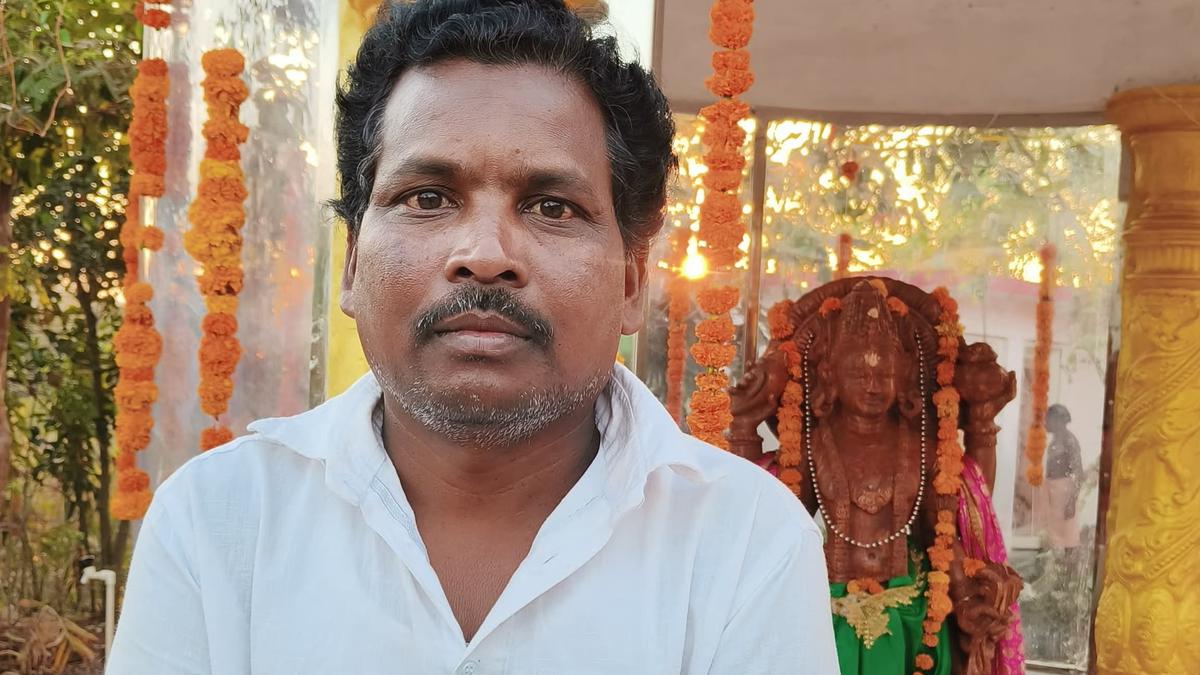
Hari Pangi, the tribal healer, in Odishaâs Koraput district.
| Photo Credit: Special ArrangementÂ
In the quiet foothills of Tentuliguda, a remote village in Odishaâs Koraput district, where age-old wisdom thrives around leaves, epidermal plant tissues, and roots, a humble four-room building serves as a laboratory for a tribal healer. Recently, this unassuming space hosted 17 Ayurvedic experts, including the Director General of the Central Council for Research in Ayurvedic Sciences (CCRAS).
Hari Pangi, a beneficiary of indigenous healing knowledge passed down through five generations, has signed a non-disclosure agreement with CCRAS under the Ministry of Ayush for the preservation and validation of local tribal health traditions being practised in his village. If successful, his traditional methods for treating chronic kidney diseases, hypertension, and cancer could gain recognition.
Professor Rabinarayan Acharya, Director General of CCRAS, said they were âquite impressedâ with Mr. Pangiâs traditional approach. Citing the high demand for Mr. Pangiâs services, with 100-125 patients visiting on Sundays, 70 on Saturdays, and 25 on weekdays, Prof. Acharya noted that âthis indicates his formulations are workingâ.
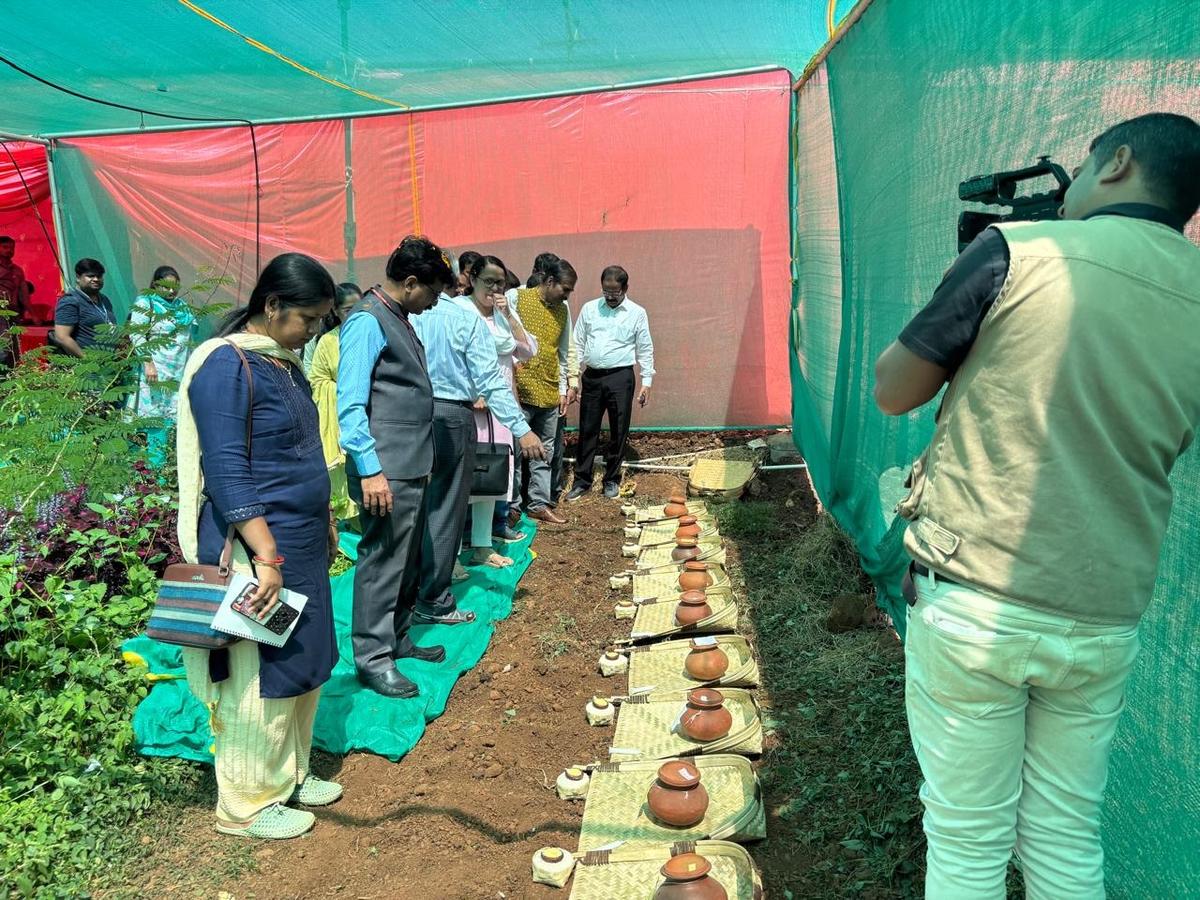
Ayurvedic experts analysing medicinal plant seeds collected by Hari Pangi at Tentuliguda village in Odishaâs Koraput district.
| Photo Credit:
Special ArrangementÂ
According to him, CCRAS is particularly interested in Mr. Pangiâs traditional treatments for chronic kidney diseases, hypertension, and cancer. To validate his claims, CCRAS will deploy an Ayurvedic degree holder to work alongside Mr. Pangi for a year, interacting with patients and cross-checking the effectiveness of his formulations. Based on the report, CCRAS will proceed with further research on the three treatments, Prof. Acharya said.
Sri Gupteswar Herbal Medicine and Training Traditional Technology Research Centre, Mr. Pangiâs research institution, has become an unexpected hub of scientific curiosity over the past two days. The centre drew tribal healers from southern Odisha districts, who gathered to share their experiences and knowledge on providing health care to remote communities.
The CCRAS organised a workshop at Mr. Pangiâs campus, emphasising the conservation of traditional medicinal plants through seed banks as a strategy to combat climate change. During the workshop, tribal healers received training to enhance their skills. Long before receiving formal recognition for his efforts, Mr. Pangi had already taken proactive steps, preserving over 400 seed varieties of plants with significant medicinal value.
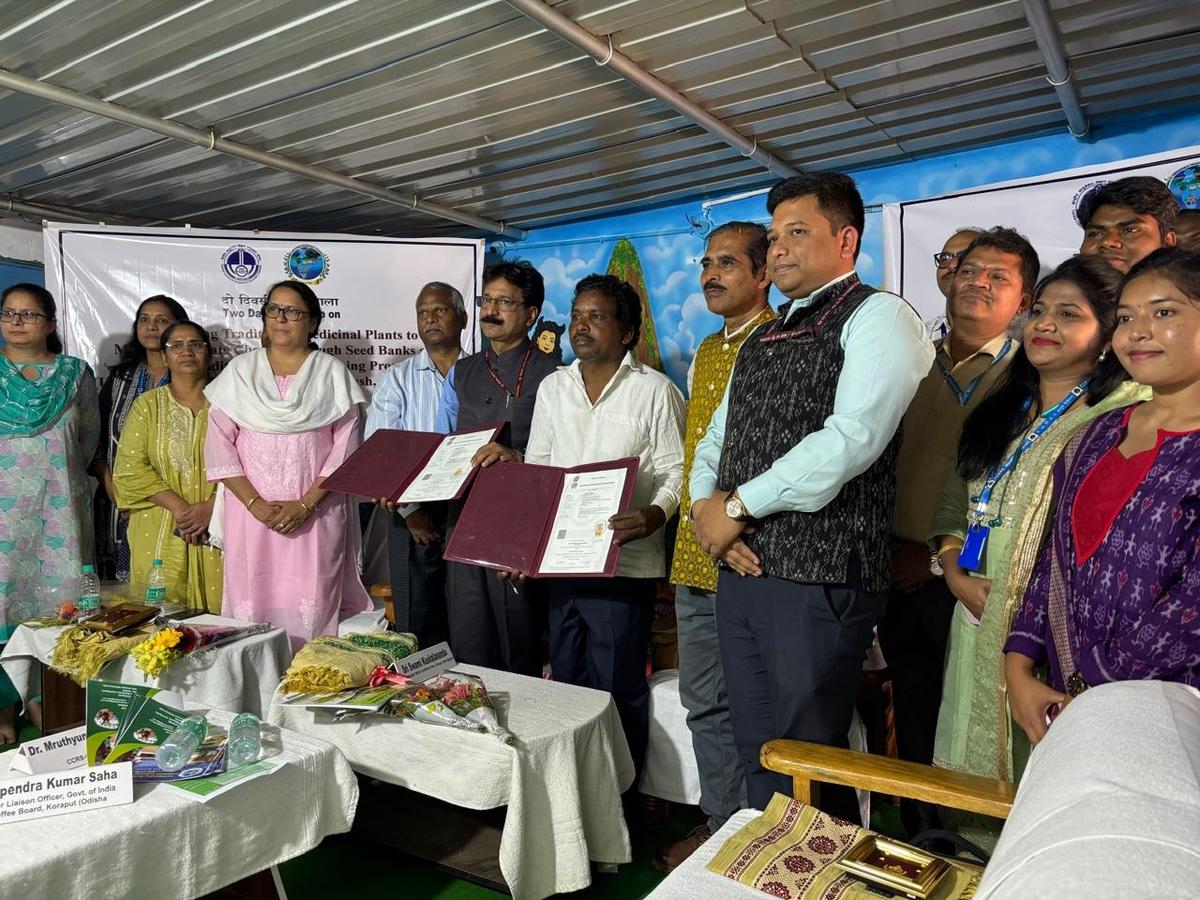
The Central Council for Research in Ayurvedic Sciences has signed a non-disclosure agreement with Hari Pangi, a tribal traditional healer.
| Photo Credit:
Special ArrangementÂ
âOur mandate is to validate the traditional knowledge of tribal healers through a structured process,â said Prof. Acharya. âWe sign a non-disclosure agreement with them, under which we are bound not to disclose their healing methods. Every formulation and piece of information is critically analysed in a systematic manner,â he said.
Prof. Acharya emphasised that while most traditional healing practices are already in the public domain, any innovative knowledge obtained through non-disclosure agreements will undergo rigorous testing, including quality control, safety assessments, clinical trials, and patenting. If patented, tribal healers will receive a share of the profits.
âRecently, we secured approval for the commercialisation of Ayush-82, an Ayurvedic formulation developed for the prevention and management of diabetes,â said Prof. Acharya. âWe have a defined process for gathering information from tribal healers, which includes details on the number of patients they treat and how many generations their practice has spanned.â
Before CCRAS took notice of his work, Mr. Pangi, who hasnât completed his matriculation, had already taken a significant step towards validating his traditional healing methods by hiring an Ayurveda degree holder for â¹24,000 per month. Confident in his knowledge, Mr. Pangi claimed that he can identify over 200 plant species and has formulations to treat over 100 different diseases, thanks to his native landâs abundance of medicinal plants.
âThere should be a policy to conserve medicinal plant seeds, roots, and tuber scientifically, so that endangered spices can be utilised for the next generation. We have a specific policy to conserve genetic resources on different crops and animals, and fish resources, but it is high time to come up with an improved policy on medicinal plants in India,â said Laxminarayan Boxi, a well-known science communicator.
Published – February 17, 2025 10:39 am IST