


Skip to content
  • Facebook
  • X
  • Linkedin
  • WhatsApp
  • Associate Journalism
  • About Us
  • Privacy Policy
  • 033-46046046
  • editor@artifex.news
Artifex.News

Artifex.News

Stay Connected. Stay Informed.

  • Breaking News
  • World
  • Nation
  • Sports
  • Business
  • Science
  • Entertainment
  • Lifestyle
  • Toggle search form
  • Temple Trip On Birthday Ends In Tragedy. Andhra Woman, Daughter, Die In US Nation
  • India vs Australia: MCG Smashes 87-Year-Old Record On Day 5 Of 4th Test Sports
  • Do Airport Food Prices Make You Go Hungry? Here’s Some Good News Nation
  • SpiceJet to operationalise 3 grounded Boeing 737 MAX planes by April 2025; inks pact with MRO provider Business
  • Markets snap record-breaking rally as profit-booking hammers banking, finance stocks Business
  • 5 Iraqi Soldiers Killed In ‘Terrorist’ Attack World
  • Mamata Banerjee Says Will Hand Over Doctor’s Rape-Murder Probe To CBI If… Nation
  • Re-Exam For 1,563 Candidates To Be Held At 6 Centres Today Nation

Obesity rare in rural children despite genetic susceptibility: study

Posted on February 1, 2025 By admin


Prevalence of underweight children was more rural schools, while obese children were from urban schools

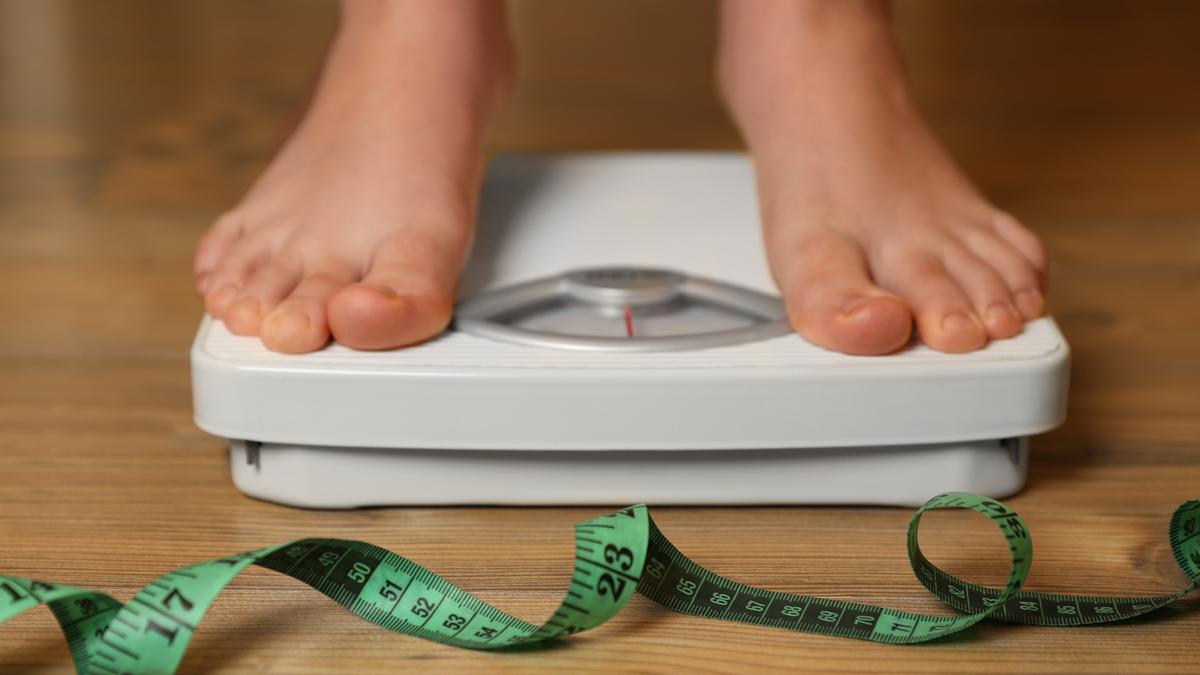
A genetic study of childhood obesity in about 6,400 school-going children aged 9-18 years has found that socioeconomic status significantly modulates the inherent genetic susceptibility to obesity. Unlike in the case of adult obesity, genetic studies to understand obesity in children and adolescents are limited, particularly in non-Caucasian populations. Besides identifying the genetic variants associated with childhood obesity in the Indian population, a study undertaken by a clutch of Indian institutions led by researchers from the School of Biotechnology in JNU, Delhi has studied how socioeconomic status modifies the genetic susceptibility to obesity. The study has been accepted for publication in the journal Obesity.

The researchers performed a two-staged Genome-wide Association Study (GWAS) on 5,673 children and an independent Exome-wide Association Study (ExWAS) on 4,963 children to identify the genetic variants associated with childhood obesity. “While GWAS examines the entire genome for common genetic variants linked to a trait, often focusing on the non-coding regions, the EWAS focuses specifically on rare variants in the protein-coding regions (exome),” explains Janaki M. Nair from JNU and the first author of the paper. “Combining the two approaches offers a more comprehensive understanding of the genetic basis of obesity.” The GWAS was performed in two stages — the discovery phase on 1,510 children and the replication phase on 4,555 children. “The discovery phase involves a genome-wide scan to identify variants associated with obesity, while the replication phase validates the lead associations in the discovery phase in an independent sample set,” she says.

Besides two genes known to be associated with obesity, the GWAS helped identify six novel associations in genes. Potential functional roles of the identified novel genes were evaluated using gene-expression profiles in different human tissues, and gene-regulatory data from publicly available databases. “Most of the identified genes showed the highest expression in adipose tissue,” Ms. Nair says. “Among the newly identified genetic variants, one (TCF7L2) functions as an enhancer in obesity-related tissues, while another gene (CDC5L) plays a role in regulating adipose tissue metabolism. A third gene (SNTG1) influences triglyceride levels, while the effect of another gene (MX1) is mediated through thyroid-related pathways, and two genes (IMMP2L and IPMK) impact the hunger-satiety signalling via the leptin-melanocortin pathway.”

Besides validating the association of known genes involved in obesity in the Indian population, the exome-wide association study identified four novel missense variants for BMI, body weight and waist-to-hip ratio. “The involvement of these identified genes in key obesity-associated pathways further strengthens the significance of our findings, highlighting their potential role in obesity and related metabolic disorders,” she says.

“Since genetic factors alone do not fully explain the development of childhood obesity, we studied the role of socioeconomic status in shaping obesity. Our study revealed significant associations between school types — students from urban private schools, urban government schools and rural government schools — which is an indicator of socioeconomic status and BMI in children,” says Dr. Dwaipayan Bharadwaj from JNU and one of the corresponding authors. “As expected, the study found that children from lower socioeconomic status showed a higher prevalence of underweight, while those from higher socioeconomic status faced a higher prevalence of obesity.” While children from urban private schools consumed more processed food and led a sedentary lifestyle, rural children led an active lifestyle and lacked access to quality nutrition. 

The study found that socioeconomic status greatly influenced genetic susceptibility to obesity. For each genetic variant significantly linked to obesity in the study population, children were grouped by genotype and their BMI (adjusted for age and sex) compared across rural, urban government, and urban private schools. “Despite the frequency of risk genotypes and the variant effects being consistent across three categories, children from urban private schools tend to have higher BMI compared to children from urban government or rural schools,” Ms. Nair says. “Even with similar genetic risks, children belonging to high SES were more likely to be obese, emphasising the powerful gene-environment interaction.” 

Published – February 01, 2025 09:45 pm IST


Source link

Science

Post navigation

Previous Post: Ashwini Vaishnaw After Budget Allocation
Next Post: Gunmen kill 10 members hailing from Assad’s community in Syria

Related Posts

  • The animal that senses electrical boxes, tolerates snow, and has ‘mating trains’ Science
  • What life feels like when earth’s temperatures soar to record highs Science
  • Shock diamonds: supersonic heat nuggets Science
  • ‘Welcome, buddy!’: Chandrayaan-3’s Lander Module establishes contact with Chandrayaan-2’s orbiter Science
  • South Africa passes its first sweeping climate change law Science
  • What is sonoluminescence? Science

More Related Articles

Crashed Russian mission left a crater on the moon, NASA images show Science
Trump trouble? A psychologist’s guide to dealing with political distress Science
Earthquake 2,500 years ago abruptly changed Ganga river’s course Science
A (very) basic guide to artificial intelligence Science
Whales near Antarctica face dire competitor for krill: industrial fishing Science
How are salamanders able to take off and stick their landing with ease? Science
SiteLock

Archives

  • February 2025
  • January 2025
  • December 2024
  • November 2024
  • October 2024
  • September 2024
  • August 2024
  • July 2024
  • June 2024
  • May 2024
  • April 2024
  • March 2024
  • February 2024
  • January 2024
  • December 2023
  • November 2023
  • October 2023
  • September 2023
  • August 2023
  • July 2023
  • June 2023
  • May 2023
  • April 2023
  • March 2023
  • February 2023
  • January 2023
  • December 2022
  • November 2022
  • October 2022
  • September 2022
  • August 2022
  • July 2022
  • June 2022
  • May 2022

Categories

  • Business
  • Nation
  • Science
  • Sports
  • World

Recent Posts

  • Record Number Of Journalists Killed In 2024: Report
  • Over 2 Crore Devotees Take Holy Dip On Maghi Purnima
  • ODI Tri-Series: Mohammad Rizwan And Salman Agha Smash Tons As Pakistan Defeat South Africa In Record Chase
  • Trump, Putin agree to begin ‘negotiations’ on ending Ukraine war
  • $10 Million Settlement For Family Of Black Woman Shot Dead By US Police

Recent Comments

  1. dfb{{98991*97996}}xca on UP Teacher Who Asked Students To Slap Muslim Classmate
  2. "dfbzzzzzzzzbbbccccdddeeexca".replace("z","o") on UP Teacher Who Asked Students To Slap Muslim Classmate
  3. 1}}"}}'}}1%>"%>'%> on UP Teacher Who Asked Students To Slap Muslim Classmate
  4. bfg6520<s1﹥s2ʺs3ʹhjl6520 on UP Teacher Who Asked Students To Slap Muslim Classmate
  5. pHqghUme9356321 on UP Teacher Who Asked Students To Slap Muslim Classmate
  • Taiwan detects 28 Chinese warplanes around island World
  • Indian mission in Dubai launches helpline numbers for Indians affected due to extreme rain in UAE World
  • Leader Of Opposition Rahul Gandhi To Speak On Union Budget In Lok Sabha Today Nation
  • China’s Two sessions | What is it and key highlights of this year’s event World
  • Rupee rises 18 paise to 86.26 against U.S. dollar in early trade Business
  • India’s crude oil import bill falls, but import dependency hits new high Business
  • R Ashwin Chooses His Successor, Passes The Baton On Social Media After Retirement Sports
  • Adani Cement refinances $3.5 billion debt from 10 international banks Business

Editor-in-Chief:
Mohammad Ariff,
MSW, MAJMC, BSW, DTL, CTS, CNM, CCR, CAL, RSL, ASOC.
editor@artifex.news

Associate Editors:
1. Zenellis R. Tuba,
zenelis@artifex.news
2. Haris Daniyel
daniyel@artifex.news

Photograher:
Rohan Das
rohan@artifex.news

Artifex.News offers Online Paid Internships to college students from India and Abroad. Interns will get a PRESS CARD and other online offers.
Send your CV (Subjectline: Paid Internship) to internship@artifex.news

Links:
Associate Journalism
About Us
Privacy Policy

News Links:
Breaking News
World
Nation
Sports
Business
Entertainment
Lifestyle

Registered Office:
72/A, Elliot Road, Kolkata - 700016
Tel: 033-22277777, 033-22172217
Email: office@artifex.news

Editorial Office / News Desk:
No. 13, Mezzanine Floor, Esplanade Metro Rail Station,
12 J. L. Nehru Road, Kolkata - 700069.
(Entry from Gate No. 5)
Tel: 033-46011099, 033-46046046
Email: editor@artifex.news

Copyright © 2023 Artifex.News Newsportal designed by Artifex Infotech.