

Skip to content
  • Facebook
  • X
  • Linkedin
  • WhatsApp
  • YouTube
  • Associate Journalism
  • About Us
  • Privacy Policy
  • 033-46046046
  • editor@artifex.news
Artifex.News

Artifex.News

Stay Connected. Stay Informed.

  • Breaking News
  • World
  • Nation
  • Sports
  • Business
  • Science
  • Entertainment
  • Lifestyle
  • Toggle search form
  • Tobacco stocks tank in early trade; Godfrey Phillips down 10%
    Tobacco stocks tank in early trade; Godfrey Phillips down 10% Business
  • Error – NDTV Sports Sports
  • Access Denied Sports
  • Trump, Xi speak on phone to discuss trade, Taiwan and Ukraine, U.S. and Chinese officials say
    Trump, Xi speak on phone to discuss trade, Taiwan and Ukraine, U.S. and Chinese officials say World
  • 80 Killed In Paramilitary Attack In Sudan
    80 Killed In Paramilitary Attack In Sudan World
  • Liverpool Face Merseyside Derby Cauldron, Chelsea Defy Expectations
    Liverpool Face Merseyside Derby Cauldron, Chelsea Defy Expectations Sports
  • Access Denied Business
  • Access Denied Sports
IIT Bombay study reveals financial impact of disasters on Indian states, calls for stronger preparedness and climate resilience

IIT Bombay study reveals financial impact of disasters on Indian states, calls for stronger preparedness and climate resilience

Posted on January 31, 2025 By admin


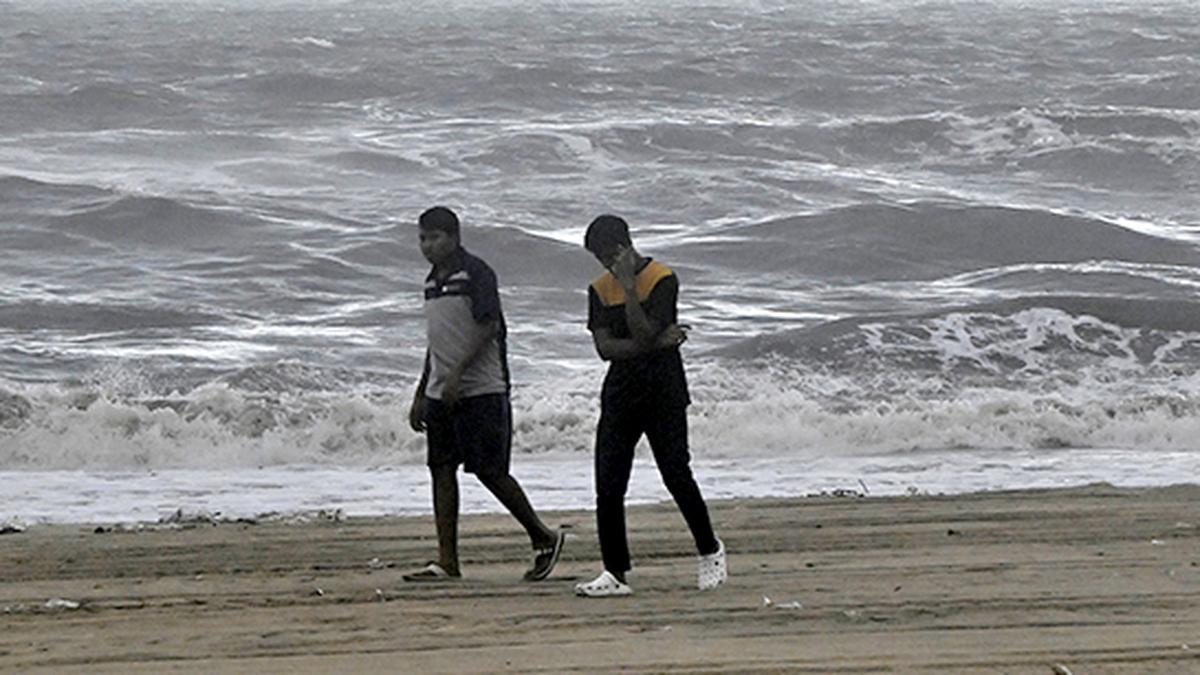
A recent study conducted by researchers at the Indian Institute of Technology (IIT) Bombay analyzed the financial impact of floods and cyclones across 25 states in India. The study, which covers a span of 23 years (1995–2018), highlights how the damage caused by these natural disasters severely affects the states’ budgets on an annual basis. The research also offers solutions for better disaster preparedness and economic protection, providing a roadmap to help mitigate the financial repercussions of such crises.

Published in the International Journal of Disaster Risk Reduction, the study titled, ‘The impact of floods and cyclones on fiscal arrangements in India: An empirical investigation at the sub-national level’ is conducted by Nandini Suresh,a research scholar with the Center for Climate Studies, IIT Bombay, Professor Trupti Mishra, and Professor D. Parthasarathy of IIT Bombay.  

Also Read | Natural disasters caused 2.5 million internal displacements in India in 2022, report says

Traditionally, disaster response funding relies on estimating the cost of damages based on evaluating economic losses, the number of deaths, and the number of people affected. “These evaluations are often inconsistent and biased,“ Ms. Suresh said. “We relied on data from weather and geographic sources [IBTrACS and the India Meteorological Department] to accurately measure cyclone strength [using wind speeds] and flood severity [based on unusual rainfall],” she explained.  

By combining this information, the researchers created a Disaster Intensity Index (DII), ensuring all types of disasters are treated fairly. This method avoids inconsistencies and biases and gives a clearer picture of disaster impacts, especially for floods and cyclones, which caused 80% of disaster-related losses in India during the study period.  

The study uses a statistical model called panel Vector Auto Regression (VAR) to examine how revenue and expenditure affect each other from one year to the next few years. The model allows accounting for differences between states and ensures that past economic conditions do not unfairly influence disaster severity measurements, giving a reliable way to study the financial impacts of disasters. 

Also Read | Wanted: a strategy to turn climate research into disaster management 

The findings from the study show that disasters put a heavy financial burden on the affected States by increasing their expenditure while also reducing their revenue. As a result, the States allocate substantial funds for immediate relief efforts such as evacuation, medical aid, food, and shelter. The government also invests in rebuilding essential infrastructure such as roads, bridges, and homes. As agriculture, trade, and business operations are frequently disrupted by these disasters, tax collection and income from these sectors also decline.

The study highlights a cycle in which increased expenditures and falling revenues lead to significant budget deficits.  

Ms. Mishra said, “However, the DII shows that disasters impact States differently. Less disaster-prone States like Madhya Pradesh and Chhattisgarh, which experience droughts and occasional floods, can handle relief with their own resources and suffer less financial damage. The disaster intensity is not high enough to affect people’s income or production; hence, there is no decrease in tax or non-tax revenues. On the other hand, disaster-prone coastal States like Odisha, Andhra Pradesh, and West Bengal, which frequently experience cyclones and floods, have higher recovery expenses and higher revenue losses. As a result, they often need to rely on external funding like loans, increasing state debt and making it difficult to fund other development projects.” 

The assistance offered by the National and State Disaster Response Funds (NDRF and SDRF) could be optimised for improved efficiency and faster disbursal. “Certain regulations, such as the 25% cap on SDRF allocations for relief operations and some procedural requirements, may create hurdles in utilising these funds in a timely manner. By simplifying these processes, there may be an opportunity to enhance the overall impact of disaster relief initiatives,” Mr. Parthasarathy said.  

The study emphasises the need for proactive disaster risk financing mechanisms such as resilience bonds, disaster insurance, and catastrophe bonds.  

Resilience bonds encourage investments in disaster prevention projects and offer incentives for reducing the effects of disasters. Disaster insurance supports individuals, companies, or governments in recovering from losses brought on by natural disasters. Catastrophe bonds allow governments or organisations to shift disaster risk to investors who receive interest unless a disaster occurs. “These provide quick funds during emergencies and reduce the need to take external loans after disasters,” Ms. Nandini said. 

Opinion | The lapses in the disaster management Bill 

However, implementing such measures in India is challenging due to a lack of awareness and understanding among stakeholders, including governments and the public, about the benefits of such instruments, she added. The other key challenges include the high cost of disaster insurance premiums and a lack of a clear financial and legal framework for issuing resilience bonds or incorporating them into state budgets. 

Public-private partnerships are also essential for building a climate-resilient economy. Governments can offer tax incentives for businesses to invest in climate resilience infrastructure and enforce sustainability regulations. 

Diverting funds from other projects is a usual way for governments to handle disasters while staying within budget. However, it is difficult to move money from fixed expenses like debt payments, salaries, or pensions as these take up most of the budget and are already set by law. Governments need flexible budgets, backup plans, and quick ways to adjust spending based on what is required so that they can quickly reallocate funds during emergencies.  

Opinion | India’s disaster management story as a work in progress 

“The states need to invest in early warning systems, cyclone shelters, and resilient infrastructure and promote sustainable land use that can minimise the economic impact of climate change and lower the long-term costs of dealing with disasters. Many states have already made progress: Tamil Nadu has installed advanced cyclone monitoring systems, Kerala has adopted climate-adaptive urban planning, and Odisha and many others have introduced budget tracking for climate-related spending,” Ms. Nandini said.  

With climate change driving an increase in the frequency and intensity of disasters, the researchers warned that Indian states will face even greater financial challenges in the future. However, by adopting the recommended measures, they believe India can mitigate long-term financial risks, protect lives and infrastructure, and work toward building a stronger, more sustainable future.

Published – January 31, 2025 06:01 am IST


Source link

Nation Tags:iit bombay study on disasters in india, india natural disaster impact, india natural disasters, natural disasters impact on economy

Post navigation

Previous Post: RINL to play a role towards achieving India’s 300 MT steel target: Kumaraswamy
Next Post: Childhoods stolen as underage pregnancies rise in Karnataka

Related Posts

  • Mahatma Gandhi Never Received Nobel Peace Prize. Panel Explains Why
    Mahatma Gandhi Never Received Nobel Peace Prize. Panel Explains Why Nation
  • Access Denied
    Access Denied Nation
  • Tamil Nadu swearing-in ceremony LIVE: TVK president C. Joseph Vijay to take oath as Chief Minister
    Tamil Nadu swearing-in ceremony LIVE: TVK president C. Joseph Vijay to take oath as Chief Minister Nation
  • Access Denied
    Access Denied Nation
  • New invasive moth threatens Ladakh’s farm-based economy
    New invasive moth threatens Ladakh’s farm-based economy Nation
  • Why Infosys Offered Staff Incentives Up To Rs 8 Lakh To Move To New Campus
    Why Infosys Offered Staff Incentives Up To Rs 8 Lakh To Move To New Campus Nation

More Related Articles

Access Denied Access Denied Nation
Kerala-Born Man’s Name Comes Up In Pager Blasts Case. What Probe Reveals Kerala-Born Man’s Name Comes Up In Pager Blasts Case. What Probe Reveals Nation
Access Denied Access Denied Nation
Banner At Congress Office Says Rahul Gandhi ‘2024 PM’, Key Ally Slams Move Banner At Congress Office Says Rahul Gandhi ‘2024 PM’, Key Ally Slams Move Nation
Sarpanch Killed, Another Injured In Maharashtra, Case Against Sharad Pawar’s Party Leader Sarpanch Killed, Another Injured In Maharashtra, Case Against Sharad Pawar’s Party Leader Nation
4 Get Life Term In Terror Conspiracy Case Involving Banned Babbar Khalsa Outfit 4 Get Life Term In Terror Conspiracy Case Involving Banned Babbar Khalsa Outfit Nation
SiteLock

Archives

  • May 2026
  • April 2026
  • March 2026
  • February 2026
  • January 2026
  • December 2025
  • November 2025
  • October 2025
  • September 2025
  • August 2025
  • July 2025
  • June 2025
  • May 2025
  • April 2025
  • March 2025
  • February 2025
  • January 2025
  • December 2024
  • November 2024
  • October 2024
  • September 2024
  • August 2024
  • July 2024
  • June 2024
  • May 2024
  • April 2024
  • March 2024
  • February 2024
  • January 2024
  • December 2023
  • November 2023
  • October 2023
  • September 2023
  • August 2023
  • July 2023
  • June 2023
  • May 2023
  • April 2023
  • March 2023
  • February 2023
  • January 2023
  • December 2022
  • November 2022
  • October 2022
  • September 2022
  • August 2022
  • July 2022
  • June 2022
  • May 2022

Categories

  • Business
  • Nation
  • Science
  • Sports
  • World

Recent Posts

  • Philippine President Marcos calls for an emergency meeting after chaos and shooting at Senate
  • Traffic diversions in Darussalam for 45 days for construction work
  • Watch: ‘We’re going to have a fantastic future together’: Trump to Xi Jinping
  • Thoothukudi will see highest Tasmac closures of liquor shops near schools, places of worship
  • Sensex climbs 450 points on positive Asian peers

Recent Comments

  1. CarlosExorb on UP Teacher Who Asked Students To Slap Muslim Classmate
  2. Robertfloup on UP Teacher Who Asked Students To Slap Muslim Classmate
  3. Davidcag on UP Teacher Who Asked Students To Slap Muslim Classmate
  4. OrvalMaync on UP Teacher Who Asked Students To Slap Muslim Classmate
  5. Jeffreyroure on UP Teacher Who Asked Students To Slap Muslim Classmate
  • The problem with billionaire consumption
    The problem with billionaire consumption Business
  • Siniakova ends Andreeva’s Indian Wells defence in third round
    Siniakova ends Andreeva’s Indian Wells defence in third round Sports
  • Key US Muslim Advocacy Group Endorses Kamala Harris, Says Trump Bigger Danger
    Key US Muslim Advocacy Group Endorses Kamala Harris, Says Trump Bigger Danger World
  • France President Emmanuel Macron to start efforts to extract from severe political uncertainty
    France President Emmanuel Macron to start efforts to extract from severe political uncertainty World
  • Access Denied Business
  • Union Budget 2024, Global Trends To Drive Stock Markets Next Week: Experts
    Union Budget 2024, Global Trends To Drive Stock Markets Next Week: Experts Nation
  • R Ashwin Picks ‘Future Batting Pillars Of Indian Cricket’. Not Rishabh Pant Or KL Rahul
    R Ashwin Picks ‘Future Batting Pillars Of Indian Cricket’. Not Rishabh Pant Or KL Rahul Sports
  • Visakhapatnam Economic Region selected as NITI Aayog’s Growth Hub pilot site
    Visakhapatnam Economic Region selected as NITI Aayog’s Growth Hub pilot site Nation

Editor-in-Chief:
Mohammad Ariff,
MSW, MAJMC, BSW, DTL, CTS, CNM, CCR, CAL, RSL, ASOC.
editor@artifex.news

Associate Editors:
1. Zenellis R. Tuba,
zenelis@artifex.news
2. Haris Daniyel
daniyel@artifex.news

Photograher:
Rohan Das
rohan@artifex.news

Artifex.News offers Online Paid Internships to college students from India and Abroad. Interns will get a PRESS CARD and other online offers.
Send your CV (Subjectline: Paid Internship) to internship@artifex.news

Links:
Associate Journalism
About Us
Privacy Policy

News Links:
Breaking News
World
Nation
Sports
Business
Entertainment
Lifestyle

Registered Office:
72/A, Elliot Road, Kolkata - 700016
Tel: 033-22277777, 033-22172217
Email: office@artifex.news

Editorial Office / News Desk:
No. 13, Mezzanine Floor, Esplanade Metro Rail Station,
12 J. L. Nehru Road, Kolkata - 700069.
(Entry from Gate No. 5)
Tel: 033-46011099, 033-46046046
Email: editor@artifex.news

Copyright © 2023 Artifex.News Newsportal designed by Artifex Infotech.