

Skip to content
  • Facebook
  • X
  • Linkedin
  • WhatsApp
  • Associate Journalism
  • About Us
  • Privacy Policy
  • 033-46046046
  • editor@artifex.news
Artifex.News

Artifex.News

Stay Connected. Stay Informed.

  • Breaking News
  • World
  • Nation
  • Sports
  • Business
  • Science
  • Entertainment
  • Lifestyle
  • Toggle search form
  • Bangladesh accepts first uranium for Russia-backed nuclear plant World
  • World Cup 2023 Points Table: Defending Champions England’s Semi-final Hopes Dented After Big Loss vs South Africa Sports
  • Markets decline in early trade on weak trends from Asian peers, foreign fund outflows Business
  • Peter Higgs, who proposed existence of Higgs boson particle, has died at 94, university says Science
  • Feasibility study on proposal to establish land connectivity with India in final stages, says Sri Lankan President World
  • AIIMS To Examine Condition Of Woman Seeking Abortion Of 25-Week Foetus Nation
  • “I Am One Of The Best Spinners, Put Me In A Test Match”: IPL Star’s Plea To Selectors Sports
  • Influenza A H5N1 detected in dairy cows in six States in the U.S. Science

Bovine H5N1 displays pronounced neurotropism in many mammals

Posted on December 14, 2024 By admin


A study investigated and compared the tissue tropism of a 2004 H5N1 strain isolated from a fatal human case and the 2024 bovine strain of H5N1 that is currently circulating in mice and found that the two strains displayed significantly different abilities to infect different tissues. While replication of the 2004 virus was largely in the respiratory tract with “limited” replication in the central nervous system, the 2024 bovine strain successfully replicated in the respiratory tract as well as various regions of the brain. Also, mice challenged with the 2024 bovine H5N1 isolates exhibited clinical signs consistent with central nervous system infection, and infectious viruses were detected in the brain tissue. The 2004 H5N1 virus was used for comparison as the virus strain has been extensively studied in animal models.

The study demonstrated that both the 2004 and the 2024 H5N1 isolates were uniformly fatal in mice when infected through aerosol exposure. But the tissue tropism was vastly different — the 2004 strain was largely restricted to the respiratory tract and predominantly caused respiratory disease, while the 2024 bovine strain showed preference to both the respiratory tract and the brain and caused inflammation in the brain and nasal cavity.

“Our findings reveal that the bovine isolate exhibits enhanced neurotropism, unlike the respiratory-restricted replication observed with the H5N1 isolate from 2004. This difference in tissue tropism, accompanied by distinct cytokine responses in the brain, underscores the potential for altered disease outcomes in other mammalian hosts,” the authors of a study posted in a preprint server BioRxiv write. Preprints are yet to be peer-reviewed.

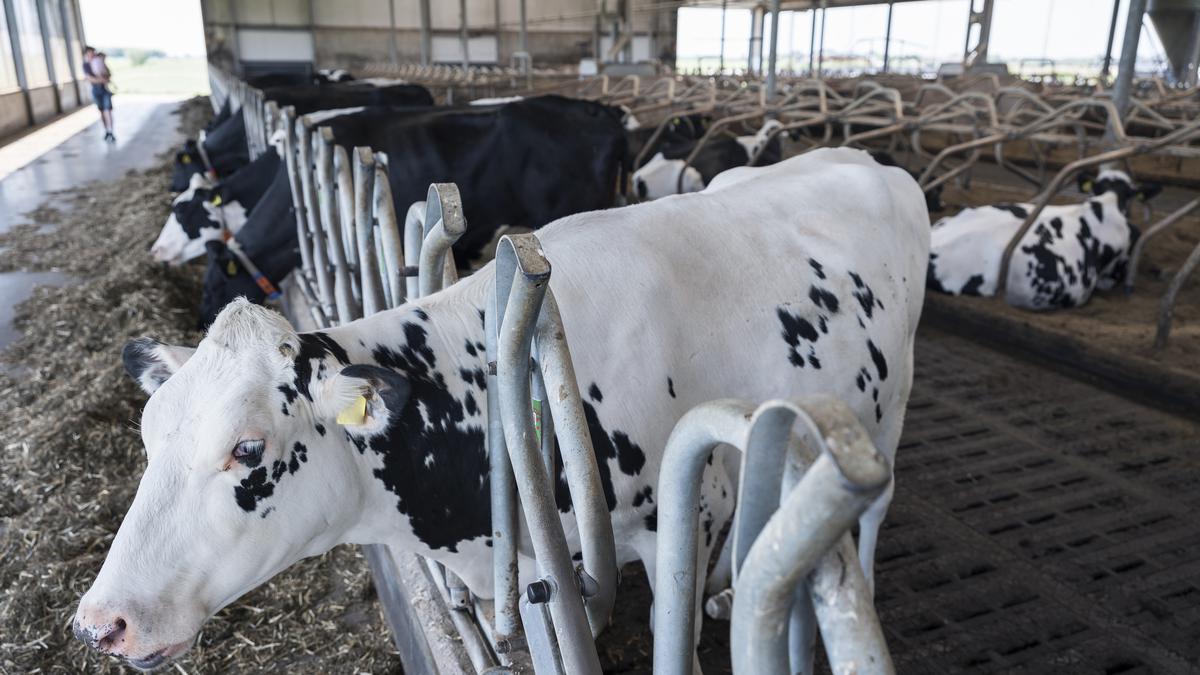
The H5N1 clade 2.3.4.4b has caused widespread infection in over 90 species of wild and domestic birds and more than 21 mammalian species, including several human infections. The virus has caused fatal infections in many different mammals. In March 2024, the 2.3.4.4b clade was first detected in dairy cattle in Texas. The virus has since spread rapidly; as of December 12, the virus has spread to 832 cattle herds across 16 States in the U.S., with 617 herds in California alone.

Mice were exposed to one of the two H5N1 isolates via aerosols to mimic a more natural route of infection. Upon exposure, mice in both groups displayed reduced activity, rapidly lost weight, and died. While the mice exposed to the 2024 bovine strain showed neurological signs of disease, neurological disease was absent in mice exposed to the 2004 isolate. Therefore, unsurprisingly, the virus titers were high in the brain tissue of mice exposed to the bovine strain compared with mice exposed to the 2004 strain.

‘Heavily linked’

In April this year, 10 cats died in a rural South Dakota residence, showing respiratory and neurological symptoms. Lab testing of two cats confirmed H5N1 clade 2.3.4.4b infection. As per a paper accepted for publication in the journal Emerging Microbes & Infections, dead cats showed systemic infection with lesions and viral antigens in multiple organs. “Higher viral RNA and antigen in the brain indicated pronounced neurotropism,” they write.

The authors note that while earlier H5N1 clades in cats caused subclinical infections or clinical disease characterised by pneumonia and encephalitis, the 2.3.4.4b H5N1 virus strain has also been “heavily linked to respiratory and neurological signs in cats in France, Poland, South Korea, and the U.S.”.

The authors of the accepted paper note that animals infected with clade 2.3.4.4b H5N1 viruses commonly exhibited pneumonia and meningoencephalitis, with neurological signs predominating in several animal species. Mammals such as dolphins, skunks, minks, red foxes, and sea lions have displayed significant neurological signs such as tremors, convulsions, and ataxia, with viral presence mainly in the brain. “Though neurotropism and neurological signs were observed during the outbreaks of previous clades of H5N1 viruses, the pronounced neurotropism of the current H5N1 clade 2.3.4.4b is highlighted by high viral loads in the brain and minimal or no viral presence in the lungs of several species, suggesting a significant shift in virus behaviour,” they write.

It must be noted that unlike in mice, central nervous system involvement has not yet been reported for dairy cows, either via natural or experimental infection by the bovine H5N1 strain (2.3.4.4b clade). The H5N1 transmission within and between cattle herds is hypothesised to be associated with milking practices. In cows, the H5N1 virus replication has been limited to the mammary glands when lactating cows were inoculated via the mammary gland.

“The growing list of susceptible mammalian hosts highlights the virus’s ability to cross species barriers, raising concerns about its potential impact on wildlife and domestic animal populations,” the authors of the accepted paper write. “There is a notable shift in the neurotropism of H5N1 viruses, particularly with the emergence of clade 2.3.4.4b in cats and wild carnivores like foxes… These cases have documented viral adaptations that facilitate central nervous system involvement, with some infections exhibiting viral mutations indicative of enhanced neurotropism.”

Published – December 14, 2024 09:15 pm IST



Source link

Science

Post navigation

Previous Post: Russia Pulling Back But Not Out Of Syria: Sources
Next Post: Writing by hand is better for learning, memory

Related Posts

  • Platelets ‘can replicate benefits of exercise in brain’, shows study Science
  • How can a quantum computer prove that it is superior? Science
  • Scientists reveal secrets of Earth’s magnificent desert star dunes Science
  • Microplastics finally found in human brains, but that’s not the full picture Science
  • India getting close to developing gene therapy for sickle cell disease, say officials Science
  • The simple medical tools of an OPD visit | Explained Science

More Related Articles

Paper-based platform for rapid detection of antibiotic-resistant bacteria Science
Australian weather bureau sees 50% chance of La Nina this year Science
Tropical forests may be getting too hot for photosynthesis Science
Indian forest activist Alok Shukla awarded the Goldman Environmental Prize Science
Hearing tests show that minke whales can hear high-frequency sounds Science
2024 Interim Budget | Space gets nominal hike, likely boost for spaceflight start-ups Science
SiteLock

Archives

  • December 2024
  • November 2024
  • October 2024
  • September 2024
  • August 2024
  • July 2024
  • June 2024
  • May 2024
  • April 2024
  • March 2024
  • February 2024
  • January 2024
  • December 2023
  • November 2023
  • October 2023
  • September 2023
  • August 2023
  • July 2023
  • June 2023
  • May 2023
  • April 2023
  • March 2023
  • February 2023
  • January 2023
  • December 2022
  • November 2022
  • October 2022
  • September 2022
  • August 2022
  • July 2022
  • June 2022
  • May 2022

Categories

  • Business
  • Nation
  • Science
  • Sports
  • World

Recent Posts

  • After Dissanayake’s India visit, China discusses development, maritime research in Sri Lanka 
  • Pat Cummins, Nathan Lyon’s Fantastic Gesture To R Ashwin, Present Him This After Retirement
  • Betting App Magicwin Promoted By Indian Celebs Owned By Pak National: Sources
  • Who Are The Immigrants That Could Be Targets Of Donald Trump’s Deportation Plans?
  • Xi, wife visit Macao to mark 25 years of its return to Chinese rule

Recent Comments

  1. dfb{{98991*97996}}xca on UP Teacher Who Asked Students To Slap Muslim Classmate
  2. "dfbzzzzzzzzbbbccccdddeeexca".replace("z","o") on UP Teacher Who Asked Students To Slap Muslim Classmate
  3. 1}}"}}'}}1%>"%>'%> on UP Teacher Who Asked Students To Slap Muslim Classmate
  4. bfg6520<s1﹥s2ʺs3ʹhjl6520 on UP Teacher Who Asked Students To Slap Muslim Classmate
  5. pHqghUme9356321 on UP Teacher Who Asked Students To Slap Muslim Classmate
  • Two Migrants Die Trying To Cross Channel To Britain World
  • Class 10 Student Kills Aunt For Declining Indecent Proposal: Cops Nation
  • Demolition Drive Leads To Clashes And Stone-Throwing In J&K, 6 Cops Injured Nation
  • RR Swain Takes Over As Director General Of Jammu And Kashmir Police Nation
  • Arvind Kejriwal’s Plea For Extension Of Bail Won’t Be Heard By Supreme Court Nation
  • Champai Soren To Join BJP On Friday, Confirms Himanta Biswa Sarma Nation
  • Hamas Says Several Killed, Injured At Gaza Church Compound In Israeli Strike World
  • Not Brendon McCullum Or Ben Stokes, England Great Points Out Star At The ‘Heart’ Of Bazball Sports

Editor-in-Chief:
Mohammad Ariff,
MSW, MAJMC, BSW, DTL, CTS, CNM, CCR, CAL, RSL, ASOC.
editor@artifex.news

Associate Editors:
1. Zenellis R. Tuba,
zenelis@artifex.news
2. Haris Daniyel
daniyel@artifex.news

Photograher:
Rohan Das
rohan@artifex.news

Artifex.News offers Online Paid Internships to college students from India and Abroad. Interns will get a PRESS CARD and other online offers.
Send your CV (Subjectline: Paid Internship) to internship@artifex.news

Links:
Associate Journalism
About Us
Privacy Policy

News Links:
Breaking News
World
Nation
Sports
Business
Entertainment
Lifestyle

Registered Office:
72/A, Elliot Road, Kolkata - 700016
Tel: 033-22277777, 033-22172217
Email: office@artifex.news

Editorial Office / News Desk:
No. 13, Mezzanine Floor, Esplanade Metro Rail Station,
12 J. L. Nehru Road, Kolkata - 700069.
(Entry from Gate No. 5)
Tel: 033-46011099, 033-46046046
Email: editor@artifex.news

Copyright © 2023 Artifex.News Newsportal designed by Artifex Infotech.