


Skip to content
  • Facebook
  • X
  • Linkedin
  • WhatsApp
  • Associate Journalism
  • About Us
  • Privacy Policy
  • 033-46046046
  • editor@artifex.news
Artifex.News

Artifex.News

Stay Connected. Stay Informed.

  • Breaking News
  • World
  • Nation
  • Sports
  • Business
  • Science
  • Entertainment
  • Lifestyle
  • Toggle search form
  • Iran-Backed Houthis Target 2 Ships In Red Sea, Indian Ocean World
  • Siddaramaiah Writes To PM, Seeks Help For Treatment Of 15-Month-Old Boy Nation
  • Ukraine-born House member who opposed aiding her native country defends her seat in Indiana primary World
  • Who Is Raginny, YouTuber Caught In Legal Battle With Actor Sonam Kapoor Nation
  • Mohammed Shami Fitness Clearance Now “Formality”, To Play Border-Gavaskar Series vs Australia From… Sports
  • Australian Breakdancer “Raygun”, Who Got Trolled In Paris Olympics, Takes Huge Step Sports
  • Manikanta Creates New 100m National Record Sports
  • China’s Naval Deployments In Line With Other Large Drills, Says US World

The issue of India’s economic growth versus emissions

Posted on December 8, 2024 By admin


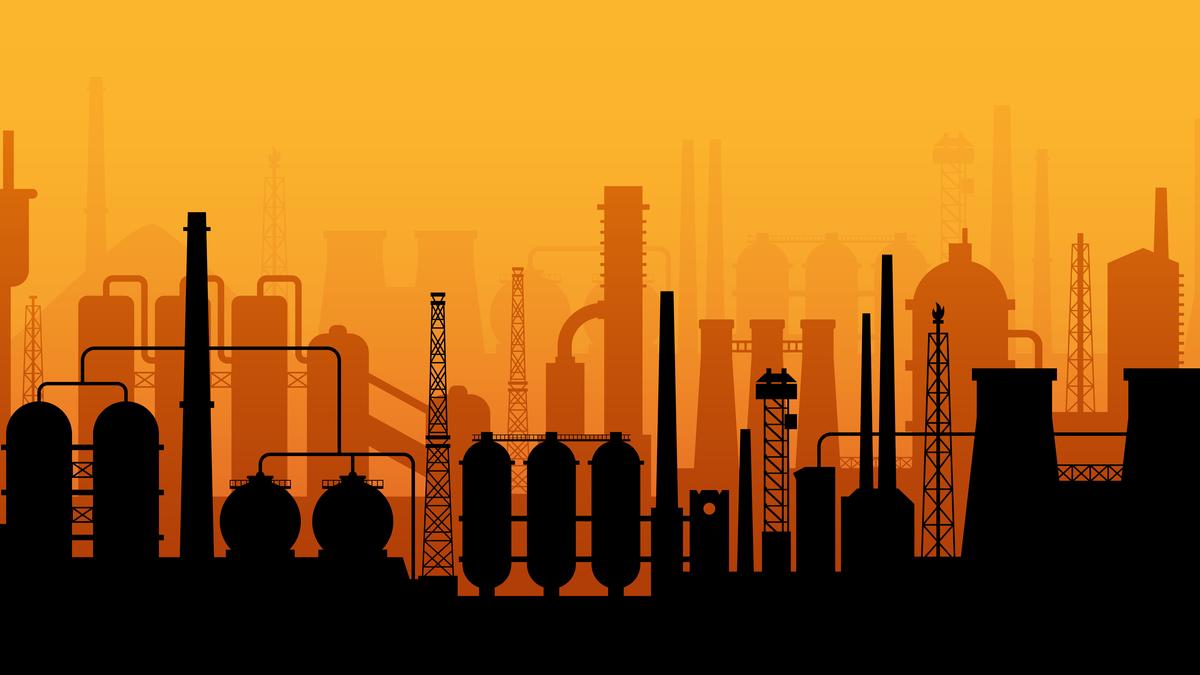
‘While India’s relative decoupling is a step in the right direction, the path to absolute decoupling is still a long and complex journey’
| Photo Credit: Getty Images

The Indian economy has consistently showcased its robust growth over the past few decades. But higher economic growth is believed to have come with increasing environmental pressure, notably through higher greenhouse gas (GHG) emissions. However, India’s Economic Survey (2023-24) claims that India has decoupled its economic growth from GHG emissions, as between 2005 and 2019, India’s GDP grew at a compound annual growth rate (CAGR) of 7%, while emissions rose at a CAGR of just 4%. This raises a crucial question: has India really decoupled its economic growth from GHG emissions? And, what does this mean for sustainable development?

What it means

Decoupling refers to breaking the link between economic growth and environmental degradation. Historically, economic growth is found to be positively related with environmental degradation, as this growth is believed to be a driver of GHG emissions. However, with the growing climate crisis, the imperative to reduce emissions while ensuring continued economic growth has gained global traction.

Decoupling has largely been classified into two types: absolute decoupling and relative decoupling. Absolute decoupling occurs when the economy grows, while emissions decrease. This is the ideal form of decoupling, where countries grow economically without increasing environmental harm. However, relative decoupling happens when both GDP and emissions grow, but the rate of GDP growth surpasses the rate of emissions growth. While this signifies progress, at the same time, it acknowledges that emissions continue to rise.

Decoupling of economic growth and GHG emissions is important. On one hand, it offers a path to sustainable growth and development, a way for nations to grow and improve living standards without exacerbating climate change. On the other, it comes as a response to rising demand for degrowth and sparks the ongoing debate between green growth and degrowth. Proponents of green growth argue that it is possible to maintain or even increase economic growth while reducing environmental harm. In contrast, degrowth advocates suggest that economic growth itself is the primary driver of ecological degradation and should be curbed in favour of reducing resource consumption. But proponents of degrowth overlook the fact that countries, in addition to tackling rising GHG emissions and the climate change, are also required to tackle low standards of living, energy poverty and ensure a decent life, which could be taken care of through economic growth.

The claim

The claim of India’s decoupling made in the Economic Survey comes from comparing GDP and emissions growth rates between 2005 and 2019. The Survey does not specify whether this represents absolute or relative decoupling. Using various decoupling indicators discussed in OECD (2002), we examine the status of the economy-wide and sector-wise decoupling status for India. Since the 1990s, with significant trade liberalisation, India has been experiencing steady and stable economic growth. Hence, we are examining how GDP and emission generation are growing in India with respect to the levels of 1990. While there has been no absolute decoupling in India, since 1990, GDP in India has grown at a much higher pace than the GHG emissions in the country, indicating economy-wide relative decoupling. Since, the agriculture and manufacturing sectors are among the major contributors of emission generation in India, it is also important to understand whether these sectors have also achieved decoupling or not, which has been assessed by comparing rate of growth of GVA of the respective sector with the rate of growth of GHGs emitted by the sector. From 1990, India’s GDP has grown six-fold, while GHG emissions have only tripled.

Efforts must continue

From the data, it seems that India may have achieved relative decoupling, where emissions are still rising but at a slower pace than the economy. This achievement, while commendable, falls short of the ultimate goal of absolute decoupling, where economic growth can continue even as emissions fall. While most countries fall short of achieving absolute decoupling and still experience rising emissions as GDP increases, many countries have at least managed to achieve a declining rate of growth of emissions. Given that India is a developing country which has not even peaked its emissions yet, emissions are expected to increase with economic growth. Hence, achieving absolute decoupling is not going to happen anytime soon. While India’s relative decoupling is a step in the right direction, the path to absolute decoupling is still a long and complex journey. Efforts must still be taken and it will be a significant challenge. This remains a necessary target if India is to meet its long-term climate commitments. Policies and measures that support renewable energy, emission mitigation, and sustainable development will be crucial in ensuring that economic growth and environmental preservation can coexist, ensuring a prosperous and sustainable future for India.

Badri Narayanan Gopalakrishnan is Visiting Senior Fellow, Centre for Social and Economic Progress (CSEP). Shifali Goyal is Research Associate, Centre for Social and Economic Progress (CSEP). The views expressed are personal

Published – December 09, 2024 12:08 am IST


Source link

Business Tags:agriculture and manufacturing sectors, economic growth and environmental degradation, green growth, higher greenhouse gas emissions, increasing environmental pressure, Indian economy and robust growth, India’s Economic Survey, India’s GDP and compound annual growth rate

Post navigation

Previous Post: Lewis Hamilton Ends Mercedes Era With Cheers, Tears And A Rousing Drive
Next Post: Biden says Assad’s fall in Syria is a ’fundamental act of justice,’ but ’a moment of risk’

Related Posts

  • Vedanta ordered to pay Cairn UK 9.4 million for delayed dividends Business
  • Markets settle lower after hitting record peaks in intra-day; Sensex breaches 75,000-milestone Business
  • SpiceJet settles $132-million dispute with aircraft leasing firm BBAM Business
  • Stock markets close higher for 2nd day; power, metal shares lead gains Business
  • ‘Crop shortages could quicken inflation following MSP hikes’  Business
  • U.S. probes whether Tesla Autopilot recall did enough to make sure drivers pay attention Business

More Related Articles

Sensex, Nifty rebound after days of downtrend Business
Rupee snaps 4-day losing streak, gains 21 paise against U.S. Dollar Business
Mahindra unveils light weight compact tractors Business
Budget 2023 | Govt to borrow record ₹15.4 lakh crore in FY24 to bridge revenue gap Business
Explained | India’s rice fortification scheme and why it has experts worried Business
World Bank projects Indian economy to grow at 7.5% in 2024 Business
SiteLock

Archives

  • December 2024
  • November 2024
  • October 2024
  • September 2024
  • August 2024
  • July 2024
  • June 2024
  • May 2024
  • April 2024
  • March 2024
  • February 2024
  • January 2024
  • December 2023
  • November 2023
  • October 2023
  • September 2023
  • August 2023
  • July 2023
  • June 2023
  • May 2023
  • April 2023
  • March 2023
  • February 2023
  • January 2023
  • December 2022
  • November 2022
  • October 2022
  • September 2022
  • August 2022
  • July 2022
  • June 2022
  • May 2022

Categories

  • Business
  • Nation
  • Science
  • Sports
  • World

Recent Posts

  • MPs Seek Discussions On Communal Violence, Delhi Law And Order
  • Another Twist In Mohammed Shami Tale, Pacer Not Flying To Australia After Rohit Sharma’s Revelation
  • South Korean police search President Yoon’s office over martial law imposition, reports say
  • Adani Ports opts out of U.S. funding for Colombo project
  • How producer bias affects consumers

Recent Comments

  1. dfb{{98991*97996}}xca on UP Teacher Who Asked Students To Slap Muslim Classmate
  2. "dfbzzzzzzzzbbbccccdddeeexca".replace("z","o") on UP Teacher Who Asked Students To Slap Muslim Classmate
  3. 1}}"}}'}}1%>"%>'%> on UP Teacher Who Asked Students To Slap Muslim Classmate
  4. bfg6520<s1﹥s2ʺs3ʹhjl6520 on UP Teacher Who Asked Students To Slap Muslim Classmate
  5. pHqghUme9356321 on UP Teacher Who Asked Students To Slap Muslim Classmate
  • Donald Trump Says He Is Much Better Looking Than Rival Kamala Harris World
  • World Economic Forum Founder Klaus Schwab To Step Back From Executive Role World
  • Halfway Through The Current Solar Cycle, The Sun Is Starting Its Next World
  • U.S. Elections: History and evolution of U.S. immigration policy World
  • G-20 members stressed on need to increase climate finance to help farmers take up adaption measures: Agriculture secretary Business
  • See For Yourself, Says Manipur BJP MLA Rajkumar Imo Singh Amid Row Over Congress’s Deleted Video Nation
  • BJP Leader G Devaraje Gowda Arrested In Karnataka Sex Scandal Case Nation
  • Sony Faces USD 90 Million Lawsuit From Zee After Merger Talks Fail Nation

Editor-in-Chief:
Mohammad Ariff,
MSW, MAJMC, BSW, DTL, CTS, CNM, CCR, CAL, RSL, ASOC.
editor@artifex.news

Associate Editors:
1. Zenellis R. Tuba,
zenelis@artifex.news
2. Haris Daniyel
daniyel@artifex.news

Photograher:
Rohan Das
rohan@artifex.news

Artifex.News offers Online Paid Internships to college students from India and Abroad. Interns will get a PRESS CARD and other online offers.
Send your CV (Subjectline: Paid Internship) to internship@artifex.news

Links:
Associate Journalism
About Us
Privacy Policy

News Links:
Breaking News
World
Nation
Sports
Business
Entertainment
Lifestyle

Registered Office:
72/A, Elliot Road, Kolkata - 700016
Tel: 033-22277777, 033-22172217
Email: office@artifex.news

Editorial Office / News Desk:
No. 13, Mezzanine Floor, Esplanade Metro Rail Station,
12 J. L. Nehru Road, Kolkata - 700069.
(Entry from Gate No. 5)
Tel: 033-46011099, 033-46046046
Email: editor@artifex.news

Copyright © 2023 Artifex.News Newsportal designed by Artifex Infotech.