



Skip to content
  • Facebook
  • X
  • Linkedin
  • WhatsApp
  • Associate Journalism
  • About Us
  • Privacy Policy
  • 033-46046046
  • editor@artifex.news
Artifex.News

Artifex.News

Stay Connected. Stay Informed.

  • Breaking News
  • World
  • Nation
  • Sports
  • Business
  • Science
  • Entertainment
  • Lifestyle
  • Toggle search form
  • DUDigital appoints Manoj Dharmani as CEO  Business
  • Russia Warns Citizens Against Travel To Israel, Palestine As War Rages World
  • Sindhu vs Wang, Malaysia Masters Live: India's Ace Shuttler Goes For Glory Sports
  • No goal for Mbappe in Spanish league debut as Real Madrid draws 1-1 at Mallorca Sports
  • Donald Trump Co-Defendant In Georgia Election Conspiracy Trial Pleads Guilty World
  • Wall Street Journal moves Asia headquarters from Hong Kong to Singapore; layoffs imminent Business
  • FPIs take out ₹25,586 crore from equities in May on poll jitters, attractive valuations in China Business
  • Super Typhoon Yagi Makes Landfall In Vietnam, Kills 4 World

Emerging H5N1 mutations raise risk of human infections

Posted on December 1, 2024 By admin


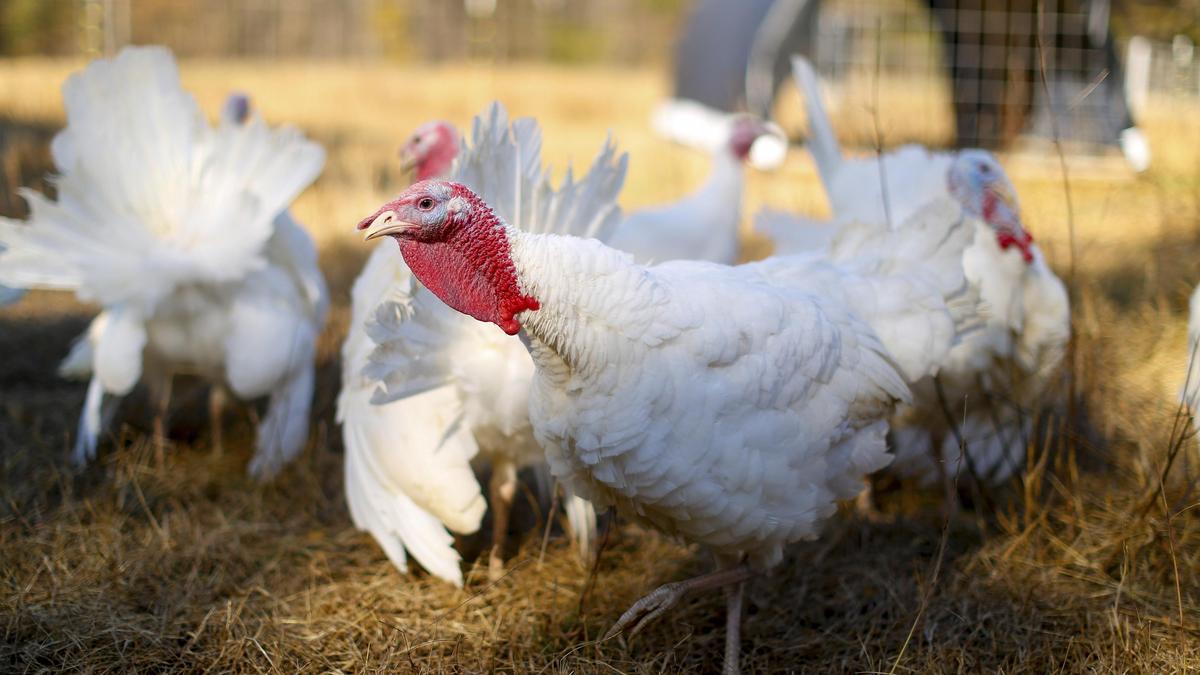
H5N1 has been a significant concern in global public health due to its potential to cause severe disease in humans and its ability to infect a wide range of hosts, including poultry.
| Photo Credit: REUTERS

Avian influenza, commonly known as bird flu, is a viral infection primarily affecting birds. A global outbreak of H5N1, a highly pathogenic avian influenza virus, has been spreading across the world since late 2020, driven by a new emerging lineage of the virus — 2.3.4.4b. H5N1 has been a significant concern in global public health due to its potential to cause severe disease in humans and its ability to infect a wide range of hosts, including poultry, wild birds, and mammals. Since its emergence in the late 1990s, the virus has predominantly been an issue for the poultry industry, but sporadic human cases have raised alarms about its pandemic potential. However, recent human cases of H5N1 in British Columbia in Canada and California have increased concerns about the adaptability of the virus and possible mutations that could facilitate human-to-human transmission.
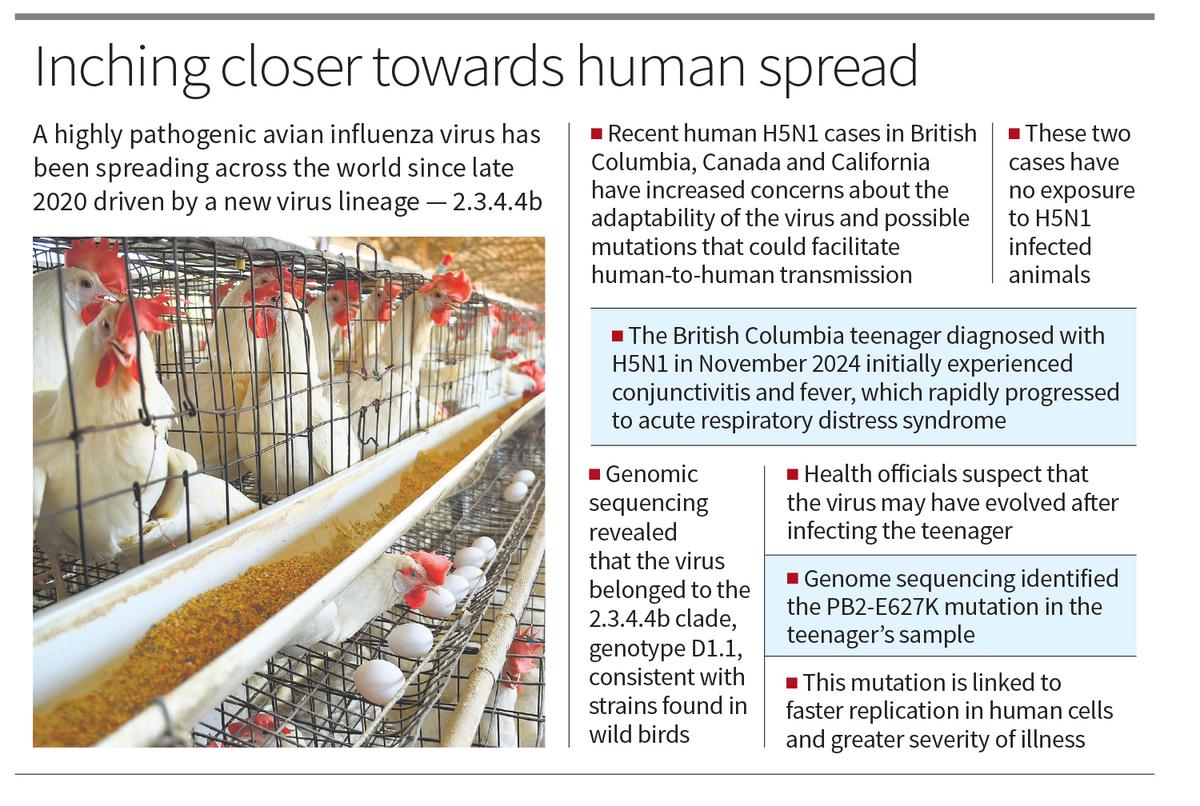
In November 2024, a teenager from Fraser Health, British Columbia was diagnosed with H5N1. This is the first domestically acquired case of human H5N1 infection in Canada. The teenager initially experienced conjunctivitis, fever, and cough, which rapidly progressed to acute respiratory distress syndrome, requiring intensive care. Genomic sequencing revealed that the virus belonged to the 2.3.4.4b clade, genotype D1.1, consistent with strains found in wild birds in the Fraser Valley area and not directly related to outbreaks at poultry farms in British Columbia. The D1.1 is a different genotype than the one that has infected dairy workers in the U.S. and the child in California. Testing of household contacts of the patient, pets, nearby animals, and environmental samples returned negative results for influenza H5 and despite several efforts, health officials were not able to identify the definitive source of the teenager’s infection.

In a media briefing, Bonnie Henry, British Columbia’s health officer said that the “virus may have evolved after infecting the patient”. The reason for suspecting this is because the teenager’s symptoms began with conjunctivitis and then rapidly progressed to acute respiratory distress syndrome. Serial samples from the patient have been collected to identify any mutations that may have occurred over the course of the infection.

While no further cases were detected, genomic analysis of the viral isolate identified mutations in the virus that are potentially linked to increased adaptation to human hosts, including enhanced cell-receptor binding and deeper lung penetration. Genome sequencing identified the PB2-E627K mutation in the sample, which is linked to faster replication in human cells and greater severity of illness, and likely emerged during the infection. These findings raise concerns about the potential of the virus to cause more severe respiratory illness in humans. However, there is currently no evidence that the H5N1 virus infecting the teenager in Canada has been transmitted to other people.

Concurrently, the U.S. CDC confirmed the first human case of H5N1 avian influenza in a child from Alameda County, California. The child experienced mild respiratory symptoms and is recovering after antiviral treatment. Health officials have found no evidence of human-to-human transmission, as family members tested negative for the virus. Although over 50 cases of human H5N1 infections have been reported from the U.S. in 2024, this patient is the second child in North America to be infected with H5N1. 

The two cases are particularly concerning because their transmission routes differ significantly from the other cases of H5N1 that have been reported from North America in 2024. Previous infections primarily involved people who were in close contact with infected birds, including dairy or poultry farm workers. According to the CDC, human H5N1 infections without a clear link to exposure to affected animals are rare and have predominantly been reported in other countries. These recent cases, therefore, underscore the importance of understanding the virus’s evolving genomic characteristics, which may allow it to bypass traditional transmission barriers. Researchers are particularly vigilant for mutations that could enable the virus to spread more easily among humans, as such changes could pose a significant public health risk.

While these findings underscore the urgent need for understanding and addressing the evolving epidemiology of the H5N1 virus, they also highlight the need for increased surveillance and targeted public health interventions to control the virus’s spread. Continued genomic surveillance of the virus will be critical to tracking its evolution, understanding mutation patterns, and assessing its potential to adapt and spread more effectively among human populations. Such efforts are essential to guide prevention strategies and mitigate the risk of a potential H5N1 pandemic.

(Bani Jolly is a senior scientist and Vinod Scaria is a senior consultant at Karkinos Healthcare)

Published – December 01, 2024 06:00 am IST



Source link

Science

Post navigation

Previous Post: Police in Moscow raid bars over ‘LGBT propaganda’
Next Post: India vs PM’s XI match: Rain plays spoilsport on day one

Related Posts

  • Strong solar storm hits Earth, could disrupt communications and produce northern lights in U.S. Science
  • ‘Kerala yet to receive Linezolid, Cycloserine MDR-TB drugs’ Science
  • Twisted magnetic field observed around Milky Way’s central black hole Science
  • Chandrayaan-3 takes another crucial step closer to moon Science
  • Budget 2024: Finance Minister Nirmala Sitharaman announces exemption of custom duties on critical minerals Science
  • The Science Quiz: The stuff semiconductors are made of Science

More Related Articles

Scientists brace for a ’flood of junk’ papers written with AI help Science
India set to transition to hyperlocal extreme weather forecasting Science
Japan’s ‘megaquake‘ warning | Explained Science
India is the world’s largest plastic polluter according to new study  Science
Australian weather bureau sees 50% chance of La Nina this year Science
A freak DNA change 25 million years ago is why humans lack tails Science
SiteLock

Archives

  • December 2024
  • November 2024
  • October 2024
  • September 2024
  • August 2024
  • July 2024
  • June 2024
  • May 2024
  • April 2024
  • March 2024
  • February 2024
  • January 2024
  • December 2023
  • November 2023
  • October 2023
  • September 2023
  • August 2023
  • July 2023
  • June 2023
  • May 2023
  • April 2023
  • March 2023
  • February 2023
  • January 2023
  • December 2022
  • November 2022
  • October 2022
  • September 2022
  • August 2022
  • July 2022
  • June 2022
  • May 2022

Categories

  • Business
  • Nation
  • Science
  • Sports
  • World

Recent Posts

  • Needle Found In Girl’s Arm After Tetanus Shot, Probe Launched In UP Hospital
  • Georgia Rocked By Violent Protests Over Russia-EU Divide Within Country
  • Supreme Court Asks Poll Body To Explain Rationale Behind Increasing Voter Limit
  • Gaganyaan Mission Likely To Be Launched By 2026-End: ISRO Chairman
  • To Counter Jasprit Bumrah, Australia Prescribed Left Leaning ‘Simple Swap’

Recent Comments

  1. dfb{{98991*97996}}xca on UP Teacher Who Asked Students To Slap Muslim Classmate
  2. "dfbzzzzzzzzbbbccccdddeeexca".replace("z","o") on UP Teacher Who Asked Students To Slap Muslim Classmate
  3. 1}}"}}'}}1%>"%>'%> on UP Teacher Who Asked Students To Slap Muslim Classmate
  4. bfg6520<s1﹥s2ʺs3ʹhjl6520 on UP Teacher Who Asked Students To Slap Muslim Classmate
  5. pHqghUme9356321 on UP Teacher Who Asked Students To Slap Muslim Classmate
  • “If You Don’t Pick Me…”: KKR CEO Reveals Venkatesh Iyer’s ‘Ultimatum’ Behind Rs 23.75 Crore Bid Sports
  • Centre Announces Welfare Measures For LIC Agents, Employees Nation
  • Weight, Speed Of Nepal Plane In July Crash Didn’t Match Guidelines, Finds Probe World
  • RIL to acquire additional 13% stake in Viacom 18 from Paramount Global Business
  • What iPhone Maker Foxconn Boss Young Liu Said On Row Over Hiring “Discrimination” In India Nation
  • India Supporting 65 Community Projects Worth $23 Million In Maldives: Report Nation
  • Congress Taking Support Of Banned PFI To Win Wayanad Seat: PM Nation
  • Pakistan’s New Batting Sensation Kamran Ghulam Was Slapped By Haris Rauf On Field. Old Video Viral Sports

Editor-in-Chief:
Mohammad Ariff,
MSW, MAJMC, BSW, DTL, CTS, CNM, CCR, CAL, RSL, ASOC.
editor@artifex.news

Associate Editors:
1. Zenellis R. Tuba,
zenelis@artifex.news
2. Haris Daniyel
daniyel@artifex.news

Photograher:
Rohan Das
rohan@artifex.news

Artifex.News offers Online Paid Internships to college students from India and Abroad. Interns will get a PRESS CARD and other online offers.
Send your CV (Subjectline: Paid Internship) to internship@artifex.news

Links:
Associate Journalism
About Us
Privacy Policy

News Links:
Breaking News
World
Nation
Sports
Business
Entertainment
Lifestyle

Registered Office:
72/A, Elliot Road, Kolkata - 700016
Tel: 033-22277777, 033-22172217
Email: office@artifex.news

Editorial Office / News Desk:
No. 13, Mezzanine Floor, Esplanade Metro Rail Station,
12 J. L. Nehru Road, Kolkata - 700069.
(Entry from Gate No. 5)
Tel: 033-46011099, 033-46046046
Email: editor@artifex.news

Copyright © 2023 Artifex.News Newsportal designed by Artifex Infotech.