
Skip to content
  • Facebook
  • X
  • Linkedin
  • WhatsApp
  • YouTube
  • Associate Journalism
  • About Us
  • Privacy Policy
  • 033-46046046
  • editor@artifex.news
Artifex.News

Artifex.News

Stay Connected. Stay Informed.

  • Breaking News
  • World
  • Nation
  • Sports
  • Business
  • Science
  • Entertainment
  • Lifestyle
  • Toggle search form
  • U.S. Venezuelans rush aid to quake victims despite Caracas airport closure
    U.S. Venezuelans rush aid to quake victims despite Caracas airport closure World
  • Access Denied
    Access Denied Nation
  • CBI Completes Lie Detector Test On Ex-RG Kar Principal Sandip Ghosh
    CBI Completes Lie Detector Test On Ex-RG Kar Principal Sandip Ghosh Nation
  • Access Denied World
  • Access Denied Sports
  • Venezuelan Gang Uses New York Migrant Crisis To Make Criminal Gains: Report
    Venezuelan Gang Uses New York Migrant Crisis To Make Criminal Gains: Report World
  • Access Denied Sports
  • When art wilts under the sun
    When art wilts under the sun Nation
MACE in Ladakh opens its one-of-a-kind eye to cosmic gamma rays

MACE in Ladakh opens its one-of-a-kind eye to cosmic gamma rays

Posted on November 26, 2024 By admin


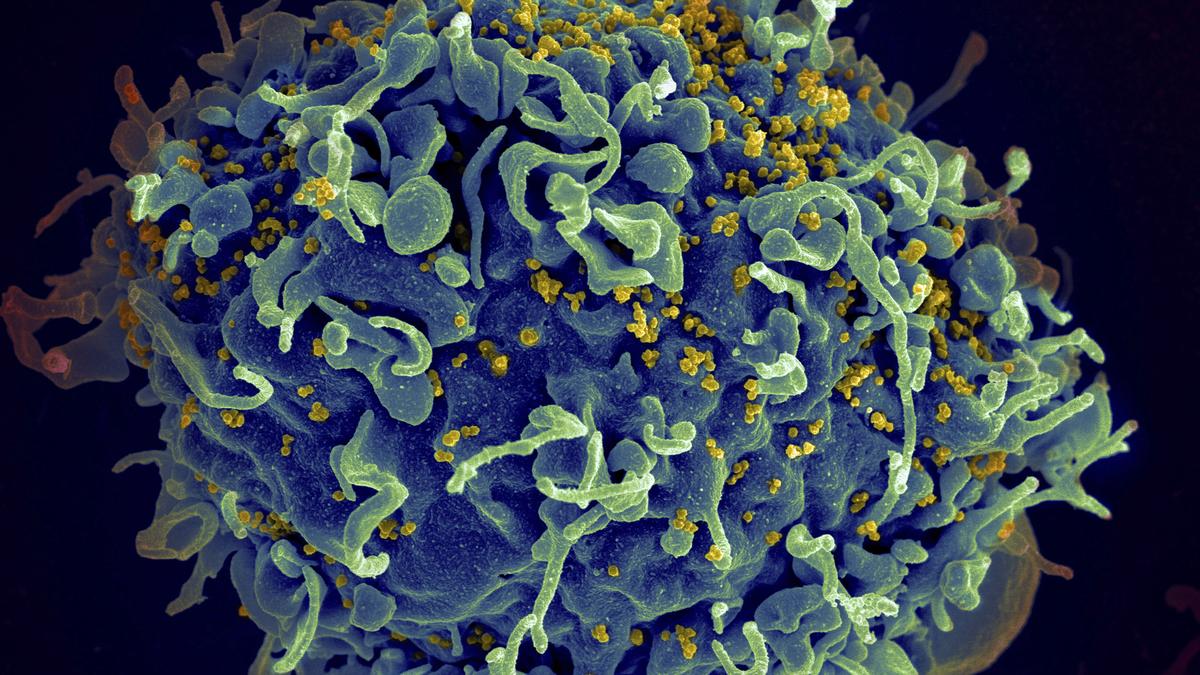
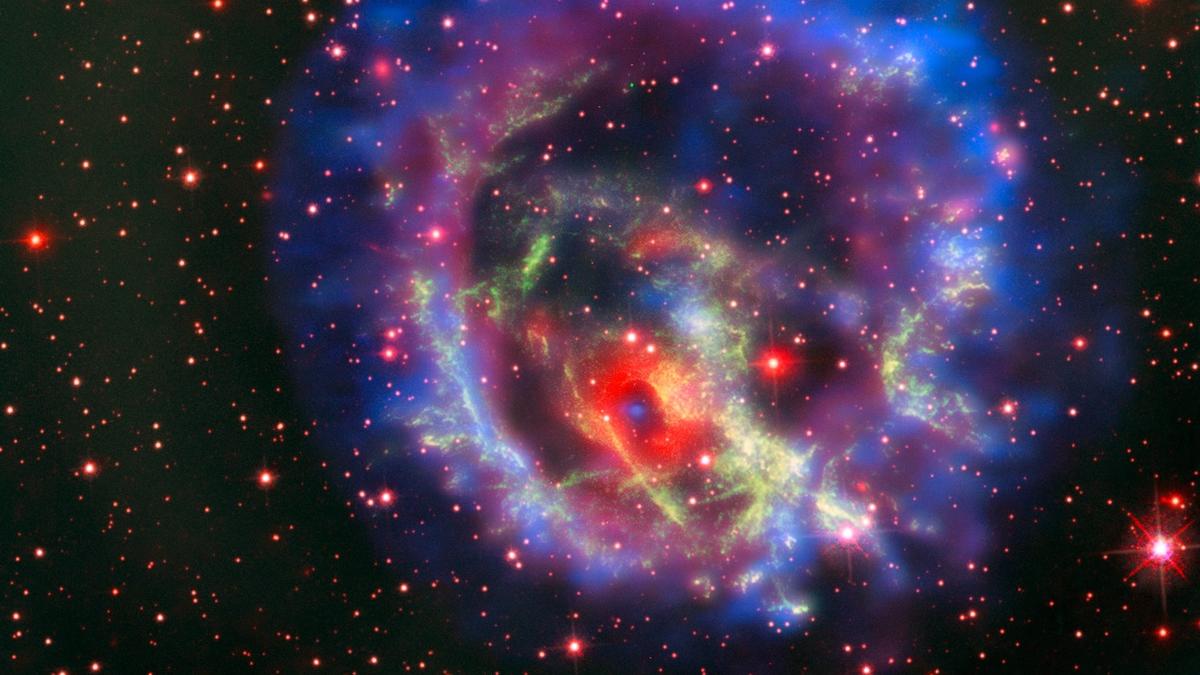
The blue spot at the centre of the red ring is an isolated neutron star in the Small Magellanic Cloud. Neutron stars are formed after heavy stars go supernova, in the process emitting gamma rays alongside radiation at other energies.
| Photo Credit: ESA and NASA

The Major Atmospheric Cherenkov Experiment (MACE) telescope is a state-of-the-art ground-based gamma-ray telescope inaugurated in Hanle, Ladakh, on October 4. Located at around 4.3 km above sea level, it is the highest imaging Cherenkov telescope in the world. It boasts of a 21-metre-wide dish, the largest of its kind in Asia and second-largest in the world.

The facility was built by the Bhabha Atomic Research Centre, the Tata Institute of Fundamental Research, the Electronics Corporation of India Ltd., and the Indian Institute of Astrophysics.

Light comes in a wide range of wavelengths but humans can only see a small portion. In the electromagnetic spectrum, gamma rays have the shortest wavelength and the highest energy, with each light-particle possessing more than 100,000 electron volts. (Visible-light photons have around 1.63-3.26 eV each.)

A strange blue light

Gamma rays are produced by exotic energetic objects in the cosmos, including rapidly spinning pulsars, supernova explosions, hot whirlpools of matter around black holes, and gamma-ray bursts. Because of their high energy, gamma rays are a health hazard. They can damage living cells and may even trigger deleterious mutations in DNA. Fortunately the earth’s atmosphere blocks gamma rays from reaching the ground. Thus, astronomers who want to study objects that emit gamma rays prefer using space observatories — although there are indirect techniques to detect gamma rays with very high energies from the ground.

When a gamma ray from a cosmic source enters the atmosphere, it interacts with molecules in the air to produce a copious shower of electron-positron pairs. As these charged particles travel through the atmosphere at speeds greater than the speed of light in air, they emit a faint blue light, called Cherenkov radiation. This radiation has wavelengths typical of violet and blue light of the visible spectrum and of the ultraviolet wavelength range.

The light is emitted in about a fraction of a second, and the light-particles spread out evenly over a vast region on the earth’s surface. This region is a suitable place to locate a detector that can collect the photons and study them to indirectly understand the gamma rays. Instruments used for this kind of detection are called imaging atmospheric Cherenkov telescopes (IACTs). The MACE telescope is an IACT.
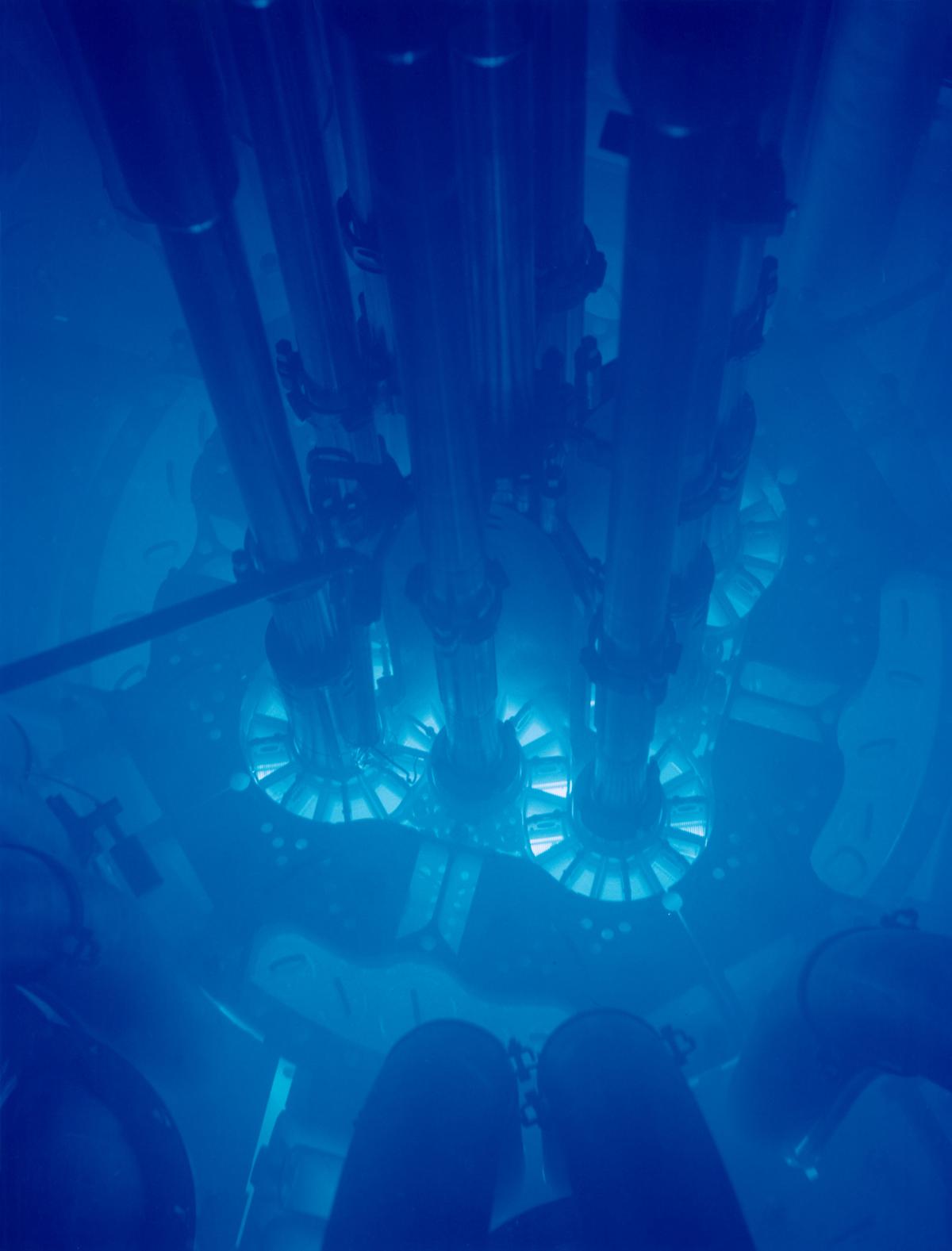
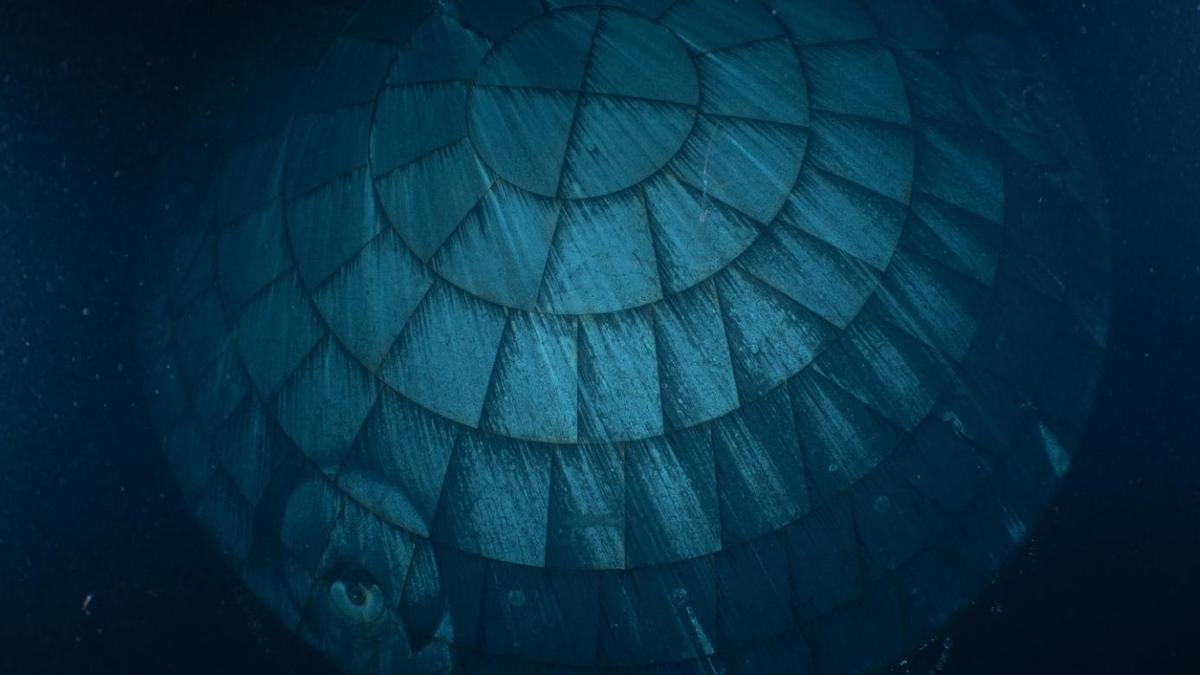
Cherenkov radiation glowing in the core of the Advanced Test Reactor at Idaho National Laboratory, 2009.

Cherenkov radiation glowing in the core of the Advanced Test Reactor at Idaho National Laboratory, 2009.
| Photo Credit:
Argonne National Laboratory (CC BY-SA 2.0)

Strength in the numbers

Every IACT has a light collector and a camera. The size of the light collector determines the minimum energy of gamma rays it can detect. MACE’s light collector has 356 mirror panels. Each panel consists of four smaller mirrors arranged in a honeycomb structure. These honeycomb arrangements have been shown to be lighter yet more stable than solid mirrors because they reduce the empty space between segments and increase the total reflective area. The James Webb Space Telescope uses honeycomb-segmented mirrors for this reason.

To ensure it can detect gamma rays in the required energy range, MACE’s construction and its geographical station were carefully planned. The high altitude location puts the telescope above disturbances in the lower reaches of the troposphere. MACE is also not housed in a dome because of its large size, leaving its mirrors continuously exposed to the environment. Each mirror is coated with a thin layer of silicon dioxide for protection.

The mirrors are aligned to collect and focus the Cherenkov radiation into the high-resolution camera, which is made up of 1,088 photomultiplier tubes that detect the faint signals and amplify them. All the necessary electronic components for processing and recording data are placed within the camera, including a specialised device that continuously converts signals from photomultiplier tubes into digital data, allowing computers to perform real-time analysis.

The telescope has a moving weight of 180 tonnes. It stands on a base with six wheels that roll along a 27-metre-wide curved track. The drive system that moves the telescope uses an altitude-azimuth mount, meaning the telescope can shift its gaze both vertically and horizontally, to observe all patches of the sky.

Searching for WIMPs

MACE’s main goal is to study gamma rays with more than 20 billion eV of energy. The telescope can examine high-energy gamma rays emitted from near black holes beyond the Milky Way and which are digesting large volumes of matter. Other potential astrophysical targets include gamma-ray pulsars, blazars, and gamma-ray bursts.

One important goal is to find dark matter particles. Dark matter is a type of matter believed to make up more than 85% of the total mass in our universe. It is a fundamental part of the standard model of cosmology — but scientists don’t know what subatomic particles it could be made of.

One of the proposed particle constituents of dark matter is weakly interacting massive particles (WIMPs). Scientists have predicted that these particles can produce high-energy gamma rays when they collide into and destroy each other. These gamma rays could be produced in large galaxy clusters, small galaxies, and/or the centre of large galaxies, including the Milky Way.

India’s MACE is the next step

Previous studies have shown that the MACE telescope can help find and measure the high-energy gamma rays produced by WIMPs. This will allow astronomers to learn more about dark matter and the behaviour of WIMPs. But just as likely, MACE could help verify whether WIMPs actually exist and make up dark matter or whether this hypothesis is flawed.

India has been active in gamma-ray astronomy for more than five decades now. The unveiling of the MACE telescope marked a significant step towards further technological and scientific advancements in the field. Most of MACE’s subsystems were also built and designed within the country. With its advanced capabilities, MACE could play an important role in addressing fundamental open questions in the field of high-energy astrophysics and particle physics, and pave the way for cutting-edge research.

Shreejaya Karantha is a freelance science writer and a content writer and research specialist at The Secrets of The Universe.

Published – November 26, 2024 05:30 am IST


Source link

Science

Post navigation

Previous Post: Joe Biden To Attend Donald Trump’s Inauguration, Says White House
Next Post: Ukraine’s Kyiv Under Multi-Wave Russian Drone Attacks, Claims Mayor

Related Posts

  • Science Quiz: On Charles Darwin
    Science Quiz: On Charles Darwin Science
  • Honourable mention for bioeconomy in Interim Budget, with trillion-dollar potential in mind
    Honourable mention for bioeconomy in Interim Budget, with trillion-dollar potential in mind Science
  • What makes the brain the most complicated object in the universe
    What makes the brain the most complicated object in the universe Science
  • How clothed pig carcasses are revealing the secrets of mummification
    How clothed pig carcasses are revealing the secrets of mummification Science
  • When did the duplication of a gene responsible for breaking down complex carbohydrate starch in the mouth occur?
    When did the duplication of a gene responsible for breaking down complex carbohydrate starch in the mouth occur? Science
  • China becomes AI’s biggest testing ground
    China becomes AI’s biggest testing ground Science

More Related Articles

Why India’s Green Revolution isn’t a blueprint to feed a hungry planet Why India’s Green Revolution isn’t a blueprint to feed a hungry planet Science
Peter Higgs, whose success as a physicist depends on whom you ask Peter Higgs, whose success as a physicist depends on whom you ask Science
Unusual black hole found at universe’s dawn presents dusty mystery to astronomers Unusual black hole found at universe’s dawn presents dusty mystery to astronomers Science
Government clears 23 institutions to set up ‘quantum labs’ Government clears 23 institutions to set up ‘quantum labs’ Science
Surprising ‘dark oxygen’ discovery could ensnarl deep-sea mining | Explained Surprising ‘dark oxygen’ discovery could ensnarl deep-sea mining | Explained Science
Artemis II: Indian-American Amit Kshatriya, senior NASA official behind U.S.’s moon mission Artemis II: Indian-American Amit Kshatriya, senior NASA official behind U.S.’s moon mission Science
SiteLock

Archives

  • September 2026
  • August 2026
  • July 2026
  • June 2026
  • May 2026
  • April 2026
  • March 2026
  • February 2026
  • January 2026
  • December 2025
  • November 2025
  • October 2025
  • September 2025
  • August 2025
  • July 2025
  • June 2025
  • May 2025
  • April 2025
  • March 2025
  • February 2025
  • January 2025
  • December 2024
  • November 2024
  • October 2024
  • September 2024
  • August 2024
  • July 2024
  • June 2024
  • May 2024
  • April 2024
  • March 2024
  • February 2024
  • January 2024
  • December 2023
  • November 2023
  • October 2023
  • September 2023
  • August 2023
  • July 2023
  • June 2023
  • May 2023
  • April 2023
  • March 2023
  • February 2023
  • January 2023
  • December 2022
  • November 2022
  • October 2022
  • September 2022
  • August 2022
  • July 2022
  • June 2022
  • May 2022

Categories

  • Business
  • Nation
  • Science
  • Sports
  • World

Recent Posts

  • Chandni Chowk’s Town Hall to be developed as ‘Global Heritage Centre’: CM
  • Missing measure in India’s magnet mission
  • Dengue cases in Tamil Nadu decline for third consecutive year as per government data
  • 3 dead, three missing in Nilambur flash flood
  • Meloni plans to ban burqas and niqabs in Italian schools, cap foreign students in classrooms

Recent Comments

  1. Josephjab on UP Teacher Who Asked Students To Slap Muslim Classmate
  2. LarryKef on UP Teacher Who Asked Students To Slap Muslim Classmate
  3. Jasonnekly on UP Teacher Who Asked Students To Slap Muslim Classmate
  4. Jasonnekly on UP Teacher Who Asked Students To Slap Muslim Classmate
  5. Frankenrib on UP Teacher Who Asked Students To Slap Muslim Classmate
  • Access Denied Sports
  • Cuba’s latest blackout underscores deepening economic crisis | In pictures
    Cuba’s latest blackout underscores deepening economic crisis | In pictures World
  • Why Hardik Pandya Has Been Snubbed From India Captaincy Under Coach Gautam Gambhir – Explained
    Why Hardik Pandya Has Been Snubbed From India Captaincy Under Coach Gautam Gambhir – Explained Sports
  • “All Hell Breaks Loose”: Sunil Gavaskar Namedrops Australian Stadiums In Pitch Rant
    “All Hell Breaks Loose”: Sunil Gavaskar Namedrops Australian Stadiums In Pitch Rant Sports
  • Access Denied
    Access Denied Nation
  • TCS Q1 results: Net profit rises 8.7% to ₹12,040 crore; CEO says strong start to new fiscal
    TCS Q1 results: Net profit rises 8.7% to ₹12,040 crore; CEO says strong start to new fiscal Business
  • Access Denied Sports
  • 58-year-old man arrested for ‘sexually assaulting’ minor girl
    58-year-old man arrested for ‘sexually assaulting’ minor girl Nation

Editor-in-Chief:
Mohammad Ariff,
MSW, MAJMC, BSW, DTL, CTS, CNM, CCR, CAL, RSL, ASOC.
editor@artifex.news

Associate Editors:
1. Zenellis R. Tuba,
zenelis@artifex.news
2. Haris Daniyel
daniyel@artifex.news

Photograher:
Rohan Das
rohan@artifex.news

Artifex.News offers Online Paid Internships to college students from India and Abroad. Interns will get a PRESS CARD and other online offers.
Send your CV (Subjectline: Paid Internship) to internship@artifex.news

Links:
Associate Journalism
About Us
Privacy Policy

News Links:
Breaking News
World
Nation
Sports
Business
Entertainment
Lifestyle

Registered Office:
72/A, Elliot Road, Kolkata - 700016
Tel: 033-22277777, 033-22172217
Email: office@artifex.news

Editorial Office / News Desk:
No. 13, Mezzanine Floor, Esplanade Metro Rail Station,
12 J. L. Nehru Road, Kolkata - 700069.
(Entry from Gate No. 5)
Tel: 033-46011099, 033-46046046
Email: editor@artifex.news

Copyright © 2023 Artifex.News Newsportal designed by Artifex Infotech.