




Based on recommendations from an expert committee, the University Grants Commission (UGC) has decided to include Ayurveda Biology on the list of subjects from December 2024 onwards. The UGC conducts the National Eligibility Test (NET) through the National Testing Agency (NTA), twice a year, in June and December. Inclusion of a subject on the list would qualify test takers for research and faculty positions in it.
Ayurveda Biology seeks to apply modern evidence-based science to traditional knowledge. The syllabus for Ayurveda Biology, as released on the UGC-NET website, has ten units, the first five of which focus on the concepts of Ayurveda and the rest, modern biology. Apart from the history and fundamental principles of Ayurveda, the syllabus covers key Ayurveda concepts such as Sharira Rachna and Kriya as well as Ayurvedic Pharmacopoeia. The second half of the syllabus focuses on contemporary science topics such as Microbiology, Immunology, Genetics and so on.
Explaining the reasons for the UGC decision, M. Jagadesh Kumar, Chairman, UGC, told The Hindu that facilitating research is a key aim. “The possibilities for research in Ayurveda Biology are enormous. Aspirants can conduct clinical trials to investigate the efficacy of Ayurvedic treatments and formulations. It is also possible to study the effects of Ayurvedic herbs and formulations on various physiological systems,” he says.
Mr. Kumar said that Ayurveda Biology researchers can help in developing methods to standardise Ayurvedic preparations and ensure that they are of high quality. Inclusion on the list is an extension of the National Education Policy 2020’s emphasis on interdisciplinary research. “Collaborating with researchers from other fields, such as biochemistry, genetics, and microbiology, can help explore Ayurvedic principles. This will promote interdisciplinary research. Integrating Ayurveda Biology knowledge into clinical practice can help in collaborating with other healthcare professionals, and providing patient care by existing and upcoming health professionals,” he said.
While the UGC NET list has historically been a place for arts and humanities subjects, the CSIR NET focuses on strict science. Prof. Jagadesh Kumar says, in the beginning, the UGC NET did focus on arts and humanities but it has evolved to incorporate a wider range of subjects. “If you look at the list, there are some 28 subjects that fit within what we generally call strictly science and provide ample opportunities for candidates in the science stream. Subjects like Indian Knowledge Systems (IKS) are also included on the UGC NET list to encourage research and scholarship in these areas. We must recognise their cultural and intellectual significance. IKS is conceived as an integrated theme across different disciplines, just like Ayurveda Biology,” he adds.
Benefits and caveats
Welcoming the inclusion, Subhash Chandra Lakhotia, BHU Distinguished Professor (Lifetime) and SERB Distinguished Fellow Cytogenetics Laboratory, however, said the issue is that the teaching of Ayurveda that has been going on in the traditional BAMS course is very poor. “With Ayurveda Biology, Ayurveda students can move a notch up by acquiring a scientific background and applying modern science to traditional knowledge,” he says.
But, Mr. Lakhotia cautioned that Ayurveda Biology will be useful only if teaching and examination are based on facts, not myths and imagination. He approved the NET syllabus for Ayurveda Biology but said that requiring students to learn concepts like Sharira Kriya along with contemporary physiology can cause confusion. “Students need to be informed about the historical nature of the first component,” he said.
The other serious limitation that he foresees is that those studying traditional Bachelor of Ayurvedic Medicine and Surgery (BAMS) may not be able to attempt this NET exam since their grounding in modern science is not adequate. “The BAMS curriculum needs in-depth redesigning so that the basics of modern biology are taught to these students. Unless the formally trained Ayurveda candidates get actively involved in research, the dream of Ayurvedic Biology cannot be fulfilled,” he said.
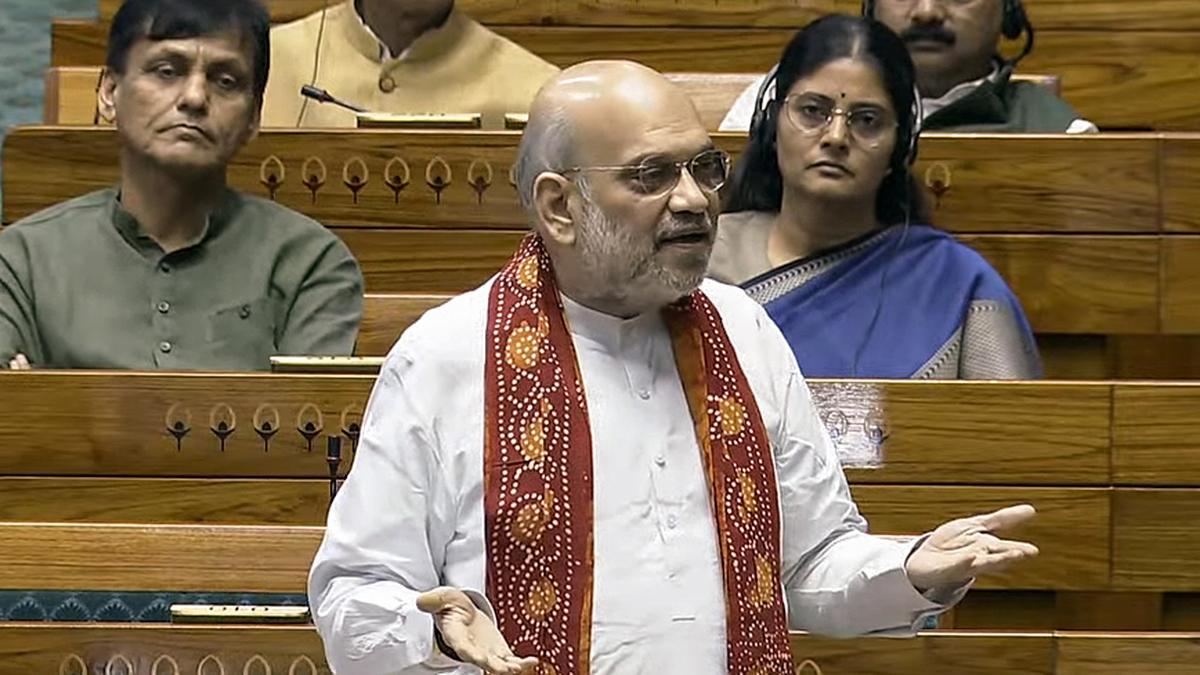
M. Jagadesh Kumar, Chairman, UGC said, “Collaborating with researchers from other fields, such as biochemistry, genetics, and microbiology, can help explore Ayurvedic principles.” | Photo credit: Official X handle of Prof. Mamidala Jagadesh Kumar
The idea of Ayurveda Biology, as a discipline, was pioneered by Dr. Marthanda Varma Sankaran Valiathan, a renowned cardiac surgeon and the founder-director of Sree Chitra Tirunal Institute for Medical Sciences and Technology (SCTIMST). Dr. Valiathan spent much of his later years deeply researching the ancient scholars — Charaka, Susruta, and Vagbhata. After many decades of study and research, Dr. Valiathan said procedures and products in Ayurveda lend themselves to modern scientific investigation.
Critics say that while Ayurveda Biology has an evidence-based approach, in other subjects, such as Indian Knowledge System, concepts are taken to be true with little or no evidence. Dr. G. Sivaraman, a Siddha physician, for instance criticises the IKS syllabus in NET saying it is not a dispassionate evaluation of the concepts. “Many mythological opinions are positioned as scientific. Some of the concepts are unscientific and irrational and they need not be positioned in the name of Indian science,” he says.
Dr. Sivaraman warns against “tall claims” in ancient texts of Ayurveda, Siddha and other traditional knowledge systems. “The practitioners of both the disciplines should know the basics of both the systems so dialogue and debate can happen with consensus.”
While modern science begins with atoms and molecules, according to Ayurveda, matter arises from the five mahabhutas: aether, air, fire, water and earth. Mr. Lakhotia says the fundamental principle of panchmahabhuta is from a time when people didn’t know what matter is or what life is. Today life is understood in terms of biological and physical properties. The concept of tridosha can’t be true for all situations. “Historically, when Ayurveda Biology was pioneered by Late Dr Valiathan in the early 2000’s, it was to question Ayurvedic principles and practices with an unbiased mind and to establish a scientific rationale for them. I believe that should be the objective today too.”
Among the institutes that teach Ayurveda Biology are the Jawaharlal Nehru University (JNU) in New Delhi and the University of Trans-Disciplinary Health Sciences and Technology (TDU) in Bengaluru, founded by Sam Pitroda and Darshan Shankar. Dr. Gurmeet Singh, professor and head of Centre for Ayurveda Biology and Holistic Nutrition at TDU, said, “While both Ayurveda and Biology are regarded as sciences of life, the two knowledge systems have a very different foundation. Biology studies how the body responds to different environments and analyses our responses from the lens of types of genome, epigenome, microbiome or our own biochemistry. Ayurveda explores these from doshik dimensions. Ayurveda Biology tries to explore the synthesis of Ayurveda and Biology.”
Dr. Sivaraman says Ayurveda Biology is the need of the hour. “The entire world, including all the developed countries, are closely watching the possibilities of integrative medicine. Wherever modern science of medicine is facing obstacles in understanding a disease or treating an ailment, they are thinking of other possibilities and whether different knowledge systems can complement each other,” he says.
Prof. Gurmeet Singh said applying contemporary biology to the knowledge in ancient texts and accumulated by village healers started some 30 years ago at TDU. “What started 30 years ago organically turned into a structured programme at the TDU when we felt the need to synergise Ayurveda and Biology. Research areas at TDU include micronutrient deficiencies with focus on iron deficiency, metabolic health with focus on type 2 diabetes, brain health with focus on mild cognitive impairment, traditional knowledge guided quality standards for traditional medicine, quality of traditional medicinal ingredients and products, and more.”
Published – November 15, 2024 12:02 pm IST