




You can probably picture a vampire: Pale, sharply fanged undead sucker of blood, deterred only by sunlight, religious paraphernalia and garlic. They’re gnarly creatures, often favorite subjects for movies or books. Luckily, they’re only imaginary … or are they?
There are real vampires in the world of bats. Out of over 1,400 currently described bat species, three are known to feed on blood exclusively.
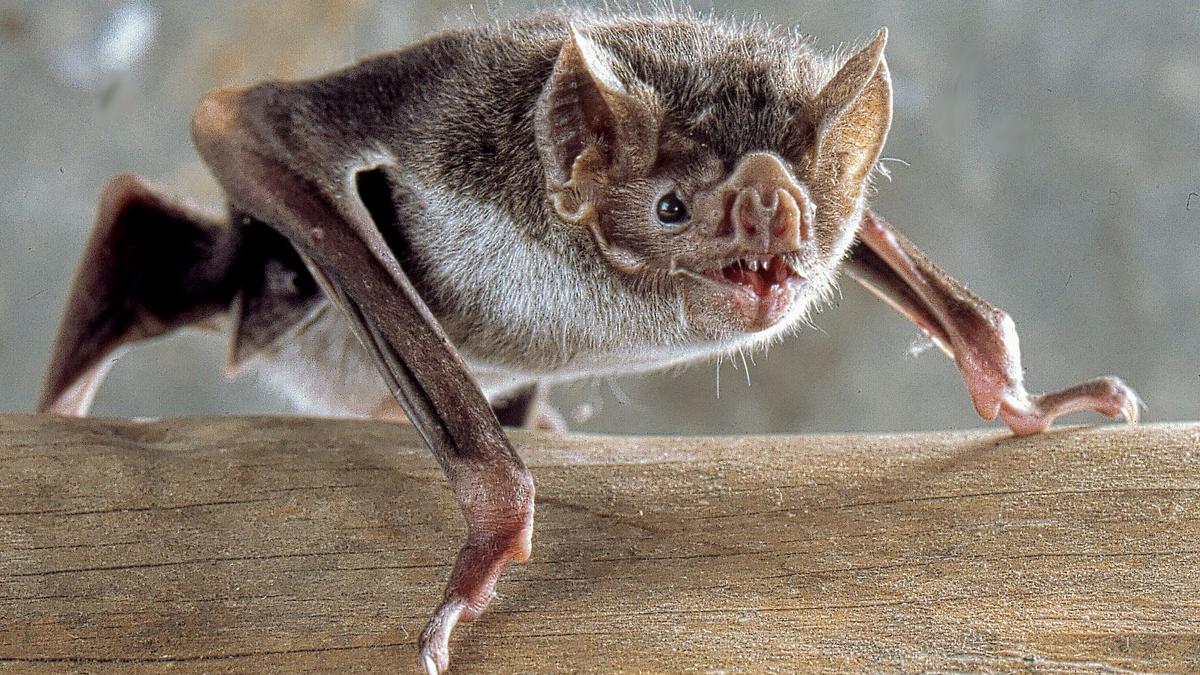
The common vampire bat, Desmodus rotundus, is the most abundant. At home in the tropical forests of Central and South America, these bats feed on various animals, including tapirs, mountain lions, penguins and, most often nowadays, livestock.
Feeding on a blood diet is unusual for a mammal and has led to many unique adaptations that facilitate their uncommon lifestyle. Unlike other bats, vampires are mobile on the ground, toggling between two distinct gaits to circle their sleeping prey. Heat-sensing receptors on their noses help them find warm blood under their prey’s skin. Finally, the combination of a small incision, made by potentially self-sharpening fangs, and an anticoagulant in their saliva allows these bats to feed on unsuspecting prey.
To me, as a behavioral ecologist, who is interested in how pathogens affect social behaviors and vice versa, the most fascinating adaptations to a blood-feeding lifestyle are observable in vampire bats’ social lives.
Vampire bats build reciprocal relationships
Blood is not very nutritious, and vampire bats that fail to feed will starve relatively quickly. If a bat returns to the roost hungry, others may regurgitate a blood meal to get them through the night.
Such food sharing happens between bats who are related – such as mothers and their offspring – but also unrelated individuals. This observation has puzzled evolutionary biologists for quite a while. Why help someone who is not closely related to you?
It turns out that vampire bats keep track of who feeds them and reciprocate – or not, if the other bat has not been helpful in the past. In doing so, they form complex social relationships maintained by low-cost social investments, such as cleaning and maintaining the fur of another animal, called allogrooming, and higher-cost social investments, such as sharing food.
These relationships are on par with what you would see in primates, and some people compare them to human friendships. Indeed, there are some parallels.
For instance, humans will raise the stakes when forming new relationships with others. You start with social investments that don’t cost much – think sharing some of your lunch – and wait for the other person’s response. If they don’t reciprocate, the relationship may be doomed. But if the other person does reciprocate by sharing a bit of their dessert, for instance, your next investment might be larger. You gradually increase the stakes in a game of back-and-forth until the friendship eventually warrants larger social investments like going out of your way to give them a ride to work when their car breaks down.
Vampire bats do the same. When strangers are introduced, they will start with small fur-cleaning interactions to test the waters. If both partners keep reciprocating and raising the stakes, the relationship will eventually escalate to food sharing, which is a bigger commitment.
Relationships, in sickness and in health
My lab studies how infections affect social behaviors and relationships. Given their vast array of social behaviors and the complexity of their social relationships, vampire bats are the ideal study system for me and my colleagues.
How does being ill affect how vampire bats behave? How do other bats behave toward one that is sick? How does sickness affect the formation and maintenance of their social relationships?
We simulate infections in bats in our lab by using molecules derived from pathogens to stimulate an immune response. We’ve repeatedly found a form of passive social distancing where sick individuals reduce their interaction with others, whether it’s allogrooming, social calling or just spending time near others.
Importantly, these behavioral changes haven’t necessarily evolved to minimize spreading disease to others. Rather, they are parts of the complex immune response that biologists call sickness behaviors. It’s comparable to someone infected with the flu staying at home simply because they don’t feel up to venturing out. Even if such passive social distancing may have not evolved to prevent transmission to others, simply being too sick to interact with others will still reduce the spread of germs.
Interestingly, sickness behaviors can be suppressed. People do this all the time. So-called presenteeism is showing up at work despite illness due to various pressures. Similarly, many people have suppressed symptoms of an infection to engage in some sort of social obligation. If you have little kids, you know that when everyone in your household is coming down with something, there’s no way you can just sit back and not take care of the little ones, even if you feel quite bad yourself.
Animals are no different. They can suppress sickness behaviors when competing needs arise, such as caring for young or defending territory. Despite their tendency to reduce social interactions with others when sick, in vampire bats, sick mothers will continue to groom their offspring and vice versa, probably because mother-daughter relationships are extra important. Mothers and daughters are often each other’s primary social relationships within groups of vampire bats.
Human-bat conflict centers on livestock
Despite their many fascinating adaptations and complex social lives, vampire bats are not universally admired. In fact, in many areas in South and Central America, they are considered pests because they can transmit the deadly rabies virus to livestock, which can cause quite significant economic losses.
Before people introduced livestock into their habitat, vampire bats probably had a harder time finding food in the form of native prey species such as tapirs. Now, livestock has become their primary food source. After all, why not feed on something that is reliably at the same place every night and quite abundant? Increases in livestock abundance come with increases in vampire bat populations, probably perpetuating the problem of rabies transmission.
The farmers’ quarrels with vampires make sense, especially in smaller cattle herds, where losing even one cow can significantly hurt a farmer’s livelihood. Culling campaigns have used topically applied poisons called vampiricide, basically a mix of petroleum jelly and rat poison. Bats are caught, the paste is applied to the fur, and they carry it back to the roost, where others ingest the poison during social interactions. Interestingly, large-scale culling may not be very effective in reducing rabies spillover.
Now, the focus has started to shift toward large-scale cattle vaccinations or vaccinating the vampire bats themselves. Researchers are even considering transmissible vaccines: They could genetically modify herpes viruses, which are quite common in vampire bats, to carry rabies genes and vaccinate large swaths of vampire bat populations.
Whichever method is used to mitigate vampire bat-human conflicts, more empathy for these misunderstood animals could only help. After all, if you stick your head into a hollow tree full of vampire bats – assuming you can brave the smell of digested blood – remember: You’re looking at a complex network of individual friendships between animals that care deeply for each other.
This article is republished from The Conversation under a Creative Commons license. Read the original article here.
Published – November 07, 2024 02:12 pm IST