





Skip to content
  • Facebook
  • X
  • Linkedin
  • WhatsApp
  • YouTube
  • Associate Journalism
  • About Us
  • Privacy Policy
  • 033-46046046
  • editor@artifex.news
Artifex.News

Artifex.News

Stay Connected. Stay Informed.

  • Breaking News
  • World
  • Nation
  • Sports
  • Business
  • Science
  • Entertainment
  • Lifestyle
  • Toggle search form
  • Access Denied
    Access Denied Nation
  • Access Denied World
  • Defence Secretary And UK’s Pick For NATO Chief Ben Wallace Resigns
    Defence Secretary And UK’s Pick For NATO Chief Ben Wallace Resigns World
  • Access Denied
    Access Denied Nation
  • GT vs MI IPL 2024 | Hardik batting at 7 was a collective decision, not his alone: Pollard
    GT vs MI IPL 2024 | Hardik batting at 7 was a collective decision, not his alone: Pollard Sports
  • In Israel Kibbutz, Paramedic Waited 6 Hours For Help That Never Came
    In Israel Kibbutz, Paramedic Waited 6 Hours For Help That Never Came World
  • Access Denied Sports
  • Five Things To Know About Wimbledon 2024 Champion Barbora Krejcikova
    Five Things To Know About Wimbledon 2024 Champion Barbora Krejcikova Sports
Can India escape middle-income trap?

Can India escape middle-income trap?

Posted on October 10, 2024 By admin


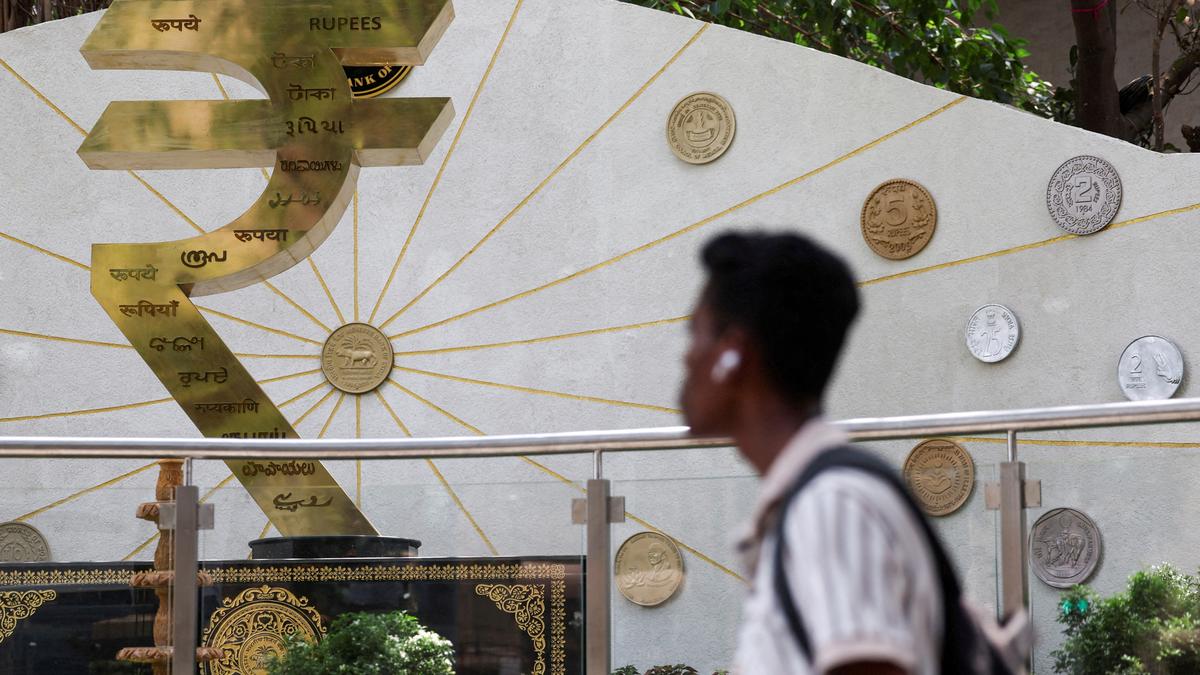
The World Development Report 2024 — authored by the World Bank — calls attention to the phenomenon of the “middle-income” trap, or the slowing down of growth rates as incomes increase. The World Bank estimates a stagnation of income per capita when economies reach a level of per capita incomes 11% of that of the U.S., hindering their journey to high-income status. Over the last 34 years, only 34 middle-income economies — defined as economies with per capita incomes between $1,136 and $13,845 — have transitioned to higher income levels.

The WDR details the policies and strategies necessary to break out of the trap based on the development experiences of those countries that did manage the transition. It highlights the importance of the “3i” approach: investment, infusion, and innovation. Economies must invest, ensure the infusion of new global technologies, and develop an environment conducive to domestic innovation. This is no easy task and requires nimble and responsive state policy. In the modern economy, there are plenty of headwinds that India must overcome to successfully navigate the middle-income trap.

Role of the state

Most countries that broke the trap were part of the European Union which facilitated growth and mobility of capital and labour for its members. Such institutions that aid free factor mobility are not available for most countries, for whom capital inflows are liberalised — largely flowing into their economies — with restrictions on the movement of labour. An important non-European country that managed to escape the trap is South Korea.

The South Korean state was heavily interventionist, often directing the private sector’s activities and ensuring their participation in an export-driven growth model. Successful companies were rewarded with access to new technologies and other supportive measures, while firms that did not perform were allowed to fail. This was no pure free market, but one where a powerful state intervened to bring about developmental goals, disciplining local elites and ensuring they followed the dictates of the state’s economic plan.

Another economy that broke the middle-income trap was Chile. But it too, saw state intervention in ensuring the success of natural resource exporting sectors. The salmon industry, for instance, succeeded in Chile due to the targeted intervention of the state on multiple fronts to ensure that the industry flourished.

The South Korean government’s approach carries significant lessons for India today. The state must be seen as being neutral amongst private players and ensuring those who do not make the mark are allowed to fail. The benefits firms receive from the state must be based on their performance instead of closeness to power. The presence of powerful business houses can promote growth provided they invest, ensure the adoption and infusion of new technologies, and innovate. South Korean business houses, or chaebols, are among the leaders in innovation today.

The pitfalls

South Korea’s success was built on manufacturing exports; such a strategy is not possible in today’s economic scenario. World export growth has slowed, with demand from large economies slowing down following the multiple shocks of the last few years. Several countries have seen a slow turn to protectionism. The employment losses in developed economies caused by free trade have made it more difficult for countries such as India to access foreign markets.

Moreover, several countries have been hit by what economist Dani Rodrik terms ‘premature deindustrialisation’. Modern economies face a reduction in the income share of manufacturing at much lower levels of GDP compared to previous economies. Manufacturing is no longer an engine of growth for developing economies, and it remains to be seen whether the service sector is strong enough to break the trap.

Challenges facing India

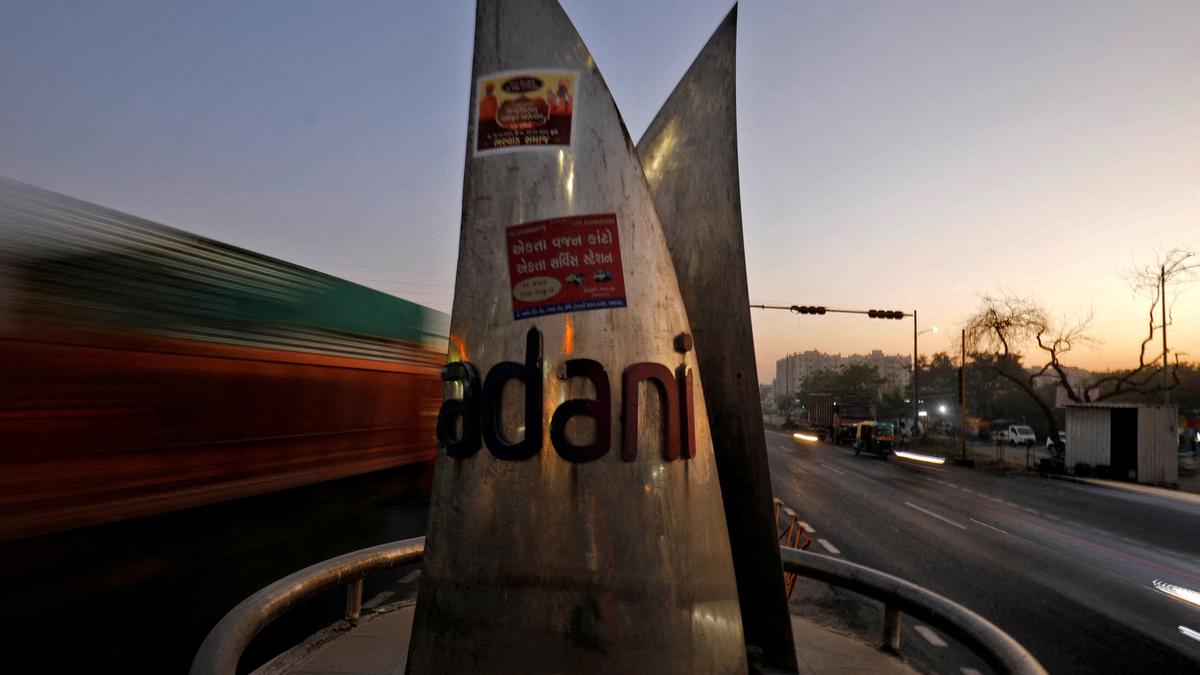
The power of billionaires in the Indian economy has increased, and they are seen as being close to the state, with the state unable — or unwilling — to ensure high rates of investment from domestic capital. The manufacturing sector has stagnated, and there has been a reversal of the process of structural transformation, with employment increasing in agriculture and in low-productive forms following the pandemic.

The growth of the aggregate economy is not being reflected on the ground. While the government estimates a real GDP growth of around 7% in recent years, wages have not kept up. According to the PLFS, nominal wages for regular wage workers at the all-India level between April and June 2023-24 has only grown at around 5%, and that of casual workers at roughly 7%. With an inflation rate of roughly 5% during this time, this implies that wage earners have seen little to no real wage growth. An economy cannot break a middle-income trap if workers are unable to partake in the growth process, as reduced consumption demand will become a drag on the economy.

Most importantly, the question of democracy looms large. South Korea’s export strategy was overseen by a military government that ruled till the 1980s. The government frequently quelled labour unions to aid the accumulation process of capital. Chile deposed the democratically elected government of Salvador Allende by a military coup, installing General Augusto Pinochet as the head of state. It is vital not to take the wrong lessons from these countries, and think that democracy is an acceptable price to pay for higher growth. The challenge for policy is to promote state intervention to ensure growth while maintaining the sanctity of the democratic ethos.

Rahul Menon is Associate Professor in the Jindal School of Government and Public Policy at O.P. Jindal Global University

Published – October 10, 2024 11:01 pm IST


Source link

Business

Post navigation

Previous Post: Kremlin rejects ‘fake’ report North Koreans fighting in Ukraine
Next Post: Infighting, Alliances, EVMs In Focus As Congress Reviews Shock Haryana Loss

Related Posts

  • NCLAT admits Meta, Whatsapp pleas against CCI’s ₹213.14-cr penalty over abuse of dominance
    NCLAT admits Meta, Whatsapp pleas against CCI’s ₹213.14-cr penalty over abuse of dominance Business
  • Access Denied Business
  • Access Denied Business
  • ‘Govt is with you, do not worry’: MSME Ministry official assures industry
    ‘Govt is with you, do not worry’: MSME Ministry official assures industry Business
  • Access Denied Business
  • Sensex, Nifty extend losses into 3rd session on surging crude prices, FII outflows
    Sensex, Nifty extend losses into 3rd session on surging crude prices, FII outflows Business

More Related Articles

Reliance gets US nod to resume Venezuelan oil imports, Bloomberg News reports Reliance gets US nod to resume Venezuelan oil imports, Bloomberg News reports Business
Access Denied Business
Stock Market Today: Markets slump in early trade, tracking weak Asian peers amid tariffs worries Stock Market Today: Markets slump in early trade, tracking weak Asian peers amid tariffs worries Business
Access Denied Business
In videos | Budget 2024 In videos | Budget 2024 Business
Nasdaq, S&P tumble as China’s DeepSeek AI model rattles Big Tech Nasdaq, S&P tumble as China’s DeepSeek AI model rattles Big Tech Business
SiteLock

Archives

  • May 2026
  • April 2026
  • March 2026
  • February 2026
  • January 2026
  • December 2025
  • November 2025
  • October 2025
  • September 2025
  • August 2025
  • July 2025
  • June 2025
  • May 2025
  • April 2025
  • March 2025
  • February 2025
  • January 2025
  • December 2024
  • November 2024
  • October 2024
  • September 2024
  • August 2024
  • July 2024
  • June 2024
  • May 2024
  • April 2024
  • March 2024
  • February 2024
  • January 2024
  • December 2023
  • November 2023
  • October 2023
  • September 2023
  • August 2023
  • July 2023
  • June 2023
  • May 2023
  • April 2023
  • March 2023
  • February 2023
  • January 2023
  • December 2022
  • November 2022
  • October 2022
  • September 2022
  • August 2022
  • July 2022
  • June 2022
  • May 2022

Categories

  • Business
  • Nation
  • Science
  • Sports
  • World

Recent Posts

  • Traffic diversions in Darussalam for 45 days for construction work
  • Watch: ‘We’re going to have a fantastic future together’: Trump to Xi Jinping
  • Thoothukudi will see highest Tasmac closures of liquor shops near schools, places of worship
  • Sensex climbs 450 points on positive Asian peers
  • India bans sugar exports till September 30

Recent Comments

  1. CarlosExorb on UP Teacher Who Asked Students To Slap Muslim Classmate
  2. Robertfloup on UP Teacher Who Asked Students To Slap Muslim Classmate
  3. Davidcag on UP Teacher Who Asked Students To Slap Muslim Classmate
  4. OrvalMaync on UP Teacher Who Asked Students To Slap Muslim Classmate
  5. Jeffreyroure on UP Teacher Who Asked Students To Slap Muslim Classmate
  • CNN On PM Modi’s Negotiations With Trump
    CNN On PM Modi’s Negotiations With Trump Nation
  • Access Denied Sports
  • India Likely To Hand Over Body Of Top Bangladesh Awami League Leader Today
    India Likely To Hand Over Body Of Top Bangladesh Awami League Leader Today Nation
  • Centre Reconstitutes Key National Security Council Secretariat
    Centre Reconstitutes Key National Security Council Secretariat Nation
  • Chinese Woman, 31, Posing For Photo Dies After Falling Into Indonesian Volcano
    Chinese Woman, 31, Posing For Photo Dies After Falling Into Indonesian Volcano World
  • Access Denied
    Access Denied Nation
  • India vs Australia 3rd Test Live Streaming, Border-Gavaskar Trophy: When And Where To Watch
    India vs Australia 3rd Test Live Streaming, Border-Gavaskar Trophy: When And Where To Watch Sports
  • Access Denied
    Access Denied Nation

Editor-in-Chief:
Mohammad Ariff,
MSW, MAJMC, BSW, DTL, CTS, CNM, CCR, CAL, RSL, ASOC.
editor@artifex.news

Associate Editors:
1. Zenellis R. Tuba,
zenelis@artifex.news
2. Haris Daniyel
daniyel@artifex.news

Photograher:
Rohan Das
rohan@artifex.news

Artifex.News offers Online Paid Internships to college students from India and Abroad. Interns will get a PRESS CARD and other online offers.
Send your CV (Subjectline: Paid Internship) to internship@artifex.news

Links:
Associate Journalism
About Us
Privacy Policy

News Links:
Breaking News
World
Nation
Sports
Business
Entertainment
Lifestyle

Registered Office:
72/A, Elliot Road, Kolkata - 700016
Tel: 033-22277777, 033-22172217
Email: office@artifex.news

Editorial Office / News Desk:
No. 13, Mezzanine Floor, Esplanade Metro Rail Station,
12 J. L. Nehru Road, Kolkata - 700069.
(Entry from Gate No. 5)
Tel: 033-46011099, 033-46046046
Email: editor@artifex.news

Copyright © 2023 Artifex.News Newsportal designed by Artifex Infotech.