



Scientists have developed a new technique to detect cancers. The method uses ultrasound to turn a small part of our body’s tissue into droplets that are released into the blood. These bubbles contain molecules like RNA, DNA, and proteins that allow the scientists to identify particular types of cancer.
Roger Zemp, associate professor of electrical and computer engineering at the University of Alberta, Canada, led a recent study describing such a technique. He presented his team’s findings at the joint meeting of the Acoustical Society of America and the Canadian Acoustical Association at Shaw Centre in Canada on May 13.
A summary of the findings was also published in the Journal of the Acoustical Society of America earlier this year.
Break-off, blood, biomarker
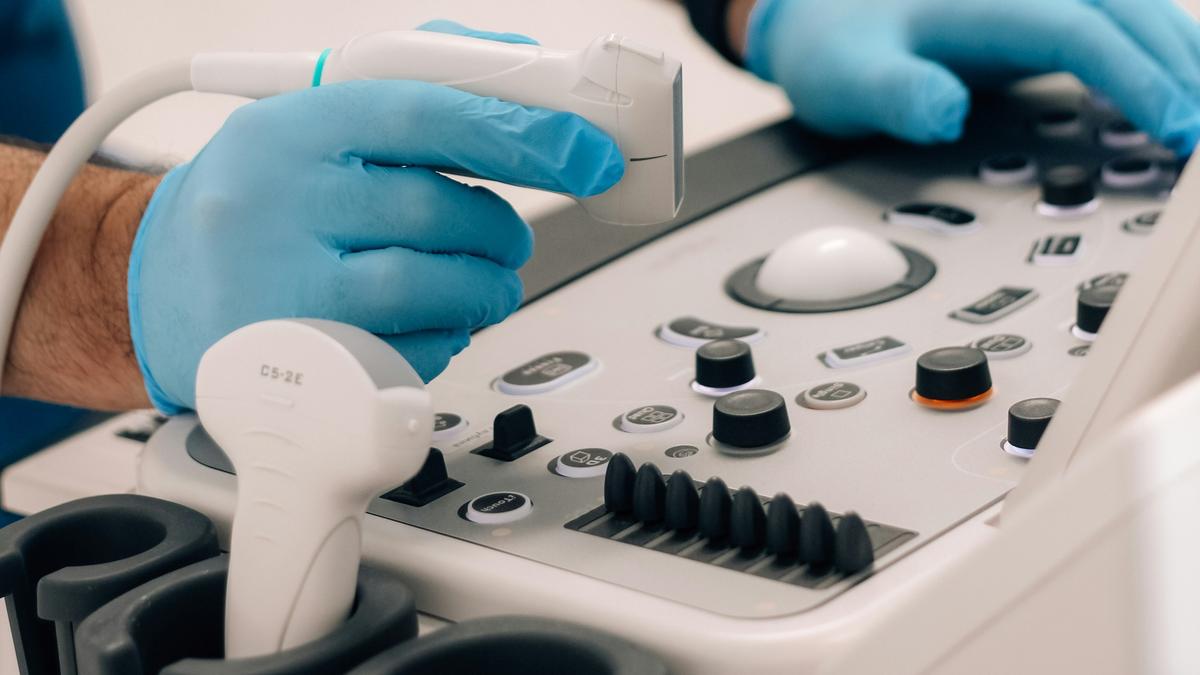
Doctors have been using ultrasound to take pictures of internal organs. The technology converts the sound waves reflected by surfaces inside the body to an image, just the way bats use ultrasound to sense their surroundings.
This said, the gold standard to detect many cancers is a biopsy. Doctors extract a small piece of tissue or cells using a large needle from the part of the body where cancer is suspected to be present. In vitro tests can confirm if the tissue/cells are cancerous and, if so, what kind of cancer it is.
Now, Zemp and his colleagues at the university are figuring out a way to use ultrasound to perhaps someday replace biopsies, which are cumbersome, painful, and potentially injurious. They have found that high-energy ultrasound (at frequencies greater than those used in ultrasound scans) can break off a small piece of cancerous tissue into droplets and release their contents into the bloodstream. The team could then test the blood for biomarkers — certain biomolecules like DNA, RNA or proteins — specific to cancer.
“Ultrasound can enhance the levels of these genetic and vesicle biomarkers in blood samples by over a 100-times,” Zemp said in a press release. This method could allow clinicians to use blood samples to detect specific cancer types and even the mutations they contain, which is currently undetectable in blood.
He estimated the technique could help clinicians avoid nearly half of all biopsies.
‘New kind of readout’
In the most advanced use of the technique, Zemp and his colleagues detected the presence of a single cancer cell circulating in the blood. When cancer progresses and spreads, cancer cells move to parts of the body other than their original site via the blood. But scientists and clinicians have struggled to spot these cells in the blood because they’re very small in number. A few tests are still sensitive enough to detect them but they’re expensive. For example the ‘CellSearch’ test costs $10,000 (Rs 8.4 lakh).
But Zemp & co. were able to detect a cancer cell in the blood samples of a prostate cancer patient using their technique. The team passed ultrasound waves through blood samples isolated from the cancer patients. The waves shredded the circulating cancer cells and released the biomarkers they contained into the blood. The team looked for and confirmed the presence of these biomarkers. Zemp estimated this version of the test would cost a hundred-times less, around $100 (Rs 8,400).

The researchers are now trying to expand their findings to other types of cancer, particularly breast cancer and melanoma.
“We hope our ultrasound technologies will benefit patients by providing clinicians a new kind of molecular readout of cells and tissues with minimal discomfort,” Zemp said in the same release.
Needed: large cohorts
Himanshu Shekhar, assistant professor of electrical engineering, and Karla Mercado-Shekhar, assistant professor of biological sciences and engineering, both at IIT Gandhinagar, said the effort was promising and considerably more advanced than previous work in this field.
“The ability to perform ultrasound-aided detection using drawn blood samples is most exciting because of the simplicity of this approach. The main advantage of this approach is its non-invasiveness, which will prevent patient discomfort,” Shekhar said.
Mercado-Shekhar said the approach could be extended to monitoring cancer progression and treatment response. However, she cautioned more studies in a large cohort of patients would be required before doctors start using this tool in the clinic.
Clinical trials with large cohorts of patients with different types of cancer and healthy people across different ethnic groups and geographies are important to ensure the technique can produce accurate results for different cancer types and prove that it’s sensitive to their varying biomarker thresholds.
About five years
Brian Tysinger, a research assistant professor of public policy, and Jakub Hlavka, associate professor of population and public health sciences, both at the University of Southern California, underscored this point in an article published by the US National Academies Press in May 2022: “Lack of representative studies on screening for cancer or cardiometabolic disease may lead to recommendations that fail to consider earlier ages or lower biomarker thresholds to start screening that might be warranted in some populations.”

There has been a push of late for more accessible and affordable cancer screening methods. The U.S. National Cancer Institute recently launched its ‘Cancer Screening Research Network’. In 2025, the network will start a pilot study to evaluate a battery of screening tests to spot cancer early and accurately with a cohort of 24,000 people. The study is expected to be completed in four years.
The network may later support similar trials for screening methods developed by individual research groups, potentially including the ultrasound-based one.
“If results of clinical trials are favourable, the researchers will likely pursue regulatory approval in collaboration with industry partners, and subsequently, this technique could be available commercially in about five years,” Mercado-Shekhar said.
Joel P. Joseph is a freelance science journalist and researcher.
Published – October 07, 2024 05:30 am IST