




Skip to content
  • Facebook
  • X
  • Linkedin
  • WhatsApp
  • YouTube
  • Associate Journalism
  • About Us
  • Privacy Policy
  • 033-46046046
  • editor@artifex.news
Artifex.News

Artifex.News

Stay Connected. Stay Informed.

  • Breaking News
  • World
  • Nation
  • Sports
  • Business
  • Science
  • Entertainment
  • Lifestyle
  • Toggle search form
  • ‘Gentleman’ Rahul Dravid Wins Hearts With His Voting Center Act. Video
    ‘Gentleman’ Rahul Dravid Wins Hearts With His Voting Center Act. Video Sports
  • South Africa’s Ex-President Jacob Zuma Barred From May Election
    South Africa’s Ex-President Jacob Zuma Barred From May Election World
  • Indian Americans largely disapprove of Trump’s first year job performance, but Democrats do not benefit: Survey
    Indian Americans largely disapprove of Trump’s first year job performance, but Democrats do not benefit: Survey World
  • Access Denied Sports
  • Capgemini announces leadership changes, Anirban Bose named CEO, Americas SBU
    Capgemini announces leadership changes, Anirban Bose named CEO, Americas SBU Business
  • Union Cabinet approves ₹30,000 crore additional investment in NIIF for new fund creation
    Union Cabinet approves ₹30,000 crore additional investment in NIIF for new fund creation Business
  • Ebola outbreak in eastern Congo spreads to two new health zones with total of 60 areas now affected
    Ebola outbreak in eastern Congo spreads to two new health zones with total of 60 areas now affected World
  • Woman, 78, Was Hospitalised With Low Oxygen, But Went To Vote In Bengaluru On Stretcher
    Woman, 78, Was Hospitalised With Low Oxygen, But Went To Vote In Bengaluru On Stretcher Nation
How Israel took the war straight to Iran’s ‘axis of resistance’  

How Israel took the war straight to Iran’s ‘axis of resistance’  

Posted on October 1, 2024 By admin


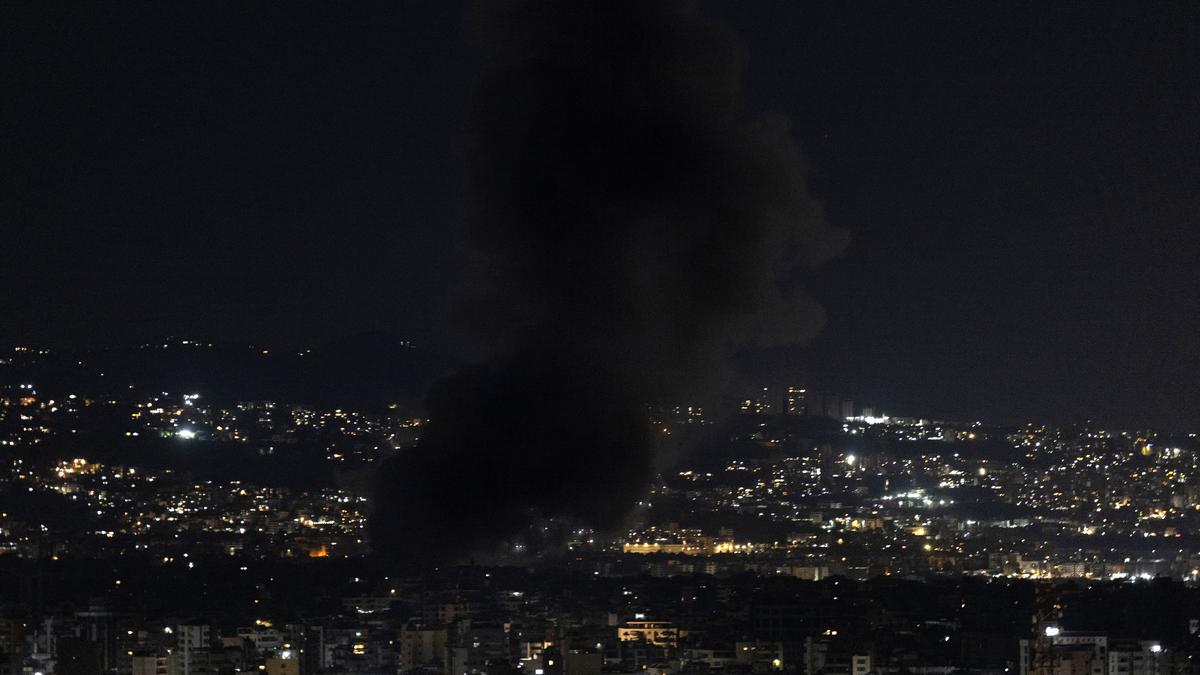
Smoke from an Israeli airstrikes rises above the city’s southern suburbs on October 1, 2024 in Beirut, Lebanon.
| Photo Credit: Getty Images

On April 1, 2024, when Israel bombed the Iranian embassy complex in Damascus killing Brig. Gen. Mohammed Reza Zahedi and other officers, Iran saw the war coming towards it. In December 2023, Israel had killed another senior general of the Islamic Revolutionary Guard Corps (IRGC), Sayyed Razi Mousavi, in a strike in Damascus. In retaliation, Iran launched a missile attack towards what it called a Mossad base in Erbil, Iraqi Kurdistan. It was a token response. But the April 1 attack marked a flagrant violation of Iran’s sovereignty. On April 14, Iran launched an unprecedented direct attack on Israel, by firing over 300 drones, cruise and ballistic missiles.

Iran wanted to change the rules of the game in its hostile engagement with Israel. The message Tehran was trying to send was that if Iranian sovereignty is breached or its officers were targeted, Iran would respond directly. And the message was well-received in Jerusalem in April. Israel’s retaliation for the Iranian attack was a meek, unclaimed air strike. But the situation would change in the following months, with two key developments in Iran.

In May, President Ebrahim Raisi, whose political and security views aligned with those of Iran’s conservative establishment, was killed in a helicopter crash. Masoud Pezeshkian, a moderate who preferred engagement with the West and restraint in West Asia, was elected President in June. In Iran’s transition, Israel found an opportunity to test its resolve.

Israel’s double strike

On July 30, Israel killed Fuad Shukr, a senior commander of Hezbollah and a close confidant of Hassan Nasrallah, the group’s Secretary General, in an air strike on a Beirut suburb. A few hours later, Ismail Haniyeh, Hamas’s Doha-based political chief who was in Tehran to attend Mr. Pezeshkian’s swearing-in ceremony, was killed in the Iranian capital. In two strikes in two geographies, Israel hit three of its enemies — Iran, Hezbollah and Hamas — within 24 hours. Both Iran and Hezbollah vowed retaliation. Iran later reportedly decided to hold back its fire to give Gaza peace talks a chance. But Gaza ceasefire talks reached nowhere with Israel continuing to pound the enclave, killing hundreds of Palestinians every week. Iran, wary of triggering a wider war, still did not respond. Hezbollah, on the other side, fired some 300 short-range rockets, after Israel carried out air strikes, most of which were intercepted. Immediately after the rocket attack, Nasrallah said the retaliatory strikes were complete, signalling that he did not want escalation.

By that time it was evident that neither Iran nor Hezbollah wanted an all-out war with Israel. Iran wanted the axis, mainly Hezbollah and Houthis, to continue to bleed Israel through rocket, drone and missile strikes. Nasrallah, when he started firing rockets in the aftermath of the October 7 attack, wanted to keep some military pressure on the Israeli troops in the north at a time when they were waging a full-scale invasion of Gaza in the south. But Israel was ready for a wider war, for a number of reasons.

One, it knew that the Arab countries would do nothing besides issuing statements. It has absolute deterrence against its neighbouring Arab states. Two, if Israel’s actions trigger a wider war with Iran, Israel knew that the U.S. would come to its defence. In the early stage of the conflict, the U.S. had moved its carrier strike groups to the Red Sea and the Mediterranean Sea. When Iran launched its first direct attack on Israel on April 14, it was the U.S. that put together a defensive coalition which intercepted most of the projectiles. Three, a larger war, with direct support from the U.S. and its allies, would be an opportunity for Israel to hit Iran’s critical infrastructure and weaken the regime in Tehran.

Two approaches

So the two sides that were in the conflict had two different approaches towards the conflict. Iran wanted the axis to fight Israel. The axis (Hezbollah) wanted a limited war. But Israel was ready for escalation. And when Israel sensed reluctance on the side of its rivals, it decided to go with full force. Israel had been preparing since 2006 for the next war with Hezbollah. When Hezbollah expanded more like a conventional military force, particularly since its involvement in the Syrian civil war, Israel was preparing like a militia to attack Hezbollah. Once it decided to escalate the war, it first exploded the pagers and walkie talkies, indiscriminately targeting Hezbollah’s ground functionaries, its communication system as well as Lebanese civilians—these are tactics typically used by militias and terrorist entities. And then, Israel launched waves of massive air strikes on Lebanon, targeting Hezbollah’s senior commanders (also killing 1,000 people in a week). And then, the IDF went for Hassan Nasrallah, dealing the heaviest blow to Hezbollah.

It was a bottom-up attack, aimed at degrading the most powerful non-state actor in the world. And when Hezbollah was still in shock, Israel launched its fourth ground invasion of Lebanon. It wants to push Hezbollah to the north of the Litani River and create a buffer along the Israeli-Lebanese border, something which Israel had tried to do and failed in the past.

Next stage

It’s to be seen whether Hezbollah would be able to quickly regroup itself and fight back, like it did in 2006, or whether Israel, which is yet to meet its declared objectives in Gaza even after a year of fighting, would be able to achieve its goals in Lebanon. But a bigger question, irrespective of the result of Israel’s Lebanon invasion, is what would be the next stage of the conflict. Israel’s real target is Iran.

As of now, Iran’s strategic reluctance has not been rewarding. Nasrallah was a central figure in Iran’s axis and Hezbollah was a key constituent of Iran’s forward defence doctrine. When Iran waits, Israel is going with full force against its axis. And the weakening of the axis would invariably weaken Iran’s deterrence and embolden Israel further. If Iran responds with force, that would provide a perfect excuse for Israel to launch direct strikes on Iran, dragging the U.S. also into the conflict. There is no off-ramp.

Published – October 01, 2024 03:58 pm IST


Source link

World Tags:engaging conflict, Iran launches missile attack, Islamic Revolutionary Guard Corps, Israel Palestine conflict, Israeli attack, President Ebrahim Raisi

Post navigation

Previous Post: Dehydrated Virat Kohli Struggles to Carry On, Gets Treatment On Field. Video
Next Post: What are countries doing to get nationals out of Lebanon?

Related Posts

  • Access Denied World
  • Turkey slams Israel’s ‘untenable’ claims after strikes on Syrian base
    Turkey slams Israel’s ‘untenable’ claims after strikes on Syrian base World
  • First Grief, Then A Political Tone Over Germany’s Christmas Market Attack
    First Grief, Then A Political Tone Over Germany’s Christmas Market Attack World
  • GenZ Indian-American running for Georgia State Senate raises over 0K
    GenZ Indian-American running for Georgia State Senate raises over $280K World
  • How Kamala Harris’ Campaign Cost  Million
    How Kamala Harris’ Campaign Cost $12 Million World
  • Russia removes general in charge of Syrian operations, military bloggers say
    Russia removes general in charge of Syrian operations, military bloggers say World

More Related Articles

North Korea says its recent live-fire drill demonstrated ‘huge destructive power’ North Korea says its recent live-fire drill demonstrated ‘huge destructive power’ World
Airliner carrying Australian women linked to Islamic State group lands in Melbourne Airliner carrying Australian women linked to Islamic State group lands in Melbourne World
Why a UN committee asked India to act against hate speech and hate crimes | Explained Why a UN committee asked India to act against hate speech and hate crimes | Explained World
China to launch ‘international manhunt’ to target officials involved in graft in BRI projects: Report China to launch ‘international manhunt’ to target officials involved in graft in BRI projects: Report World
Gaza Doctor As Missile Struck Hospital Amid Israel-Hamas War Gaza Doctor As Missile Struck Hospital Amid Israel-Hamas War World
Telegram CEO Pavel Durov freed from police custody, will appear in court: French prosecutors Telegram CEO Pavel Durov freed from police custody, will appear in court: French prosecutors World
SiteLock

Archives

  • September 2026
  • August 2026
  • July 2026
  • June 2026
  • May 2026
  • April 2026
  • March 2026
  • February 2026
  • January 2026
  • December 2025
  • November 2025
  • October 2025
  • September 2025
  • August 2025
  • July 2025
  • June 2025
  • May 2025
  • April 2025
  • March 2025
  • February 2025
  • January 2025
  • December 2024
  • November 2024
  • October 2024
  • September 2024
  • August 2024
  • July 2024
  • June 2024
  • May 2024
  • April 2024
  • March 2024
  • February 2024
  • January 2024
  • December 2023
  • November 2023
  • October 2023
  • September 2023
  • August 2023
  • July 2023
  • June 2023
  • May 2023
  • April 2023
  • March 2023
  • February 2023
  • January 2023
  • December 2022
  • November 2022
  • October 2022
  • September 2022
  • August 2022
  • July 2022
  • June 2022
  • May 2022

Categories

  • Business
  • Nation
  • Science
  • Sports
  • World

Recent Posts

  • The paradox of self-reliance: India-China trade dynamics | Data Point
  • U.S. seeks ‘AI dialogue’ with China as officials set stage for Trump-Xi summit
  • Locally-built drone is highlight of Belagavi tech summit
  • Typhoon approaches eastern Japan, prompting flood and landslide warnings
  • Minimum salary needed in Bengaluru to afford daily commute by Namma Metro is ₹70,000

Recent Comments

  1. LarryKef on UP Teacher Who Asked Students To Slap Muslim Classmate
  2. Josephjab on UP Teacher Who Asked Students To Slap Muslim Classmate
  3. LarryKef on UP Teacher Who Asked Students To Slap Muslim Classmate
  4. Jasonnekly on UP Teacher Who Asked Students To Slap Muslim Classmate
  5. Jasonnekly on UP Teacher Who Asked Students To Slap Muslim Classmate
  • Access Denied World
  • Iran says it will escalate if U.S. does not honour deal within weeks
    Iran says it will escalate if U.S. does not honour deal within weeks World
  • Access Denied Sports
  • How is TRAI and the govt. combating spam? | Explained
    How is TRAI and the govt. combating spam? | Explained Business
  • Access Denied
    Access Denied Nation
  • Access Denied
    Access Denied Nation
  • BCCI’s Surplus Earning From IPL 2023 Jumps 116 Per Cent To Rs 5120 Crore, Total Income Is…
    BCCI’s Surplus Earning From IPL 2023 Jumps 116 Per Cent To Rs 5120 Crore, Total Income Is… Sports
  • Border-Gavaskar Trophy: It’s great to level the series, says Cummins on Adelaide Test win
    Border-Gavaskar Trophy: It’s great to level the series, says Cummins on Adelaide Test win Sports

Editor-in-Chief:
Mohammad Ariff,
MSW, MAJMC, BSW, DTL, CTS, CNM, CCR, CAL, RSL, ASOC.
editor@artifex.news

Associate Editors:
1. Zenellis R. Tuba,
zenelis@artifex.news
2. Haris Daniyel
daniyel@artifex.news

Photograher:
Rohan Das
rohan@artifex.news

Artifex.News offers Online Paid Internships to college students from India and Abroad. Interns will get a PRESS CARD and other online offers.
Send your CV (Subjectline: Paid Internship) to internship@artifex.news

Links:
Associate Journalism
About Us
Privacy Policy

News Links:
Breaking News
World
Nation
Sports
Business
Entertainment
Lifestyle

Registered Office:
72/A, Elliot Road, Kolkata - 700016
Tel: 033-22277777, 033-22172217
Email: office@artifex.news

Editorial Office / News Desk:
No. 13, Mezzanine Floor, Esplanade Metro Rail Station,
12 J. L. Nehru Road, Kolkata - 700069.
(Entry from Gate No. 5)
Tel: 033-46011099, 033-46046046
Email: editor@artifex.news

Copyright © 2023 Artifex.News Newsportal designed by Artifex Infotech.