

Skip to content
  • Facebook
  • X
  • Linkedin
  • WhatsApp
  • Associate Journalism
  • About Us
  • Privacy Policy
  • 033-46046046
  • editor@artifex.news
Artifex.News

Artifex.News

Stay Connected. Stay Informed.

  • Breaking News
  • World
  • Nation
  • Sports
  • Business
  • Science
  • Entertainment
  • Lifestyle
  • Toggle search form
  • China’s Overseas Travel Recovery From Covid Lags Due To Costs, Visa Snags World
  • Yemen’s Houthis Claim Attack On Vital Target In Israel’s Haifa World
  • Mohun Bagan SG To Face Al-Wakrah, Tractor And Ravshan In AFC Champions League Two Group Stage Sports
  • Himachal To Build Its 1st Road Using Full Depth Reclamation Technology Nation
  • In Chhattisgarh School, Mid-Day Meal Is Just Rice And Turmeric Nation
  • Tribunal Approves $8.5 Billion Reliance, Walt Disney Merger Nation
  • Hard-liners are leading in Iran’s parliamentary election which may have witnessed record-low turnout World
  • New Audio Tapes Reveal King Charles Reaction When Prince Harry Was Born World

Extinct volcanoes could help sate humanity’s hunger for rare earth elements

Posted on September 26, 2024 By admin


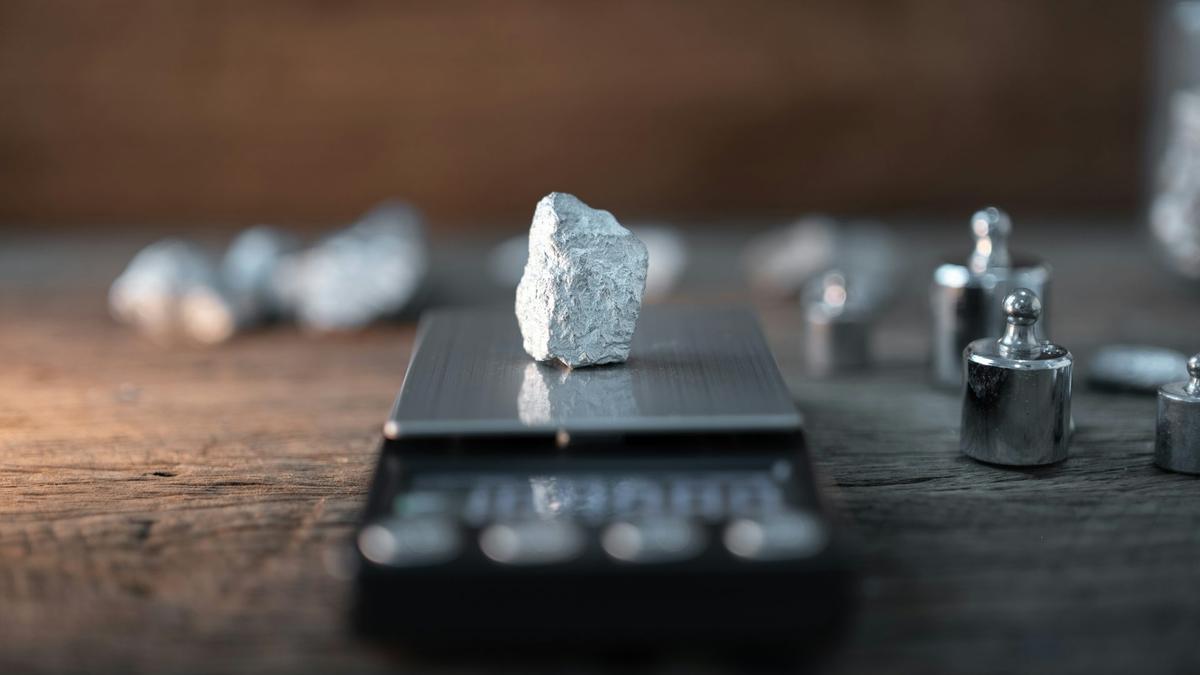
Scientists found that some rare magma types are surprisingly efficient at concentrating rare earth elements.
| Photo Credit: Shutterstock

Extinct volcanoes are hard to study – we never see them erupt. Using a unique experimental technique, we were able to recreate a certain type of extinct volcano in a lab, learning more about the magma these volcanoes produce.

We found that some rare magma types are surprisingly efficient at concentrating rare earth elements. This is a group of metals with crucial applications in several high-tech industries, such as magnets for electric vehicles and wind turbines.

Demand for rare earths is soaring as society moves away from fossil fuels and electrifies energy production and transport. Despite the name, rare earths aren’t particularly rare. The biggest challenge is finding rocks in which these metals are concentrated enough to be economically viable to extract.

Our new research, published in the journal Geochemical Perspectives Letters, shows certain extinct volcanoes are a great place to look.

Iron-rich magma in extinct volcanoes

There is an enigmatic type of magma that contains unusually large amounts of iron. It is so rare, no eruptions featuring this type of magma have happened in recorded history.

Instead, it is only known from extinct volcanoes that were active many millions of years ago.

The most famous example of such a volcano is El Laco in Chile. Another notable example is Kiruna in Sweden, mined for iron ore for many decades. Last year, its operating company LKAB announced Kiruna as the largest rare earths resource in Europe.

The discovery at Kiruna made us (and many others) wonder why there would be a rare earth resource at a volcanic iron mine. We already know of many other rock types containing rare earths, and none of them are like Kiruna and other extinct iron-rich volcanoes.

Was this just a geological serendipity, or is there something inherent to iron-rich magmas that make them rare-earth rich, too? After all, many of those iron-rich extinct volcanoes are known, but no one ever bothered to check whether they have a rare earth resource in them.

Additionally, iron-rich rocks are often easy to find because of their strong magnetic signal, despite their rarity. Should they be added to the target list of rare earth explorers?

Recreating volcanism in a bottle

To test this hypothesis, we used a machine called a piston cylinder. We put synthetic material akin to volcanic rocks and magmas into small capsules or “bottles” made of noble metals such as platinum. We then pressurised them to depths equivalent to 15 kilometres deep in Earth’s crust and heated them up to 1,100°C, melting them into a liquid.

At these extreme conditions, we found the iron-rich magma exists as bubbles inside a more common magma type known from virtually all modern active volcanoes. The iron-rich magma absorbs rare earths from the surrounding liquid.

These iron-rich bubbles will have a different density and viscosity, and will separate from their iron-poor environment, similar to how water and oil mixed together will eventually separate into distinct layers.

Iron-rich magmas absorb the rare earths so efficiently, their rare earth contents are almost 200 times greater than the regular magmas around them.

This means the discovery at Kiruna wasn’t an accident. It’s something we can expect from most, if not all, iron-rich volcanoes.

Why do we need more rare earth deposits?

Production of rare earth elements is concentrated in just a handful of countries – mostly China, along with the United States, Myanmar and Australia.

Rare earths are therefore classified as “critical minerals”: they have important uses, but suffer from a supply chain risk due to geopolitical factors.

As demand for rare earths has surged, this has led to substantial investment in research and exploration for additional deposits. The more deposits are known, the better industry can pick deposits that will yield rare earths at the lowest financial, environmental and societal cost.

Extinct iron-rich volcanoes are often mined for iron ore. Our results indicate existing mines at such locations can potentially be modified to produce rare earths as well.

This would be a positive outcome – an existing mining operation can gain additional value. In some cases, mine waste can be reprocessed to extract these critical metals. This would mean new mines for rare earth elements may not even be required, preventing unnecessary disruption of natural environments.

This article is republished from The Conversation under a Creative Commons license. Read the original article.

Published – September 26, 2024 03:44 pm IST


Source link

Science Tags:Extinct volcanoes, Rare Earth Elements, rare earth elements in extinct volcanoes, science news

Post navigation

Previous Post: French President Macron supports India’s bid for permanent membership in UNSC
Next Post: Octopuses, fish hunt together using surprisingly complex decision-making

Related Posts

  • A freak DNA change 25 million years ago is why humans lack tails Science
  • Do sheep swim? If so, how do they learn? Science
  •  Future Skills at Monash College and Microsoft partner to transform tech education with AI Science
  • Can resveratrol-copper be used to prevent metastasis without trials? Science
  • Can the tongue taste only sweet, salty, sour, bitter and umami? Science
  • Physicist who claimed room-temperature superconductor discovery faked data, probe finds Science

More Related Articles

Great Barrier Reef suffering ‘one of the most severe’ coral bleaching events on record Science
Is it possible in mice to restore walking after paralysis from spinal cord injury? Science
Organ-on-chip tech could boost BioE3 goal to personalise medicine Science
As India’s summer begins, understanding the heat and health conundrum Science
Why is the R21/Matrix malaria vaccine being called ‘revolutionary’? | Explained Science
Mathematician Ruixiang Zhang to receive 2023 Sastra Ramanujan Prize Science
SiteLock

Archives

  • September 2024
  • August 2024
  • July 2024
  • June 2024
  • May 2024
  • April 2024
  • March 2024
  • February 2024
  • January 2024
  • December 2023
  • November 2023
  • October 2023
  • September 2023
  • August 2023
  • July 2023
  • June 2023
  • May 2023
  • April 2023
  • March 2023
  • February 2023
  • January 2023
  • December 2022
  • November 2022
  • October 2022
  • September 2022
  • August 2022
  • July 2022
  • June 2022
  • May 2022

Categories

  • Business
  • Nation
  • Science
  • Sports
  • World

Recent Posts

  • Israel-Hezbollah war LIVE: Israeli airstrike hits central Beirut for the first time in nearly a year of conflict
  • “IPL Needs MS Dhoni”: Fans React As BCCI Reintroduces Uncapped Player Rule
  • India vs Bangladesh: No More International Games In Kanpur After ‘Washout’ Row? Report Says…
  • PM Modi calls Kharge to enquire about his health
  • Not just nothing, dark matter quests close in on dire ‘neutrino fog’

Recent Comments

  1. TpeEoPQa on UP Teacher Who Asked Students To Slap Muslim Classmate
  2. xULDsgPuBe on UP Teacher Who Asked Students To Slap Muslim Classmate
  3. KyJtkhneiLmcq on UP Teacher Who Asked Students To Slap Muslim Classmate
  4. mOyehudovB on UP Teacher Who Asked Students To Slap Muslim Classmate
  5. GFBvgSrWPcsp on UP Teacher Who Asked Students To Slap Muslim Classmate
  • Various Colours Of Holi Symbolise Our Country’s Diversity Nation
  • Empty chairs for hostages as Israel at war marks Passover World
  • Mumbai Woman, 28, Arrested For Kidnapping Teen: Cops Nation
  • TNPL 2024 | Sachin on song as Kovai Kings begin campaign in style Sports
  • “Can’t Say Jai Samvidhan?” Priyanka Gandhi After Speaker Chides Congress MP Nation
  • Netanyahu’s Message For People Of Lebanon After Deadly Strikes: 10 Points World
  • UP Muslim Family Keeps Dussehra Tradition Alive For Last 3 Generations Nation
  • Zoopharmacognosy: the study of how animals self-medicate Science

Editor-in-Chief:
Mohammad Ariff,
MSW, MAJMC, BSW, DTL, CTS, CNM, CCR, CAL, RSL, ASOC.
editor@artifex.news

Associate Editors:
1. Zenellis R. Tuba,
zenelis@artifex.news
2. Haris Daniyel
daniyel@artifex.news

Photograher:
Rohan Das
rohan@artifex.news

Artifex.News offers Online Paid Internships to college students from India and Abroad. Interns will get a PRESS CARD and other online offers.
Send your CV (Subjectline: Paid Internship) to internship@artifex.news

Links:
Associate Journalism
About Us
Privacy Policy

News Links:
Breaking News
World
Nation
Sports
Business
Entertainment
Lifestyle

Registered Office:
72/A, Elliot Road, Kolkata - 700016
Tel: 033-22277777, 033-22172217
Email: office@artifex.news

Editorial Office / News Desk:
No. 13, Mezzanine Floor, Esplanade Metro Rail Station,
12 J. L. Nehru Road, Kolkata - 700069.
(Entry from Gate No. 5)
Tel: 033-46011099, 033-46046046
Email: editor@artifex.news

Copyright © 2023 Artifex.News Newsportal designed by Artifex Infotech.