




Skip to content
  • Facebook
  • X
  • Linkedin
  • WhatsApp
  • Associate Journalism
  • About Us
  • Privacy Policy
  • 033-46046046
  • editor@artifex.news
Artifex.News

Artifex.News

Stay Connected. Stay Informed.

  • Breaking News
  • World
  • Nation
  • Sports
  • Business
  • Science
  • Entertainment
  • Lifestyle
  • Toggle search form
  • Robert Kennedy Jr To Quit US Presidential Race, Will Support Trump: Report World
  • Vidarbha Close In On Thrilling Win Over Madhya Pradesh In Ranji Trophy Semifinal Sports
  • IPL 2024 Playoffs: Exact Results Mumbai Indians Need For Top 4 Finish Sports
  • Ashok Gehlot Recalls 2020 Revolt Nation
  • Israel-Palestine conflict live updates | Israel Army launches air strikes on Gaza World
  • Donald Trump Warns Of TikTok Risks, But Fears Ban Makes Facebook Stronger World
  • Highlights: NDTV Battleground – Public Mood After 6 Phases Of Election Nation
  • PM-CARES Fund Secrets Will Be Exposed After INDIA Bloc Wins: MK Stalin Nation

New research finds abundant microplastics in personal care products available in India

Posted on August 27, 2024 By admin


Personal care products (PCP) like face washes and shower gels in India contain a significant amount of harmful microplastics, new research has revealed.

According to a study published in the Emerging Contaminants journal and led by Riya K. Alex, a third-year Ph.D Scholar at the Cochin University of Science and Technology, polyethylene (or polythene, PE) is the dominant polymer noted in microplastic emissions from PCPs.

What are microplastics?

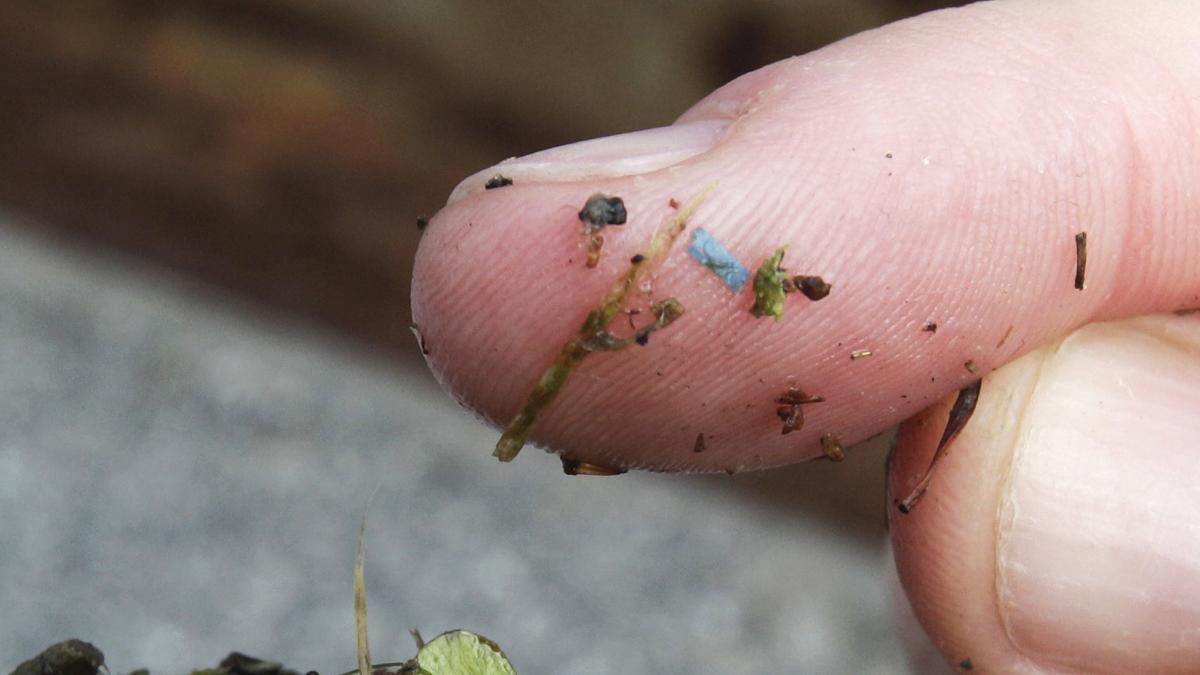
Microplastics are defined as particles of plastic that are under 5mm in range — in terms of microbeads, under 5mm in diameter and mainly in the range of 1-1,000 micrometres.

Findings of the new research

The research analysed 45 samples of PCP across four categories — face wash, face scrub, shower gel, and body scrub available in Indian market and manufactured in the year 2022. The study especially used products marketed as “eco-friendly”, “natural”, and “organic” to scrutinise the legitimacy of these claims. Around 23.33% of products contained cellulose microbeads, and their biodegradability is unclear. Most of these microbeads were coloured white, followed by blue, pink, yellow, red, and green. According to the researchers, the white colour of microbeads could be intended to hide them from easy identification.

In PCPs, microbeads are widely used for exfoliation, as well as delivery of active ingredients and improved aesthetics, among other uses.

Microbeads in PCP are made of materials like polyethylene, polypropylene, and polyester, with polyethylene being the most dominant polymer identified in more than half the microbeads studied.

On average, 1.34% of the total product of each analysed sample was microbeads. This ranged from 0.04% at the lowest to 5.04% at the highest. In 30 grams of each kind of product, the average quantities of microbeads were noted to be 0.26g, 0.90g,1.24g and 1.74g for face washes, face scrubs, body scrubs, and shower gels respectively. The highest quantities obtained were 2.30g, 1.73g, 1.75g and 4.87g, respectively, whereas the lowest quantities extracted were 0.01g, 0.13g, 0.55g and 0.13g, respectively.

The average sizes of microbeads in samples under study were 640.74 μm, 452.45 μm, 556.66 μm and 606.30 μm for face washes, face scrubs, body scrubs, and shower gels respectively. Shower gels contained the largest microbeads, followed by body scrubs, face scrubs, and face washes.

The study also shows that most microbeads were not spherical but instead irregularly shaped. This is worse for the environment, as irregular shapes provide more surface area for adsorption of other environmental pollutants, and sharper edges can potentially cause cuts and injuries to organisms who ingest them.

The research also found polycaprolactone, a type of bioplastic, in two of the tested samples. Although polycaprolactone is gaining attention as an efficient carrier for drugs, and for its anti-ageing and antibacterial constituents, it has been known to cause embryonic developmental delays and other malformations in aquatic biota.

Findings of the report also indicate greenwashing in the Indian PCP market, especially with labels like “organic”, “natural”, and” eco-friendly.” Brands rely on consumers to not scan the ingredient lists in detail, and the blends of natural and plastic in the same product poses challenges in recognising the presence of plastic.

Why are microbeads bad?

Like most other plastic pollution, microbeads are terrible for the environment. They accumulate in food chains, reach wastewater treatment facilities and eventually end up in oceans causing aquatic pollution.

Many countries, like the U.S., U.K., Canada, France, and New Zealand have banned the production and sale of products with microbeads, but it remains an ambiguous issue in developing countries like India. In 2023, India rose to the fourth position in terms of revenue in global beauty and personal care markets, behind the U.S., China, and Japan.

The 2030 microbead emission forecast for India is “alarmingly high,” researchers say. The trend can go up as well due to an evolving retail landscape, cosmetic trials, and enhanced purchasing power in the coming years.

Are microplastics everywhere?

Yes, microplastics are almost everywhere. A recent study by Toxics Link, a non-government organisation working in the field of environmental research and advocacy, found microplastics ranging from 6.71 to 89.15 pieces per kg of dry weight, and between 0.1 mm to 5 mm in size in several varieties of salt and sugar.

Microplastics have also been found in the human brain, blood, lungs, colon, placenta, testicles, and stool.

The study advocates for better policies to control microplastic pollution in India, and suggests coffee, apricots, walnut, kiwi seeds, and soluble cellulose beads, etc. as some natural and sustainable alternatives to microbeads in PCPs.



Source link

Science Tags:environment, Microplastics, plastic pollution, Pollution, waste

Post navigation

Previous Post: Harmanpreet Kaur, Sarabjot Singh Lead A Mammoth March With PUMA To Launch Vedanta Delhi Half Marathon 2024 Race Day Tees
Next Post: Unified Pension Scheme: How does it differ from the Old and New Pension Scheme?

Related Posts

  • China launches lunar probe mission to collect samples for first time from far side of moon Science
  • Rise and shine: morning sunlight and your wellbeing Science
  • Nuclear study provides major update on plutonium isotope fission Science
  • Does prenatal Zika infection have long-term immune consequences in children? Science
  • Dozens of nations to sign U.N. ocean treaty but implementation still awaits Science
  • Punnett square: A genetics puzzle Science

More Related Articles

TIDCO bets big on space sector, signs MoU with IN-SPACe Science
Using AI to classify neem fruits based on azadirachtin content Science
Why are planets formed in a spherical shape? Science
Sci-Five | The Hindu Science Quiz: On Woodpeckers Science
Tonga volcano could cause unusual weather for rest of decade: study Science
Union Minister Suresh Gopi meets ISRO officials in Bengaluru  Science
SiteLock

Archives

  • August 2024
  • July 2024
  • June 2024
  • May 2024
  • April 2024
  • March 2024
  • February 2024
  • January 2024
  • December 2023
  • November 2023
  • October 2023
  • September 2023
  • August 2023
  • July 2023
  • June 2023
  • May 2023
  • April 2023
  • March 2023
  • February 2023
  • January 2023
  • December 2022
  • November 2022
  • October 2022
  • September 2022
  • August 2022
  • July 2022
  • June 2022
  • May 2022

Categories

  • Business
  • Nation
  • Science
  • Sports
  • World

Recent Posts

  • Typhoon Makes Landfall On Japanese Island Of Kyushu: Weather Office
  • United Nations Vehicle In Gaza Hit By Israeli Gunfire
  • Buchi Babu | TNCA XI spinners have Mumbai batters in a bind
  • Telegram founder-CEO Pavel Durov charged, banned from leaving France
  • Paralympics 2024 Declared Open With Mesmerising Opening Ceremony In Paris

Recent Comments

  1. TpeEoPQa on UP Teacher Who Asked Students To Slap Muslim Classmate
  2. xULDsgPuBe on UP Teacher Who Asked Students To Slap Muslim Classmate
  3. KyJtkhneiLmcq on UP Teacher Who Asked Students To Slap Muslim Classmate
  4. mOyehudovB on UP Teacher Who Asked Students To Slap Muslim Classmate
  5. GFBvgSrWPcsp on UP Teacher Who Asked Students To Slap Muslim Classmate
  • AIFF Legal Head Accuses President Kalyan Chaubey Of Corruption Sports
  • 14% of Indians signed up on DigiLocker; highest proportion in Delhi, Haryana Nation
  • Kamala Harris’ Donald Trump Warning As She Accepts Presidential Nomination World
  • Nitin Menon, Kumar Dharmasena To Be On-field Umpires For World Cup Opener Sports
  • China’s top leaders vow to improve confidence in its slowing economy Business
  • Bomb-making materials found in vehicle and home of Trump rally shooting suspect: Law enforcement World
  • Vice President To Sudha Murty On Her Rajya Sabha Nomination Nation
  • These Are The World’s Happiest Countries In 2024 World

Editor-in-Chief:
Mohammad Ariff,
MSW, MAJMC, BSW, DTL, CTS, CNM, CCR, CAL, RSL, ASOC.
editor@artifex.news

Associate Editors:
1. Zenellis R. Tuba,
zenelis@artifex.news
2. Haris Daniyel
daniyel@artifex.news

Photograher:
Rohan Das
rohan@artifex.news

Artifex.News offers Online Paid Internships to college students from India and Abroad. Interns will get a PRESS CARD and other online offers.
Send your CV (Subjectline: Paid Internship) to internship@artifex.news

Links:
Associate Journalism
About Us
Privacy Policy

News Links:
Breaking News
World
Nation
Sports
Business
Entertainment
Lifestyle

Registered Office:
72/A, Elliot Road, Kolkata - 700016
Tel: 033-22277777, 033-22172217
Email: office@artifex.news

Editorial Office / News Desk:
No. 13, Mezzanine Floor, Esplanade Metro Rail Station,
12 J. L. Nehru Road, Kolkata - 700069.
(Entry from Gate No. 5)
Tel: 033-46011099, 033-46046046
Email: editor@artifex.news

Copyright © 2023 Artifex.News Newsportal designed by Artifex Infotech.