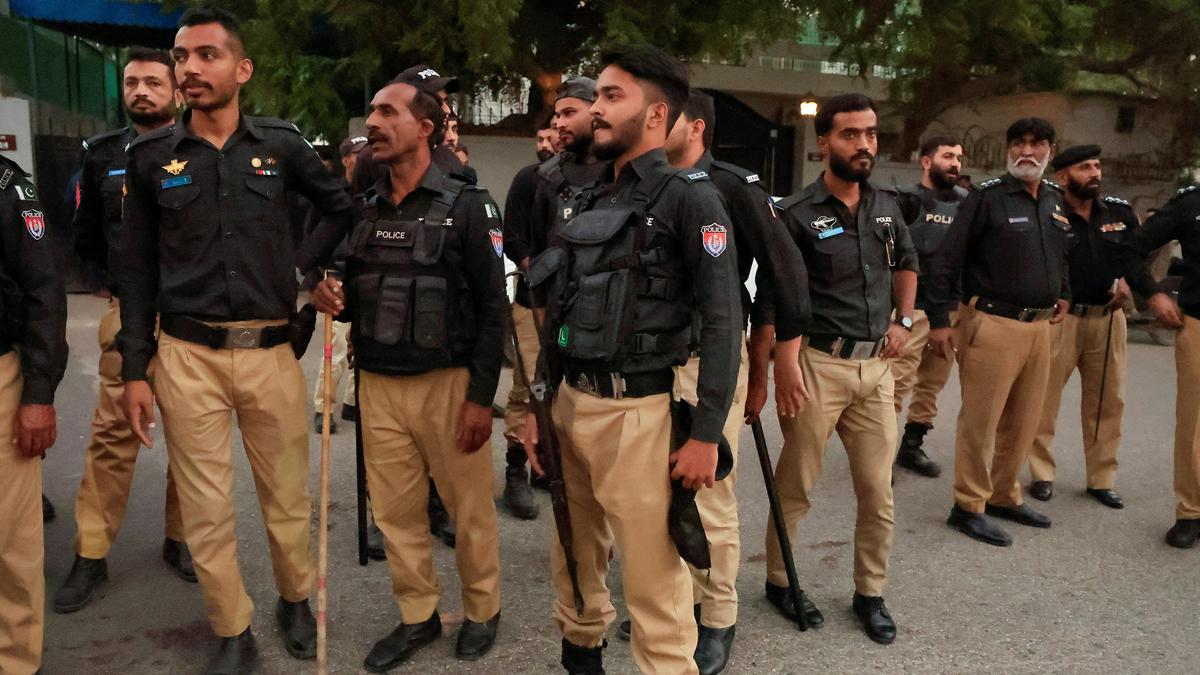






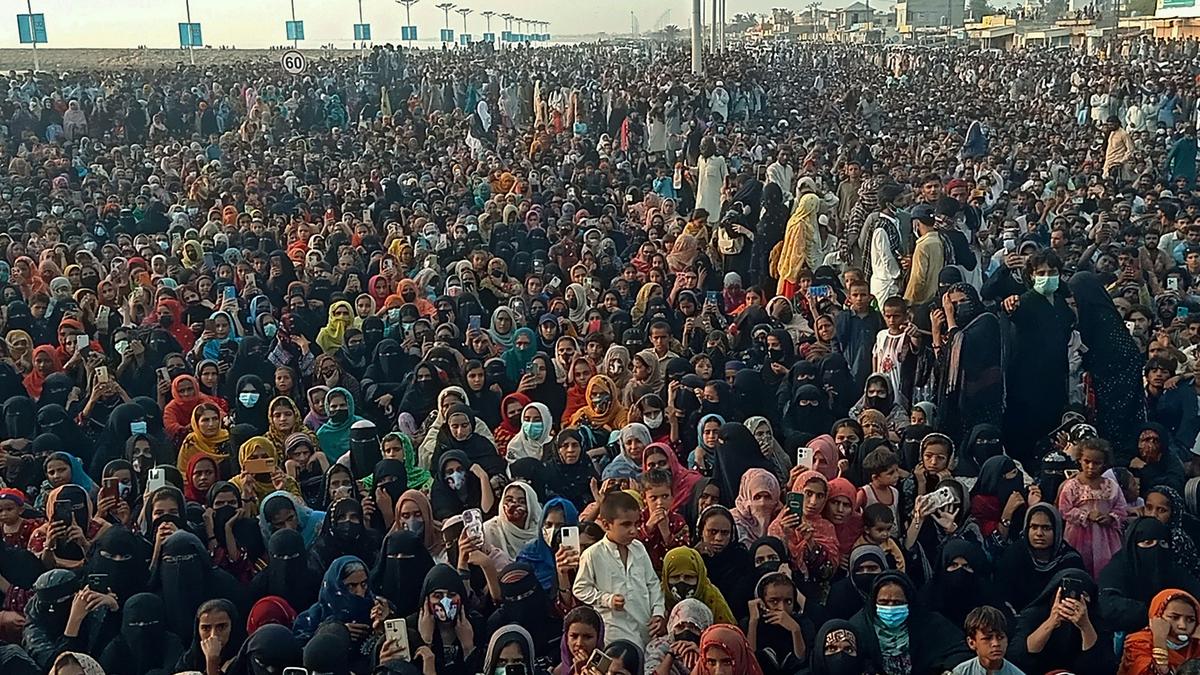
In the past few weeks, Balochistan, in Pakistan, has witnessed large-scale protests. Balochistan is a region with a distinct cultural and historical identity that is now divided between three countries mainly Pakistan, Iran and Afghanistan. The Baloch Yakjehti Committee (BYC) had called for a ‘Baloch Raaji Muchi’ (Baloch National Gathering) in the Gwadar port city to highlight human rights violations, resource exploitation, and the government’s inability to provide basic amenities to people in the province. Consequently, there were clashes between the protestors and the security forces, resulting in fatalities and detentions. The security forces’ crackdown and blockade of major thoroughfares in many towns and cities, such as Gwadar, Hub, Mastung and Quetta, resulted in a sharp increase in the prices of necessities such as food, medicine, and petrol.
While there were reports that the BYC called off protests in Gwadar after negotiations with the government, previous experiences suggest that more protests may resume soon. For instance, last December, protesting custodial killings and fake encounters, the Baloch protestors marched from Turbat to Islamabad, where they were subjected to a violent crackdown by the police. Subsequently, the protests continued in various parts of the Balochistan.
In a country with many restrictions on women’s rights, the demonstrations in Balochistan have witnessed a proactive participation from women, which indicates a deep resentment of the violent tactics of security forces. Women like Mahrang Baloch, who lost her father to custodial killings, are leading the protests.
Causes and reasons
The recent protests constitute an important episode in Balochistan’s long history of political turmoil. In 1947, the Khan of Kalat announced the formation of an independent state in Balochistan. After sustained coercive tactics by Pakistan’s leadership, the Khan of Kalat signed the instrument of accession in 1948. Interestingly, at the time of Pakistan’s independence, Gwadar was part of the Sultanate of Oman. After prolonged negotiations with Oman, Pakistan was able to purchase Gwadar in 1958. This history of independence, resistance, and incorporation of territories through coercion continues to define Balochistan’s political trajectory.
Additionally, in 1955, various provinces and ethnic areas in West Pakistan were subsumed into a single province under the One Unit scheme. The scheme resulted in considerable centralisation of power and negated the basic principles of federalism. After much opposition, it was abolished in 1970 leading to the emergence of provincial assemblies, including in Balochistan. However, this did not usher in an era of genuine federalism. The provincial governments were routinely dismissed, and Islamabad continued to have a significant say in the governance of the province. The lack of provincial autonomy aggravated the discontent in Balochistan, which often became the site of multiple insurgencies and protests.

The economic neglect of Balochistan also contributed to the disgruntlement in the region. Balochistan, accounting for 44% of the country’s landmass — with significant mineral resources, such as copper, gold, coal, and natural gas — continues to be one of the most backward regions in Pakistan. The exploitation of these resources has not resulted in substantive economic benefits for the local population. According to the 2018-19 UNDP report, Balochistan accounted for 4.5% of Pakistan’s GDP, 14% of the national road network, and 4% of its national electricity consumption. Despite being a mineral-rich region with a long coastline, poor economic indicators have fuelled the disappointment in Balochistan against Islamabad’s policies. The region’s performance is less than satisfactory even with respect to child, youth, and labour development indicators.
There is considerable resentment in Balochistan with the government’s counter-insurgency strategy. The security forces, as a part of their counter-insurgency operations, reportedly resort to enforced disappearances, which implies that the whereabouts of individuals detained/abducted by government officials are unknown. Quite often, enforced disappearances have ended in extra-judicial killings and fake encounters. The government-constituted Commission of Inquiry on Enforced Disappearances recorded approximately 2,752 cases. On the other hand, civil society groups such as the Voice of Baloch Missing Persons contend that there were over 7,000 cases of disappearances between 2002 and 2024. Various human rights organisations have also highlighted the phenomena of enforced disappearances of the Baloch people. However, security forces’ attempts to use enforced disappearances to subdue Baloch nationalist sentiment have failed spectacularly. Instead, enforced disappearances have deepened discontent in Balochistan, which will also have an impact on the broader region.
China’s role in the region
Today, China has emerged as a major player in Balochistan and has invested in mining, energy, airports and expressway projects as part of the China-Pakistan Economic Corridor (CPEC). The CPEC begins in Kashgar, China, traverses through the length of Pakistan and ends in Gwadar. Because of its proximity to the Strait of Hormuz, a shipping route that witnesses substantive oil transportation, Gwadar often figured in geopolitical discussions even during the Cold War.
A Chinese firm has taken the Gwadar port on a 40-year lease and is involved in constructing and operating it. While Pakistan officials often insist that Gwadar will remain a commercial port, the apprehensions regarding a possible militarisation of the port continue to persist. A Chinese naval presence will enhance its ability to project power into the Persian Gulf and to protect its energy supplies via the Strait of Hormuz. The possible militarisation of the port, fencing and other infrastructure development has raised concerns among the locals that they would lose access to large parts of the coastline, which would negatively impact their livelihoods. Additionally, the presence of Chinese trawlers close to Gwadar prompted protests from the local fishing community that demanded an end to illegal fishing and freedom to operate in the sea without restrictions.
Many in Balochistan contend that even a decade after the initiation of the CPEC, there have been no tangible gains for their people.
Instead, there is growing anxiety that the province’s demography is changing rapidly as non-locals have moved into Balochistan to work on infrastructure projects. Overall, the CPEC has not addressed the perception of neglect among the Baloch people.
The way forward
Parallel to the political movement led by women, which is contesting Islamabad’s policies, an armed insurgency has been raging in Balochistan.
There has been a steady uptick in the attacks by Baloch insurgent groups on security forces, CPEC projects, including other targets, such as on the Pakistan Stock Exchange in Karachi. The Pakistan government is responding to these events by scaling up security tactics. Perhaps the Pakistan establishment should listen to voices calling for a prudent approach to address the challenges in Balochistan. The Dawn, in its recent editorial, noted: “those who wield power must listen to Balochistan’s aggrieved voices with compassion, and work to solve the province’s burning issues, chief amongst which are the missing persons and socio-economic disparity.”
Moreover, Islamabad’s approach of building a few big-ticket infrastructure projects with external assistance and without adequate local stakeholder participation has exacerbated the Baloch grievances.
The strife in Balochistan is indicative of the challenges that Pakistan is encountering in building a nation-state purely based on religion. Movements based on ethnic identities not defined solely by religion have often, sometimes successfully, contested Pakistan’s nation-building project.
To compound the challenges, prolonged military rule in Pakistan with intermittent semi-democratic regimes ensured that provinces rarely enjoyed autonomy to be partners in defining their destiny.
In addition to Pakistan, the experiences from other parts of the subcontinent, such as Sri Lanka and Myanmar, demonstrate that the failure to address provincial aspirations tends to result in political turmoil.
Sanjay Pulipaka is the Chairperson of the Politeia Research Foundation. The views expressed here are personal.