





Skip to content
  • Facebook
  • X
  • Linkedin
  • WhatsApp
  • Associate Journalism
  • About Us
  • Privacy Policy
  • 033-46046046
  • editor@artifex.news
Artifex.News

Artifex.News

Stay Connected. Stay Informed.

  • Breaking News
  • World
  • Nation
  • Sports
  • Business
  • Science
  • Entertainment
  • Lifestyle
  • Toggle search form
  • Wikimania 2024 honours Indian Wikipedia volunteer, Siddharth VP, names him ‘Tech contributor of the year’ World
  • Gambhir’s ploy to utilise Parag as part-time bowler pays off Sports
  • Gautam Gambhir’s ‘Masala’ Take On Relation With Virat Kohli, Says “Country Doesn’t…” Sports
  • Knock, knock. Who’s there? The World Cup, we are back in your city Pune Sports
  • “Have A Boring Birthday”: Sachin Tendulkar Explains Reason Behind Strange Wish For Virender Sehwag Sports
  • What is it? IceCube: The big, chill neutrino-spotter Science
  • Russia Demands Ukraine Hand Over Head Of Security Service, Others World
  • Israeli forces kill Palestinian militant in West Bank World

COVID-19: anosmia as a marker for susceptible brain damage

Posted on August 24, 2024 By admin


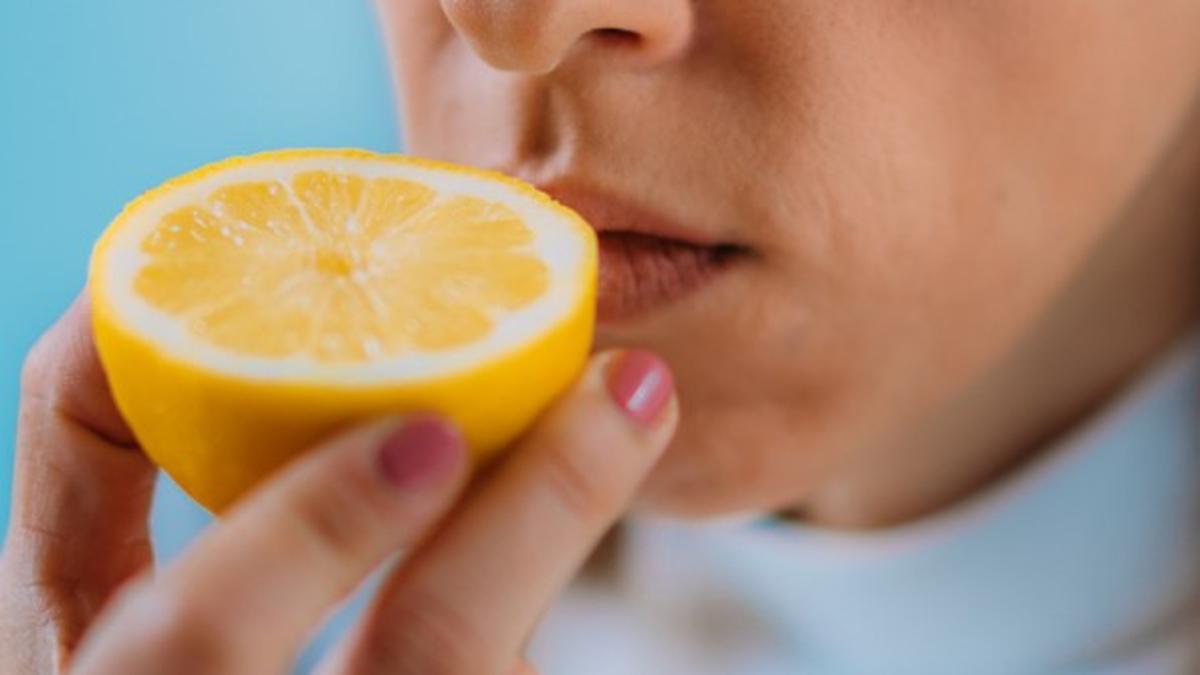
Linked: People with loss of smell had behavioural, functional, and structural brain changes.
| Photo Credit: Getty Images

A large body of studies has found how even mild COVID-19 impacts the brain of people. One the most common ailments seen among people who had COVID-19 was the loss of smell, otherwise called as anosmia. In most cases, people recover their sense of smell after a few weeks to months. Many studies have found that months after recovery from COVID-19, some people continued to experience neurological and cognitive effects. While persistent cognitive symptoms have been linked to brain alterations, patients recovering from mild COVID-19 without cognitive symptoms presented with cortical thickness alterations and changes in white matter integrity.

A small study from Chile recruited 73 adults with a mild to moderate COVID-19 without signs of respiratory failure and 27 people without any history of COVID-19. The 73 participants who had COVID-19 and recruited for the study had an average of nine months after diagnosis. Participants with COVID-19 and the control group were subjected to cognitive screening, a decision-making task, and MRI evaluations. The team used loss of smell and need for hospitalisation as proxies for potential markers of neurologic involvement and disease severity, respectively. The study, published in the journal Scientific Reports, has found that people who suffered from loss of smell had behavioural, functional, and structural brain changes.

 “Given the significant global incidence of COVID-19, identifying factors that can distinguish individuals at risk of developing brain alterations is crucial for prioritizing follow-up care,” the authors write. Since the anosmia “correlated with brain measures, including decreased functional activity during the decision-making task, thinning of cortical thickness in parietal regions, and loss of white matter integrity”, the authors say that anosmia could be used as a criterion when identifying at-risk populations for follow-up.

Of the 73 participants with COVID-19, 22 (30.1%) individuals reported experiencing varying degrees of attention and memory issues, which persisted at the time of the cognitive test administered as part of the study. Relatively minor indications were headache in seven participants, fatigue in six people, and four with persistently impaired sense of smell lasting, on average, 1.3 months. Of these patients, a complete loss of smell (anosmia) was experienced by 68% (29 participants), while 32% (14 participants) experienced differing degrees of changes in their sense of smell (hyposmia/microsmia). Both these categories were clubbed together as ‘patients with anosmia’.

While no significant differences in cognitive performance between groups based on COVID-19 diagnosis, anosmia, or hospitalisation requirements,  “intriguing patterns” emerged in behavioural task performance. Participants with a loss of smell displayed a distinct decision-making strategy characterised by more impulsive behaviour and were more likely to make a choice that is different when the earlier result was negative when performing a behavioural task. But the participants who were hospitalised displayed less strategic thinking and unlike those who were not hospitalised repeatedly made the same wrong choice.

Loss of smell was positively associated with decreased functional activity during the decision-making task, thinning of cortical thickness, and loss of white matter integrity. “Hence, anosmia could be a factor to be considered when identifying at-risk populations for follow-up,” the authors write.

“Only six patients present indicators of persistent olfactory deficit; thus, our results are not due to actual deficit. Hence, anosmia could serve as both a potential marker of virus-induced damage to neuronal tissues and a marker for individuals susceptible to brain damage,” the authors note. 


Source link

Science Tags:Anosmia, COVID-19, COVID-19 impacts brain, Loss of smell

Post navigation

Previous Post: Woman Found Engulfed In Flames In Ambala, Rushed To Hospital: Cops
Next Post: Singles In Pakistan Defy Tradition, Meet Potential Partners At Matchmaking Event

Related Posts

  • Venus has more volcanism than previously known, new analysis finds Science
  • Does cash take away the cachet of science awards? Science
  • The Science Quiz | Twilight time – the world between worlds Science
  • How a 6.3 magnitude quake caused another of same intensity Science
  • No signals from Chandrayaan-3’s Vikram, Pragyan: ISRO Science
  • 76% of TB patients received payment for nutritional support Science

More Related Articles

Data Point | Fly Me to the Moon: A Glimpse into India’s Space Achievements Science
Can India’s One Health Mission help tackle the rising number of infectious diseases? | In Focus podcast Science
 Children at risk as new mpox variant hits Congo displacement camps Science
Math disabilities hold many students back. Schools often don’t screen for them Science
Sea otters get more prey and reduce tooth damage using tools Science
Why a tiny gravity measurement may be a leap forward for physics Science
SiteLock

Archives

  • August 2024
  • July 2024
  • June 2024
  • May 2024
  • April 2024
  • March 2024
  • February 2024
  • January 2024
  • December 2023
  • November 2023
  • October 2023
  • September 2023
  • August 2023
  • July 2023
  • June 2023
  • May 2023
  • April 2023
  • March 2023
  • February 2023
  • January 2023
  • December 2022
  • November 2022
  • October 2022
  • September 2022
  • August 2022
  • July 2022
  • June 2022
  • May 2022

Categories

  • Business
  • Nation
  • Science
  • Sports
  • World

Recent Posts

  • Clash between students and Ansar members leaves nearly 40 injured in Dhaka
  • PM Narendra Modi, Amit Shah At Party Panel Meet To Decide On J&K Poll Candidates
  • Hamas Rejects New Conditions In US-Led Gaza Ceasefire Talks
  • Arne Slot Enjoys Perfect Anfield Start As Liverpool Ease Past Brentford
  • 70-Year-Old Woman Raped At Her Residence By Man, 23, In Kerala: Cops

Recent Comments

  1. TpeEoPQa on UP Teacher Who Asked Students To Slap Muslim Classmate
  2. xULDsgPuBe on UP Teacher Who Asked Students To Slap Muslim Classmate
  3. KyJtkhneiLmcq on UP Teacher Who Asked Students To Slap Muslim Classmate
  4. mOyehudovB on UP Teacher Who Asked Students To Slap Muslim Classmate
  5. GFBvgSrWPcsp on UP Teacher Who Asked Students To Slap Muslim Classmate
  • Cracking the mystery of how the chemical origins of life formed Science
  • Why Court Said No Case Against US Cop Who Killed Indian Student Nation
  • Copa America Hosts USA Labelled ‘Embarrassment’, Doubts Cast Over 2026 FIFA World Cup Sports
  • Nawaz Sharif’s Return To Pakistan Not Driven By Revenge: Shehbaz Sharif World
  • Jailed In Israel 20 Years Ago, Palestinian Writer Basim Khandaqji Wins Top Fiction Prize World
  • Wolvaardt to lead SA in Test, ODIs during India tour Sports
  • IPL-17: MI vs LSG: Pooran’s pyrotechnics help Super Giants finish on a high Sports
  • Does inequality lead to growth? | Explained Business

Editor-in-Chief:
Mohammad Ariff,
MSW, MAJMC, BSW, DTL, CTS, CNM, CCR, CAL, RSL, ASOC.
editor@artifex.news

Associate Editors:
1. Zenellis R. Tuba,
zenelis@artifex.news
2. Haris Daniyel
daniyel@artifex.news

Photograher:
Rohan Das
rohan@artifex.news

Artifex.News offers Online Paid Internships to college students from India and Abroad. Interns will get a PRESS CARD and other online offers.
Send your CV (Subjectline: Paid Internship) to internship@artifex.news

Links:
Associate Journalism
About Us
Privacy Policy

News Links:
Breaking News
World
Nation
Sports
Business
Entertainment
Lifestyle

Registered Office:
72/A, Elliot Road, Kolkata - 700016
Tel: 033-22277777, 033-22172217
Email: office@artifex.news

Editorial Office / News Desk:
No. 13, Mezzanine Floor, Esplanade Metro Rail Station,
12 J. L. Nehru Road, Kolkata - 700069.
(Entry from Gate No. 5)
Tel: 033-46011099, 033-46046046
Email: editor@artifex.news

Copyright © 2023 Artifex.News Newsportal designed by Artifex Infotech.