




Microorganisms have mastered the art of surviving on the earth. They are found practically in all niches where life can possibly thrive. Over millions of years of evolution, they have developed mechanisms to adapt to diverse habitats. They are very flexible and able to colonise extreme environments, even those off limits to more complex life-forms.
Scientists have isolated microbes from volcanic vents, permafrost, acid mines, deep-sea hydrothermal vents, and dark lakes buried kilometres under polar ice caps. Microbes have also been found thriving on the exteriors of spacecraft and around nuclear waste storage sites. Microbes that live in extreme natural conditions are called extremophiles. Many researchers believe that life began on the earth in an extreme environmental niche, in the form of an extremophile, before spreading and adapting to more temperate ecosystems.
Microbes adapt to extreme environments by incorporating unique biological and biochemical processes. More complex life-forms like humans have evolved to have one set of proteins with which they navigate life. Extremophile microbes on the other hand have multiple sets of proteins, each customised for life in a specific environmental niche. They ‘activate’ each set depending on the conditions around them and what they need to survive: say, one set for the super-high temperature during a volcanic eruption, one for the debilitating lack of water during a prolonged drought, and one for the gruesome acidity of a volcanic crater lake.
A key to biology itself
Our knowledge of microbes, especially in the earth’s various environmental niches, is still in its infancy. Many global initiatives are currently trying to map, organise, and understand this diversity. One is the ambitious ‘Earth Microbiome Project’. It was founded in 2010 to sequence 200,000 genetic samples and assemble 500,000 microbial genomes. Another is the ‘Earth Biogenome Project’ — to sequence the genomes of all of the planet’s eukaryotic organisms to create one of the largest and most comprehensive maps of organisms on the earth in a decade.
A further advantage to understanding how extremophiles adapt lies in a number of biological and industrial applications. For example, in the 1960s, U.S. researchers isolated a new species of bacteria from a hot spring at Yellowstone National Park and named it Thermus aquaticus. This microbe is able to produce a heat-resistant enzyme called Taq DNA polymerase. This enzyme is an important and valuable workhorse of molecular biology because of its application in the polymerase chain reaction (PCR). Readers will recall this is a technique to identify the presence of certain DNA in a biological sample, popularised during the COVID-19 pandemic.
Since the discovery of Taq, researchers have found a number of other polymerases from a variety of extremophile microbes, and have reengineered them for various applications in molecular biology with remarkable success.
What life can look like
Our rapidly expanding ability to ‘read’ the genomes of organisms — thanks in turn to the increasing throughput of sequencing machines and their dropping costs and and our ability to synthesise DNA nucleotides in the lab — has spawned a new era in utilising biological processes at scale to solve human problems. Unravelling the biological rules governing extremophiles could thus enable researchers to engineer organisms to have new abilities, like helping poultry resist an infectious disease or creating synthetic biological systems that can augment the immune system.
Knowledge of new mechanisms can also help scientists determine the limits of habitability on other planets. For example, in 2011, scientists in Japan reported growing microbes in a centrifuge subjected to a g-force of more than 400,000 (1 g is the force you experience at rest on the earth’s surface). They also found that some of these microbes didn’t only survive: their population grew, meaning they thrived. It was a significant finding because it proved microbes are not deterred by hypergravity, of the sort found on large planets and stars.
In a 2020 study, scientists reported that Deinococcus radiodurans, an earth-born bacteria, could survive in outer space for more than three years, stuck to the outside of the International Space Station and being blasted with ultraviolet radiation.
These studies hold promise not just for life beyond the earth but for such microbes to have colonised extreme conditions that humans might think twice about entering.
On the earth, researchers have found bacteria living in elevator switches, personal grooming devices, home cleaning machines, and cooking appliances. These devices have their own microscopic ecosystems subjected to specific selective pressures and thus a well-defined microbiome. In fact, researchers have already found that coffee machines and dishwashers have their own distinct microbial communities.
The coffee-machine-based community is interesting because caffeine is an alkaloid and has well-known antibacterial properties. In spite of this, researchers found a microbiome rich in coffee-adapted bacteria in the machines. Caffeine-degrading microbes provide insights into developing strategies for decaffeination and bioremediation. Similarly, microbial communities isolated from the dishwashers have included both bacterial and fungal species; some of them were also opportunistic pathogens — they cause disease in people with weakened immune systems — and thus could have a wide medical impact.
The meaning of safety
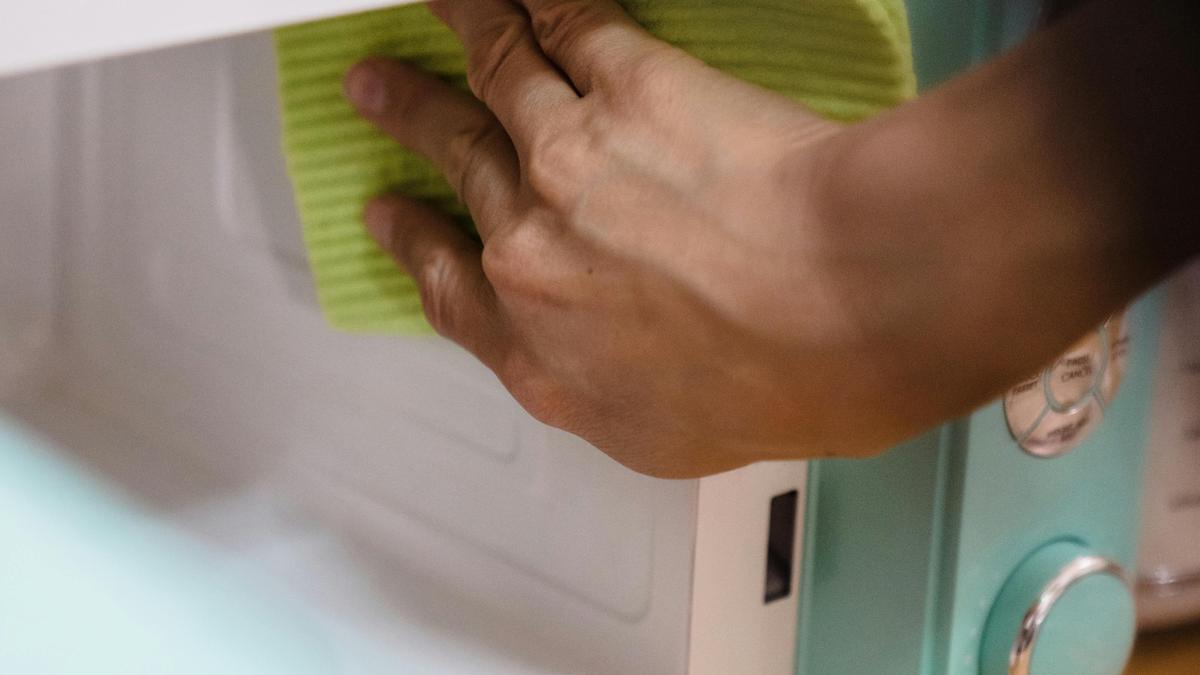
Speaking of medical impact: on August 8, researchers at the University of Valencia in Spain reported in the journal Frontiers in Microbiology the results of their investigation into bacterial communities present in microwave ovens installed in domestic settings, large shared spaces, and in molecular biology research facilities. They used a combination of culturing methods and genome-sequencing to document hundreds of strains of bacteria from these ovens. Many of them were bacterial species often found in human skin while a few others were known to cause food-borne illnesses.
But there is no need to panic: the bacterial communities found in the ovens were still not very different from those found on kitchen surfaces and thus didn’t pose a higher risk of any diseases.
One interesting detail in the study was that domestic microwave ovens were enriched in food-associated microbial communities, in line with their primary utility, whereas the ovens in research facilities housed bacterial communities that were more resistant to radiation, desiccation, and high temperature, in line with those found in environments like the surfaces of solar panels, which are constantly exposed to (favourable and unfavourable) radiation. This difference could reflect the differences in the selective pressures imposed by the microbes’ environments — that is to say, not all extremes are the same.
Since the extremophile communities found in microwave ovens were selected by evolution, in a manner of speaking, to survive repeated rounds of radiation, they may have applications in the bioremediation of toxic waste. It seems they may never cease to amaze.
The authors are senior consultants at Vishwanath Cancer Care Foundation and adjunct professors at IIT Kanpur and Dr. D.Y. Patil Medical College, Hospital & Research Centre, Pune.