

Skip to content
  • Facebook
  • X
  • Linkedin
  • WhatsApp
  • YouTube
  • Associate Journalism
  • About Us
  • Privacy Policy
  • 033-46046046
  • editor@artifex.news
Artifex.News

Artifex.News

Stay Connected. Stay Informed.

  • Breaking News
  • World
  • Nation
  • Sports
  • Business
  • Science
  • Entertainment
  • Lifestyle
  • Toggle search form
  • 100-Foot Chariot For Temple Fair Collapses, Narrowly Misses Devotees
    100-Foot Chariot For Temple Fair Collapses, Narrowly Misses Devotees Nation
  • Expecting India to win both CT and WTC final under Rohit’s captaincy: BCCI Secretary Shah
    Expecting India to win both CT and WTC final under Rohit’s captaincy: BCCI Secretary Shah Sports
  • Trump Media unveils plan to distribute new cryptocurrency to shareholders
    Trump Media unveils plan to distribute new cryptocurrency to shareholders World
  • WPL 4: Smriti-Voll blitz powers RCB to second crown
    WPL 4: Smriti-Voll blitz powers RCB to second crown Sports
  • Access Denied Sports
  • Chinese Scientist Turns Tiny Drones Into Metal-Slicing Laser Beam Monsters
    Chinese Scientist Turns Tiny Drones Into Metal-Slicing Laser Beam Monsters World
  • Access Denied
    Access Denied Nation
  • Access Denied
    Access Denied Nation
Will the new Saudi law help migrant domestic workers?

Will the new Saudi law help migrant domestic workers?

Posted on August 10, 2024 By admin


The story so far:

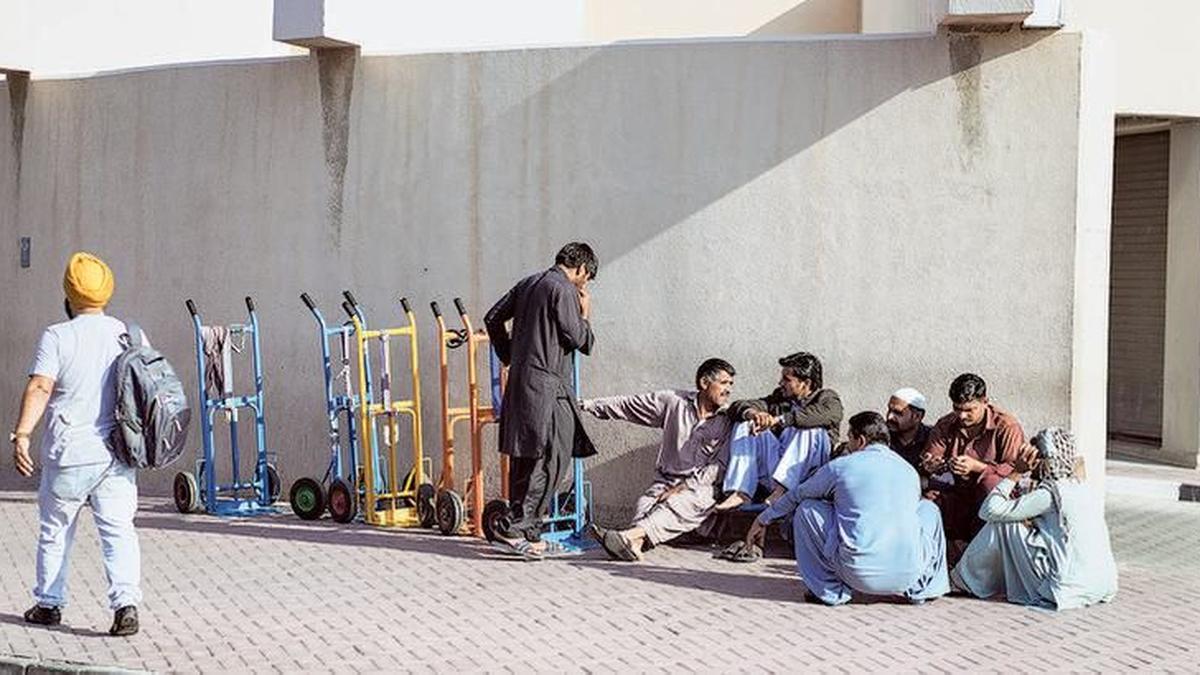
The Kingdom of Saudi Arabia, one of the world’s largest recipients of migrant domestic workers (MDWs), will roll out a new domestic workers law in September. The six GCC states (Saudi Arabia, the UAE, Qatar, Kuwait, Oman, and Bahrain) employ close to 5.5 million migrant domestic workers, and all of them exclude MDWs from labour laws, with only four having passed specific domestic worker laws.

How many migrants work in Saudi Arabia?

In Saudi, as of the first quarter of 2024, there were 39,13,925 migrant domestic workers with 27,32,344 males and 11,81,581 females, making up 25% of the total workforce. The exclusion of these workers from the labour law leaves huge gaps in protection, as monitoring mechanisms such as labour inspections, complaints mechanisms, and the Wages Protection System do not apply to the sector. These vulnerabilities are further exacerbated by the systemic marginalisation of migrant workers under the Kafala system. The employer-tied visa system leaves lower-income migrant workers at the absolute mercy of their sponsors. In effect, the state has outsourced the immigration regime to individuals, the majority of whom are citizens.

The current and upcoming MDW laws do not address these protection gaps sufficiently. It is common knowledge that female MDWs face extreme abuse at the hands of their employers within households and by officials when they seek remedy. Saudi Arabia’s regulations have failed to address these issues, and the broader justice mechanism that fails migrant workers in general is especially indifferent to the plight of MDWs.

Saudi still does not have a minimum wage, and mandatory referral wages apply only when prescribed in bilateral agreements by origin countries. This means MDWs are not only paid poorly but there are no clear calculations for overtime, though almost all of them are overworked.

Who are migrant domestic workers?

They are employed by individuals to render services in their household. The combination of exclusion from labour laws and the stranglehold of the Kafala system results in employers having absolute control over domestic workers. Saudi has 14 categories of domestic work, including domestic worker, driver, nanny, nurse, cook, tailor, farmer, physiotherapist, and private speech and hearing therapist. Some categories are recent additions, and concerningly, go beyond household work to roles requiring specialist skills.

As per the official data, there are over 20 lakh workers who fall under the category ‘servants and house cleaners’ — referring to domestic workers, nearly 60% of whom are female. The second most recruited category is drivers, at 18,17,120, almost all of whom are male. Saudi is the only GCC state where male domestic workers constitute the majority in the sector, at nearly 70%. This is partly due to segregation within households and dependency on household drivers. 

How does the Kafala system work?

GCC citizens are wealthy and can afford ‘engines of liberation’ — mechanised consumer goods that were meant to reduce the domestic labour of women. This has not played out as desired in most patriarchal cultures, even if women are active in the labour economy and the dependence on women’s labour at home is still high. Large joint families living together demand a host of unpaid services that women in the household were once responsible for. With growing affluence and the assumption that domestic work is menial, these tasks are now delegated to paid MDWs, but the value placed on their work — and by extension them — remains low. Many of the mechanisms and institutions set up by Saudi to govern the sector tend to have an employer bias, including its Musaned system, the domestic worker recruitment platform, through which all aspects of the recruitment and employment of MDWs are regulated.

Consequently, the intersection of the Kafala system and labour law exclusion results in a type of bonded labour. The state makes it easy to recruit and employ migrant workers, without any oversight on their obligations as employers, resulting in extreme exploitation with impunity. The cost of recruitment excluding wages is steep – between US$2,000 and US$5,000 per worker – and employers feel they have ‘bought’ the worker, instead of seeing it as payment for services. 

Is the new MDW law better?

Some notable features of the new law are a maximum of 10 working hours a day and entitlement to a weekly off day; prohibition of confiscation of identity documents; emphasis on workers’ right to communication; workers have a right to terminate the contract without losing entitlements under certain conditions; compensation for unjust termination; one month paid leave yearly and employer must pay for the annual ticket home.

Saudi also introduced insurance on all new MDW contracts to protect workers and employers, the cost of which is built into the recruitment fees. More recently and quite significantly, the kingdom included all new MDWs in its WPS from July, and will gradually cover all existing MDWs by the end of 2025.

What are the persisting concerns?

Saudi has a poor record of implementation, especially when it comes to protecting the rights of migrant workers. Wage theft and labour exploitation are rampant, but employers are rarely held to account. When it comes to MDWs, especially women, they cannot leave the employer’s household without permission and there’s a risk of being reported as absconding (huroob).

Though the absconding regime has been reformed, making it more difficult to file false charges, and giving workers more time to challenge false accusations, the law still can be weaponised by abusive employers. The lack of labour inspections, limited access to communication, and language barriers make it difficult both for the state to assess the impact of reforms and for workers to report violations.

What is the status of Indian MDWs?

At 26.5 lakh, Indians constitute the single largest migrant population in the kingdom. Though Saudi does not furnish nationality-wise disaggregated data, by several estimations, the domestic work sector comprises a large percentage of Indians working as drivers, and also in other categories.

Recruitment of Indian MDWs must be through the eMigrate system. India’s minimum referral wage for the sector is SAR1,500 (₹33,400). Special provisions for female MDWs — minimum age must be 30 — include a financial bank guarantee of U.S.$2,500 in favour of the Embassy in Riyadh. The contract must be attested at one of the missions in Saudi.

However, according to many workers in distress, consular support is limited at best to repatriation and there is no effort to help with access to justice or ensure workers receive all their entitlements before deportation. Given the size of the kingdom and the diaspora, the Embassy in Riyadh and the consulate office in Jeddah are not equipped enough to deal with these needs.

(Vani Saraswathi is the director of projects and editor-at-large of Migrant-Rights.Org, a GCC-based research and advocacy organisation)



Source link

World Tags:Indian workers in Saudi Arabia, Kafala system, Marginalisation of workers, Saudi Arabia migrant domestic workers law

Post navigation

Previous Post: EAM Jaishankar inaugurates India-funded water and sanitation project in Maldives
Next Post: Zelensky Acknowledges Army Operation In Russia’s Kursk Region For 1st Time

Related Posts

  • Vatican To Hold Press Conference On “Supernatural Phenomena” Today
    Vatican To Hold Press Conference On “Supernatural Phenomena” Today World
  • Access Denied World
  • Inside Sam Bankman-Fried’s Multi-Billion Dollar FTX Fraud
    Inside Sam Bankman-Fried’s Multi-Billion Dollar FTX Fraud World
  • Kamala Harris secures Democratic presidential nomination
    Kamala Harris secures Democratic presidential nomination World
  • Anti-Maduro protests spread as Venezuelan opposition says he stole vote
    Anti-Maduro protests spread as Venezuelan opposition says he stole vote World
  • Protests shut streets in Armenia’s capital, roads in other parts to demand the Prime Minister’s resignation
    Protests shut streets in Armenia’s capital, roads in other parts to demand the Prime Minister’s resignation World

More Related Articles

57 terrorists, 10 security personnel killed in different operations across Pakistan’s Balochistan 57 terrorists, 10 security personnel killed in different operations across Pakistan’s Balochistan World
Key Bangladesh Official Proposes Removing ‘Secularism’, ‘Socialism’ From Constitution Key Bangladesh Official Proposes Removing ‘Secularism’, ‘Socialism’ From Constitution World
France’s top court upholds Sarkozy’s conviction for illegal campaign financing in 2012 France’s top court upholds Sarkozy’s conviction for illegal campaign financing in 2012 World
Trump has ‘good conversations’ with Putin, Zelenskyy: report Trump has ‘good conversations’ with Putin, Zelenskyy: report World
Access Denied World
Australia accuses China of unsafe behaviour when fighter jet released flares in a helicopter’s path Australia accuses China of unsafe behaviour when fighter jet released flares in a helicopter’s path World
SiteLock

Archives

  • May 2026
  • April 2026
  • March 2026
  • February 2026
  • January 2026
  • December 2025
  • November 2025
  • October 2025
  • September 2025
  • August 2025
  • July 2025
  • June 2025
  • May 2025
  • April 2025
  • March 2025
  • February 2025
  • January 2025
  • December 2024
  • November 2024
  • October 2024
  • September 2024
  • August 2024
  • July 2024
  • June 2024
  • May 2024
  • April 2024
  • March 2024
  • February 2024
  • January 2024
  • December 2023
  • November 2023
  • October 2023
  • September 2023
  • August 2023
  • July 2023
  • June 2023
  • May 2023
  • April 2023
  • March 2023
  • February 2023
  • January 2023
  • December 2022
  • November 2022
  • October 2022
  • September 2022
  • August 2022
  • July 2022
  • June 2022
  • May 2022

Categories

  • Business
  • Nation
  • Science
  • Sports
  • World

Recent Posts

  • Cuba has run out of diesel and fuel oil amid U.S. oil blockade
  • Karnataka’s Leader of Opposition R Ashok to reduce escort vehicles, travel by Namma Metro
  • China, U.S. should be ‘partners not rivals’, says Xi Jinping after meeting Donald Trump
  • UAE ‘denies reports’ of secret Netanyahu visit
  • Iran working on Hormuz ‘protocol’ to cover ‘costs’, says Deputy Foreign Minister Gharibabadi

Recent Comments

  1. OrvalMaync on UP Teacher Who Asked Students To Slap Muslim Classmate
  2. Jeffreyroure on UP Teacher Who Asked Students To Slap Muslim Classmate
  3. Stevemonge on UP Teacher Who Asked Students To Slap Muslim Classmate
  4. RichardClage on UP Teacher Who Asked Students To Slap Muslim Classmate
  5. StevenLek on UP Teacher Who Asked Students To Slap Muslim Classmate
  • Access Denied World
  • 91% of capital expenditure on airports for five years achieved: Economic Survey
    91% of capital expenditure on airports for five years achieved: Economic Survey Business
  • India Urged To Take ‘Right Step’ Towards Hosting 2036 Olympics, Told To Host This Major Tournament First
    India Urged To Take ‘Right Step’ Towards Hosting 2036 Olympics, Told To Host This Major Tournament First Sports
  • Access Denied World
  • Divisive Rhetoric On Religion Harms Constitutional Unity: Supreme Court Judge
    Divisive Rhetoric On Religion Harms Constitutional Unity: Supreme Court Judge Nation
  • Indian-origin former Minister Tharman in race as Singapore set to vote on new President on September 1
    Indian-origin former Minister Tharman in race as Singapore set to vote on new President on September 1 World
  • PM Modi in U.S. LIVE: Prime Minster Narendra Modi to arrive in Philadelphia shortly for the Quad summit
    PM Modi in U.S. LIVE: Prime Minster Narendra Modi to arrive in Philadelphia shortly for the Quad summit World
  • 63-Year-Old Woman Strangled To Death In Mumbai, Cops Suspect House-Help
    63-Year-Old Woman Strangled To Death In Mumbai, Cops Suspect House-Help Nation

Editor-in-Chief:
Mohammad Ariff,
MSW, MAJMC, BSW, DTL, CTS, CNM, CCR, CAL, RSL, ASOC.
editor@artifex.news

Associate Editors:
1. Zenellis R. Tuba,
zenelis@artifex.news
2. Haris Daniyel
daniyel@artifex.news

Photograher:
Rohan Das
rohan@artifex.news

Artifex.News offers Online Paid Internships to college students from India and Abroad. Interns will get a PRESS CARD and other online offers.
Send your CV (Subjectline: Paid Internship) to internship@artifex.news

Links:
Associate Journalism
About Us
Privacy Policy

News Links:
Breaking News
World
Nation
Sports
Business
Entertainment
Lifestyle

Registered Office:
72/A, Elliot Road, Kolkata - 700016
Tel: 033-22277777, 033-22172217
Email: office@artifex.news

Editorial Office / News Desk:
No. 13, Mezzanine Floor, Esplanade Metro Rail Station,
12 J. L. Nehru Road, Kolkata - 700069.
(Entry from Gate No. 5)
Tel: 033-46011099, 033-46046046
Email: editor@artifex.news

Copyright © 2023 Artifex.News Newsportal designed by Artifex Infotech.