






The story so far:
The Kingdom of Saudi Arabia, one of the world’s largest recipients of migrant domestic workers (MDWs), will roll out a new domestic workers law in September. The six GCC states (Saudi Arabia, the UAE, Qatar, Kuwait, Oman, and Bahrain) employ close to 5.5 million migrant domestic workers, and all of them exclude MDWs from labour laws, with only four having passed specific domestic worker laws.
How many migrants work in Saudi Arabia?
In Saudi, as of the first quarter of 2024, there were 39,13,925 migrant domestic workers with 27,32,344 males and 11,81,581 females, making up 25% of the total workforce. The exclusion of these workers from the labour law leaves huge gaps in protection, as monitoring mechanisms such as labour inspections, complaints mechanisms, and the Wages Protection System do not apply to the sector. These vulnerabilities are further exacerbated by the systemic marginalisation of migrant workers under the Kafala system. The employer-tied visa system leaves lower-income migrant workers at the absolute mercy of their sponsors. In effect, the state has outsourced the immigration regime to individuals, the majority of whom are citizens.
The current and upcoming MDW laws do not address these protection gaps sufficiently. It is common knowledge that female MDWs face extreme abuse at the hands of their employers within households and by officials when they seek remedy. Saudi Arabia’s regulations have failed to address these issues, and the broader justice mechanism that fails migrant workers in general is especially indifferent to the plight of MDWs.
Saudi still does not have a minimum wage, and mandatory referral wages apply only when prescribed in bilateral agreements by origin countries. This means MDWs are not only paid poorly but there are no clear calculations for overtime, though almost all of them are overworked.
Who are migrant domestic workers?
They are employed by individuals to render services in their household. The combination of exclusion from labour laws and the stranglehold of the Kafala system results in employers having absolute control over domestic workers. Saudi has 14 categories of domestic work, including domestic worker, driver, nanny, nurse, cook, tailor, farmer, physiotherapist, and private speech and hearing therapist. Some categories are recent additions, and concerningly, go beyond household work to roles requiring specialist skills.
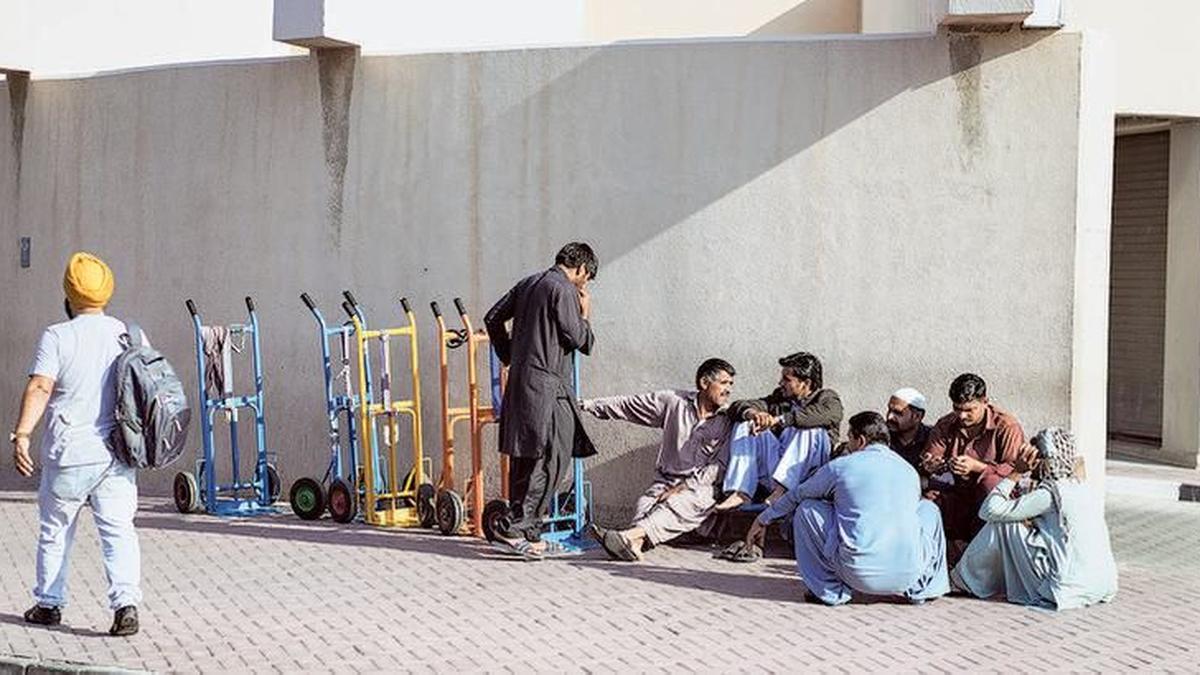
As per the official data, there are over 20 lakh workers who fall under the category ‘servants and house cleaners’ — referring to domestic workers, nearly 60% of whom are female. The second most recruited category is drivers, at 18,17,120, almost all of whom are male. Saudi is the only GCC state where male domestic workers constitute the majority in the sector, at nearly 70%. This is partly due to segregation within households and dependency on household drivers.
How does the Kafala system work?
GCC citizens are wealthy and can afford ‘engines of liberation’ — mechanised consumer goods that were meant to reduce the domestic labour of women. This has not played out as desired in most patriarchal cultures, even if women are active in the labour economy and the dependence on women’s labour at home is still high. Large joint families living together demand a host of unpaid services that women in the household were once responsible for. With growing affluence and the assumption that domestic work is menial, these tasks are now delegated to paid MDWs, but the value placed on their work — and by extension them — remains low. Many of the mechanisms and institutions set up by Saudi to govern the sector tend to have an employer bias, including its Musaned system, the domestic worker recruitment platform, through which all aspects of the recruitment and employment of MDWs are regulated.
Consequently, the intersection of the Kafala system and labour law exclusion results in a type of bonded labour. The state makes it easy to recruit and employ migrant workers, without any oversight on their obligations as employers, resulting in extreme exploitation with impunity. The cost of recruitment excluding wages is steep – between US$2,000 and US$5,000 per worker – and employers feel they have ‘bought’ the worker, instead of seeing it as payment for services.
Is the new MDW law better?
Some notable features of the new law are a maximum of 10 working hours a day and entitlement to a weekly off day; prohibition of confiscation of identity documents; emphasis on workers’ right to communication; workers have a right to terminate the contract without losing entitlements under certain conditions; compensation for unjust termination; one month paid leave yearly and employer must pay for the annual ticket home.
Saudi also introduced insurance on all new MDW contracts to protect workers and employers, the cost of which is built into the recruitment fees. More recently and quite significantly, the kingdom included all new MDWs in its WPS from July, and will gradually cover all existing MDWs by the end of 2025.
What are the persisting concerns?
Saudi has a poor record of implementation, especially when it comes to protecting the rights of migrant workers. Wage theft and labour exploitation are rampant, but employers are rarely held to account. When it comes to MDWs, especially women, they cannot leave the employer’s household without permission and there’s a risk of being reported as absconding (huroob).
Though the absconding regime has been reformed, making it more difficult to file false charges, and giving workers more time to challenge false accusations, the law still can be weaponised by abusive employers. The lack of labour inspections, limited access to communication, and language barriers make it difficult both for the state to assess the impact of reforms and for workers to report violations.
What is the status of Indian MDWs?
At 26.5 lakh, Indians constitute the single largest migrant population in the kingdom. Though Saudi does not furnish nationality-wise disaggregated data, by several estimations, the domestic work sector comprises a large percentage of Indians working as drivers, and also in other categories.
Recruitment of Indian MDWs must be through the eMigrate system. India’s minimum referral wage for the sector is SAR1,500 (₹33,400). Special provisions for female MDWs — minimum age must be 30 — include a financial bank guarantee of U.S.$2,500 in favour of the Embassy in Riyadh. The contract must be attested at one of the missions in Saudi.
However, according to many workers in distress, consular support is limited at best to repatriation and there is no effort to help with access to justice or ensure workers receive all their entitlements before deportation. Given the size of the kingdom and the diaspora, the Embassy in Riyadh and the consulate office in Jeddah are not equipped enough to deal with these needs.
(Vani Saraswathi is the director of projects and editor-at-large of Migrant-Rights.Org, a GCC-based research and advocacy organisation)