



Skip to content
  • Facebook
  • X
  • Linkedin
  • WhatsApp
  • YouTube
  • Associate Journalism
  • About Us
  • Privacy Policy
  • 033-46046046
  • editor@artifex.news
Artifex.News

Artifex.News

Stay Connected. Stay Informed.

  • Breaking News
  • World
  • Nation
  • Sports
  • Business
  • Science
  • Entertainment
  • Lifestyle
  • Toggle search form
  • Maldives President Mohamed Muizzu says never followed “India Out” agenda
    Maldives President Mohamed Muizzu says never followed “India Out” agenda World
  • Access Denied Sports
  • Israeli military sacks several generals over October 7 attack
    Israeli military sacks several generals over October 7 attack World
  • GST Council sets up GoM on compensation cess; panel to submit report by December 31
    GST Council sets up GoM on compensation cess; panel to submit report by December 31 Business
  • New US House Speaker Announces Resolution Supporting Israel As First Bill
    New US House Speaker Announces Resolution Supporting Israel As First Bill World
  • Maldives Orders Indian Officials To Leave By May 10 After Military Pact With China
    Maldives Orders Indian Officials To Leave By May 10 After Military Pact With China World
  • Access Denied
    Access Denied Nation
  • Mining output growth hit 19-month low of 1.2% in signal for March IIP
    Mining output growth hit 19-month low of 1.2% in signal for March IIP Business
Farmers in Africa say their soil is dying and chemical fertilizers are in part to blame

Farmers in Africa say their soil is dying and chemical fertilizers are in part to blame

Posted on July 25, 2024 By admin


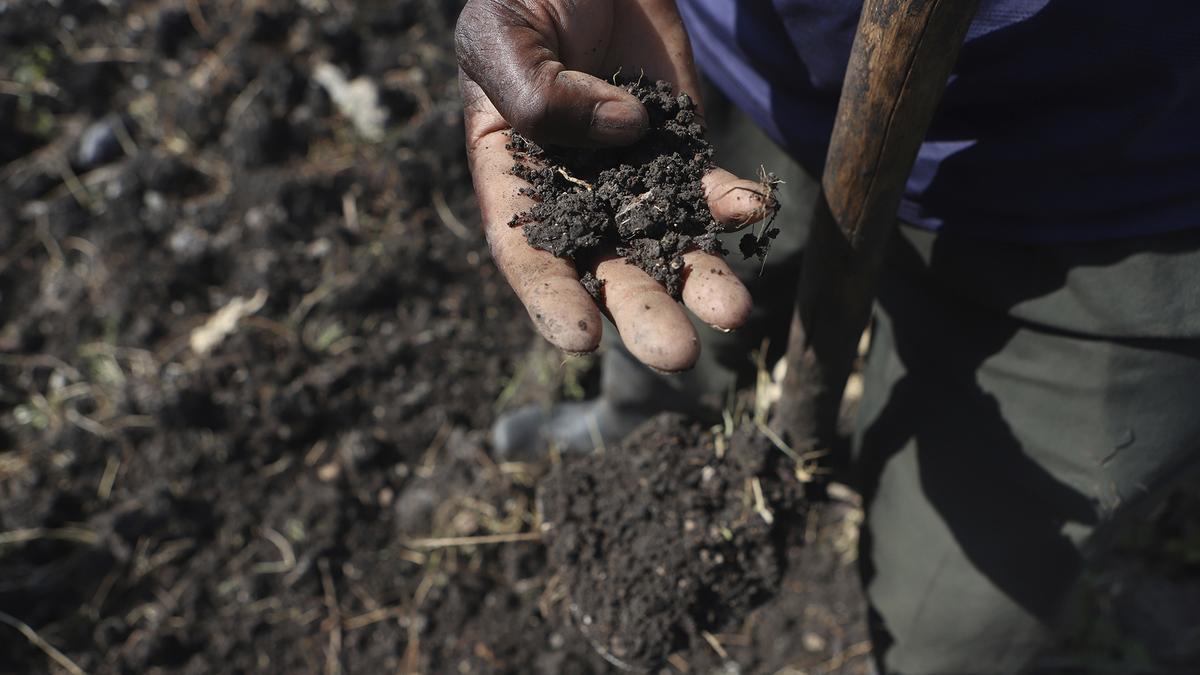
When Benson Wanjala started farming in his western Kenya village two and a half decades ago, his 10-acre farm could produce a bountiful harvest of 200 bags of maize. That has dwindled to 30. He says his once fertile soil has become a nearly lifeless field that no longer earns him a living.

Like many other farmers, he blames acidifying fertilizers pushed in Kenya and other African countries in recent years. He said he started using the fertilisers to boost his yield and it worked—until it didn’t. Kenya’s government first introduced a fertilizer subsidy in 2008, making chemical fertilizers more accessible for smaller-scale farmers.

About 63% of arable land in Kenya is now acidic, according to the agriculture ministry, which has been recording a decline in production of staples such as maize and leading exports of horticulture and tea. The production of maize declined by 4% to 44 million tons in 2022, according to the Food and Agriculture Organization, which didn’t say why.

Problems with soil health are growing as the Africa struggles to feed itself. Africa has 65% of the world’s remaining uncultivated arable land but has spent about $60 billion annually to import food, according to the African Development Bank. The spending is estimated to jump to $110 billion by 2025 due to increased demand and changing consumption habits.

In May, Kenya hosted an Africa-wide soil health summit to discuss declining production, climate change and other issues that have increased food security concerns. Agriculture is a key part of the economy in Kenya, making up more than a quarter of the GDP.

At the summit, Stephen Muchiri, executive director of the Eastern Africa Farmers Federation, advocated for a return to traditional farming practices to replenish lifeless soils, including planting a variety of crops and doing as little as possible to disturb the land.

“Inorganic fertilizers were never meant to be the foundation of crop production,” he said, later adding that because of “commercially inclined farming, our soils are now poor, acidic, and low in biomass resources, and without life!”

He said farmers should rotate crops on their land and source compost material from livestock such as goats: “There must be some kind of transition and adaptation for our soils to revert back to fertility.”

Experts say soil acidity causes land degradation by decreasing the availability of plant and essential nutrients, making soil more vulnerable to structure decline and erosion.

The program coordinator for the Alliance for Food Sovereignty in Africa, Bridget Mugambe, advised the phasing out of chemical fertilizers.

“Soil health goes beyond the quick fixes provided by chemical fertilizers. In fact, chemical fertilizers have extensively damaged our soils in Africa. We need to think of our soils in a more holistic way,” she said.

The soil health summit by the African Union—which in 2006 recommended that members use more chemical fertilizers—adopted a 10-year plan that calls for increased investment to produce both organic and chemical fertilizers locally and triple their use for higher production.

During the summit, AU commissioner for agriculture Josefa Leonel Correia Sacko asserted that the continent was “losing over $4 billion worth of soil nutrients each year.”

Kenya heavily relies on imported fertilizer due to low local production. The main supplier is the European Union, followed by Saudi Arabia and Russia.

Declining soil quality is a food security concern across Africa.

In Zimbabwe, once a regional breadbasket, about 70% of soils are acidic, according to the government. The government in the past introduced chemical fertilizers in an attempt to strengthen soils, but wrong usage caused a decline in organic matter.
“Before the introduction of mineral fertilizers, our forefathers had the knowledge and understanding that if you add organic manure, the soil becomes fertile, and crops perform better,” said Wonder Ngezimana, a crop science associate professor at Zimbabwe’s Marondera University of Agricultural Sciences and Technology. “That has been a traditional norm in Zimbabwe and elsewhere in Africa where people scavenge for any kind of organic matter to add to the soil.”

That includes animal manure, grass, leaves and twigs, crop residue, ash and compost. But many farmers in Zimbabwe no longer have cattle because of recent drought, Mr. Ngezimana said: “Farmers are struggling to maintain soil health because they can’t generate enough quantities of organic matter.”

AGRA recommended that farmers test their soil’s acidity and apply lime to reverse high acidity.

But farmers say both are limited and costly. Soil testing services are available in government agricultural agencies, public universities and private organizations at prices ranging from $20 to $40.

Mr. Wanjala, the farmer, said he cannot even find the money cattle for manure, and barely for seeds.
“I cannot afford more expenses,” he said.




Source link

World

Post navigation

Previous Post: Rupee slips to all-time low of 83.72 against U.S. dollar in early trade
Next Post: Shoplifting surges 30% in England and Wales, official data shows

Related Posts

  • Israeli Forces Tie Wounded Palestinian To Jeep In West Bank Raid
    Israeli Forces Tie Wounded Palestinian To Jeep In West Bank Raid World
  • Access Denied World
  • Donald Trump Said Goodbye To His Legal Cases But Issues Have Not Left The Horizon
    Donald Trump Said Goodbye To His Legal Cases But Issues Have Not Left The Horizon World
  • Access Denied World
  • Gunmen kidnap 300 students in northwest Nigeria. Two days later, some have lost hope of finding them
    Gunmen kidnap 300 students in northwest Nigeria. Two days later, some have lost hope of finding them World
  • Pakistan Army constitutes high-level inquiry committee to probe allegations against former ISI chief Faiz Hameed
    Pakistan Army constitutes high-level inquiry committee to probe allegations against former ISI chief Faiz Hameed World

More Related Articles

White House presses Government AI use with eye on security, guardrails White House presses Government AI use with eye on security, guardrails World
Russia has three-fold frontline advantage: Ukraine Army chief Russia has three-fold frontline advantage: Ukraine Army chief World
Israel Has Been “Victimised” But It Can Relieve Suffering Of Gazans: Joe Biden Israel Has Been “Victimised” But It Can Relieve Suffering Of Gazans: Joe Biden World
Trump rally shooting LIVE updates: Joe Biden, PM Modi and other world leaders condemn attack Trump rally shooting LIVE updates: Joe Biden, PM Modi and other world leaders condemn attack World
Transgender Man Tortured For Weeks Before Murder Transgender Man Tortured For Weeks Before Murder World
Access Denied World
SiteLock

Archives

  • May 2026
  • April 2026
  • March 2026
  • February 2026
  • January 2026
  • December 2025
  • November 2025
  • October 2025
  • September 2025
  • August 2025
  • July 2025
  • June 2025
  • May 2025
  • April 2025
  • March 2025
  • February 2025
  • January 2025
  • December 2024
  • November 2024
  • October 2024
  • September 2024
  • August 2024
  • July 2024
  • June 2024
  • May 2024
  • April 2024
  • March 2024
  • February 2024
  • January 2024
  • December 2023
  • November 2023
  • October 2023
  • September 2023
  • August 2023
  • July 2023
  • June 2023
  • May 2023
  • April 2023
  • March 2023
  • February 2023
  • January 2023
  • December 2022
  • November 2022
  • October 2022
  • September 2022
  • August 2022
  • July 2022
  • June 2022
  • May 2022

Categories

  • Business
  • Nation
  • Science
  • Sports
  • World

Recent Posts

  • Cuba has run out of diesel and fuel oil amid U.S. oil blockade
  • Karnataka’s Leader of Opposition R Ashok to reduce escort vehicles, travel by Namma Metro
  • China, U.S. should be ‘partners not rivals’, says Xi Jinping after meeting Donald Trump
  • UAE ‘denies reports’ of secret Netanyahu visit
  • Iran working on Hormuz ‘protocol’ to cover ‘costs’, says Deputy Foreign Minister Gharibabadi

Recent Comments

  1. OrvalMaync on UP Teacher Who Asked Students To Slap Muslim Classmate
  2. Jeffreyroure on UP Teacher Who Asked Students To Slap Muslim Classmate
  3. Stevemonge on UP Teacher Who Asked Students To Slap Muslim Classmate
  4. RichardClage on UP Teacher Who Asked Students To Slap Muslim Classmate
  5. StevenLek on UP Teacher Who Asked Students To Slap Muslim Classmate
  • Second Iranian ship near Sri Lankan waters, Minister tells country’s Parliament
    Second Iranian ship near Sri Lankan waters, Minister tells country’s Parliament World
  • Tata Seals Deal With Pegatron For iPhone Plant In Tamil Nadu: Report
    Tata Seals Deal With Pegatron For iPhone Plant In Tamil Nadu: Report Nation
  • Access Denied Business
  • PM Modi To Indians In Russia
    PM Modi To Indians In Russia Nation
  • Rupee falls 8 paise to 86.87 against U.S. dollar
    Rupee falls 8 paise to 86.87 against U.S. dollar Business
  • Access Denied World
  • Rupee falls 4 paise to close at 83.94 against U.S. dollar
    Rupee falls 4 paise to close at 83.94 against U.S. dollar Business
  • India’s First-Ever Space Exercise ‘Antariksha Abhyas’ Begins In Delhi
    India’s First-Ever Space Exercise ‘Antariksha Abhyas’ Begins In Delhi Nation

Editor-in-Chief:
Mohammad Ariff,
MSW, MAJMC, BSW, DTL, CTS, CNM, CCR, CAL, RSL, ASOC.
editor@artifex.news

Associate Editors:
1. Zenellis R. Tuba,
zenelis@artifex.news
2. Haris Daniyel
daniyel@artifex.news

Photograher:
Rohan Das
rohan@artifex.news

Artifex.News offers Online Paid Internships to college students from India and Abroad. Interns will get a PRESS CARD and other online offers.
Send your CV (Subjectline: Paid Internship) to internship@artifex.news

Links:
Associate Journalism
About Us
Privacy Policy

News Links:
Breaking News
World
Nation
Sports
Business
Entertainment
Lifestyle

Registered Office:
72/A, Elliot Road, Kolkata - 700016
Tel: 033-22277777, 033-22172217
Email: office@artifex.news

Editorial Office / News Desk:
No. 13, Mezzanine Floor, Esplanade Metro Rail Station,
12 J. L. Nehru Road, Kolkata - 700069.
(Entry from Gate No. 5)
Tel: 033-46011099, 033-46046046
Email: editor@artifex.news

Copyright © 2023 Artifex.News Newsportal designed by Artifex Infotech.