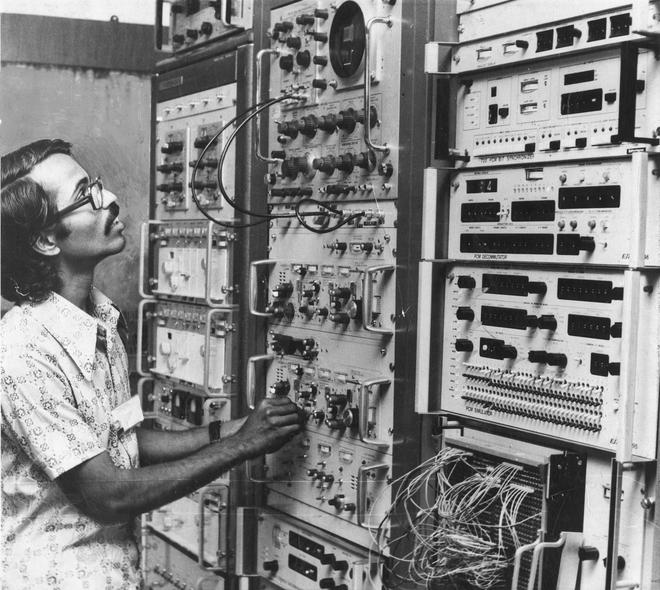


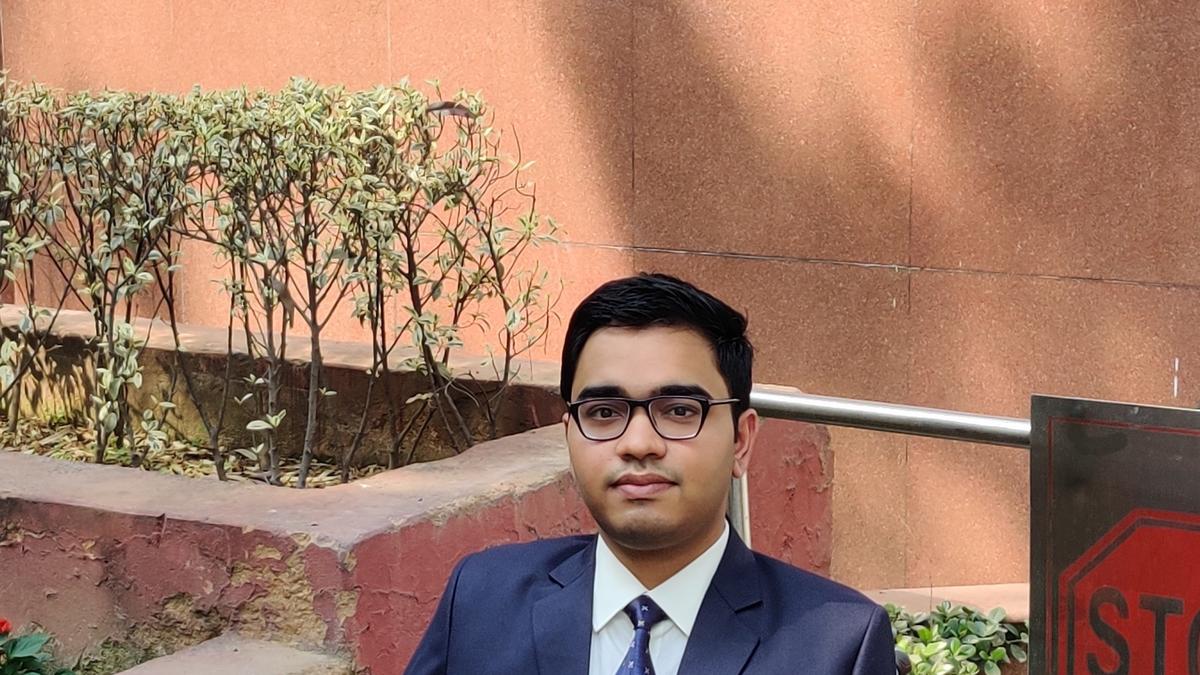
Kartik Kansal is presently working with the ISRO.
| Photo Credit: Special Arrangement
A 28-year-old scientist, suffering from muscular dystrophy, who cracked the Civil Services Examination on four occasions has moved the Central Administrative Tribunal (CAT) after the Department of Personnel and Training (DoPT) declined to allocate any service to him. The DoPT informed the tribunal that the candidate does not fulfil physical standards required for the service.
Kartik Kansal, who presently works for the Indian Space Research Organisation (ISRO), is wheelchair-bound since the age of 12 and taught himself to write after his muscles weakened. A graduate from the Indian Institute of Technology (IIT)-Roorkee, Mr. Kansal is a resident of Uttarakhand.
The Union Public Service Commission (UPSC) conducts the Civil Services Examination (CSE) every year and recommends candidates for appointment to around 20 services such as the Indian Administrative Service, Indian Foreign Service (IFS), Indian Police Service (IPS) and Central Services- Group A and Group B.
Puja Khedkar case
Mr. Kansal’s case is in stark contrast with trainee Indian Administrative Service (IAS) officer Puja Khedkar who faces a criminal case for allegedly forging documents and misusing the quota available to people with benchmark disabilities (PwBD) to get into the service. Ms. Khedkar could continue with her job despite a CAT ruling in 2023 that her candidature was liable to be cancelled as she failed to appear before a medical board at the AIIMS, Delhi, on six occasions to testify her disability under “visually impaired and mental illness” criteria. She appeared for the examination again in 2022, secured a rank of 821 and got entry into the IAS by changing the disability criteria to “visually impaired and hearing loss”. A medical board at the AIIMS declared her disability to be 47% – above the 40% criteria– after which DoPT allotted her the IAS. The DoPT was a respondent in the CAT petition filed by Ms. Khedkar.
According to the CSE-2021 notification for which Mr. Kansal appeared, 22 out of total 712 vacancies were reserved for PwBD candidates. These include six vacancies for locomotor disability, including cerebral palsy, leprosy cured, dwarfism, acid attack victims and muscular dystrophy. Despite the PwBD reservation, certain other requirements such as writing and seeing ability as certified by a medical board are considered while allotting a service.
In 2021, Mr. Kansal secured a rank of 271, yet he was denied a service, though according to the petition he was eligible to be allotted the Indian Revenue Service (Income Tax).
Sanjeev Gupta, a retired IAS officer who is pursuing Mr. Kansal’s case with the authorities, said “grave injustice” had been done. “The medical board at AIIMS certified 90% muscular dystrophy in the certificate that was sent to the DoPT. However, after Mr. Kansal moved CAT when he was denied any service allocation, the DoPT responded that he is suffering from cerebral palsy and does not fulfil the physical eligibility criteria. He met the “sitting, seeing, reading, writing and communication criteria” for IRS. The DoPT should correct its mistake and not drag the case in the tribunal as it has erred in reading the documents,” Mr. Gupta said.
Mr. Kansal cracked the coveted examinations in 2019, 2022 and 2023 as well, securing the rank of 813, 784 and 829 rank respectively. The CAT is expected to hear the petition in August.
When contacted by The Hindu, Mr. Kansal said, “I wanted to join the civil services to address the challenges faced by people like me, there is a stigma attached to disability.”
Asked about Ms. Khedkar’s case, he said, “It is disheartening but I cannot comment on what other people are doing.”