


Skip to content
  • Facebook
  • X
  • Linkedin
  • WhatsApp
  • Associate Journalism
  • About Us
  • Privacy Policy
  • 033-46046046
  • editor@artifex.news
Artifex.News

Artifex.News

Stay Connected. Stay Informed.

  • Breaking News
  • World
  • Nation
  • Sports
  • Business
  • Science
  • Entertainment
  • Lifestyle
  • Toggle search form
  • “Sannata”: Ex-India Star Blasts Punjab Kings For Not Acknowledging Shashank Singh’s Half-century Sports
  • A suicide bomber attacks a bank in Afghanistan, killing at least 3 people and injuring 12 others World
  • Joe Biden, Donald Trump set to win primary races on Super Tuesday; Biden faces dissatisfied Democratic voters World
  • “Mera Hukum Hai Room Aao Jaldi”: Ravindra Jadeja’s Insta Banter With Wife Rivaba Goes Viral Sports
  • Himachal Chief Minister Sukhvinder Singh Sukhu’s Wife Who Won On Political Debut Nation
  • Army After Rahul Gandhi’s Claim Nation
  • Inter Beat Genoa To Take Further Step Towards Serie A Title Sports
  • Vice President Jagdeep Dhankhar Dig At Opposition Nation

Nobel laureate supports India’s pursuit for a neutrino lab

Posted on July 13, 2024 By admin


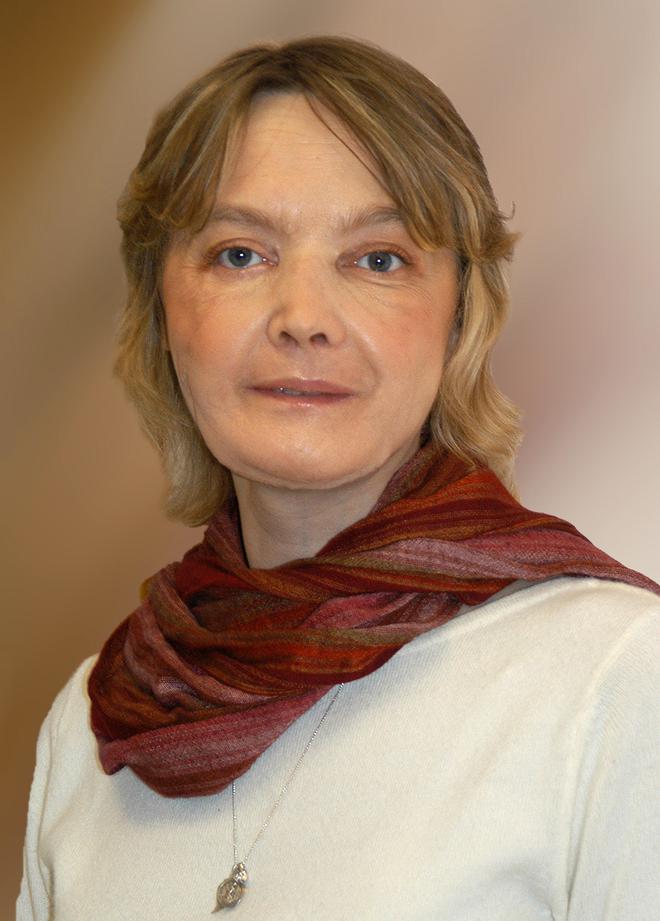
If the obstacle-ridden India-based Neutrino Observatory (INO) ever becomes a reality, it will be one of the largest basic science projects in the country. Nobel laureate and neutrino researcher Takaaki Kajita is convinced that the proposed underground laboratory is still worth fighting for.

Neutrinos are abundant particles that may be relevant to our understanding of the origin of matter in the universe. About 60 years ago, historic science experiments inside a goldmine in Kolar, Karnataka, would lead to the 1965 discovery of atmospheric neutrinos. This was a collaboration between Indian, Japanese and British scientists.

Awakened to the potential of neutrino research, Japan continued with experiments on — or rather, under — their soil, in the underground Kamioka Observatory situated under Mount Ikeno. This was where Masatoshi Koshiba’s team would discover cosmic neutrinos in the late 1980s. Subsequently, Japan decided to establish a dedicated neutrino observatory, Super-Kamiokande, which began operation in 1996. In 2002, Koshiba won a Nobel Prize for his contributions.

Indian scientists had no intention of being left behind. Though the original experiments had to end in 1992 due to the closure of the goldmines in Kolar, plans to build our own observatory were already underway. After extensive deliberations, a proposal was drawn and in 2011, the Indian government announced its intention to set aside about ₹1,350 crores for an India-based Neutrino Observatory, which would be situated 1.3 km underground in Tamil Nadu. Over a decade later, there has been no progress. Today, the fate of INO is uncertain.

Meanwhile, Japanese researchers received the first evidence for a phenomenon called neutrino oscillation within a year of the Super-Kamiokande. This discovery would go on to (jointly) win Koshiba’s student Takaaki Kajita, another Nobel in 2015.

Having spent his entire research career in his home country of Japan, Takaaki Kajita is a living example of how much is to be gained by having a neutrino laboratory close to home. “We can easily access the laboratory and the detector is nearby,” he said, in an interview with this reporter during the 73rd Lindau Nobel Laureate Meeting which concluded on July 5.

Two of the main reasons for opposition to INO are adverse environmental impacts and the fear of radioactivity. This is despite INO scientists repeatedly stating that the observatory would be located a kilometre underground and hence would have minimal impact on wildlife and the ecosystem. What about radioactivity? “The experiment will neither produce any radioactivity nor can it function well where there is radiation,” they point out on INO’s website. The whole point of housing the detector underground is to protect it from the natural radiation that hits the surface of Earth.

According to Kajita, the Japanese project did not face as much opposition. “We decided to construct the detector in an active mine, so there was no need for additional excavation,” he pointed out. Besides, the original experiment was designed to search not for neutrinos but for a hypothetical phenomenon called proton decay. “That was nothing to do with radiation,” he said.

The biggest stroke of luck for the Japanese neutrino scientists was the timing of a supernova that was observed in February 1987. The Supernova 1987A happened while the Kamiokande-II detector was online, leading to the discovery of cosmic neutrinos by the team led by Koshiba. “This had a great impact. People suddenly knew neutrinos, and had only a good image about them,” said Kajita, who was Koshiba’s PhD student.

A neutrino observatory at home is envisioned to give the Indian scientific community, including students of particle physics, the opportunity to work with a world-class detector without needing to travel outside national borders. Back in the 1980s, the young Kajita greatly benefited from this privilege. He recalled the excitement during the construction of the Kamiokande detector. “It’s the young postdocs involved in the Kamiokande and Super Kamiokande experiments who first saw and analysed the data,” he said.

Today, the Super-Kamiokande facility continues to train new generations of particle physicists. While some of them secure positions abroad, many choose to stay back in Japan. After he won his Nobel in 2015, Kajita himself declined invitations to take up new positions in other countries. “As an experimental physicist, it is very important that I am near the detector,” he explained.

Aware of the setbacks his Indian colleagues have suffered, Kajita insists that the INO dream is worth salvaging. “It may be a bit late to start the construction of the detector, but it is very important to continue working towards an underground lab. There are a lot of things [yet] to be done [in the field of neutrino physics].”

(Nandita Jayaraj is a freelance science writer and co-author of Lab Hopping: A Journey to Find India’s Women in Science)



Source link

Science Tags:Neutrino lab, Neutrino Observatory, Neutrino research, Takaaki Kajita

Post navigation

Previous Post: Not Yashasvi Jaiswal Or Shubman Gill. Sikandar Raza Says This Move Helped India Beat Zimbabwe By 10 Wickets
Next Post: Government mulls handing over MTNL operations to BSNL; merger unlikely

Related Posts

  • Caterpillars may sense threats using electric fields Science
  • How scientists found that LK-99 is probably not a superconductor Science
  • Gaganyaan’s expected launch by end of 2025, says ISRO chief Science
  • Argentine scientists find speedy 90-million-year-old herbivore dinosaur Science
  • Daily Quiz | On World Organ Donation Day Science
  • How do SIM cards work? | Explained Science

More Related Articles

The Science Quiz | A brief history of the earth Science
Big Butterfly Month | A month for the winged ones Science
Sci-Five | The Hindu Science Quiz: On Eusociality Science
ISRO to hold more tests for Gaganyaan in coming months Science
Russia’s Luna-25 spacecraft crashes into the Moon Science
‘Not considering women pilots for first Gaganyaan flight huge missed opportunity’ Science
SiteLock

Archives

  • July 2024
  • June 2024
  • May 2024
  • April 2024
  • March 2024
  • February 2024
  • January 2024
  • December 2023
  • November 2023
  • October 2023
  • September 2023
  • August 2023
  • July 2023
  • June 2023
  • May 2023
  • April 2023
  • March 2023
  • February 2023
  • January 2023
  • December 2022
  • November 2022
  • October 2022
  • September 2022
  • August 2022
  • July 2022
  • June 2022
  • May 2022

Categories

  • Business
  • Nation
  • Science
  • Sports
  • World

Recent Posts

  • Top Democrat Adam Schiff calls on U.S. President Joe Biden to exit presidential race
  • Jyothi Yarraji Wants To Learn From Her Mother’s Struggles And Shine At Olympics 2024
  • Prime Accused In INDIA’s Bihar Ally’s Brutal Murder Arrested
  • Finance Ministry eases procurement rules for scientific research equipment
  • Sania Mirza Tennis Academy Launches, ‘Step One To Be A Champ’ Tennis Camp

Recent Comments

  1. ywdVpqHiNZCtUDcl on UP Teacher Who Asked Students To Slap Muslim Classmate
  2. bRstIalYyjkCUJqm on UP Teacher Who Asked Students To Slap Muslim Classmate
  3. GkJwRWEAbS on UP Teacher Who Asked Students To Slap Muslim Classmate
  4. xreDavBVnbGqQA on UP Teacher Who Asked Students To Slap Muslim Classmate
  5. aANVRzfUdmyb on UP Teacher Who Asked Students To Slap Muslim Classmate
  • Financial inclusion index rises with growth across all segments: RBI Business
  • Cricket World Cup 2023 | I’m not sure where you get ‘favourites’ from: Pakistan coach Grant Bradburn Sports
  • Deadline Ends, Here’s What Government Will Do Now Nation
  • Pune Teen Gets Bail With Conditions Nation
  • Watch | The troubles behind Vistara’s massive flight cancellations Business
  • Retail inflation eases marginally to 5.09% in February Business
  • Taliban deny Pakistan’s claim Afghans responsible for attack that killed Chinese dam engineers World
  • Jailed Maoist Leader Arnab Dam Likely To Enroll For PhD As Bengal Government Steps In Nation

Editor-in-Chief:
Mohammad Ariff,
MSW, MAJMC, BSW, DTL, CTS, CNM, CCR, CAL, RSL, ASOC.
editor@artifex.news

Associate Editors:
1. Zenellis R. Tuba,
zenelis@artifex.news
2. Haris Daniyel
daniyel@artifex.news

Photograher:
Rohan Das
rohan@artifex.news

Artifex.News offers Online Paid Internships to college students from India and Abroad. Interns will get a PRESS CARD and other online offers.
Send your CV (Subjectline: Paid Internship) to internship@artifex.news

Links:
Associate Journalism
About Us
Privacy Policy

News Links:
Breaking News
World
Nation
Sports
Business
Entertainment
Lifestyle

Registered Office:
72/A, Elliot Road, Kolkata - 700016
Tel: 033-22277777, 033-22172217
Email: office@artifex.news

Editorial Office / News Desk:
No. 13, Mezzanine Floor, Esplanade Metro Rail Station,
12 J. L. Nehru Road, Kolkata - 700069.
(Entry from Gate No. 5)
Tel: 033-46011099, 033-46046046
Email: editor@artifex.news

Copyright © 2023 Artifex.News Newsportal designed by Artifex Infotech.